Puppy Nighttime Potty Schedule Generator
Input Details
Your Custom Schedule
Enter your puppy's details and click Generate to see your personalized nighttime potty schedule.
The Sleepless Nights of Puppy Parenthood
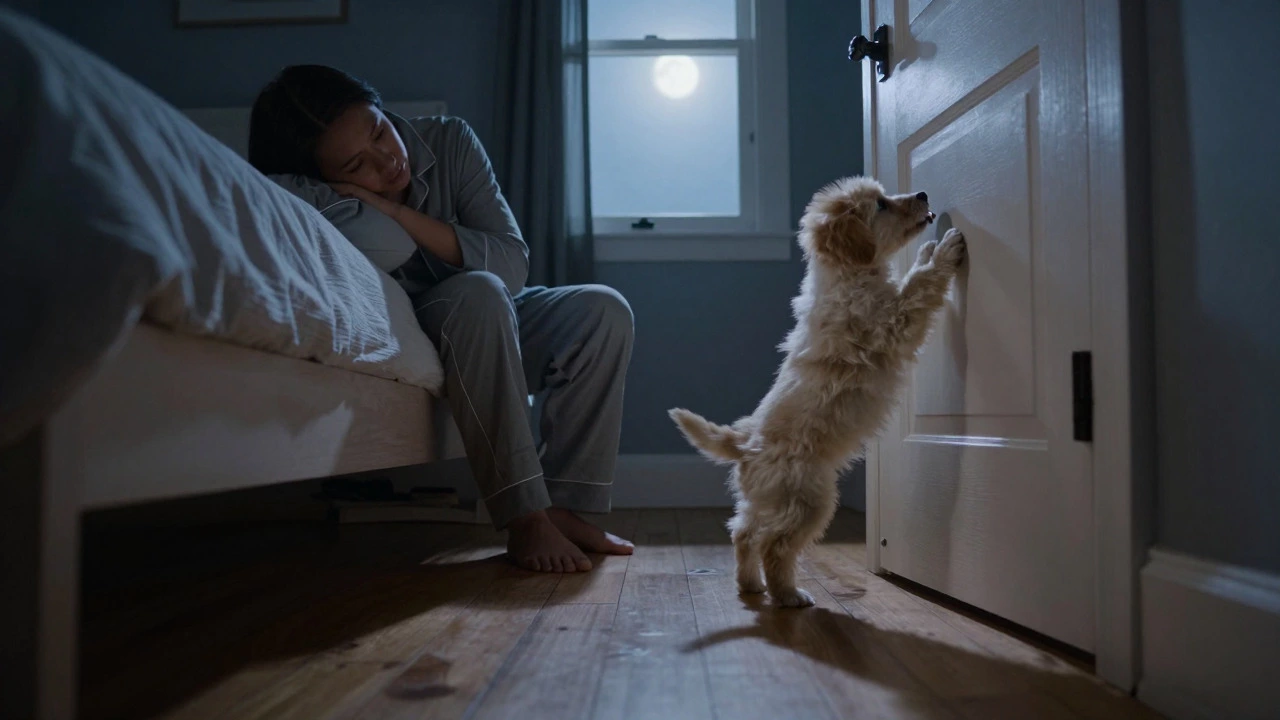
It is 3:00 AM. The house is quiet, the stars are out over Auckland, and you are finally drifting off to sleep. Then, you hear it-a soft whine, followed by a frantic scratch against your bedroom door. Your heart sinks. Do you get up? If you do, will you reinforce bad behavior? If you don’t, will you end up with a puddle on the floor? This is the classic dilemma for every new puppy owner.
The short answer is yes. You absolutely should wake your puppy at night to go potty during the early stages of house training, which is the process of teaching a dog to eliminate waste in an appropriate location. But there is a right way and a wrong way to do it. Doing it incorrectly can actually make your puppy’s bladder control worse or teach them that nighttime is playtime. Getting it right means fewer accidents, better sleep for everyone, and a faster path to a fully trained dog.
Why Puppies Can't Hold It (The Biology)
To understand why you need to interrupt your own sleep, you have to look at the puppy's biology. A young puppy has very little voluntary control over their bladder and bowels. Their sphincter muscles are still developing, and their bladders are tiny. A general rule of thumb in veterinary science is that a puppy can hold their bladder for one hour for every month of age, plus one. So, a three-month-old puppy might hold it for four hours maximum. An eight-week-old pup? Maybe two hours.
If you put a tiny puppy down for an eight-hour stretch of sleep without a break, they physically cannot hold it. When they have an accident because of this, they aren't being defiant; they are simply overflowing. By waking them up, you are working with their physiology, not against it. You are preventing the habit of eliminating indoors from forming in the first place.
The Golden Rules of Nighttime Potty Breaks
Waking your puppy isn't just about opening the door and letting them run around. If you turn this into a social event, you defeat the purpose. Here is how to handle the midnight trip effectively:
- Keep it boring: No toys, no treats, no talking. Use a monotone voice if you must speak. You want the puppy to associate this time with one thing only: business. If you play fetch while they pee, they will learn that going outside equals fun games, and they will start holding it just to get the reward later.
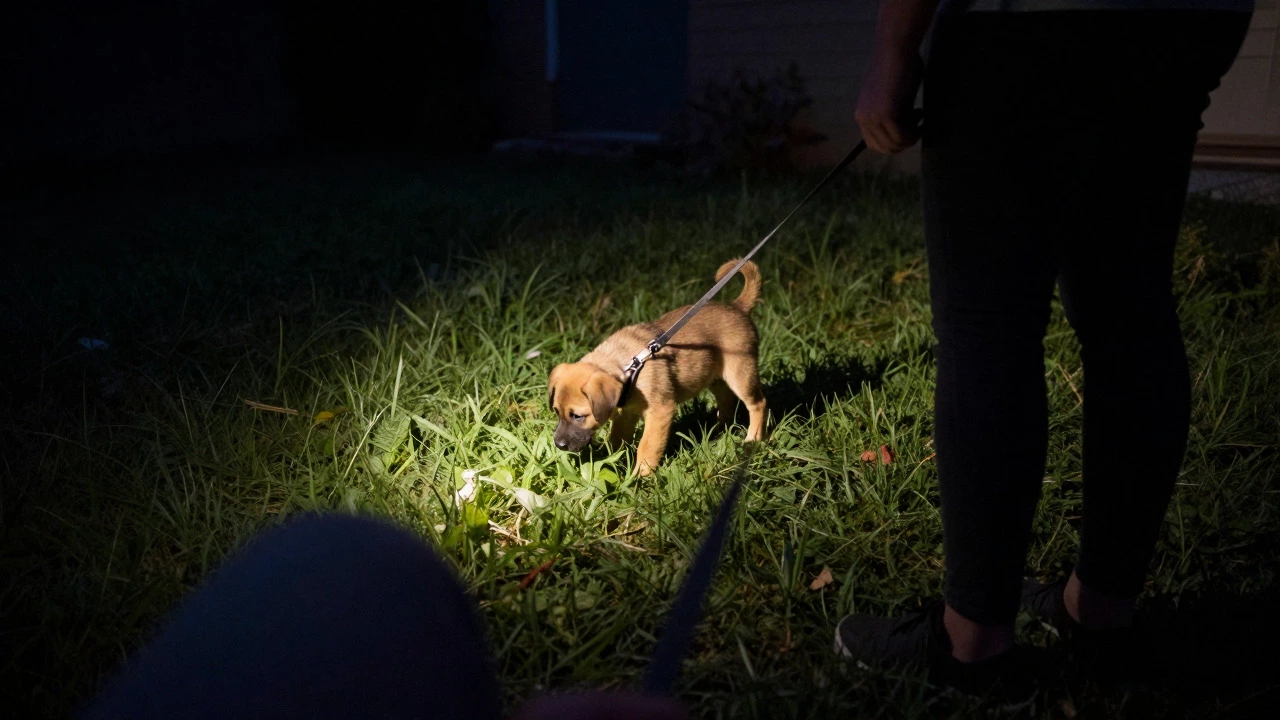
- Use a leash: Even if you have a fenced yard, keep the puppy on a short leash. This prevents them from sniffing every blade of grass or chasing bugs. It keeps them focused on the task at hand.
- Pick a specific spot: Always take them to the exact same patch of grass. The scent of previous eliminations acts as a trigger, helping them remember what they are supposed to do there.
- Wait it out: Sometimes, the puppy doesn't go immediately. Stand quietly and wait. Give them five minutes. If nothing happens, bring them back inside. Try again in twenty minutes. Patience is key here.
- Silence is golden: When they finish, offer a very quiet "good boy" or "good girl," but no big celebration. Immediately return them to their crate or bed. The party starts in the morning.
Setting the Schedule: Timing Is Everything
Relying on your puppy to signal you when they need to go is a recipe for disaster in the beginning. Instead, you need to set a proactive schedule. This takes the guesswork out of the equation for both you and the dog.
| Puppy Age | Max Hold Time | Suggested Wake Times |
|---|---|---|
| 8-10 Weeks | 1-2 Hours | Every 2 hours (e.g., 10 PM, 12 AM, 2 AM, 4 AM) |
| 3 Months | 3-4 Hours | Once or twice (e.g., 11 PM, 3 AM) |
| 4-5 Months | 4-5 Hours | Once (e.g., 12 AM) or none if they slept late |
| 6+ Months | 6+ Hours | Usually none required |
Notice how the frequency drops as the puppy grows. As their bladder capacity increases, so does their ability to sleep through the night. Most puppies can sleep through the night without a break by six months of age, provided they haven't eaten or drunk heavily right before bed.
The Crate Training Connection
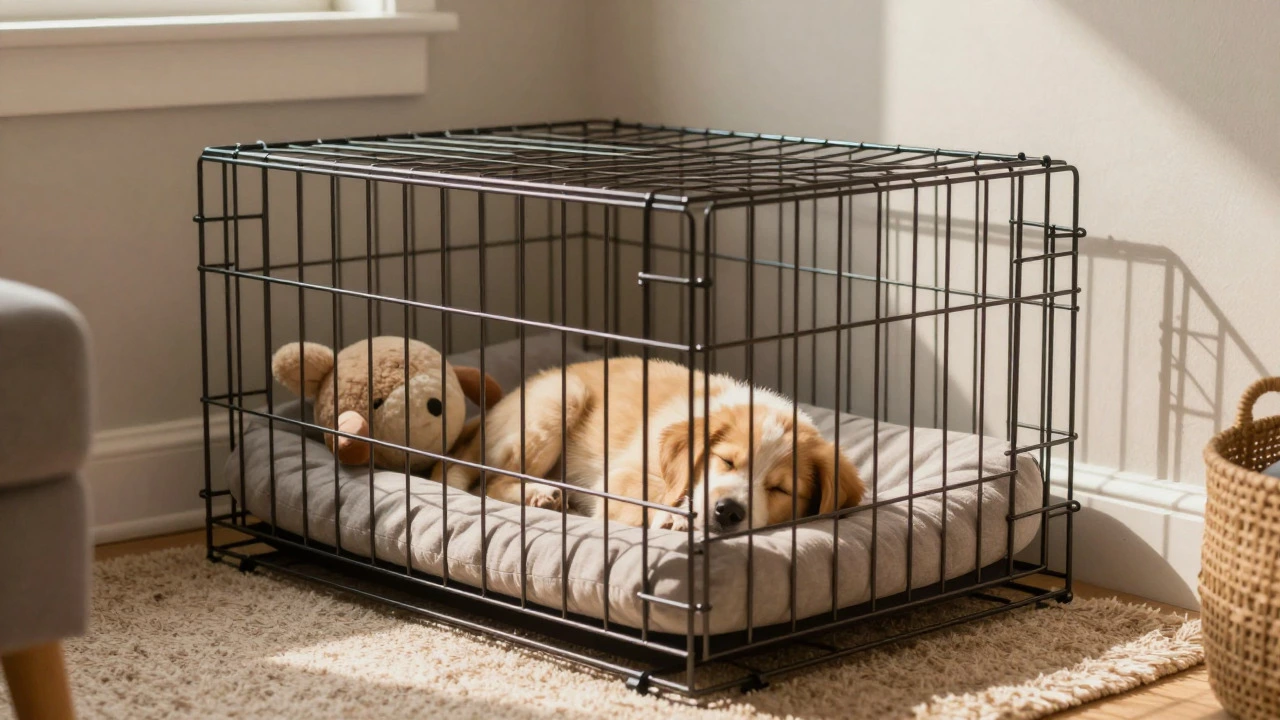
Crate training is a method of confining a dog to a safe, den-like space to aid in housebreaking and safety. This tool is your best friend during these nighttime excursions. Dogs are den animals; by instinct, they avoid soiling the place where they sleep. If the crate is the right size-big enough to stand and turn around, but not big enough to have a separate bathroom corner-the puppy will do their best to hold it until let out.
If you use a crate, the routine becomes seamless. You hear the whine, you open the crate, you leash them up, you go to the spot, they pee, you return them to the crate. If you don't use a crate, you need a confined area like a small bathroom or a gated-off section of the bedroom. Roaming freely around the house gives them too many opportunities to sneak off and have an accident in a hidden corner.
Managing Water and Food Intake
You can also influence the need to go potty by managing what goes into the puppy's stomach. While hydration is crucial, timing matters. Remove the water bowl about two hours before bedtime. This gives the puppy enough time to drink throughout the evening but allows their system to process the liquid before sleep. Similarly, feed the last meal of the day at least three hours before bed. Digestion stimulates bowel movements, so an empty stomach means less urgency at night.
However, be careful not to dehydrate them. Puppies grow fast and need water. Just ensure the bulk of their drinking happens earlier in the day. If it’s a hot summer day in Auckland, they might need more water, so adjust accordingly, but always prioritize the pre-bedtime cutoff.
What If They Have an Accident?
Despite your best efforts, accidents happen. Maybe you fell asleep and missed the cue. Maybe the puppy had a sudden tummy upset. When this happens, stay calm. Never punish the puppy after the fact. Rubbing their nose in it or yelling achieves nothing; they don't connect the punishment with the act that happened ten minutes ago. They just think you are angry for no reason, which damages trust.
Instead, clean it up thoroughly using an enzymatic cleaner. Regular household cleaners might mask the smell to your nose, but dogs have incredibly sensitive snouts. If even a trace of urine scent remains, they will view that spot as a designated bathroom and return to it. Enzymatic cleaners break down the proteins in the urine, removing the scent entirely.
When to Stop Waking Them Up
There comes a point when you need to stop the nightly interruptions. How do you know when it’s time? Look for consistency. If your puppy has gone three to four nights in a row without waking up to whine, and there are no accidents in the crate or bed, they are likely ready to sleep through the night. Start by pushing the wake-up time later. If you usually wake them at 3 AM, try 4 AM. Then 5 AM. Gradually extend the interval until they are sleeping straight through.
If you stop too soon, you risk accidents. If you continue too long, you risk creating a dependency where the puppy expects attention at night. Trust your observation skills. Every puppy is different, but the biological clock is a reliable guide.
Troubleshooting Common Issues
Sometimes, the whining isn't about the bathroom. Puppies whine for attention, because they are lonely, or because they are bored. How do you tell the difference? Watch the timing. If they whine immediately after coming back inside from a successful potty break, they probably just want company. In this case, ignore the whining. Wait it out. If you give in and let them out to play, you confirm that whining gets results.
Another issue is separation anxiety. Some puppies find the crate terrifying. Ensure the crate is a positive space during the day with treats and chews. A thunder shirt or a piece of clothing with your scent can provide comfort. If the anxiety is severe, consult a professional trainer or veterinarian, as medication might be necessary in extreme cases.
How long does it take for a puppy to sleep through the night?
Most puppies can sleep through the night without a potty break by 4 to 6 months of age. However, some breeds with smaller bladders or higher energy levels may take longer. Consistency in training and scheduling is the biggest factor in speeding up this process.
Should I let my puppy play when I take them out at night?
No. Nighttime potty breaks should be strictly business. Playing or engaging with the puppy signals that nighttime is a time for fun, which can lead to more whining and difficulty settling down. Keep interactions minimal and boring.
What if my puppy pees in the crate?
If a puppy pees in the crate, the crate might be too large. They need a space just big enough to stand, turn, and lie down. If the crate is the right size and they still soil it, they may have been left in too long. Reduce the time between breaks or check for medical issues like a urinary tract infection.
Can I use bell training for nighttime potty needs?
Yes, bell training can be effective. Hang a bell on the crate door or near the exit. Teach the puppy to ring the bell before going out. Over time, they will learn to ring the bell when they need to go, signaling you without excessive whining. This works best for older puppies who have more cognitive understanding.
Is it okay to wake my puppy up every hour?
For very young puppies (under 10 weeks), waking them every 2 hours is standard. Waking them every hour is usually unnecessary unless they are having medical issues or eating highly irritating foods. Over-waking can disrupt their sleep cycle and yours, leading to exhaustion and frustration.