Puppy Bedtime Planner
Find the perfect bedtime for your new companion. The best strategy is to align your puppy's sleep with yours, adjusted for their developmental stage.
Your Schedule & Puppy Info
Recommended Plan
--:-- PM
Target time to start winding down / crate time.
You just brought home a bundle of fluff, and suddenly your evenings look nothing like they used to. One minute you're trying to relax on the couch, and the next, you're being bitten at the ankles by a tiny creature who seems convinced that midnight is playtime. If you've ever found yourself staring at the clock at 11 PM wondering why your four-month-old Labrador Retriever is still bouncing off the walls while you're ready for bed, you aren't alone. The question isn't just about what time should a puppy go to bed; it's about understanding how their biology works so you can reclaim your own sleep.
Most adult dogs sleep between 12 and 14 hours a day. Puppies? They need significantly more-often up to 20 hours. But here’s the catch: they don’t sleep all those hours in one block like humans do. Their sleep cycles are fragmented, driven by high energy needs and rapid growth. So, when exactly should you tuck them in? There is no single magic hour that works for every breed or age group, but there is a reliable framework based on age, activity level, and household routine.
The Golden Rule: Match Your Household Schedule
Let’s get the biggest misconception out of the way first. You do not need to put your puppy to bed at 7 PM just because a breeder told you to. In fact, forcing an early bedtime often backfires. If you put a tired-but-not-exhausted puppy in a crate at 7 PM, they will likely wake up at 3 AM, desperate to pee and bored out of their minds. That 3 AM alarm is your responsibility, not theirs.
The best bedtime for your puppy is typically one hour before you plan to go to sleep. This aligns their circadian rhythm with yours. If you’re a night owl who goes to bed at midnight, your puppy should be settling down around 11 PM. If you’re an early riser hitting the pillow at 9 PM, then 8 PM is your target window. Why this approach? Because puppies learn through association. If they associate darkness and quiet with your departure from the living room, they begin to understand that nighttime means rest. When they wake up naturally aligned with your morning routine, you avoid the chaotic middle-of-the-night bathroom trips.
Age Matters: Adjusting Bedtimes as They Grow
A three-week-old puppy has different needs than a six-month-old adolescent. As your dog matures, their bladder capacity increases, and their ability to self-soothe improves. Here’s how to adjust the schedule based on developmental stages.
| Age Group | Typical Bedtime | Nighttime Needs | Key Focus |
|---|---|---|---|
| 8-12 Weeks | 9:00 PM - 10:00 PM | Every 2-3 hours | Consistency & Warmth |
| 3-6 Months | 10:00 PM - 11:00 PM | Once (optional) | Bladder Control |
| 6-12 Months | Matches Owner | Sleep Through | Independence |
| Adult Dog | Matches Owner | Sleep Through | Maintenance |
For young puppies under 12 weeks, expect to set an alarm. Their bladders are tiny. A general rule of thumb is that a puppy can hold their urine for one hour per month of age. So, a two-month-old puppy can only hold it for about two hours. If you go to bed at 10 PM, you’ll likely need to take them out once during the night. Don’t make this trip fun. Keep lights dim, speak softly, and take them straight to their potty spot. No playing. No cuddling unless necessary for comfort. Once they’ve gone, back to bed.
By the time they hit four months, many puppies can sleep through the night without a break, provided they’ve been properly exercised and fed earlier in the evening. If your four-month-old is still waking up at 2 AM, check your daytime routine. Are they getting enough mental stimulation? Often, "nighttime" issues are actually boredom or excess energy problems disguised as sleep disturbances.
The Pre-Bed Routine: Setting the Stage for Sleep
You wouldn’t run a marathon and immediately try to fall asleep. Neither should your puppy. What happens in the hour before bed dictates how well they settle. A chaotic, hyperactive end to the day leads to a restless night.
Start winding down about 90 minutes before bedtime. Stop high-energy play like fetch or tug-of-war. Switch to low-key activities like sniffing games or gentle grooming. These activities engage the brain without spiking adrenaline. Next, handle the biological basics:
- Final Potty Break: Take them out last thing before you head to bed. Even if they went an hour ago, ask again. It reduces accidents.
- Food Timing: Finish dinner at least two hours before bed. Digestion produces waste, and a full stomach right before sleep increases the chance of a midnight accident.
- Water Management: Pick up the water bowl 1-2 hours before bedtime. Yes, they might be thirsty, but preventing a soaked crate is worth the minor inconvenience. Offer ice cubes if they seem dry, as these provide hydration slowly without filling the bladder quickly.
After the final potty break, lead them directly to their sleeping area. Whether that’s a Crate or a designated bed, keep the environment boring. Remove toys that squeak or encourage chewing. A chew toy like a stuffed Kong with frozen peanut butter can be helpful-it keeps them occupied quietly while they drift off, mimicking the soothing sensation of nursing.
Where Should They Sleep?
This decision impacts your bedtime more than you might think. If your puppy sleeps in your bedroom, you’ll hear every whimper, which makes it harder to ignore false alarms. If they sleep in another room, you might miss genuine distress signals initially.
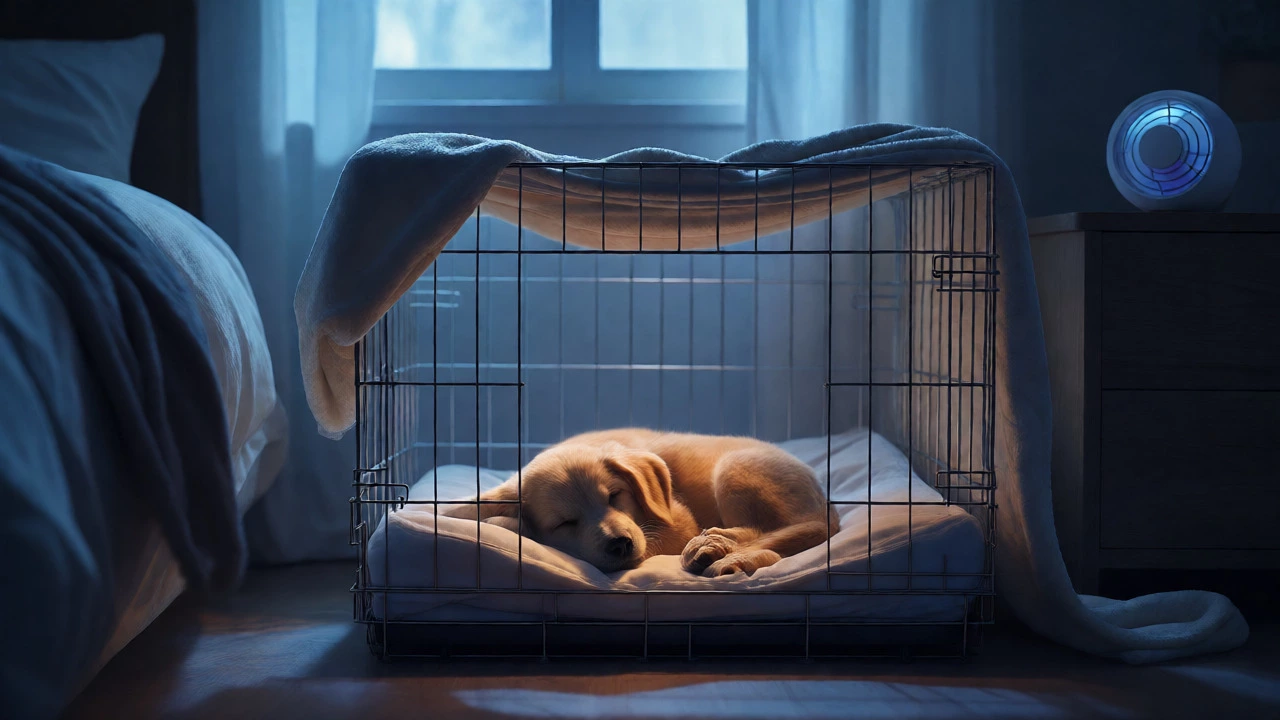
For the first few weeks, keeping the crate in your bedroom is ideal. It helps with bonding and allows you to respond quickly to bathroom needs. However, place the crate away from direct traffic paths. Use a white noise machine or a fan to mask household sounds that might startle them awake. Once they are consistently sleeping through the night, you can gradually move the crate to its permanent location, such as a hallway or kitchen, over several nights.
If you choose to let them sleep on your bed, be aware that this can create dependency. An adult dog who cannot sleep alone may develop separation anxiety. If you want them in the bed, ensure they have a consistent spot and that you’re prepared to manage their movement. For most owners, however, a crate or a confined safe space offers better boundaries for both human and canine sleep quality.
Troubleshooting Common Bedtime Struggles
Even with a perfect schedule, hiccups happen. Here’s how to handle the most common scenarios.
The Witching Hour: Many puppies experience a burst of energy in the early evening, often called the "zoomies." If your puppy is frantic at 8 PM, don’t try to force them into bed. Instead, engage in a calm activity. Practice basic commands like "sit" or "stay" for short sessions. Mental fatigue tires a dog faster than physical exercise. After 15 minutes of focused training, offer a chew toy and see if they settle.
Whining and Crying: Never reward whining with attention if it’s purely behavioral. If you get up every time they cry, you teach them that crying equals company. Wait for a brief pause in the noise, even if it’s just two seconds, then calmly reassure them. If the crying escalates, they likely need to pee. Check with minimal interaction.
Accidents in the Crate: If your puppy wakes up in a puddle, they didn’t have an accident; they couldn’t hold it. This means you either waited too long before bed or gave too much water. Adjust the timing. Clean the crate thoroughly with an enzymatic cleaner to remove the scent, otherwise, they’ll mark the spot again.
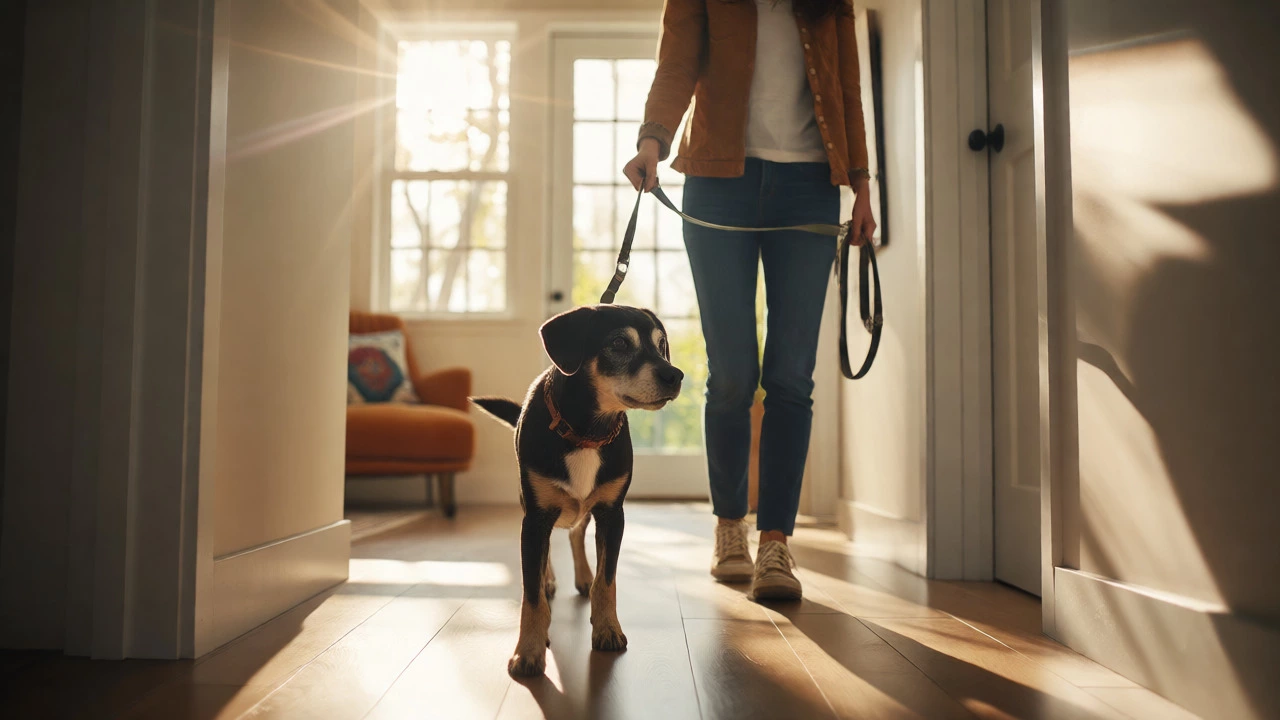
Signs Your Puppy Is Ready for Bed
Dogs communicate their readiness through body language. Learn to read these cues so you don’t force sleep on a wide-awake pup or miss the window when they’re exhausted.
- Yawning and Stretching: Classic signs of fatigue.
- Loss of Interest: They stop responding to toys or calls.
- Restlessness Followed by Lethargy: Sometimes puppies get fussy before they crash. If they start circling or digging at their bed, they’re preparing to lie down.
- Heavy Eyes: Blinking slows down, and eyes may look glazed.
When you see these signs, initiate the bedtime routine immediately. Delaying past this point often leads to overtiredness, which paradoxically causes hyperactivity. It’s similar to a toddler throwing a tantrum because they missed their nap window.
Long-Term Benefits of a Consistent Schedule
Why bother with all this structure? Because consistency builds trust. Dogs thrive on predictability. When they know that after dinner comes the walk, then the chew, then the crate, they feel secure. Anxiety decreases, and sleep quality improves.
Over time, this routine transitions into lifelong habits. A dog trained to sleep through the night as a puppy rarely develops nighttime anxiety as an adult. They also tend to have better bladder control and fewer house-training regressions. Plus, you get your life back. Being able to watch a movie or read a book without worrying about a midnight crisis is a tangible benefit of investing effort in the first few months.
Should I feed my puppy right before bed?
No. Feeding right before bed increases the likelihood of digestive discomfort and bathroom accidents. Aim to finish the last meal of the day at least two hours before bedtime to allow for digestion and a final potty break.
How long does it take for a puppy to sleep through the night?
Most puppies can sleep through the night between 4 and 6 months of age. However, this varies by breed and individual development. Smaller breeds may mature faster, while larger breeds might take longer due to slower physical maturation.
Is it okay to wake my puppy up in the morning?
Yes, especially in the beginning. Establishing a consistent wake-up time helps regulate their internal clock. Take them out immediately upon waking to reinforce that morning starts with a potty break, not playtime.
What if my puppy cries all night?
First, rule out medical issues or the need to pee. If they are healthy and empty, they may be adjusting to isolation. Ensure the crate is comfortable and warm. Avoid giving in to demands for attention during the night, as this reinforces the crying behavior.
Can I change my puppy's bedtime later?
Yes, but do it gradually. Shift their bedtime by 15 minutes every few days until you reach the desired time. Sudden changes can disrupt their routine and cause confusion or accidents.