Dog Cheese Portion Calculator
Cheese Safety Calculator
Determine the safe amount of cheese for your dog based on veterinary guidelines
Enter your dog's weight and cheese type to calculate safe portions.
Ever caught your dog giving you that sad, side-eye look while you’re eating a slice of cheddar? You might be tempted to toss them a piece - after all, they love it, and it seems harmless. But is cheese actually safe for dogs? The answer isn’t simple. Some dogs can handle it fine. Others get sick from just a small bite. Here’s what you need to know before you share that wedge.
Why Dogs Like Cheese
Dogs aren’t just drawn to cheese because it smells good - they’ve evolved to crave high-fat, high-protein foods. Cheese is rich in both. It’s also salty and creamy, two things dogs naturally find appealing. In the wild, canines would scavenge fatty animal parts. Cheese, in their eyes, is basically a tasty, human-made version of that.
But liking something doesn’t mean it’s good for them. Just because your dog wolfs down a piece of mozzarella doesn’t mean their body knows how to process it properly.
Can Dogs Eat Cheese? The Short Answer
Yes, dogs can eat small amounts of cheese - but only if they’re not lactose intolerant. Most adult dogs lose the ability to digest lactose after weaning. That’s normal. Humans keep producing lactase (the enzyme that breaks down milk sugar) into adulthood. Dogs? Not so much.
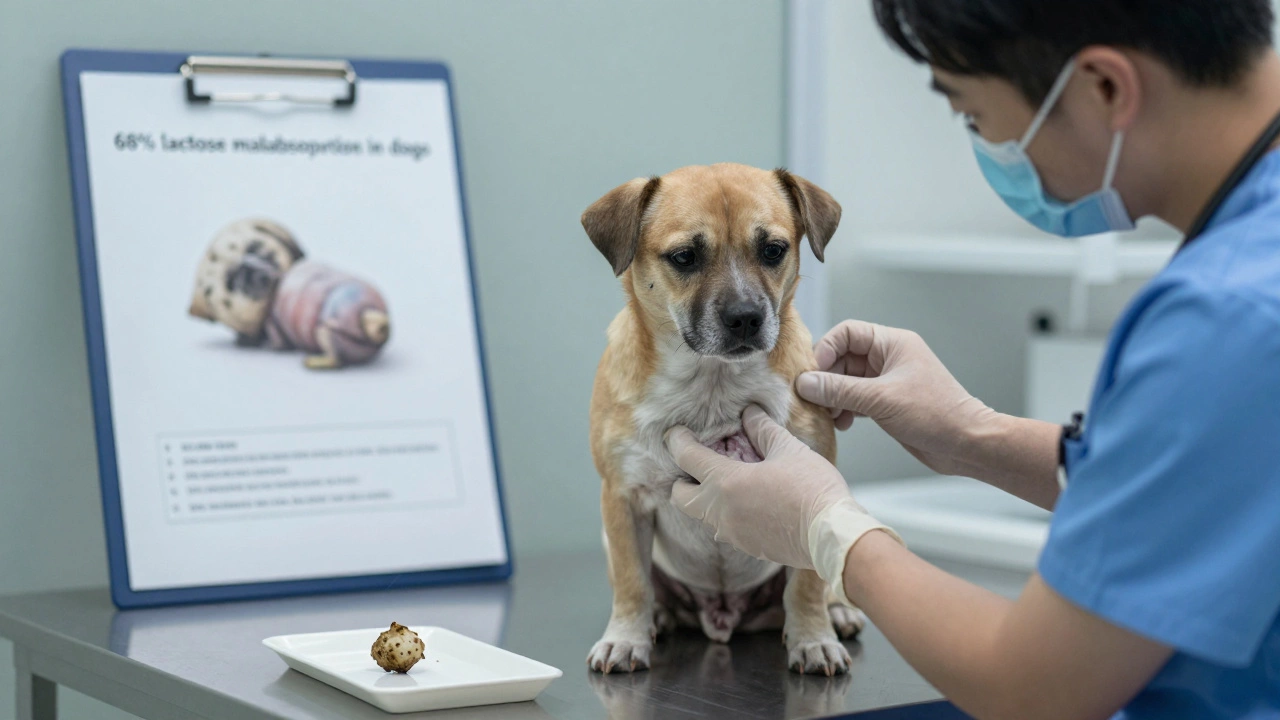
A 2023 study from the University of Auckland’s Veterinary Nutrition Lab found that 68% of dogs tested showed signs of lactose malabsorption after consuming dairy products. Symptoms included loose stools, gas, bloating, and occasional vomiting. That’s not a small number. It means nearly seven out of ten dogs you meet might not handle cheese well.
Which Cheeses Are Safer?
Not all cheeses are created equal. Some have less lactose than others. The fermentation process breaks down lactose, so aged cheeses are often better tolerated.
- Low-lactose options: Cheddar, Swiss, and Parmesan - these have very little lactose left after aging.
- Medium-lactose: Mozzarella and cottage cheese - okay in tiny amounts, but still risky for sensitive dogs.
- Avoid: Cream cheese, brie, blue cheese, and processed cheese slices. These are high in fat, salt, or additives like garlic and onion, which are toxic to dogs.
Even low-lactose cheeses aren’t magic. A 10-pound dog eating a 1-inch cube of cheddar is getting more than 10% of its daily calorie intake from one snack. That’s a lot.
How Much Cheese Is Too Much?
There’s no official "safe" amount, but most vets agree on this rule: cheese should make up less than 10% of your dog’s daily treat allowance.
For a medium-sized dog (around 40 pounds), that means no more than a teaspoon of grated cheese - once or twice a week. Think of it like giving your kid a candy bar: occasional, small, and never a regular part of their diet.
Also, remember: cheese is high in fat. A single ounce of cheddar has about 9 grams of fat. That’s nearly half the daily fat requirement for a 30-pound dog. Too much fat can lead to pancreatitis - a painful, sometimes life-threatening inflammation of the pancreas. One study from the Journal of Veterinary Internal Medicine reported that 22% of pancreatitis cases in dogs were linked to high-fat treats, including cheese and bacon.
Signs Your Dog Can’t Handle Cheese
If your dog eats cheese and you notice any of these within 12 hours, stop giving it:
- Loose stools or diarrhea
- Excessive gas
- Loss of appetite
- Vomiting
- Itchy skin or ear infections (a sign of food sensitivity)
Some dogs react slowly. You might not see symptoms until the next day. If your dog has recurring digestive issues, cheese might be a hidden trigger.
What About Lactose-Free Cheese?
Lactose-free cheese sounds like a perfect solution - but it’s not always better. Many brands replace lactose with sugars like maltodextrin or artificial sweeteners. Xylitol, for example, is deadly to dogs. Always check the label. If you can’t read it or don’t recognize the ingredients, skip it.
Even "lactose-free" cheeses are still high in fat and salt. They’re not a health food. They’re just a different kind of treat.

Alternatives to Cheese
If you’re looking for a tasty, safe, and nutritious treat, try these instead:
- Small pieces of cooked chicken or turkey (no skin, no seasoning)
- Carrot sticks (great for dental health)
- Pumpkin puree (unsweetened, from a can or fresh)
- Commercial dog treats labeled "low-fat" and "no artificial additives"
These options give your dog something to enjoy without the risk of upset stomachs or long-term health issues.
When Cheese Might Be Okay - And Even Helpful
There are times when cheese can be useful. Many trainers use tiny bits of low-fat cheese as high-value rewards during training sessions. Why? Because it’s super motivating. If your dog is struggling to learn a new command, a pea-sized piece of cheddar can make all the difference.
Some vets even recommend low-sodium cheese to mask pills. If your dog refuses to take medicine, a small blob of cream cheese (not the flavored kind) can hide a tablet. But this should be a rare trick - not a daily habit.
Final Verdict: Yes, But With Caution
Can dogs have cheese? Technically, yes. But should they? Not regularly. Not in large amounts. Not if they’ve ever had a tummy upset after dairy.
Think of cheese like wine for humans: a little bit, once in a while, might be fine. But if you’re drinking it every night? You’re asking for trouble.
If your dog loves cheese and you want to keep giving it, start with a pea-sized piece. Watch them for 24 hours. If nothing happens, you can offer it once a week. If they get gassy or loose stools? It’s time to say goodbye to cheese.
There’s no need to feel guilty. Your dog will still love you - even if you’re not sharing your snack. And they’ll be healthier for it.