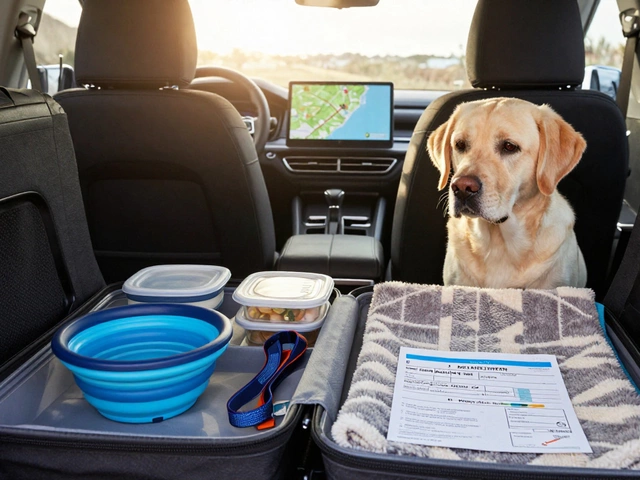
Crate Size Calculator for Large Dogs
Calculate Your Dog's Minimum Crate Size
Based on the article's safety recommendations for 70-pound dogs and above
Minimum Crate Requirements
Length
42 inches
Width
28 inches
Height
30 inches
Travel Safety Tips
Based on the article's recommendations:
- Always use a crash-tested crate certified by CPS or IAATA
- For air travel, dogs over 20 lbs must travel as checked baggage or cargo
- Never let your dog roam freely in the vehicle
- Plan stops every 2-3 hours for water and rest
Important: For dogs over 70 lbs, a 42-inch crate is the absolute minimum. For larger dogs, adjust these dimensions proportionally.
Traveling with a 70-pound dog isn’t impossible-it’s just different
Most people assume big dogs are too heavy, too loud, or too hard to manage on trips. But if you’ve got a 70-pound dog-think Labrador, German Shepherd, or Golden Retriever-you’ve already got a loyal travel partner. The trick isn’t avoiding travel, it’s planning for the weight, space, and rules that come with it. Airlines, rental cars, and even some trains have specific limits. Skip the guesswork. Here’s how real people get their big dogs from point A to point B without stress, fines, or panic.
Know the weight limits before you book anything
Not every airline lets you bring a 70-pound dog in the cabin. Most require dogs over 20 pounds to travel as checked baggage or cargo. That’s not a suggestion-it’s a rule. Delta, United, and American all cap cabin pets at 20 pounds including the carrier. If your dog weighs 70 pounds, you’re looking at cargo or ground transport. Carriers like Alaska Airlines and JetBlue allow larger dogs in cargo, but they charge $200-$300 each way. Always call the airline directly. Their website might say one thing, but the agent on the phone might tell you about a recent policy change or a waiver for service animals.
For road trips, the issue isn’t weight-it’s space. A 70-pound dog needs room to sit, lie down, and breathe. A small SUV won’t cut it. You need at least a midsize SUV or pickup truck with a covered bed. Think Honda Pilot, Toyota Highlander, or Ford Ranger. A crate that’s 42 inches long is the minimum for a dog this size. Anything smaller and you’re risking injury or stress.
Use a crash-tested travel crate, not just any carrier
That cute pet carrier from Amazon? It’s not safe for a 70-pound dog in a crash. The Center for Pet Safety tested over 100 carriers in simulated 30-mph collisions. Only six passed. Look for the Crash-Tested label from CPS or the IAATA certification. Brands like Sleepypod, Gunner Kennels, and Petmate Sky Kennel are the only ones that reliably hold up. A 42-inch Gunner Kennel costs around $450, but it’s the only thing that won’t collapse if you hit the brakes hard. Don’t save money here. Your dog’s spine, ribs, and internal organs depend on it.
Install the crate in the back of the vehicle using a seatbelt anchor or a cargo barrier. Never let your dog roam freely. A 70-pound dog becomes a 70-pound projectile in a crash. One study from the University of Pennsylvania found that unrestrained dogs in accidents were 20 times more likely to suffer fatal injuries than those in proper crates.

Plan rest stops like a pro
Big dogs need to stretch, pee, and drink more often than small ones. Plan a stop every 2-3 hours. Use apps like BringFido or Dog Park Finder to locate dog-friendly rest areas. Avoid rest stops with heavy traffic or no shade. In New Zealand, places like Te Kuiti Rest Area or Lake Taupo North Shore have designated dog zones with water bowls and waste stations. Bring a collapsible water bowl and at least 2 liters of water per dog per 2 hours. Heat exhaustion hits big dogs faster. If it’s over 25°C, your dog is at risk-even if it’s early morning.
Never leave your dog in the car, even for five minutes. A 70-pound dog generates more body heat. On a 22°C day, the inside of a parked car can hit 40°C in 10 minutes. That’s enough to cause organ failure. If you’re stopping for coffee, take your dog with you. Many cafes in Auckland, Wellington, and Christchurch now allow big dogs on patios. Just ask.
Prepare for airport chaos
Airports are loud, bright, and full of strange smells. Your dog doesn’t know it’s going on vacation. They know they’re in a strange place with strange people and noises. Start training weeks before. Practice walking through crowds with a harness and leash. Use a calming vest like the ThunderShirt-it reduces anxiety in 80% of large dogs, according to a 2024 vet survey. Bring familiar items: a worn T-shirt, a favorite toy, or a blanket with your scent. Don’t feed your dog 4-6 hours before flying. A full stomach plus turbulence = disaster.
At the airport, arrive 3 hours early. You’ll need to check your dog in at the cargo desk, not the main counter. Bring your vet’s health certificate (issued within 10 days of travel), rabies records, and proof of microchip. Some countries, like Australia and Japan, require additional paperwork. Don’t assume your airline will tell you what you need. Ask for a checklist.
Public transport? It’s possible-but tricky
In New Zealand, dogs are allowed on trains and buses if they’re in a crate or on a leash under 25kg. But 70 pounds? That’s over 31kg. Most public transit systems won’t allow it. Exceptions exist: KiwiRail’s Northern Explorer train lets you book a private cabin for you and your dog, but you pay for two seats. In Auckland, the Northern Busway allows large dogs in crates during off-peak hours. Always call ahead. Some drivers will let you on if you’re polite and your dog is calm. But don’t count on it.
If you’re traveling between cities, consider a pet taxi. Services like PetCabs in Wellington or DoggyRide in Christchurch specialize in large dog transport. They use vans with ramps, secure crates, and climate control. It costs $80-$150 per trip, but it’s safer than trying to cram your dog into a bus that wasn’t built for it.

What about hotels and rentals?
Not every Airbnb or hotel accepts dogs over 50 pounds. Use filters on Booking.com or Airbnb to search for “dogs over 50 lbs welcome.” Look for places that mention “large breed friendly” or “no weight limits.” Some properties charge a flat fee of $50-$100 per stay. Others require a deposit. Always confirm in writing. Don’t rely on a chat message. Get it in the booking confirmation.
Bring your own dog bed. Hotels rarely provide one. Your dog’s comfort reduces stress and keeps the room cleaner. Also, bring poop bags, wipes, and a towel. Big dogs track in dirt, mud, and grass. A quick wipe-down before they jump on the couch saves you from cleaning fees.
Emergency prep: What if something goes wrong?
Carry a pet first-aid kit. Include: gauze, antiseptic wipes, tweezers, a digital thermometer, and Benadryl (only if your vet approved it). Know the nearest 24-hour vet clinic at your destination. Save their number in your phone. If you’re flying internationally, register your dog with the local veterinary authority. In Australia, you’ll need to notify Biosecurity. In the EU, you need a pet passport.
Keep a recent photo of your dog on your phone. If your dog gets lost, you’ll need it to show security or staff. Microchips help, but not everyone scans them. A photo with your contact info on a collar tag is still the fastest way to reunite.
Bottom line: It’s doable, but you need to plan
A 70-pound dog isn’t a burden. They’re a companion. But you can’t treat them like a suitcase. You need the right crate, the right vehicle, the right paperwork, and the right mindset. The first trip might feel overwhelming. But after three or four trips, you’ll know exactly what works. Your dog will start wagging when they see the crate. That’s not just obedience-it’s trust. And that’s worth every extra hour of planning.
Can I bring my 70-pound dog in the cabin on a plane?
No. Almost all airlines restrict cabin pets to dogs under 20 pounds, including the carrier. A 70-pound dog must travel as checked baggage or cargo. Some airlines, like Alaska Airlines and JetBlue, allow larger dogs in cargo, but they charge $200-$300 each way. Always call the airline directly-policies can change without notice.
What size crate do I need for a 70-pound dog?
You need a crate that’s at least 42 inches long, 28 inches wide, and 30 inches tall. The dog should be able to stand up, turn around, and lie down comfortably. Look for a crash-tested crate certified by the Center for Pet Safety or IAATA. Brands like Gunner Kennels or Petmate Sky Kennel are reliable. Never use a soft carrier for a dog this size-it won’t protect them in a crash.
Is it safe to fly a large dog as cargo?
Yes, if you take the right steps. Choose a direct flight to avoid delays. Fly during cooler months or early morning to avoid extreme heat. Use a hard-sided, ventilated crate. Label it with "Live Animal" and "This Side Up." Avoid flying during holidays when cargo holds are packed. Airlines like Delta and United have better cargo safety records than others. Check their pet transport reports online.
Can I take my 70-pound dog on a train or bus in New Zealand?
Generally, no. Public transport in New Zealand limits dogs to 25kg (55 lbs) or less unless they’re in a crate. A 70-pound dog exceeds that. The only exception is KiwiRail’s Northern Explorer, which allows large dogs in private cabins for an extra fee. For other routes, use a pet taxi service like PetCabs or DoggyRide. They’re designed for large dogs and have climate-controlled vans.
What should I pack for a road trip with a 70-pound dog?
Pack: a crash-tested crate, 2 liters of water per 2 hours, a collapsible bowl, a leash and harness, poop bags, a towel, a familiar blanket or toy, a vet health certificate, and a pet first-aid kit. Also bring a recent photo of your dog and your microchip number. If you’re crossing borders, bring rabies and vaccination records. Don’t forget a snack or two-dogs burn energy on long drives.