Pet Carrier Size Checker
Enter your carrier's external dimensions (including wheels/handles) to see which major US airlines will allow it in the cabin.
- Enter dimensions and click "Check Compatibility"
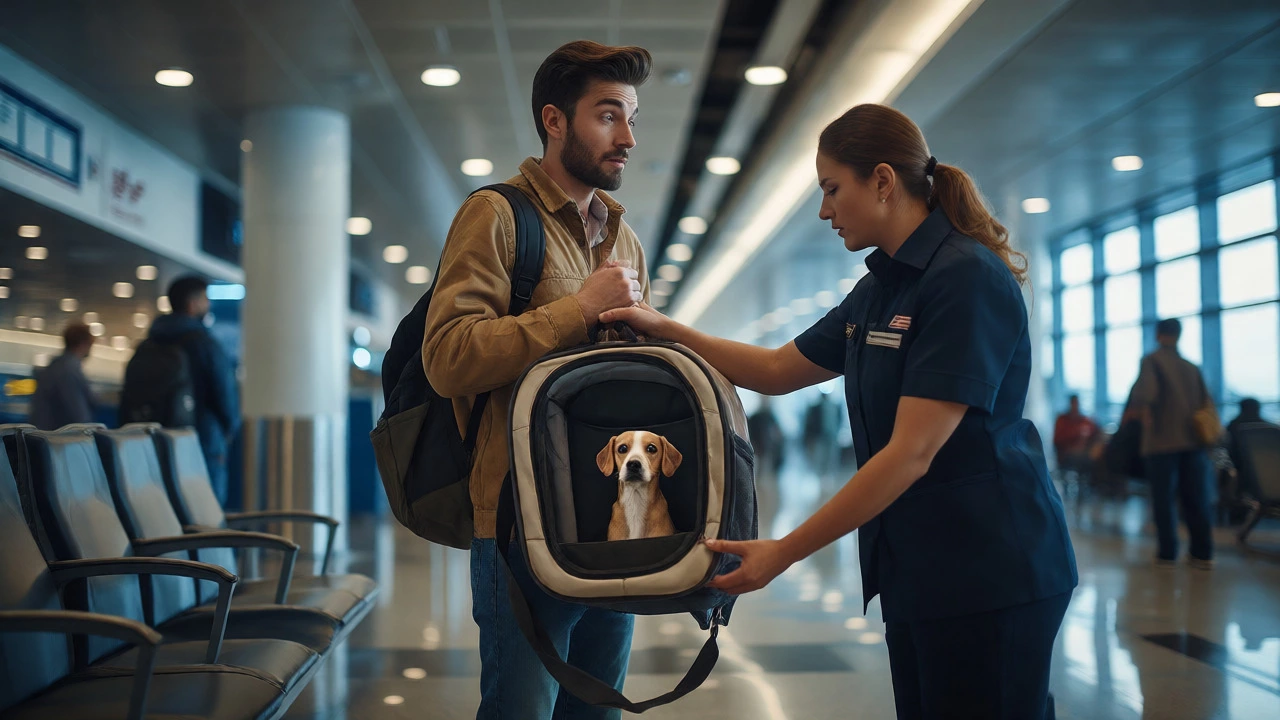
You’re standing at the gate, heart pounding, holding a cat or small dog in a bag that suddenly feels too big. The agent glances at it, then at you, and asks the question every pet owner dreads: "Does this fit under the seat?" If your carrier is even an inch too wide, you might be forced to put your furry friend in the cargo hold-or worse, denied boarding entirely. There is no single global standard for largest pet carrier allowed on a plane, but there are strict rules that most major airlines follow. Understanding these limits before you buy a bag can save you hundreds of dollars and a lot of stress.
The core issue isn't just about weight; it's about geometry. Most airlines require that the carrier fits completely under the seat in front of you without blocking the aisle or touching the footrests. This creates a tight spatial constraint. While policies vary by carrier, the industry generally accepts soft-sided carriers up to approximately 18 inches long, 11 inches wide, and 11 inches high (45 x 28 x 28 cm). However, this is not a universal law. Some budget airlines have smaller limits, while premium carriers might allow slightly larger dimensions if you pay extra. The key is knowing that "carry-on" for pets is different from human carry-on luggage. You cannot use the overhead bin for your pet.
Why Dimensions Matter More Than Weight
Many owners focus solely on their pet’s weight, assuming that if the animal is light enough, any bag will do. That’s a dangerous assumption. Airlines enforce dimension limits primarily for safety reasons. In the event of turbulence or an emergency evacuation, loose items become projectiles. A carrier that sticks out into the aisle prevents other passengers from moving safely. Furthermore, hard-shell crates often fail inspection because they lack the flexibility to compress into the under-seat gap. Soft-sided carriers made of mesh and nylon are preferred because they can be squished slightly to fit, whereas rigid plastic boxes cannot bend.
Consider the difference between international and domestic flights. Domestic US carriers like Delta, United, and American Airlines typically adhere to the 18x11x11 rule. However, when flying internationally, especially with Asian or European carriers, the rules can tighten. For example, some airlines operating within Asia limit cabin pet bags to 16 inches in length. Always check the specific airline’s website rather than relying on general advice from friends who flew last year.
Airline-Specific Size Limits and Policies
Since there is no one-size-fits-all answer, you need to know the specific constraints of the airlines you are likely to use. Here is a breakdown of common restrictions for major carriers as of 2026. Note that these figures refer to external dimensions, including wheels and handles if applicable.
| Airline | Max Dimensions (L x W x H) | Type Required | Notes |
|---|---|---|---|
| Delta Air Lines | 18 x 11 x 11 inches | Soft-sided preferred | Must fit under seat; no overhead storage. |
| United Airlines | 18 x 11 x 11 inches | Soft-sided required | Hard crates may be rejected if they don't fit easily. |
| American Airlines | 19 x 13 x 9 inches | Soft or Hard | Slightly wider allowance, but height is restricted. |
| Southwest Airlines | 18.5 x 8.5 x 13.5 inches | Soft-sided only | Unique shape; taller but narrower. |
| Alaska Airlines | 17 x 11 x 9.5 inches | Soft-sided recommended | Tightest height restriction among major US carriers. |
| Air New Zealand | 45 x 30 x 20 cm | Soft-sided | Strict enforcement on domestic NZ routes. |
Notice the variation. Southwest allows more height but less width. Alaska restricts height significantly. If you buy a generic "airline approved" bag from Amazon, measure it yourself. Many manufacturers claim compliance but ignore wheel protrusions or handle thickness. A carrier labeled "18 inches" might actually measure 19 inches once fully packed and zipped.
Soft-Sided vs. Hard-Sided Carriers
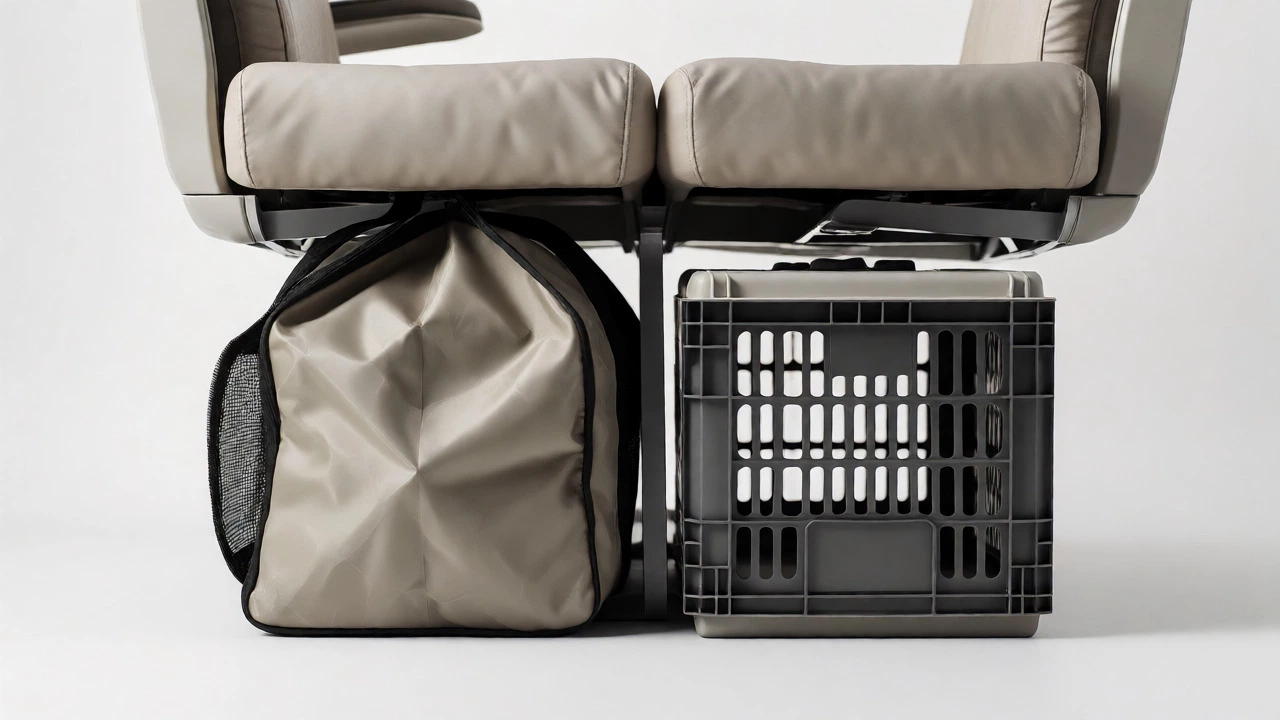
When choosing a soft-sided pet carrier a flexible travel bag designed to compress under airplane seats, you gain a distinct advantage. These bags are constructed from durable nylon, canvas, or mesh panels. Their primary benefit is compressibility. If the space under the seat is 10.5 inches high, a soft bag can be gently pushed down to fit. A hard crate, typically made of reinforced plastic or metal, has zero give. If it doesn’t slide in smoothly on the first try, flight attendants will ask you to remove it.
Hard crates are usually reserved for checked baggage or cargo. They offer better protection against crushing but are heavier and bulkier. For cabin travel, the goal is minimalism. You want a bag that is lightweight so you aren’t struggling with the total weight limit. Most airlines include the weight of the pet plus the carrier in their fee calculation. A heavy hard crate could push a 15-pound dog over the 20-pound combined limit, forcing you into the cargo hold unnecessarily.
How to Measure Your Pet and Carrier Correctly
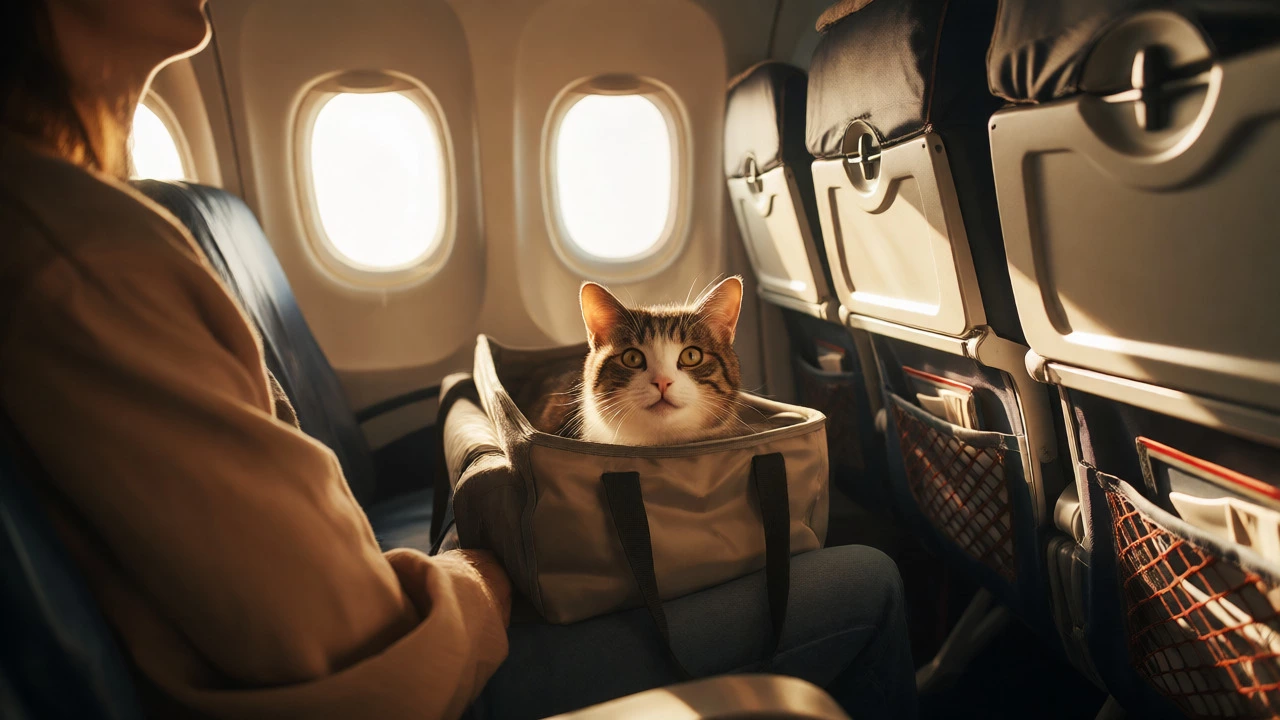
Before purchasing a new carrier, perform a home test. Place your pet inside the empty carrier. Close it. Then, place the carrier under a chair or table that mimics the average airplane seat pitch. Can it slide in completely? Is there room for your knees? If you have to force it, it won’t pass inspection.
- Measure the External Dimensions: Include pockets, straps, and feet. Do not measure the internal sleeping area.
- Weigh the Empty Carrier: Subtract this from your airline’s weight limit to see how much pet weight you have left.
- Check Ventilation Requirements: Most airlines require mesh windows on at least two sides for airflow. Solid fabric walls can lead to rejection.
- Test the Zippers: Ensure zippers can be secured with locks or ties. An open zipper mid-flight is a security risk and a nuisance.
Remember that your pet needs to stand up and turn around comfortably inside the carrier. It shouldn’t feel cramped. If your cat is large, you might find that the largest allowed carrier still feels tight. In such cases, consider whether cargo travel might be safer and more humane than squeezing a stressed animal into a tiny box.
Pitfalls to Avoid at the Airport
Even if your carrier meets the specs, other factors can cause issues. One common mistake is using a carrier with excessive branding or decorations that add bulk. Another is bringing a pet that is technically overweight for the carrier’s capacity. Flight attendants are trained to spot overloaded bags. If the mesh bulges significantly, they may deem it unsafe.
Also, be aware of breed restrictions. While this article focuses on size, some airlines ban brachycephalic (short-nosed) breeds from the cabin due to breathing risks. Check the breed list before booking. Finally, never assume that a previous successful flight guarantees future approval. Airline policies change frequently, and individual crew members have discretion. Having a backup plan, such as a foldable crate that fits in overhead bins for human luggage, can be useful if you’re rebooked on a partner airline with different rules.
Can I use a backpack instead of a traditional pet carrier?
Yes, provided the backpack meets the same dimension requirements and has adequate ventilation. Many modern pet backpacks are designed specifically for air travel. However, ensure the structure is sturdy enough to support your pet without collapsing, and that it fits under the seat without tilting forward excessively.
What happens if my pet carrier is too big for the seat?
If the carrier does not fit under the seat, you have three options: pay for an extra seat for the carrier (if available), move the pet to checked baggage/cargo, or potentially be denied boarding if no alternative is possible. Crew members will not allow a carrier to hang into the aisle.
Do service animals count toward the pet carrier size limits?
No. Service dogs are typically allowed to sit at your feet or on your lap, depending on size, and are not confined to a carrier during the flight. Emotional Support Animals (ESAs) are now generally treated as pets by most major airlines, meaning they must comply with standard carrier size and fee regulations.
Is there a difference in rules for international flights?
Yes, international rules vary widely. Some countries prohibit pets in the cabin entirely, requiring them to travel as manifest cargo. Always check both the departure and arrival country’s import regulations, as well as the specific airline’s international policy, which may differ from its domestic standards.
Can I bring two pets in one carrier?
Usually, yes, if they are the same species, similar size, and compatible (e.g., two cats or two puppies). The combined weight must still meet the airline’s limit, and they must be able to stand and turn around together. Check specific airline policies, as some limit the number of animals per carrier.