Canine Sleep Environment Analyzer
Recommended Setup
Pro Tip
You turn off the bedroom lights, climb into bed, and glance over at your dog. They’re pacing. Or maybe they’re whining at the door. Or perhaps they’re just staring into the blackness of the hallway with wide, unblinking eyes. It makes you wonder: do dogs actually like sleeping in the dark? Or are we projecting our own human preference for pitch-black rooms onto a species that evolved very differently?
The short answer is no, most dogs don’t need total darkness to sleep well. In fact, many prefer a little ambient light. But it’s not as simple as flipping a switch. Your dog’s comfort depends on their age, vision, anxiety levels, and even where you live. Let’s break down what’s really happening when the lights go out.
Why Humans Need Darkness (But Dogs Don’t)
We humans are diurnal creatures. Our brains produce melatonin-the sleep hormone-only when it gets dark. If there’s too much light, especially blue light from phones or LEDs, our sleep quality tanks. We associate darkness with safety and rest because that’s how our biology works.
Dogs are different. They are crepuscular by nature, meaning they’re naturally most active during dawn and dusk. Their circadian rhythm doesn’t rely on total darkness to trigger sleep. Instead, they respond more to routine, temperature, and security cues. A dimly lit room won’t keep them awake the way it might keep you up.
Think about it this way: if you’ve ever taken your dog camping, you know they can sleep fine under moonlight or starlight. They don’t need a blackout curtain to feel safe. What they do need is consistency. If you always sleep with a nightlight on, your dog will expect that. Change it suddenly, and they might get confused or anxious-not because the dark hurts them, but because the routine broke.
Canine Vision in Low Light: What They Actually See
One big reason people assume dogs love the dark is because they have superior night vision compared to us. That’s true, but it’s often misunderstood. Dogs don’t see in total darkness. They need some light source to reflect off their retinas.
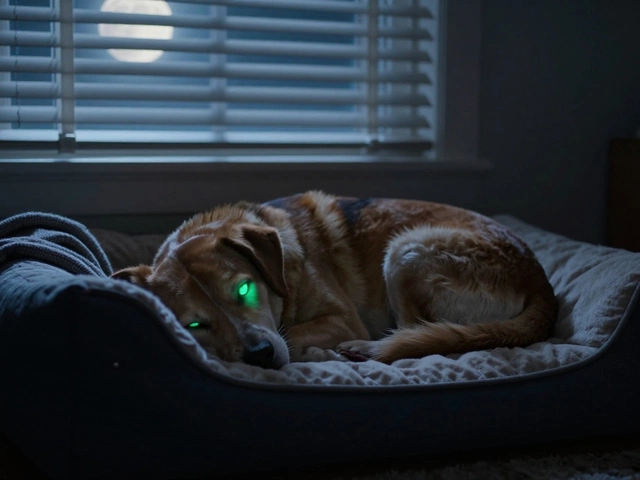
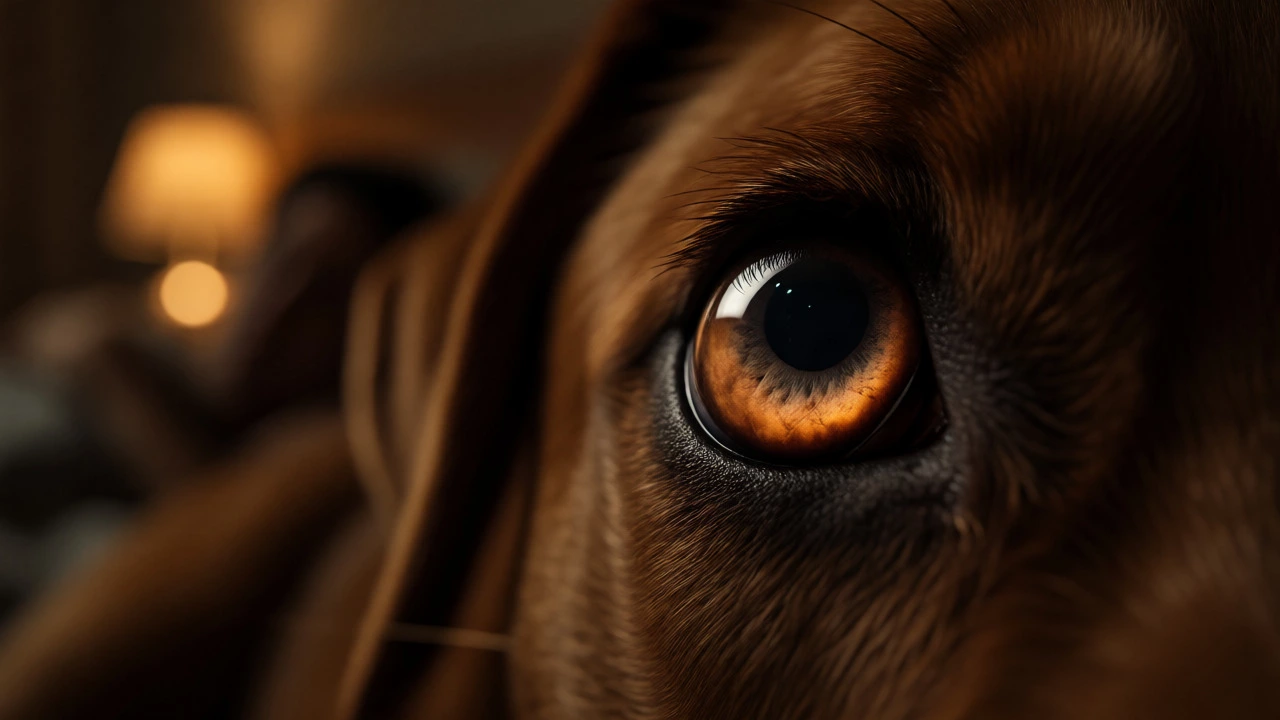
Here’s the science without the jargon: dogs have a layer behind their retina called the tapetum lucidum. This reflective layer bounces light back through the eye, giving photoreceptors a second chance to detect it. That’s why their eyes glow green or yellow in headlights. It’s not magic-it’s efficient light recycling.
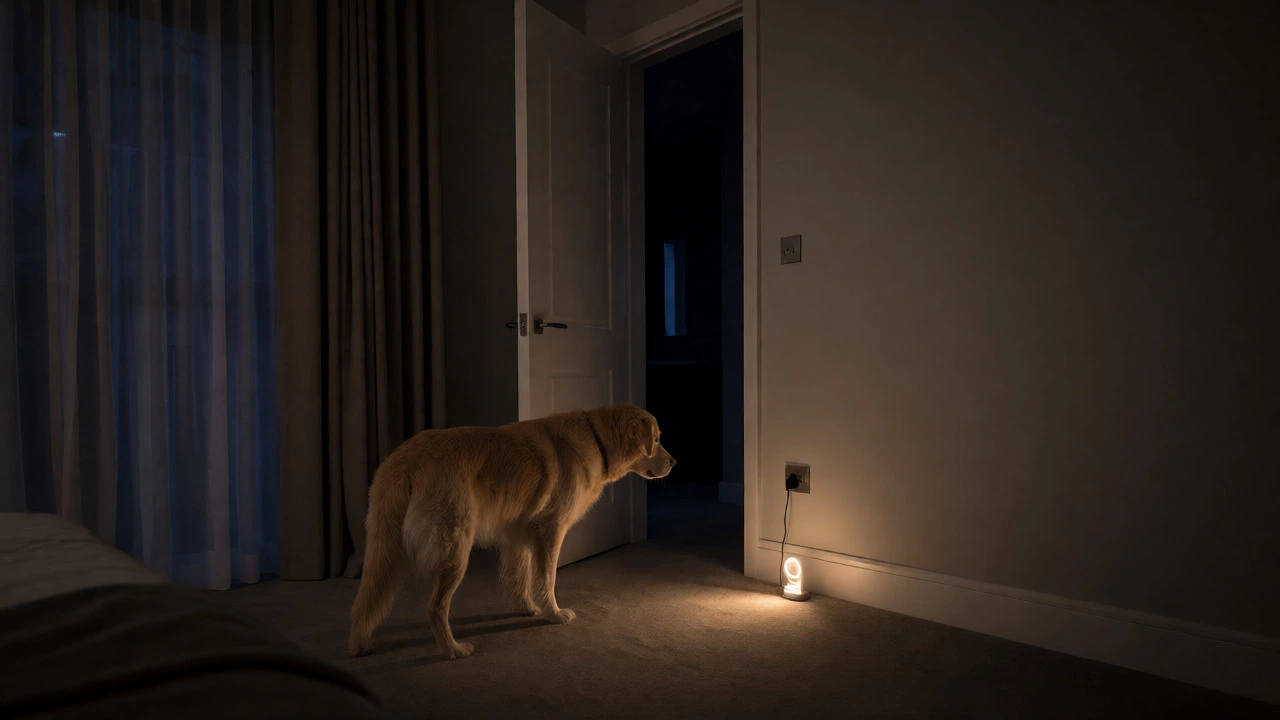
This means dogs see better than humans in low-light conditions, like twilight or a dimly lit hallway. But in complete pitch black? They’re just as blind as we are. They rely on smell and hearing then. So, if you leave a small LED nightlight on, your dog isn’t “struggling” to see-they’re actually seeing quite clearly. For many dogs, this visual clarity reduces anxiety. They can check their surroundings, see their water bowl, or spot you moving around. Total darkness removes those cues, which can be unsettling for nervous pups.
When Light Helps: Puppies, Seniors, and Anxious Dogs
Not all dogs are created equal. Some genuinely benefit from having a light on while they sleep. Here’s who needs it most:
- Puppies: Young dogs are still learning their environment. A soft glow helps them navigate to their potty area or find their bed without bumping into furniture. It also mimics the warmth and presence of their littermates, reducing separation anxiety.
- Senior Dogs: As dogs age, their vision deteriorates. Conditions like cataracts or general lens clouding make it hard to see in low contrast. A nightlight prevents them from stumbling or waking up disoriented. If your old boy hesitates to walk down the hall at night, he’s probably not being stubborn-he’s scared he’ll fall.
- Anxious or Reactive Dogs: Dogs with noise phobias or separation anxiety often use sight to monitor threats. In total darkness, every creak or shadow becomes a mystery. A consistent, low-level light provides reassurance. It lets them see that nothing scary has entered the room.
If your dog falls into any of these categories, turning off the lights completely might actually hurt their sleep quality. They stay alert, scanning for danger, instead of entering deep REM sleep.
When Darkness Is Better: Overstimulation and Sensitivity
On the flip side, some dogs sleep better in the dark. Why? Because light can be stimulating. If your dog is high-energy, working-breed type, or prone to overstimulation, even a small light might keep their brain engaged. They might watch shadows move across the wall or track dust motes floating in the beam.
Also, consider your own sleep habits. If you’re a light sleeper, you might already use heavy curtains. Adding a bright lamp for your dog could disrupt your rest. The key is balance. You don’t need a floodlight. A warm-toned, low-lumen bulb placed near the floor is usually enough for a dog who needs visual reassurance without causing human disturbance.
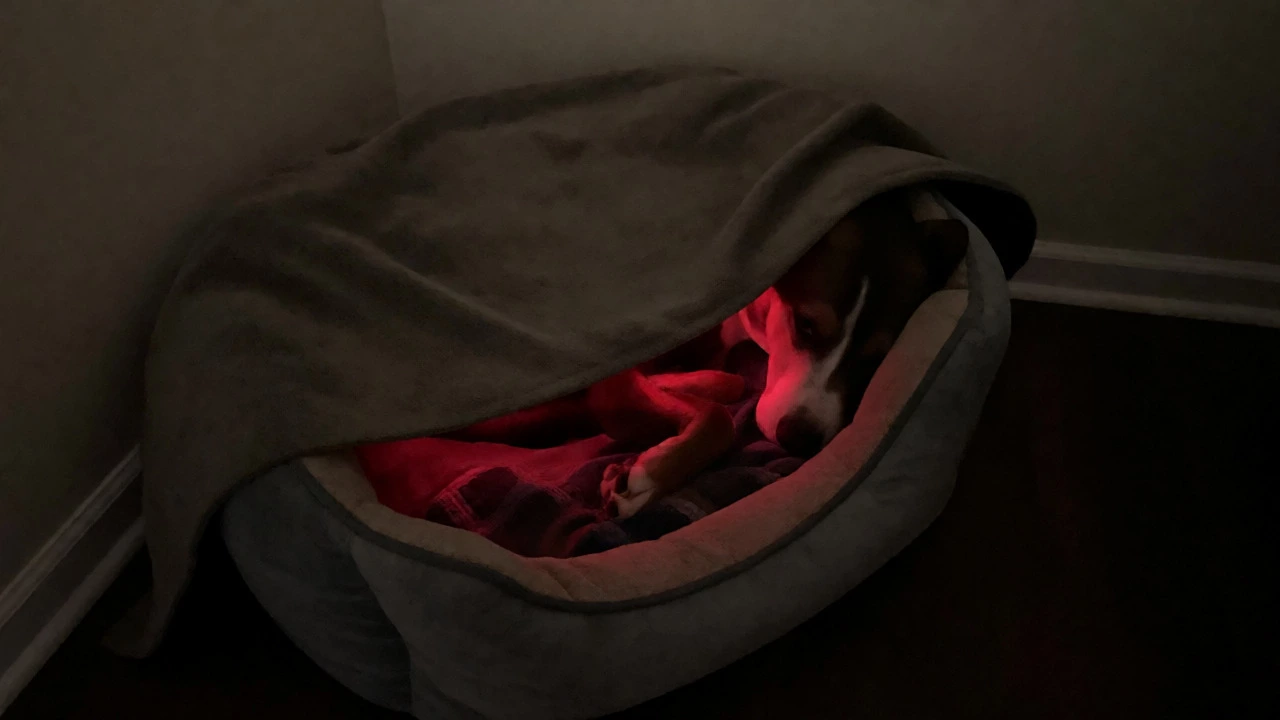
Watch your dog’s body language. If they seem restless, panting slightly, or unable to settle after you turn on a nightlight, try dimming it further or switching to a red-spectrum light. Red light is less stimulating for both humans and animals because it doesn’t suppress melatonin production as aggressively as blue or white light.
Setting Up the Perfect Dog Bed Environment
Your choice of dog bed plays a huge role here. The bed itself isn’t just about cushioning; it’s part of the sensory environment. A covered cave-style bed, for example, blocks out light naturally. If your dog prefers darkness, a burrow-style bed gives them a sense of enclosure and privacy, mimicking a den. No extra lighting needed.
For dogs who prefer light, an open bolster bed placed in a corner with a nearby outlet for a plug-in nightlight works best. Position matters too. Avoid placing the bed directly under a streetlamp’s glare or in front of a TV that flickers. These unpredictable light sources can cause micro-arousals throughout the night, fragmenting sleep.
| Dog Profile | Preferred Lighting | Best Bed Style | Key Reason |
|---|---|---|---|
| Puppy (under 6 months) | Soft, warm glow | Crate with blanket or enclosed bed | Navigational aid + comfort |
| Senior (8+ years) | Ambient nightlight | Orthopedic open bed | Vision support + joint ease |
| Anxious/Reactive | Consistent low light | Calming donut bed | Visual reassurance |
| High-Energy/Working | Total darkness | Elevated cot or crate | Reduces stimulation |
| Standard Adult | Darkness or minimal | Any comfortable bed | Mimics natural den cycle |
How to Test What Your Dog Prefers
You don’t need a degree in animal behavior to figure this out. Run a simple two-week experiment. Week one: sleep with the room completely dark. Note how long it takes your dog to settle, if they wake up frequently, and their mood in the morning. Are they grumpy? Hyper? Normal?
Week two: introduce a small, warm-colored nightlight. Keep everything else the same. Same bed location, same temperature, same bedtime routine. Compare the results. Did they sleep longer? Were they calmer? Did they startle less at noises?
If they slept better in the dark, stick with it. If they preferred the light, keep the nightlight. If it made no difference, then you’re free to choose based on your own convenience. Most healthy adult dogs are adaptable. They care more about temperature and security than lumens.
Is it bad to leave a light on for my dog all night?
No, it’s generally not bad, provided the light is low-intensity and warm-colored. Bright, cool-white lights can disrupt sleep cycles for both dogs and humans. Use a dim amber or red nightlight if you need illumination for navigation or anxiety relief.
Do dogs dream in the dark?
Yes, dogs dream regardless of lighting conditions. Dreaming occurs during REM sleep, which is driven by brain activity, not external light. However, excessive light exposure before bed can delay the onset of REM sleep, potentially reducing dreaming time.
Should I cover my dog’s crate with a blanket?
Covering a crate creates a den-like environment that blocks light and sound. Many dogs find this comforting and sleep deeper. Ensure proper ventilation so air can circulate, and never use materials that trap heat excessively.
What color light is best for dogs at night?
Red or amber lights are best. They have longer wavelengths that are less likely to stimulate the brain or suppress melatonin. Blue and white lights are more alerting and should be avoided in sleeping areas.
My dog wakes up when I turn off the light. Why?
This is often due to separation anxiety or a disruption in routine. The sudden change signals an event. Try using a timer to dim the light gradually over 15 minutes, creating a smoother transition into sleep mode.