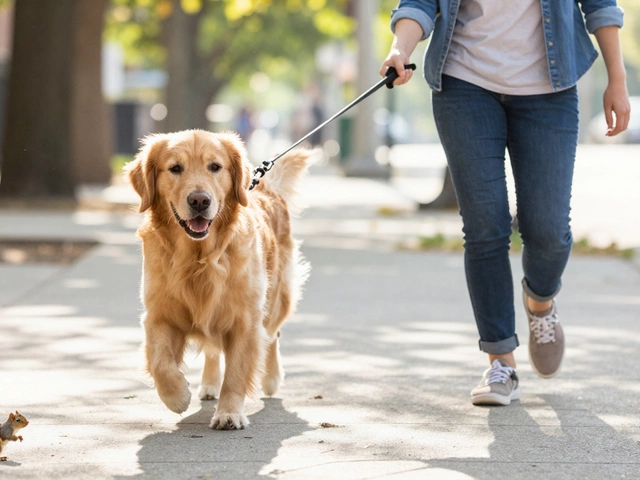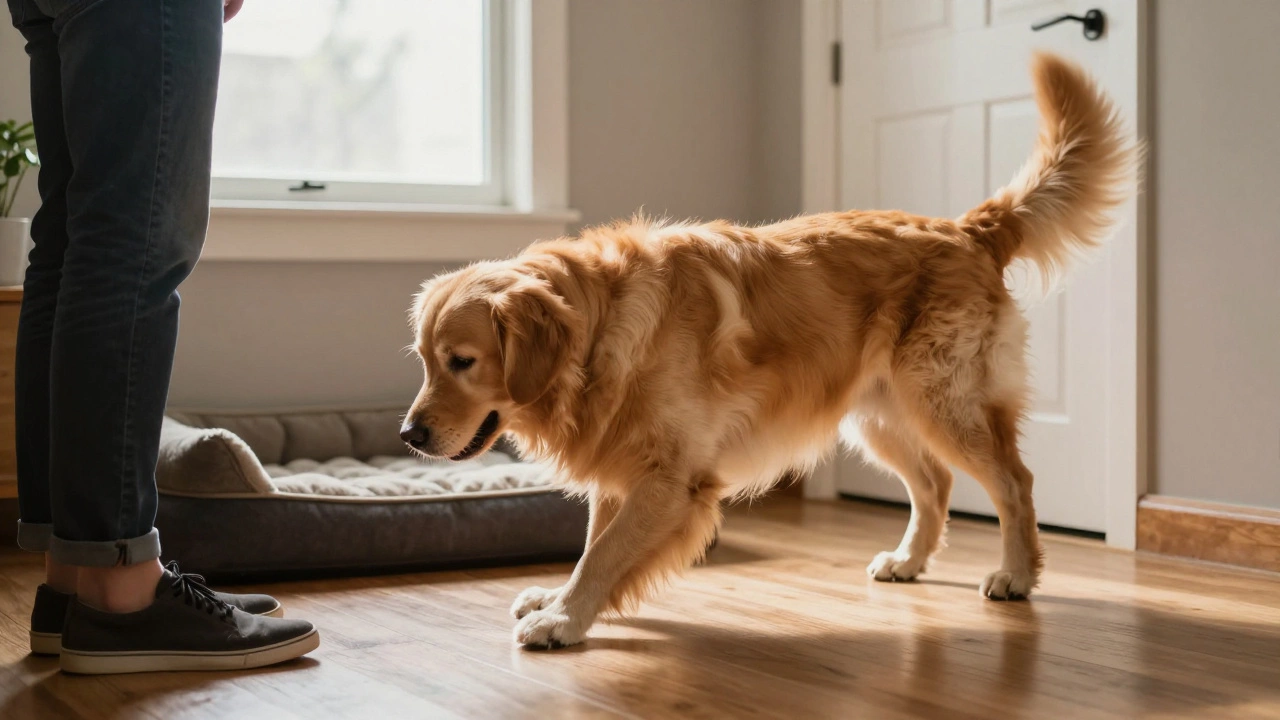
Ever notice how your dog explodes into a full-body stretch the second you walk through the door? Front paws out, back arched, tail wagging like a metronome set to hyperdrive. It’s not just a random movement-it’s a language. And if you’ve ever wondered why dogs stretch when they see you, you’re not alone. This isn’t just about loose muscles or morning stiffness. It’s about trust, comfort, and a deep-rooted social ritual that’s been shaped over thousands of years of living with humans.
It’s a greeting, not just a stretch
Dogs don’t stretch the same way humans do. When you come home, your dog doesn’t just yawn and reach for the ceiling. They drop into a full “play bow” stretch-front legs extended, rear end high, shoulders low. This isn’t accidental. It’s a visual signal that says, I’m safe, I’m happy, and I’m ready to connect. This posture is identical to the one they use before playtime, before chasing a ball, or before inviting another dog to romp. When they do it for you, they’re saying, Here I am-let’s do what we do best.Studies in canine ethology show that dogs use body language to regulate social tension. After being alone for hours, the stretch acts like a reset button. It releases physical stress from being still, but more importantly, it signals emotional readiness. Think of it like a human saying, “I’m back in the room-what’s next?”
They’re releasing tension from being alone
Dogs aren’t like cats who nap for 18 hours straight. They’re social animals wired to be alert to their pack. When you leave, even if it’s just for a quick trip to the store, your dog’s nervous system stays slightly activated. Their muscles tense. Their ears stay perked. Their tail stays still. That’s why the moment you walk in, their whole body seems to unfurl.This isn’t laziness. It’s a biological release. A 2022 study from the University of Auckland’s Animal Behavior Lab found that dogs who spent more than four hours alone showed significantly higher cortisol levels-stress hormones-than those with shorter separations. The stretch that follows isn’t just about muscle relief. It’s a physiological cooldown. Their heart rate drops. Their breathing slows. Their nervous system shifts from “on alert” to “safe now.”
That’s why you’ll notice some dogs stretch more dramatically after you’ve been gone longer. The longer the separation, the bigger the release. It’s not about being dramatic-it’s about recalibrating.
It’s a sign of comfort and trust
Dogs don’t stretch like this around strangers. Try it. Have a guest walk in. Watch how your dog reacts. Most will sit up, ears forward, tail still. Maybe they’ll wag slowly. But they won’t drop into that full, loose, belly-on-the-floor stretch. Why? Because stretching like that requires vulnerability. To fully extend your body, you have to let your guard down. You have to feel safe.That’s why your dog does it for you and not for the mail carrier. It’s a quiet, powerful statement: You’re my person. I don’t need to be on guard around you. This is the same behavior they show when they roll onto their back to expose their belly-not as a request for a scratch, but as a sign of complete trust.
It’s one of the most intimate things a dog can do. And it’s happening every time you walk through the door.
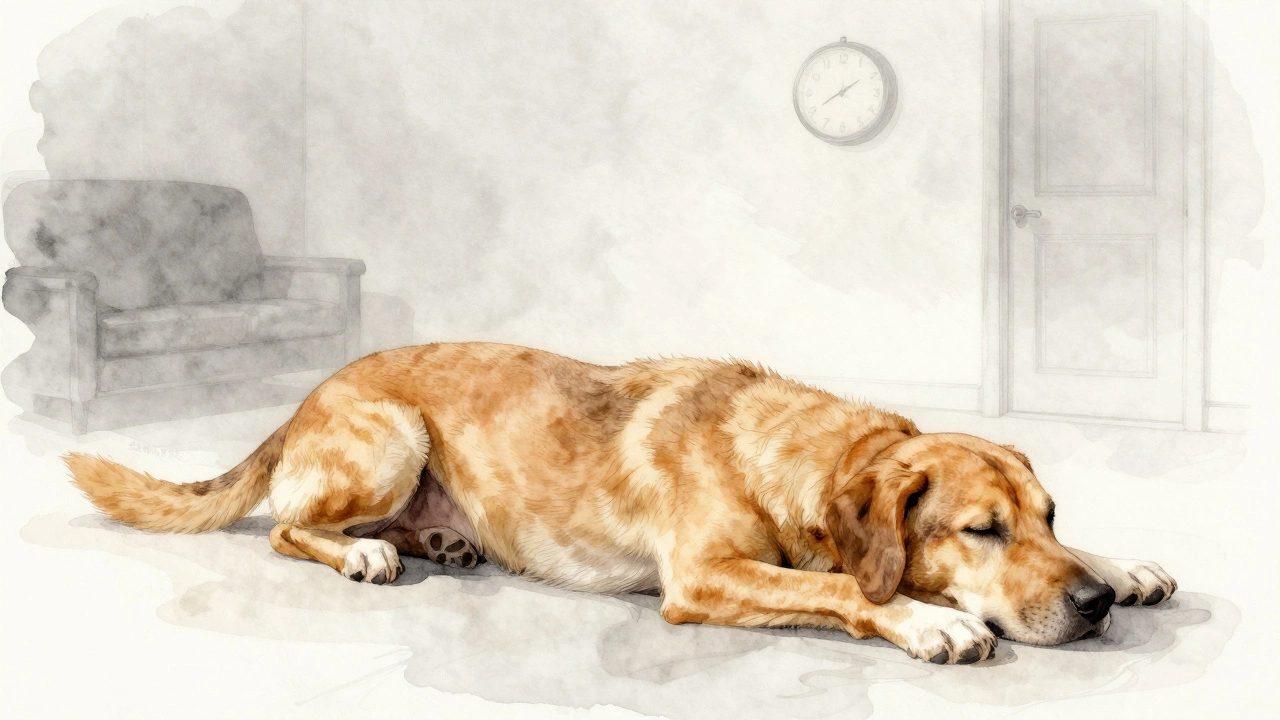
It’s linked to their dog bed habits
You’ve probably noticed your dog stretches right after they get up from their bed. That’s no coincidence. Their bed isn’t just a place to sleep-it’s their safe zone. When they stretch after waking up on their bed, they’re preparing to move. When they stretch when they see you, they’re preparing to interact.Think of it like this: their bed is where they feel secure. You are the trigger that says, “Now we move from rest to connection.” The stretch is the bridge between those two states. It’s the physical equivalent of saying, “I was resting, but now I’m with you-let’s go.”
That’s why dogs who have a favorite bed-soft, warm, in a quiet corner-tend to stretch more dramatically when you return. Their bed gives them a sense of safety, so when you come back, they can fully relax into the greeting. Dogs without a consistent resting spot often stay more alert. They don’t stretch as deeply. They might jump up, bark, or pace. That’s not excitement-it’s uncertainty.
It’s not always about joy
Not every stretch means pure happiness. Sometimes, it’s a calming signal. Dogs use stretching as a way to diffuse tension. If you’ve ever come home after a loud argument, or if you’re in a bad mood, your dog might stretch slowly-almost deliberately-while looking at you. That’s not a greeting. That’s a peace offering.They’re saying, “I see you’re tense. I’m going to relax, and maybe you will too.” It’s a non-verbal way of saying, “Let’s reset.” This kind of stretch is slower, more controlled, and often accompanied by averted eyes or a soft yawn. It’s not the wild, energetic stretch you get when you walk in smiling. It’s quieter. But it’s just as meaningful.
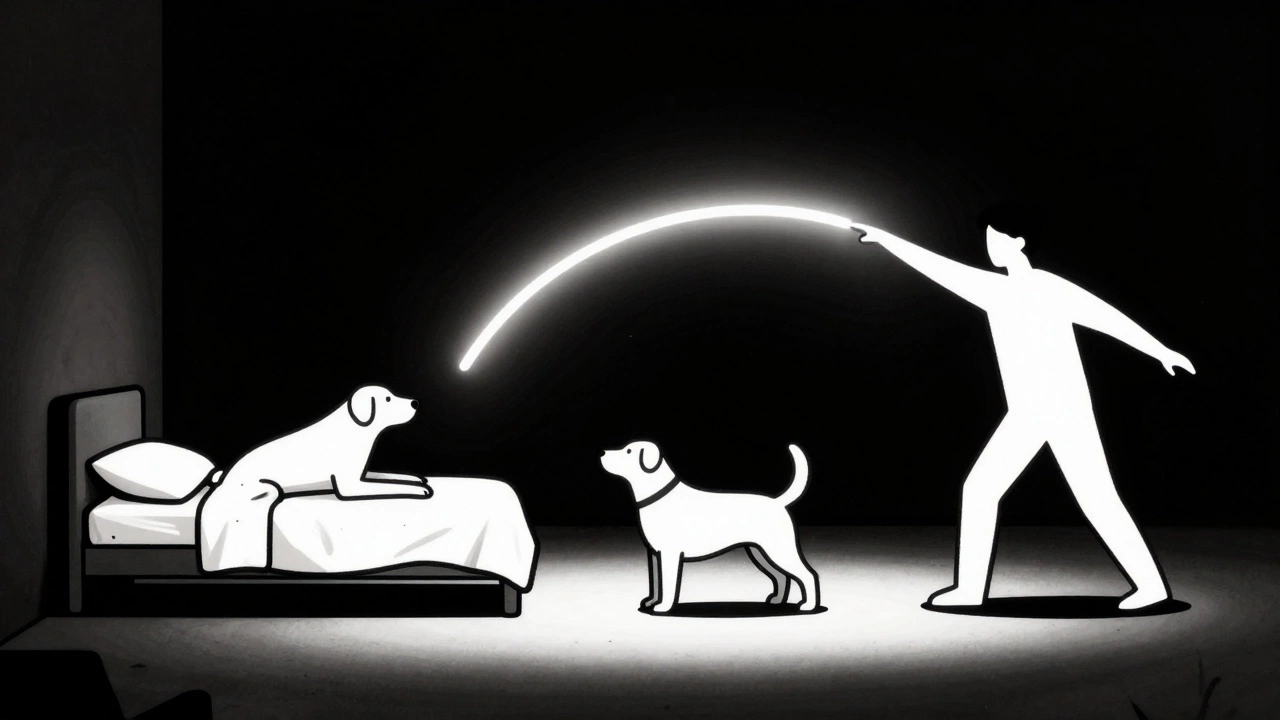
What if your dog doesn’t stretch when they see you?
Not every dog stretches when you come home. And that doesn’t mean they don’t love you. Some breeds are naturally more reserved-think Shiba Inus or Basenjis. Others might have had past trauma that keeps them from fully relaxing. Older dogs with arthritis might avoid deep stretches because it hurts. Dogs with anxiety might freeze instead of stretch.If your dog doesn’t stretch, look for other signs: Do they wag their tail? Do they follow you around? Do they lean into you when you sit down? Do they bring you their favorite toy? These are all forms of greeting. Stretching is just one of many ways dogs say, “I’m glad you’re here.”
What matters isn’t whether they stretch. It’s whether they show up for you in their own way.
How to encourage healthy stretching habits
If you want your dog to stretch more when you come home-because it’s a sign of their comfort-you can help. Start with their space. Make sure their bed is in a quiet, low-traffic area. Not next to the door where people come and go. Not under the fan or in direct sunlight. A cozy corner with a soft, supportive surface helps them feel safe enough to fully relax.When you come home, don’t rush in with loud voices or sudden movements. Give them a second. Let them come to you. If they stretch, reward them with calm praise-not treats, not excitement. Just a soft “good boy” or “good girl.” Over time, they’ll associate your return with calm connection, not chaos.
Also, avoid punishing them for being “too excited.” If they jump or bark, wait for a moment of stillness before giving attention. That teaches them that calm behavior gets rewarded. And stretch behavior? That’s the gold standard.
Final thought: It’s their way of saying “I’m home, too”
When your dog stretches when they see you, they’re not just moving their body. They’re telling you something deep and simple: I missed you. I feel safe with you. I’m ready to be with you now. It’s a ritual older than leashes, older than dog food bowls, older than even the first domesticated wolves.It’s one of the quietest, most beautiful ways a dog shows love. And it happens every single day-without you even realizing it.
Why does my dog stretch only when they see me and not other people?
Stretching in that full, loose way is a sign of deep trust. Dogs only let their guard down completely around people they feel safe with. Other people-even familiar ones-don’t trigger the same emotional response. Your dog knows you’re their person, so they relax fully in your presence.
Is a dog stretching a sign of happiness or just physical relief?
It’s both. The stretch releases physical tension from being still, but it’s also an emotional signal. When it happens right after you walk in, it’s tied to joy, relief, and bonding. The timing matters. A stretch after sleeping is physical. A stretch when you return is social.
Should I encourage my dog to stretch when I come home?
You don’t need to encourage it-it happens naturally when your dog feels safe. But you can create the conditions for it: give them a quiet, comfortable bed, greet them calmly, and avoid overwhelming them with loud energy. That way, they’ll feel secure enough to stretch freely.
My dog stretches and then pees on the floor. Is that normal?
Yes, but it’s not the stretch causing it. This is called submissive urination, common in young dogs or those with anxiety. The stretch is a sign of relaxation, but the urination is a separate stress response. If it happens often, consult a vet or behaviorist. It’s not a training issue-it’s an emotional one.
Do older dogs stretch less when they see you?
Often, yes. Arthritis, joint pain, or muscle loss can make deep stretching uncomfortable. But they may still greet you in other ways-leaning against you, following you closely, or giving slow tail wags. Pay attention to their version of “I’m glad you’re home.” It’s still there.