Puppy Energy & Sleep Planner
Daily Energy Input
Enter the approximate minutes spent on each activity today to see your puppy's state.
Analysis & Recommendations
Enter your puppy's activity data to generate a balance report.
Key Takeaways:
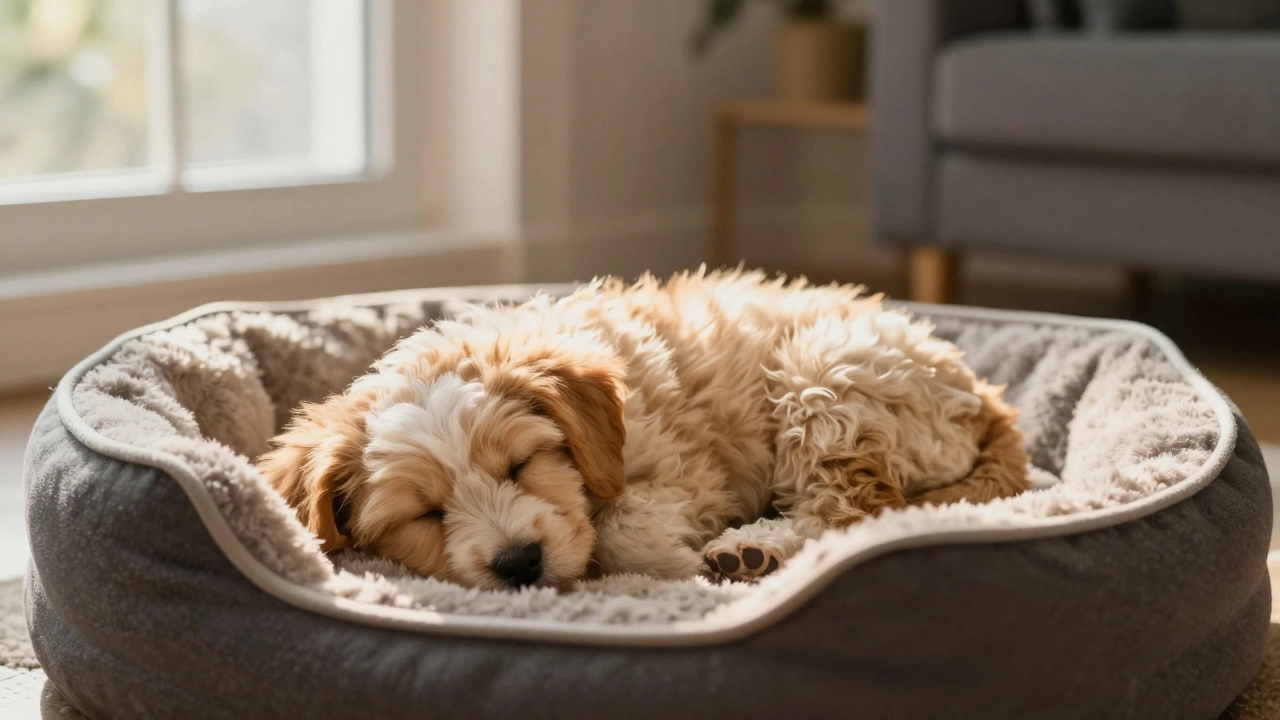
- Puppies need more sleep than you think (up to 18-20 hours a day).
- Over-stimulation leads to "the zoomies" and biting.
- Independent play is a skill that must be taught.
- Mental exercise is often more tiring than physical running.
- A structured routine reduces anxiety and destructive behavior.
The Myth of the Constant Playdate
Many new owners believe that a tired puppy is a good puppy. While true, the way you get them tired matters. If you spend eight hours a day throwing a ball, your puppy never learns the critical skill of an "off switch." Overstimulation is a state where a puppy's nervous system becomes overwhelmed by too much activity, leading to erratic behavior like nipping or frantic running. When this happens, puppies often get "cranky"-much like a toddler who has missed their nap. If you notice your puppy suddenly biting your ankles or tearing up a rug after a long play session, they aren't bored; they're actually exhausted and need you to step in and make them stop.
Think of it as a battery. You want to drain the battery through a mix of activity and learning, but you also need to let it recharge. If you keep pushing a puppy to play when they are tired, you're essentially training them to be hyperactive. You want a dog that can settle down while you're eating dinner, not one that views every single moment of your life as a potential game of tag.
Teaching the Art of Being Bored
Being bored is actually a vital developmental milestone. When a puppy is left to explore a toy or a scent on their own, they are practicing problem-solving. If you always provide the entertainment, you're doing the thinking for them. This is where Independent Play is the ability of a dog to engage with their environment and toys without direct human intervention comes into play. If you always throw the toy, the puppy learns that the toy is only interesting when you are involved. If you give them the toy and then walk away, they learn that the toy itself is the reward.
Start small. Give them a chew toy and move to the other side of the room. Reward them with a quiet "good girl/boy" when they focus on the toy instead of following you. Over time, increase the distance. You'll find that providing a variety of textures-rubber, plush, and fabric-keeps them engaged longer because different materials trigger different sensory responses.
The Power of Mental Stimulation Over Physical Exercise
You can run a puppy until they drop, and they might still be chewing your baseboards. Why? Because physical exercise only targets one part of their energy. Mental Stimulation is cognitive activity that challenges a dog's brain through scent work, puzzles, and training, often resulting in deeper fatigue than physical activity is the secret weapon for a calm house. Ten minutes of a challenging puzzle can be as tiring as a thirty-minute walk.
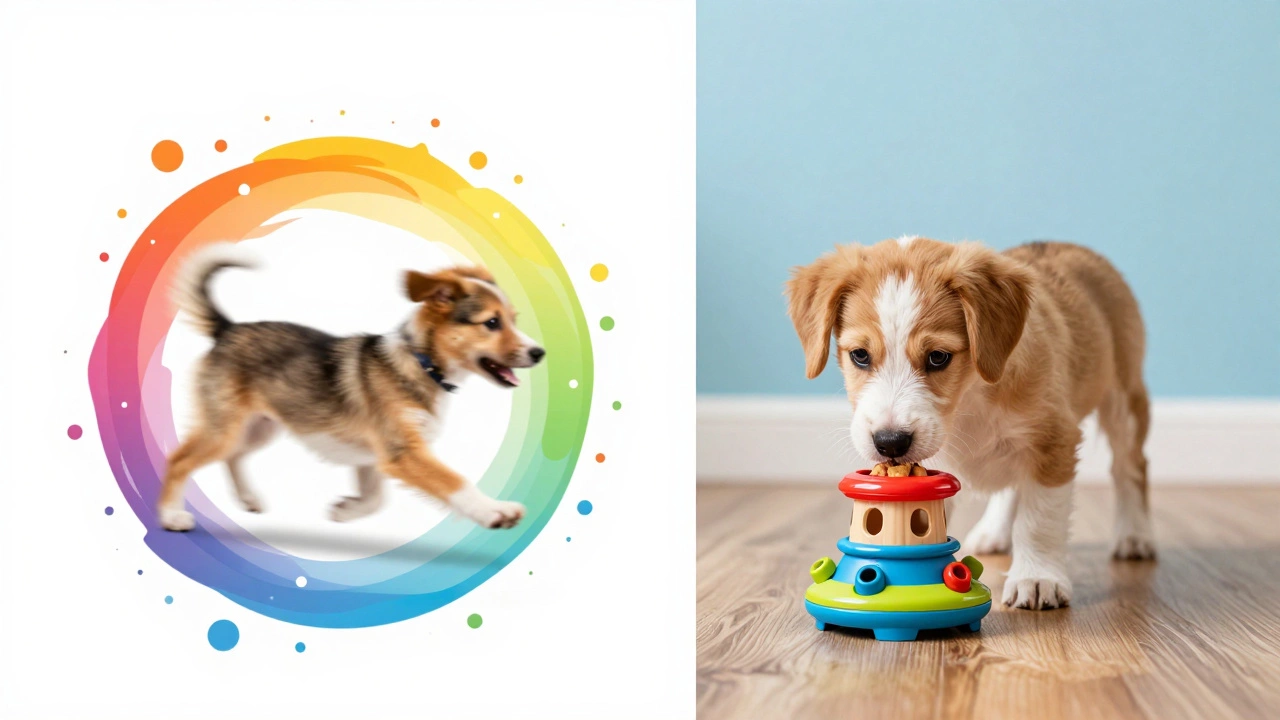
Instead of constant active play, try "passive" entertainment. Use food-dispensing toys that force them to figure out how to get a treat. This taps into their natural foraging instincts. For example, stuffing a rubber toy with wet food and freezing it creates a long-lasting activity that keeps them occupied for an hour while you work. This isn't just about keeping them busy; it's about satisfying a biological urge to chew and forage, which lowers their stress levels.
| Engagement Type | Example | Energy Drain | Main Benefit |
|---|---|---|---|
| Active Play | Fetch, Tug-of-War | High (Physical) | Bonding & Cardiovascular health |
| Cognitive Work | Scent games, Basic commands | Very High (Mental) | Better impulse control |
| Passive Play | Lick mats, Puzzle toys | Medium (Calming) | Self-soothing & Independence |
| Rest | Naps in a crate/pen | Recovery | Brain development & Growth |
Structuring Your Day for Sanity
The key to not feeling like a full-time entertainer is a predictable routine. Puppies thrive on structure; it makes the world feel safe. A typical day should be a cycle of "Eat, Play, Potty, Sleep." If you follow this rhythm, you'll find that the "sleep" portion happens naturally and more frequently. Crate Training is the process of introducing a dog to a kennel as a safe, positive space for sleeping and resting is essential here. A crate isn't a cage; it's a bedroom. When a puppy is in their crate, they know the "working" part of the day is over and it's time to shut down.
If you don't enforce nap times, your puppy will decide when to nap-which usually happens right when you're trying to have a Zoom call or a quiet coffee. Don't be afraid to put a sleepy puppy down for a nap even if they're fighting it. Their brains are like sponges, but they can only absorb so much information before they need to process it during sleep. A well-rested puppy is significantly easier to train than a sleep-deprived one.
Choosing the Right Tools for the Job
Not all puppy toys are created equal. To avoid the "all day entertainment" trap, you need a toy rotation. If every toy is in the living room at once, they become part of the furniture and lose their appeal. Instead, keep a small selection of three to five toys available and rotate them every few days. This makes "old" toys feel new again.
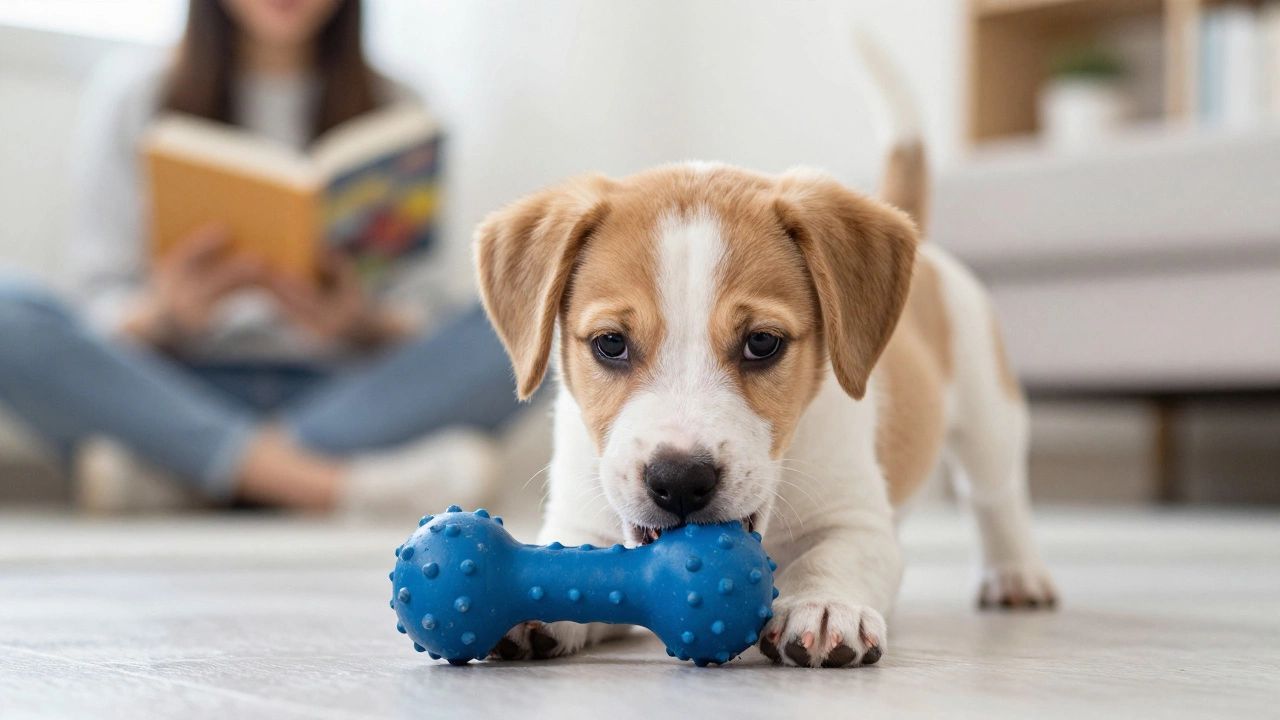
When choosing toys, match them to the puppy's current developmental stage. For the teething phase, focus on Chew Toys are durable toys made from rubber or nylon designed to satisfy a dog's urge to chew and soothe sore gums during teething that can be chilled in the fridge. For the curiosity phase, use toys that make different sounds or have varying textures. Avoid toys with small parts that can be swallowed, as puppies explore everything with their mouths. A good rule of thumb is: if it's smaller than the puppy's mouth, it's a choking hazard.
Common Pitfalls to Avoid
One of the biggest mistakes owners make is rewarding "demand barking." This is when a puppy barks or paws at you to get your attention for play. If you jump up and start playing the moment they bark, you've just taught them that barking is the "on button" for entertainment. Instead, wait for a moment of silence and calm before initiating play. This teaches them that calmness gets results, not chaos.
Another pitfall is neglecting the "quiet time" transition. Moving abruptly from high-intensity wrestling to "stay in your crate" can be jarring. Instead, use a bridge activity. Spend five minutes with a lick mat or a slow-feeder toy to bring their heart rate down before transitioning to a nap. This gradual wind-down prevents the frantic energy that often leads to a "meltdown" during the transition to sleep.
How many hours of sleep does a puppy actually need?
Most puppies need between 18 and 20 hours of sleep per day. Because they are growing so rapidly, their bodies and brains require immense amounts of rest to develop. If your puppy is acting out, it's often a sign they are overtired rather than bored.
What can I do if my puppy destroys every toy I buy?
Destruction often stems from two things: the wrong material or boredom. Ensure you are providing "aggressive chewer" toys made of heavy-duty rubber. Also, implement toy rotation so they don't get bored with the same items. If they are shredding plush toys, they might need more mental stimulation, like scent work or training sessions, to tire out their brain.
Is it bad to let my puppy be alone?
Quite the opposite. While bonding is important, spending too much time together can lead to separation anxiety. Short periods of solitude-where they have a safe space and a chew toy-help them build confidence and learn how to self-soothe.
How do I know if my puppy is overstimulated?
Look for "the zoomies" (frantic running), excessive nipping, ignoring commands they usually know, or a sudden increase in barking. When these behaviors appear during play, it's a signal to stop all activity and encourage a nap.
What are the best low-effort ways to keep a puppy busy?
The best low-effort activities are those that use the puppy's nose. Scatter their kibble in the grass, use a snuffle mat, or hide treats around a room. These activities are calming and provide a high level of mental exhaustion with minimal effort from the owner.
Next Steps for Your Puppy's Growth
If you've been spending your whole day playing, try a "quiet day" experiment. Implement a strict nap schedule and see if your puppy's behavior improves. For the more adventurous, start introducing "environmental socialization"-taking them to new places just to observe, not necessarily to interact. This provides a huge amount of mental stimulation without requiring you to be their playmate.
If you find your puppy is still chronically destructive despite mental work and adequate sleep, it might be time to consult a certified professional dog trainer. They can help you identify if there are underlying anxiety issues or if your puppy has an unusually high drive that requires specialized activities, like agility training or scent work, to keep them satisfied.