Puppy Potty Break Calculator
Based on scientific guidance for puppy development. Helps determine when your puppy needs to go out at night.
At eight weeks old, your puppy is still a baby. Their tiny bladder can’t hold urine for more than a few hours, and their brain hasn’t learned how to calm down for long stretches. So, can an 8-week-old puppy stay in a crate all night? The short answer: no, not safely or comfortably.
Why an 8-Week-Old Puppy Can’t Sleep Through the Night in a Crate
Puppies this young have underdeveloped bladders and bowels. Most can only hold it for about 2 to 3 hours at a time-even if they’re sleeping. That’s because their bodies are still growing, and their nervous system hasn’t learned to control elimination yet. A 2023 study from the University of Melbourne’s Animal Behaviour Lab found that 78% of 8-week-old puppies needed to relieve themselves at least once during an 8-hour night.
Forcing a puppy to hold it longer can lead to accidents, stress, and even long-term issues like urinary tract infections or crate aversion. You’re not teaching them discipline-you’re teaching them that the crate is a place where they feel scared and wet.
What Happens If You Leave Them in Too Long?
Some owners think, “They’ll learn to hold it if I don’t let them out.” But that’s not how puppy brains work. At this age, they don’t understand cause and effect. If they soil their crate, they don’t feel shame-they feel confusion. And if they’re left in wet bedding for hours, they may start associating the crate with discomfort instead of safety.
Plus, puppies this young need frequent feeding. An 8-week-old puppy should eat every 4 to 5 hours, even overnight. Skipping meals or delaying feedings can lead to low blood sugar, which can cause weakness, shivering, or even seizures in small breeds like Chihuahuas or Yorkies.
How to Set Up a Realistic Overnight Routine
You don’t need to wake up every hour-but you do need to plan for at least one or two nighttime trips outside. Here’s how to make it work:
- Take your puppy out right before bed-no exceptions. Even if they just went 20 minutes ago, go again. This resets their system.
- Feed their last meal by 6 PM, and remove water by 7:30 PM. This gives their body time to process it before bedtime.
- Place the crate in your bedroom, not the garage or another room. Puppies this young need to feel close to you. Hearing your breathing helps them relax.
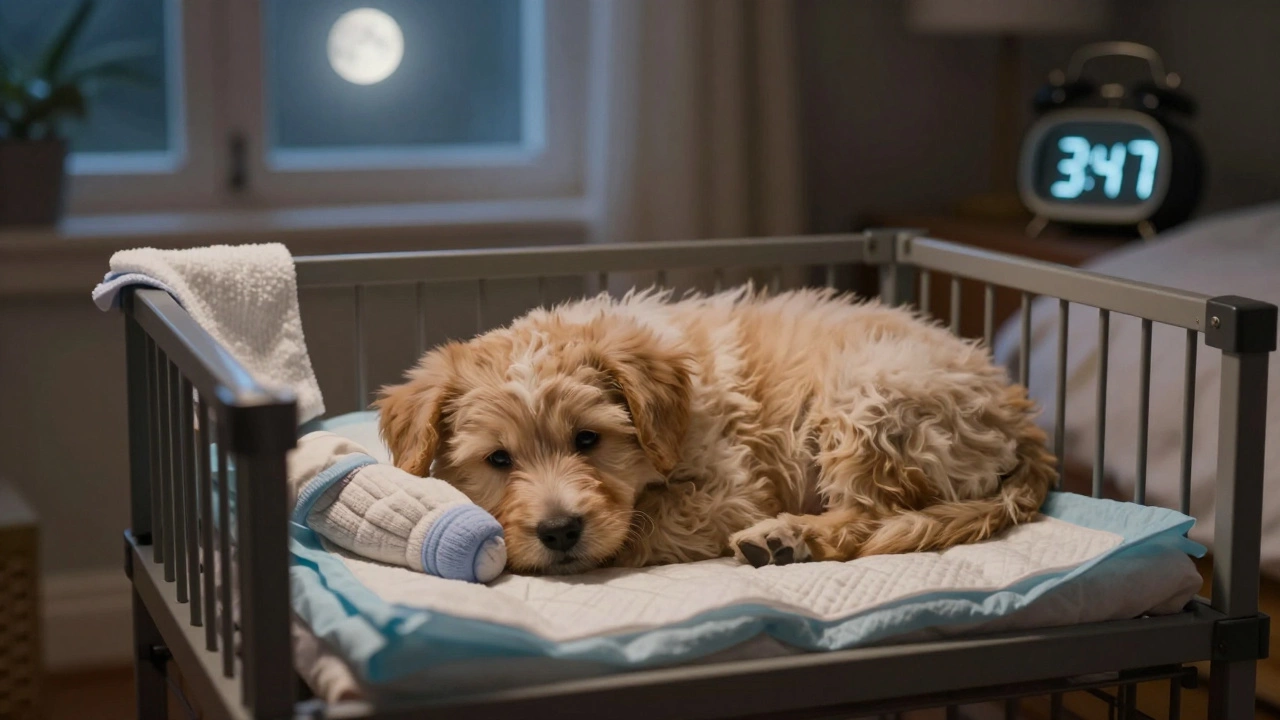
- Use a soft, absorbent pad or puppy training mat inside the crate. If they do have an accident, it won’t soak into the bedding or create a mess.
- Set an alarm for 4 to 5 hours after bedtime. When it goes off, take them out quietly. Don’t play, don’t turn on bright lights. Just go outside, let them do their business, and bring them right back to the crate.
After a few nights, you’ll start to notice patterns. Maybe they only need to go every 5 hours. Maybe they’re sleeping through 6. That’s progress. But don’t push it. Let their body catch up.
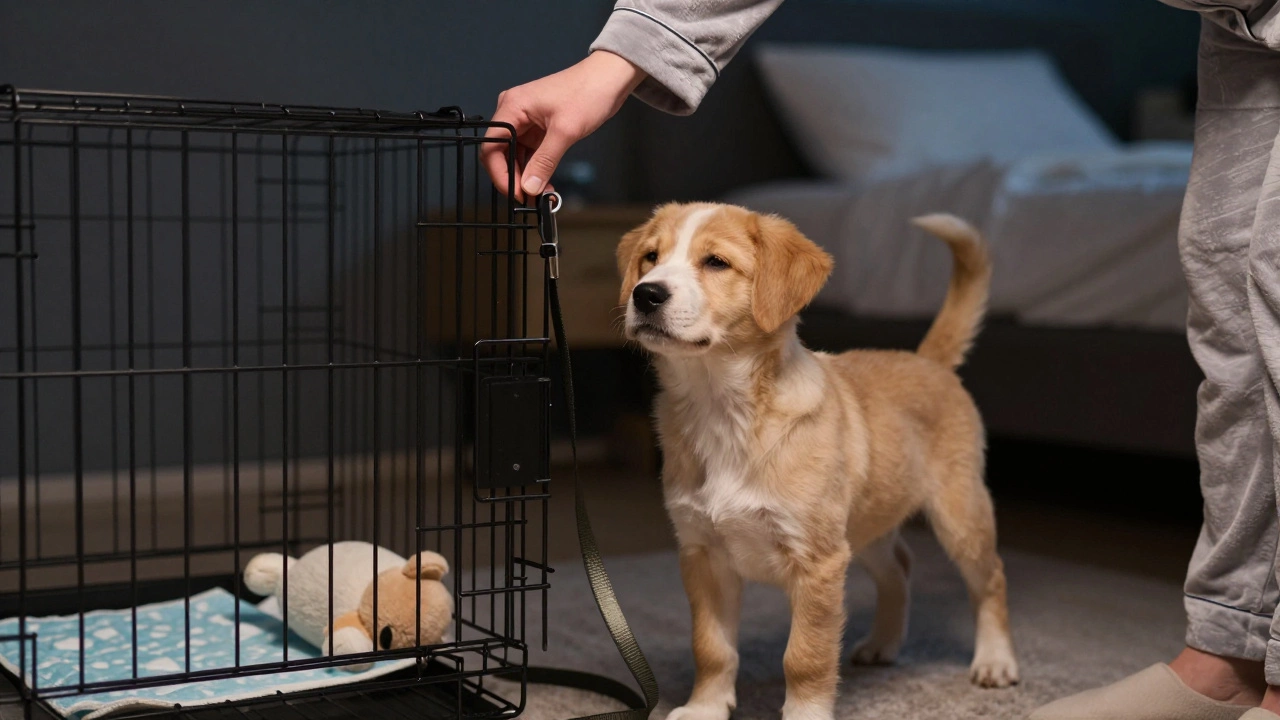
Crating vs. Baby Gates: What Works Better?
Some people think a playpen or gated-off kitchen is better than a crate. It’s not always true. A crate gives puppies a den-like space that helps them feel secure. A large open area with no boundaries can overwhelm them. They might wander, get into trouble, or panic because they don’t know where to rest.
But here’s the key: the crate shouldn’t be too big. If it’s big enough for them to run around, they might use one corner as a bathroom. The rule of thumb? The crate should be just big enough for them to stand up, turn around, and lie down comfortably. If they’re growing fast, use a divider to block off extra space.
What About Puppy Toys in the Crate?
You might be tempted to toss in a chew toy or stuffed animal to keep them busy. That’s fine-but only if it’s safe. Avoid toys with small parts, stuffing, or plastic eyes. At 8 weeks, puppies are still teething and will chew anything they can get their mouth on.
A soft, washable Kong or a rope toy without knots works best. Freeze a wet washcloth and give it to them-it soothes sore gums and keeps them calm. But never leave them with a toy they can tear apart. One swallowed piece could mean an emergency vet visit.
When Can They Start Sleeping Through the Night?
Most puppies begin sleeping 6 to 8 hours straight between 12 and 16 weeks old. That’s when their bodies have grown enough to hold it longer, and their brains start to understand routine. But every puppy is different. A small breed like a Pomeranian might take longer than a Labrador.
Don’t compare your puppy to others. Focus on progress. If they go from needing to go at 2 AM and 5 AM to just 5 AM, that’s a win. If they go 6 hours without a break, celebrate. Nighttime training is slow, but it’s doable.

Common Mistakes to Avoid
- Leaving water in the crate overnight-this increases the need to pee.
- Using the crate as punishment-it should always be a safe, happy place.
- Ignoring whining without checking on them-they might need to go out.
- Letting them sleep in your bed every night and then switching to the crate-it confuses them.
- Expecting perfection on day one. This is a process, not a test.
What to Do If Your Puppy Cries All Night
Crying is normal. Puppies are separated from their littermates for the first time. They’re scared, lonely, and adjusting to a new world. But that doesn’t mean you should rush in every time they whimper.
Wait 5 to 10 minutes. Sometimes they’re just testing boundaries. If they’re still crying, check on them quietly. If they need to go out, take them. If they’re just lonely, give them a gentle pat and leave. Don’t pick them up, don’t play, don’t turn on the lights.
Consistency is everything. If you let them out every time they cry, they’ll learn crying = attention. If you ignore them completely, they’ll learn the crate is scary. Find the middle ground.
Final Thoughts: Patience Over Perfection
An 8-week-old puppy isn’t meant to sleep through the night. Their body isn’t ready. Their brain isn’t ready. And pushing them to be “grown up” too soon only makes the process harder.
Instead of asking, “Can they stay in the crate all night?” ask, “How can I help them feel safe while they learn?” That shift in thinking makes all the difference. You’re not training a dog-you’re raising a baby who needs your care, not your control.
With time, routine, and a little patience, your puppy will sleep through the night. But it won’t happen in a week. It might take a month. And that’s okay. The bond you build during these late-night trips? That’s what lasts longer than any training trick.
Can an 8-week-old puppy sleep through the night without peeing?
No, most 8-week-old puppies cannot hold their bladder for a full 8-hour night. They typically need to go out every 2 to 4 hours. Expect to wake up at least once to take them outside.
Should I put water in the crate at night?
No. Remove water 1.5 to 2 hours before bedtime to reduce nighttime accidents. Puppies this young don’t need water overnight, and it increases the chance they’ll need to go out.
Is it cruel to crate a puppy at night?
No, if done correctly. A crate should be a safe, cozy space-not a punishment. Keep it small, clean, and near you. With the right routine, your puppy will come to see it as their den.
What toys are safe for a puppy in the crate at night?
Only soft, durable toys without small parts. A frozen washcloth or a stuffed Kong (with peanut butter or yogurt) can soothe teething gums. Avoid plush toys with buttons, strings, or stuffing that can be chewed off.
How long does it take for a puppy to sleep through the night?
Most puppies start sleeping 6 to 8 hours straight between 12 and 16 weeks old. Smaller breeds may take longer. Progress happens gradually-celebrate small wins like going 5 hours instead of 3.