Puppy Nighttime Response Guide
Step 1: Basic Information
Let's start with some key details about your puppy situation.
Step 2: Assess the Situation
Observe your puppy's current state and environment.
Step 3: Environmental Factors
Check these aspects of your puppy's sleeping environment.
The Midnight Dilemma: To Ignore or Not to Ignore?
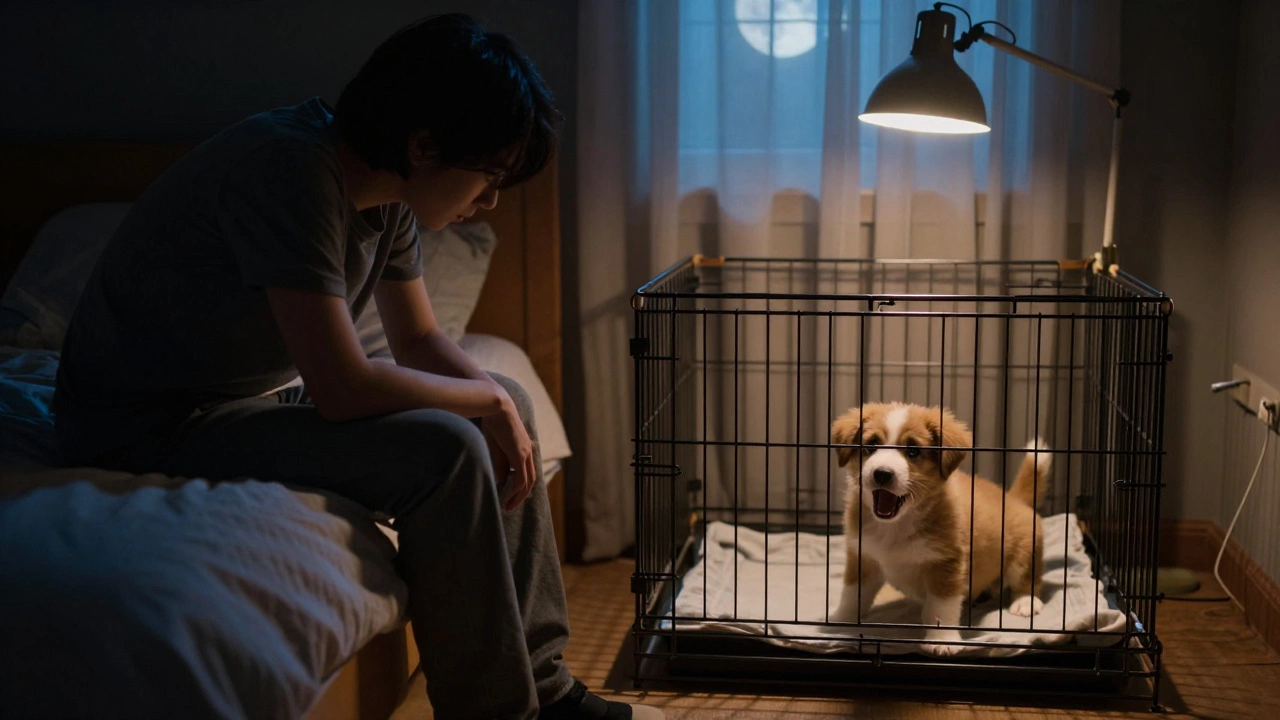
It is 3:00 AM. The house is silent except for one sound: a high-pitched, heart-wrenching whimper coming from the corner of your bedroom. Your new puppy, only eight weeks old, is crying in their crate or bed. You are exhausted. You have been awake for four hours. Every instinct tells you to pick them up and soothe them, but every article you read says "just ignore it." So, what do you actually do? Do you walk away and risk traumatizing your dog, or do you intervene and accidentally teach them that crying gets attention?
The short answer is no, you should not simply ignore a crying puppy without context. Blanket ignoring can lead to severe behavioral issues, including separation anxiety, which is much harder to fix than a few bad nights of sleep. However, responding to every single noise teaches your dog that crying is the universal remote control for your attention. The solution lies in a middle ground called positive reinforcement sleep training, where you address the root cause of the distress rather than just silencing the symptom.
Why Is Your Puppy Crying? Decoding the Distress Signals
Before you decide whether to intervene, you need to understand why the crying is happening. Puppies do not cry for no reason; they are communicating a specific need. If you treat a bladder emergency the same way you treat boredom, you will fail. Here are the most common reasons a puppy cries at night:
- Biological Needs: At 8-12 weeks, puppies cannot hold their bladders for more than 4-5 hours. If they cry, they likely need to eliminate. Ignoring this leads to accidents in the crate, which creates a negative association with the sleeping space.
- Temperature Discomfort: Puppies regulate body temperature poorly. If the room is too cold or too hot, they will vocalize. Check if they are shivering or panting.
- Fear and Loneliness: For the first time in their life, they are separated from their mother and littermates. This is a terrifying transition. They may be crying because they feel unsafe, not because they want to play.
- Pain or Illness: If the crying is sudden, sharp, or accompanied by limping, lethargy, or vomiting, it could be medical. Always rule out health issues first.
- Boredom or Attention Seeking: Older puppies (4+ months) may cry because they have pent-up energy or have learned that crying makes you come over.
If your puppy is crying because they need to pee, you must take them out. If you ignore them, they will wet their crate. Dogs naturally avoid soiling their sleeping area, so a wet crate becomes a stressful environment, leading to more crying. This is a cycle you must break immediately.
The Risks of Ignoring: When Silence Becomes Harmful
The advice to "ignore" a puppy often comes from outdated dominance theory or misinterpreted behaviorist methods. While extinction (ignoring a behavior until it stops) works for attention-seeking barking in adult dogs, it is dangerous for young puppies. Here is why total ignoring can backfire:
Increased Anxiety Levels
Puppies are social animals. When a puppy cries and receives no response, their stress hormones (cortisol) spike. Over time, this can develop into chronic anxiety. Instead of learning self-soothing, the puppy learns that the world is unpredictable and unresponsive. This is the foundation of reactive dog behavior later in life.
Destruction of Trust
Your job as an owner is to provide safety. If your puppy signals distress and you consistently ignore it, they may stop trusting you as their secure base. This doesn't mean they will hate you, but it does mean they will struggle to form a deep bond, making future training significantly harder.
Reinforcement of Bad Habits
If you ignore the puppy for two days and then finally give in on the third night, you have inadvertently taught them that crying longer yields better results. This is known as intermittent reinforcement, and it is the strongest type of reinforcement in psychology. The puppy learns: "If I cry for 20 minutes, nothing happens. If I cry for 45 minutes, my human comes!"
The Balanced Approach: How to Respond Without Enabling
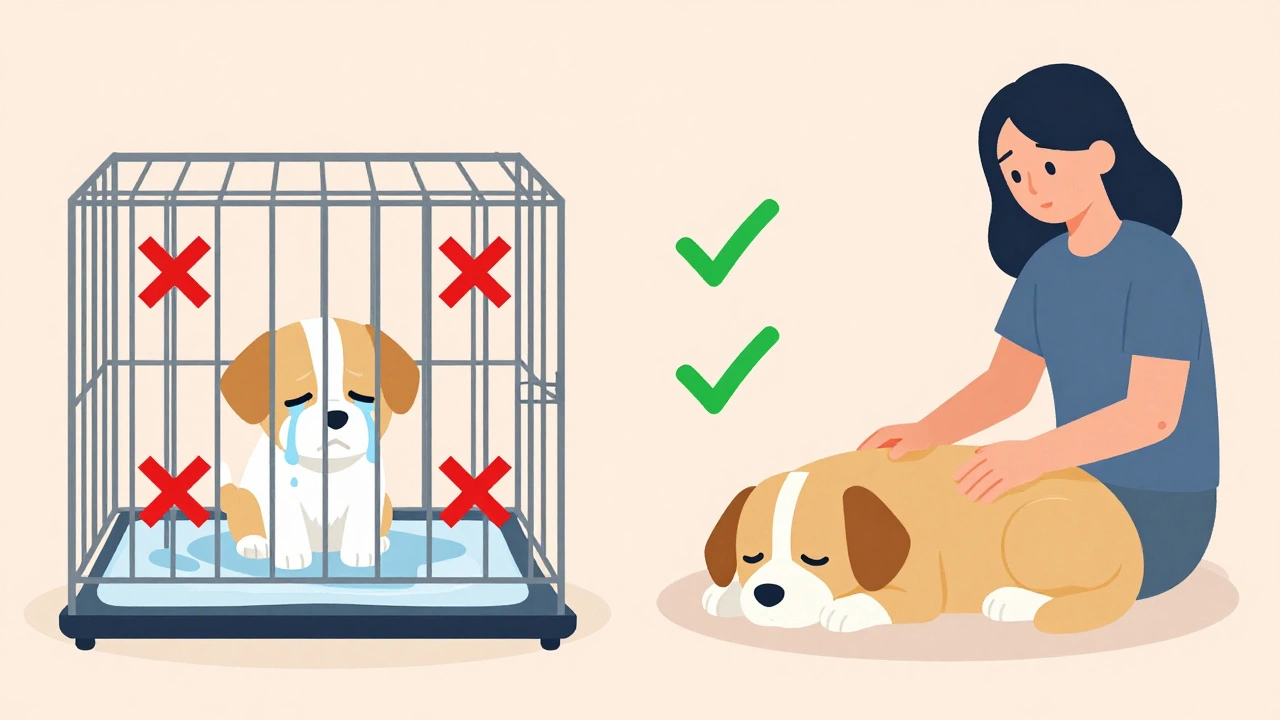
You don't have to choose between coddling and ignoring. There is a method that addresses needs while encouraging independence. This approach involves checking for needs, providing reassurance without engagement, and gradually increasing distance.
- The Bathroom Break Rule: If the puppy has been in the crate for less than their age-in-months-plus-one hours (e.g., a 2-month-old puppy = 3 hours max), assume they need to go out. Take them out quietly. No talking, no playing, no eye contact. Just business. Once they eliminate, return them to the crate immediately. This prevents them from associating the bathroom trip with fun.
- The Quiet Pause: If the puppy has recently gone out and seems comfortable otherwise, wait 30-60 seconds before reacting. Often, puppies cry in bursts. They may stop on their own if they realize no immediate action is taken. If the crying escalates after the pause, proceed to step 3.
- Low-Key Reassurance: Go to the crate. Speak in a calm, low voice. Say something like, "It's okay, settle down." Do not pick them up unless they are panicked. Picking them up reinforces the idea that crying equals cuddles. Instead, offer a gentle pat or place a hand near them. Then leave again. You are showing presence without rewarding the behavior.
- The White Noise Buffer: Use a fan or white noise machine. This masks household sounds that might trigger alert barking and provides a consistent background hum that mimics the sound of littermates breathing.
Crate Training: Making the Box a Safe Haven
The success of any night-time strategy depends heavily on how your puppy perceives their sleeping space. Many owners make the mistake of using the crate as punishment, which turns it into a prison. For crate training to work, the crate must be associated with positive experiences.
Start by leaving the crate door open during the day. Toss treats inside. Feed meals inside. Let the puppy explore it freely. Never force them in. When it comes to night time, the crate should feel like a den, not a cage. Cover three sides of the crate with a light blanket to create a cave-like atmosphere. This reduces visual stimuli and makes the puppy feel secure.
Ensure the crate is the right size. It should be large enough for the puppy to stand up, turn around, and lie down, but not so large that they can use one end as a toilet. If you buy a crate for an adult dog, use a divider to shrink the space as the puppy grows. A properly sized crate encourages cleanliness and comfort.
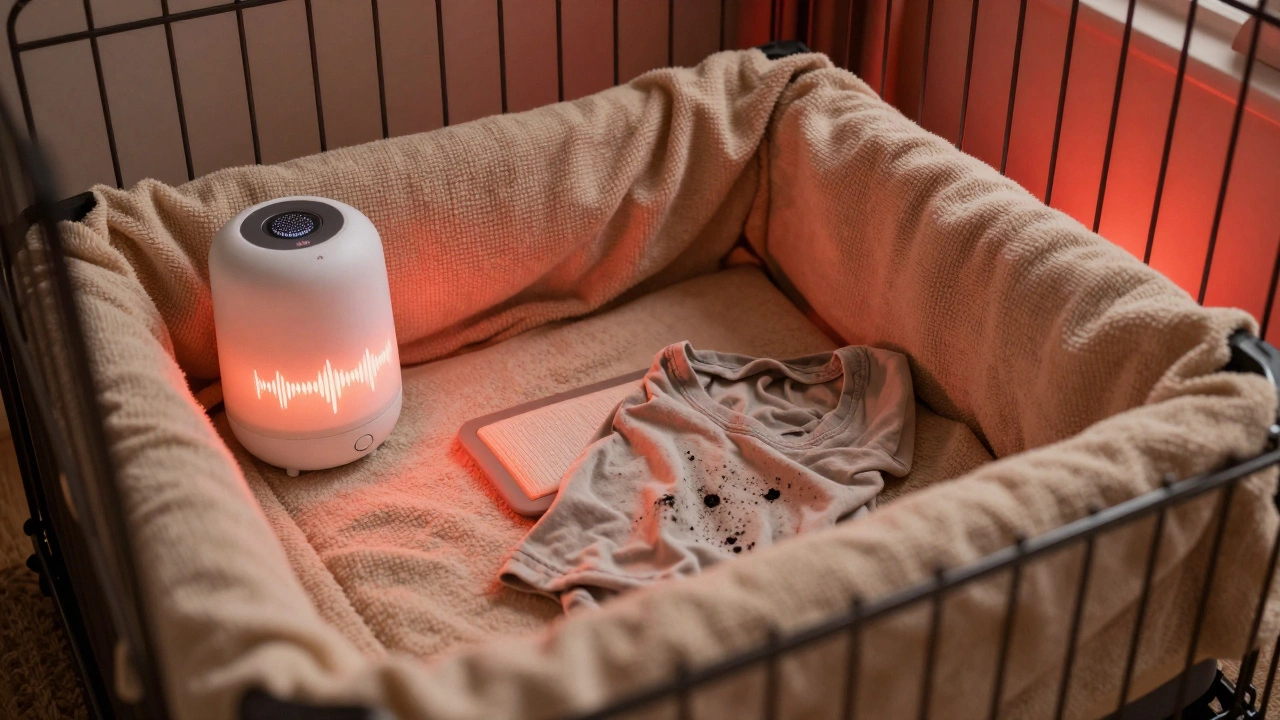
Setting Up the Perfect Sleep Environment
Your bedroom setup plays a huge role in how well your puppy sleeps. Here are practical adjustments that can reduce crying by up to 50%:
| Factor | Recommendation | Why It Matters |
|---|---|---|
| Location | Next to your bed initially | Hearing your breathing and movement provides comfort and security. |
| Bedding | Washable, soft mat with a timer-controlled heat pad | Mimics body warmth of mother/littermates. Prevents chilling. |
| Scent | A piece of your worn t-shirt in the crate | Your scent is calming. It bridges the gap between separation and connection. |
| Lighting | Dim red light or complete darkness | Blue light suppresses melatonin. Darkness signals sleep time. |
| Sound | White noise or classical music | Masks sudden noises that trigger startle reflexes. |
For the first few weeks, keep the crate next to your bed. As the puppy ages and sleeps through the night, you can gradually move the crate further away, eventually transitioning to another room if desired. Moving too fast causes regression. Move the crate only one foot per night.
Daytime Routine: The Key to Nighttime Success
Nighttime behavior is a reflection of daytime activity. A tired puppy is a quiet puppy. If your puppy is energetic and bored during the day, they will be restless at night. Structure your day around three pillars: exercise, mental stimulation, and routine.
Physical Exercise: Age-appropriate play is crucial. For a young puppy, this means short bursts of play, not long walks. Avoid high-impact activities that damage developing joints. Ten minutes of fetch or tug-of-war is sufficient for a 10-week-old.
Mental Stimulation: Puzzle toys, sniffing games, and basic obedience training tire a puppy’s brain faster than physical exercise. A mentally exhausted puppy falls asleep faster and stays asleep longer. Try hiding treats around the house for them to find before dinner.
Consistent Routine: Dogs thrive on predictability. Feed, potty, and play at the same times every day. This regulates their internal clock. If they know dinner is at 6 PM and bedtime is at 9 PM, they will begin to wind down automatically as evening approaches.
When to Call a Professional
Most puppies adjust within 1-2 weeks. However, some situations require professional intervention. Consult a veterinarian or certified animal behaviorist if:
- The crying persists beyond 3 weeks despite consistent training.
- The puppy shows signs of physical illness (vomiting, diarrhea, loss of appetite).
- The crying is accompanied by destructive behavior (chewing bars, self-harm).
- You notice signs of extreme fear (trembling, urination when approached).
Remember, every puppy is different. Some adapt quickly, others take longer. Patience and consistency are your best tools. By addressing needs, creating a safe environment, and avoiding the trap of total ignoring, you will build a strong bond and ensure your puppy grows into a confident, well-adjusted adult dog.
How long should I wait before responding to a crying puppy?
Wait 30-60 seconds to see if the puppy settles on their own. If the crying escalates or continues, respond calmly. Do not wait for hours, as this increases anxiety. The goal is to acknowledge the distress without rewarding it with excessive attention.
Is it okay to let my puppy sleep in my bed?
While co-sleeping is a personal choice, it is generally recommended to train puppies to sleep in their own crate or bed first. This establishes boundaries and prevents dependency. If you choose to co-sleep, ensure it is a deliberate decision and not a reaction to crying.
What if my puppy cries even after going to the bathroom?
If the puppy has eliminated and is still crying, they may be seeking comfort or feeling anxious. Use low-key reassurance (calm voice, gentle touch) without picking them up. Ensure the crate is comfortable and covered. If the crying persists, check for pain or illness.
Can I use a thunder shirt or anxiety wrap for my puppy?
Yes, anxiety wraps can help some puppies feel secure by providing gentle pressure. However, they should not replace proper crate training and routine. Introduce the wrap during the day with positive associations before using it at night.
How do I know if my puppy is crying due to pain?
Signs of pain include whining that changes pitch, limping, reluctance to move, panting excessively, or trembling. If you suspect pain, consult a veterinarian immediately. Do not assume it is behavioral until medical causes are ruled out.