Dog Safety & Identification Risk Calculator
Answer these questions to assess your current dog safety setup and get personalized recommendations.
Your Dog's Safety Score
Risk Factors Identified
Strengths
Personalized Recommendations
Walk down any suburban street in Auckland or glance at a local park, and you might spot a dog trotting around with nothing but a leash clip attached to a harness-or sometimes just running loose without any gear at all. It’s becoming increasingly common to see dogs without the traditional neck collar. You might wonder why. Is it a trend? A statement against tradition? Or is there a legitimate safety concern driving this choice?
The answer isn’t as simple as "owners are lazy." In reality, the decision to skip a collar often stems from specific physical needs of the dog, behavioral quirks, or a shift toward technology that makes traditional ID tags obsolete. However, ditching the collar entirely comes with significant risks if not managed correctly.
Quick Takeaways
- Many owners avoid collars due to tracheal issues (common in small breeds) or escape artist behavior.
- Harnesses are often preferred for walking comfort and control, especially for strong pullers.
- Microchips and GPS trackers have reduced reliance on visible ID tags for some owners.
- Legally, many regions require visible ID; skipping a collar can lead to fines or lost pets.
- A balanced approach often involves a lightweight ID collar plus a separate walking harness.
The Physical Case: Why Collars Can Hurt
For some dogs, a collar isn't just uncomfortable-it's medically contraindicated. This is the most valid reason people stop using them. If your dog has a sensitive neck, a standard flat collar can cause real damage over time.
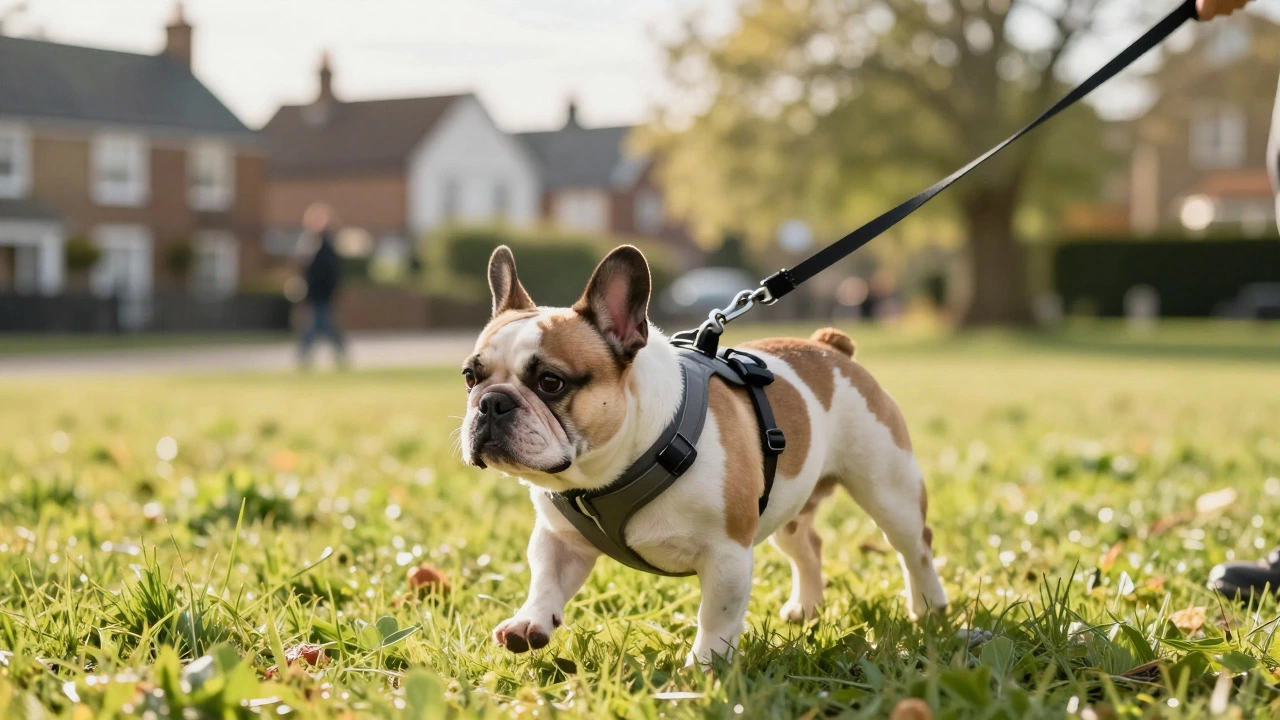
Small breeds like Pugs, French Bulldogs, and Chihuahuas often suffer from tracheal collapse, a condition where the rings supporting the windpipe weaken. Pulling on a collar puts direct pressure on the trachea, worsening the condition. Even larger breeds with long necks, like Greyhounds or Whippets, can develop throat irritation or thyroid issues if they wear heavy collars constantly. In these cases, veterinarians explicitly recommend switching to a body harness to distribute pressure across the chest rather than the neck.
Then there’s the issue of skin sensitivity. Some dogs have allergies to certain metals in D-rings or plastics in buckle mechanisms. Constant rubbing can lead to hair loss, raw spots, and secondary infections. If you’ve noticed your dog scratching at their neck excessively, the collar might be the culprit. Switching to a harness eliminates this friction point entirely.
The Behavioral Factor: Escape Artists and Anxiety
Not every dog sits still while you clip on a leash. For "escape artists," a collar can be a trigger. Some dogs associate the click of a buckle with being trapped, leading to panic, thrashing, or even injury as they try to break free. Others are simply clever; they learn to slip out of flat collars by jerking their heads back-a move known as "backing out."
If a dog backs out of a collar repeatedly, owners often give up on the accessory altogether. Instead, they rely on front-clip harnesses, which make it mechanically difficult for the dog to escape because pulling forward rotates the dog’s body rather than tightening the strap. While this solves the escape problem, it leaves the dog without an immediate form of identification if they somehow do get loose.
Anxiety plays a role too. Dogs with severe separation anxiety or noise phobias may become agitated when touched near the neck. Removing the collar reduces stress during daily routines, making walks less traumatic for both pet and owner. It’s a quality-of-life adjustment that prioritizes mental well-being over convention.
The Technology Shift: Microchips and GPS Trackers
Technology has changed how we think about pet safety. Ten years ago, a metal tag was the only way to identify a lost dog. Today, many owners feel secure relying on digital solutions.
Microchipping is now standard practice in many countries, including New Zealand. A microchip is a tiny electronic device implanted under the dog’s skin, containing a unique ID number linked to the owner’s contact details. When a vet or shelter scans the chip, they can call the owner. Because the chip is internal, it doesn’t require a collar. Many owners assume this is enough protection.
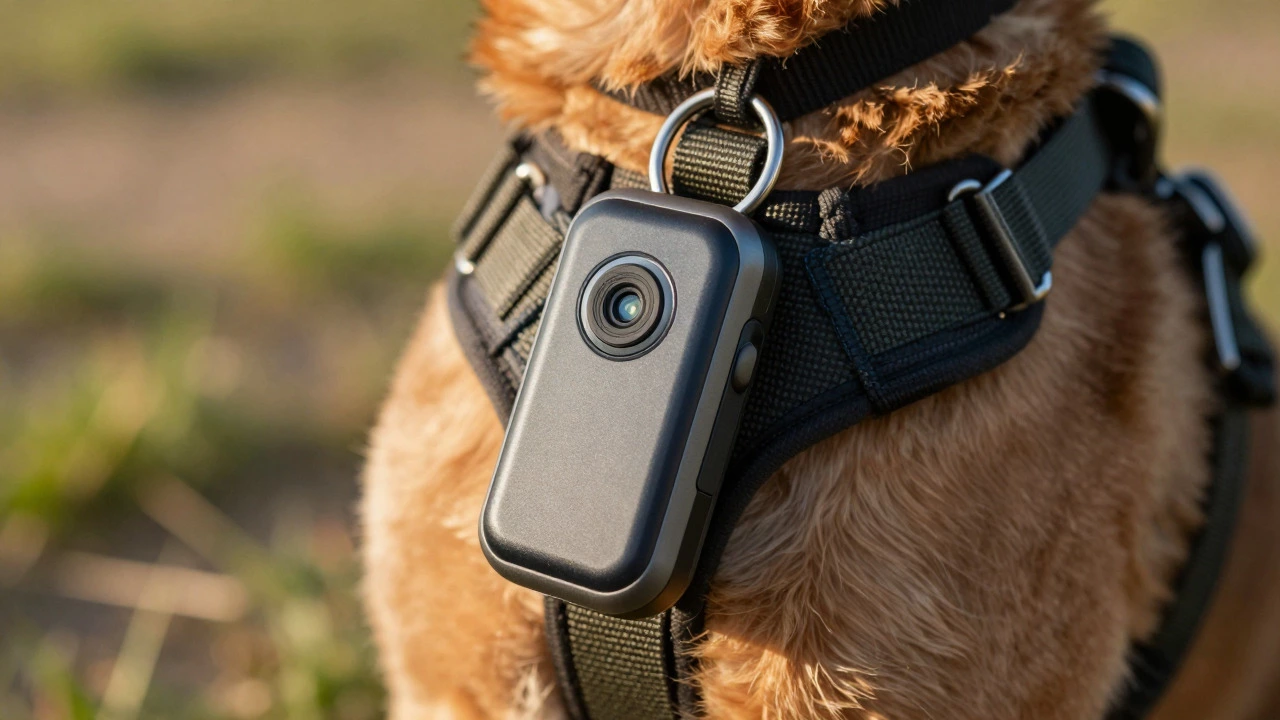
However, microchips have a flaw: they aren’t GPS devices. They don’t tell you where your dog is *right now*. They only help reunite you after someone finds the dog and takes them to a professional scanner. This gap has led to the rise of GPS trackers. Devices like Fi, Tractive, or Whistle attach to a harness or collar and send real-time location data to your phone.
Here’s the catch: most GPS trackers are bulky. Attaching one to a thin collar can choke a small dog. So, owners attach the tracker to a sturdy harness. Once they have real-time tracking and a microchip, they often drop the collar, thinking they’re covered. But this creates a dangerous blind spot: what if the battery dies? What if the signal is lost? What if a neighbor finds the dog before you get an alert?
| Method | Visibility | Reliability | Cost | Maintenance |
|---|---|---|---|---|
| ID Tag on Collar | High (Immediate) | High (If present) | Low | None |
| Microchip | Low (Requires Scanner) | Medium (Dependent on Database Update) | Medium (One-time fee) | Annual Check |
| GPS Tracker | Medium (Digital Only) | High (Real-time) | High (Device + Subscription) | Battery Charging |
| Harness Only | Low (No ID unless tagged) | Low (If no backup ID) | Medium | Fitting Adjustment |
The Legal Reality: Are You Breaking the Law?
This is where things get tricky. In many places, having a collar with an ID tag isn’t just a suggestion-it’s the law. In New Zealand, for example, the Dog Control Act requires dogs to wear a collar with the owner’s name and address when in public. Fines can apply if your dog is found off-leash without proper identification.
Even in areas where laws are looser, animal control officers rely on visual ID. If your dog runs away and ends up in a shelter, staff will check for a tag first. If there’s none, they’ll scan for a microchip. But if the database info is outdated (a common issue), or if the shelter doesn’t scan immediately, your dog could stay lost for days. A collar with a current phone number allows anyone-neighbors, passersby, kids-to return your dog instantly without needing special equipment.
Skipping the collar shifts the burden of proof onto technology and luck. And luck is a poor strategy for pet safety.
The Best Compromise: Harness Plus Lightweight ID Collar
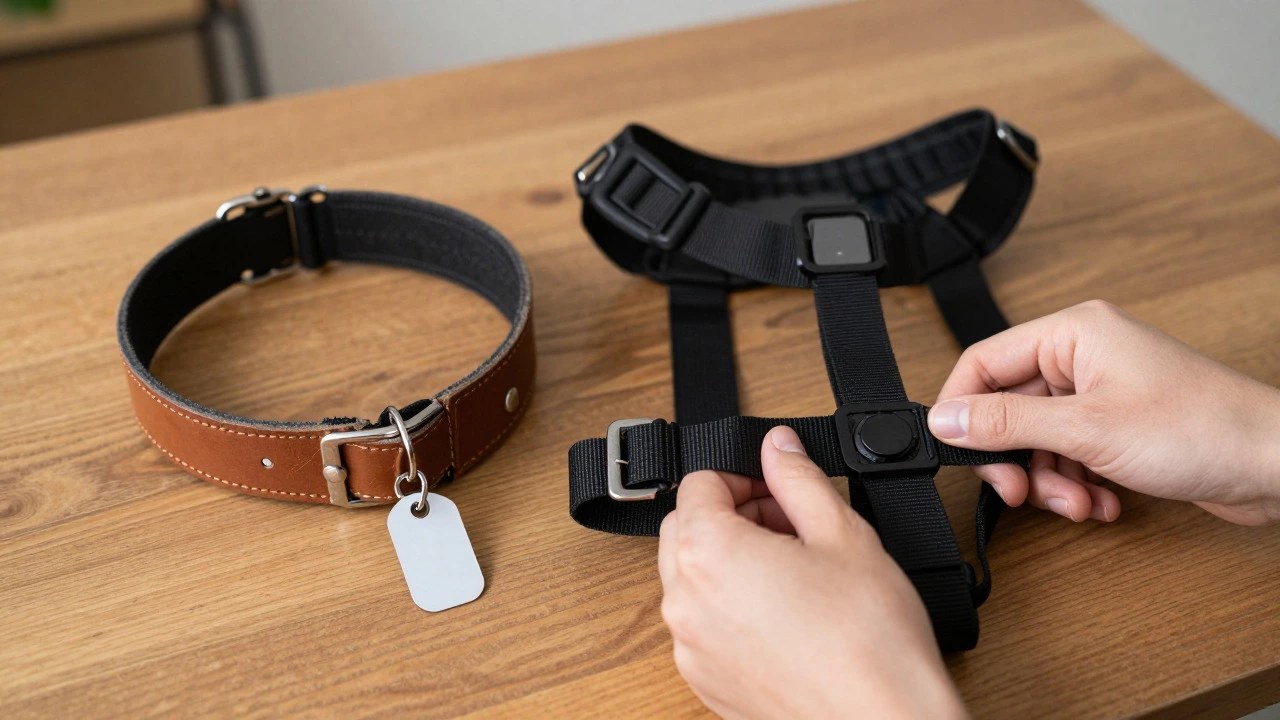
You don’t have to choose between comfort and safety. The most effective setup used by professional trainers and veterinarians is a two-part system:
- A Walking Harness: Used for daily walks, training, and exercise. This protects the neck, prevents pulling, and holds GPS trackers if needed.
- A Breakaway ID Collar: Worn underneath or alongside the harness. This should be lightweight, made of soft nylon or leather, and equipped with a breakaway buckle.
A breakaway buckle is designed to pop open if the collar gets snagged on a fence, branch, or toy. This prevents choking or strangulation hazards. It’s thin enough to sit comfortably under a harness but visible enough to display ID tags. This way, you get the physical benefits of a harness and the immediate identification of a collar.
If your dog absolutely hates anything on their neck, consider attaching the ID tag directly to the harness. Many modern harnesses have a dedicated metal ring specifically for tags. Just ensure the tag is securely fastened so it doesn’t fall off during play.
Common Misconceptions About No-Collar Dogs
Let’s clear up a few myths that drive this trend:
- "My dog knows my voice, so he won’t run away." Distractions happen. Squirrels, smells, and sudden noises can override recall training. Visual ID is a backup for unpredictable moments.
- "Collars restrict breathing." Only if fitted incorrectly or if the dog pulls aggressively. A properly fitted collar (two fingers’ width gap) does not restrict breathing. The issue is usually the type of collar, not the concept itself.
- "Microchips are foolproof." They are not. Batteries in scanners fail, databases get hacked or go offline, and human error leads to unregistered chips. Layers of security are better than single points of failure.
Final Thoughts: Prioritize Safety Over Style
Whether you skip the collar for medical reasons, behavioral quirks, or tech reliance, the goal is always the same: keeping your dog safe and identifiable. Don’t let convenience override caution. If you remove the collar, ensure you have a robust alternative plan. Attach tags to the harness, keep microchip details updated, and invest in reliable GPS tracking. Your dog’s freedom shouldn’t come at the cost of their ability to find their way home.
Is it safe to leave a dog collar on 24/7?
For most healthy dogs, wearing a lightweight ID collar 24/7 is safe if it fits properly and has a breakaway buckle. However, if your dog sleeps tangled in blankets or plays rough with toys, removing the collar at night reduces the risk of snagging. Always check the fit regularly as your dog grows or changes weight.
Can I put an ID tag on a harness instead of a collar?
Yes, many harnesses have a designated D-ring for ID tags. This is a great alternative for dogs who cannot wear collars. Ensure the tag is securely attached and doesn’t flap excessively, which can irritate the dog’s skin or ears.
What is a breakaway collar and do I need one?
A breakaway collar features a buckle that opens under pressure. If the collar gets caught on an object, the force pops the buckle open, preventing choking. It is highly recommended for all dogs, especially those who explore outdoors or have anxiety-related thrashing behaviors.
Do microchips replace the need for ID tags?
No, microchips do not replace ID tags. Microchips require a scanner to read, whereas ID tags provide immediate visual information. Using both methods offers the highest chance of reunion if your dog gets lost. Think of the tag as the first line of defense and the microchip as the backup.
Why do small breed dogs often not wear collars?
Small breeds like Pugs and Chihuahuas are prone to tracheal collapse, a condition where the windpipe weakens. Pressure from a collar can exacerbate this issue. Vets often recommend harnesses for these breeds to protect their delicate neck structures.
How tight should a dog collar be?
You should be able to slide two fingers comfortably under the collar. If it’s too tight, it can cause choking or skin irritation. If it’s too loose, the dog can slip out. Regularly check the fit, especially for growing puppies or dogs undergoing weight changes.