Dog Vitamin Dosage Calculator
Calculate Your Dog's Daily Vitamin Needs
Daily Vitamin Recommendations
Important Notes:
- Always consult your vet before starting supplements
- Zinc doses over 40mg/day can be toxic
- Results take 8-12 weeks for visible improvement
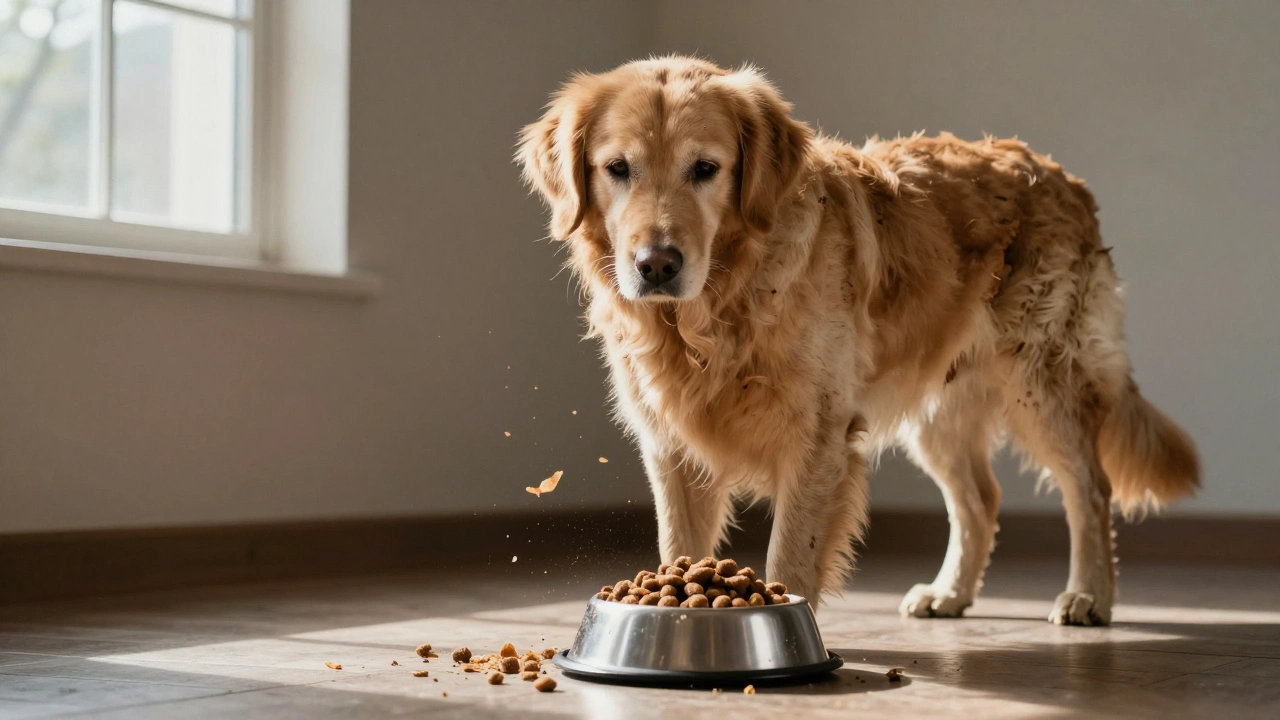
Is your dog’s coat looking dull, patchy, or brittle? It’s not just about grooming-it’s about what’s happening inside. A shiny, soft coat doesn’t happen by chance. It’s built from the inside out, and vitamins play a major role. But not all supplements are created equal. Giving your dog random vitamins won’t fix the problem. In fact, some can do more harm than good. So what actually works? Let’s cut through the noise and give you the real, science-backed answer.
Why Your Dog’s Fur Matters
Your dog’s coat isn’t just for looks. It’s a protective barrier. It keeps out dirt, bacteria, and UV rays. It helps regulate body temperature. And when it’s unhealthy, your dog can develop hot spots, flaky skin, or even infections. A dull coat often signals a deeper issue-nutrient deficiency, allergies, or hormonal imbalance. Before you reach for a bottle of supplements, check for signs like excessive shedding, itching, redness, or bald patches. If those are present, talk to your vet first. Supplements won’t fix medical problems.
The Top 4 Vitamins and Nutrients for Healthy Dog Fur
Not every vitamin helps. Some are overhyped. Others are essential. Here are the four that actually make a difference, backed by veterinary nutrition studies and real-world results.
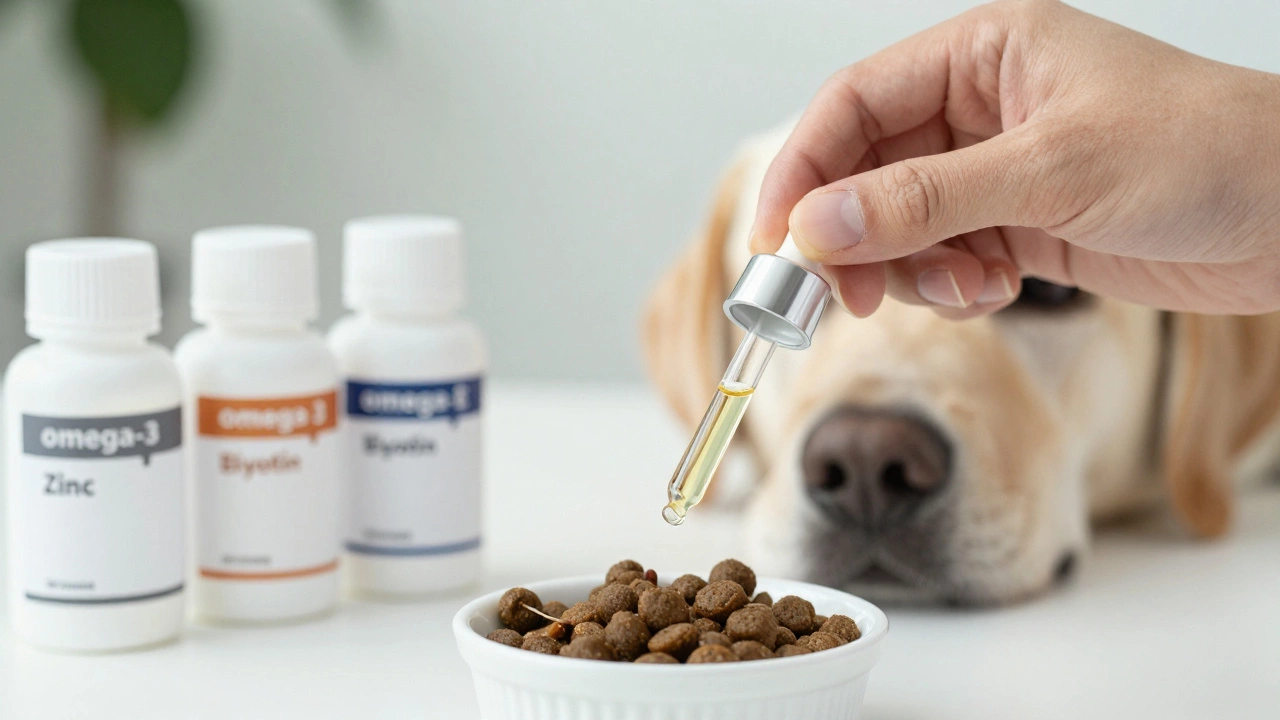
- Omega-3 Fatty Acids - These aren’t technically vitamins, but they’re the #1 nutrient for skin and coat health. Found in fish oil (like salmon or sardine oil), omega-3s reduce inflammation and improve skin moisture. A 2022 study from the Journal of Veterinary Dermatology showed dogs fed omega-3 supplements had 40% less dry skin and 35% less shedding after 8 weeks. Look for products with at least 500 mg of EPA and DHA per 10 lbs of body weight.
- Vitamin E - This antioxidant protects skin cells from oxidative damage. It works with omega-3s to lock in moisture. Dogs with dry, flaky skin often have low vitamin E levels. The National Research Council recommends 50 IU per kg of body weight daily. Most high-quality dog foods include this, but dogs on homemade diets or with skin issues may need extra.
- Biotin (Vitamin B7) - Often called the “hair vitamin,” biotin helps produce keratin-the protein that makes up fur, nails, and skin. A 2020 trial in Canine Medicine and Genetics found that dogs with poor coat quality showed visible improvement in 6-12 weeks after adding 1-2 mg of biotin daily. It’s not a magic fix, but it’s a solid support player.
- Zinc - Zinc deficiency is a common cause of scaly, crusty skin and hair loss in dogs, especially in breeds like German Shepherds and Huskies. It helps with cell turnover and skin repair. The recommended dose is 10-40 mg per day, depending on size. Too much zinc is toxic, so never give it without vet guidance.
What Not to Give
There’s a market full of dog vitamins with flashy labels. “Super Coat Boost!” “Miracle Shine Blend!” But many of these contain fillers, artificial colors, or dangerous additives.
- Avoid human multivitamins. They often have too much vitamin A or D, which can poison dogs.
- Skip products with xylitol. Even tiny amounts are deadly to dogs.
- Don’t rely on coconut oil alone. While it’s safe, it doesn’t contain the omega-3s your dog needs for true coat repair.
- Steer clear of “all-in-one” supplements that promise everything. They rarely deliver enough of the key ingredients to matter.
How to Choose the Right Supplement
Not all supplements are equal. Here’s how to pick one that actually works:
- Check the label for exact amounts of omega-3, vitamin E, biotin, and zinc. If it just says “proprietary blend,” walk away.
- Look for third-party testing. Certifications from NASC (National Animal Supplement Council) or NSF International mean the product was independently verified.
- Choose oil-based forms for omega-3s. Liquid fish oil is more bioavailable than capsules or treats.
- Match the dose to your dog’s weight. A 5-lb Chihuahua doesn’t need the same as a 100-lb Great Dane.
Some trusted brands that meet these standards include Nordic Naturals Omega-3 for Pets, PetHonesty Omega-3 Fish Oil, and VetriScience Laboratories NuVet Plus. Always read the ingredient list-not the marketing.
Food First, Supplements Second
The best source of nutrients is food. If your dog eats a high-quality commercial diet labeled as “complete and balanced” by AAFCO, they’re likely getting what they need. But if you feed homemade meals, raw diets, or low-grade kibble, you’re probably missing key nutrients.
Try adding these real foods to meals:
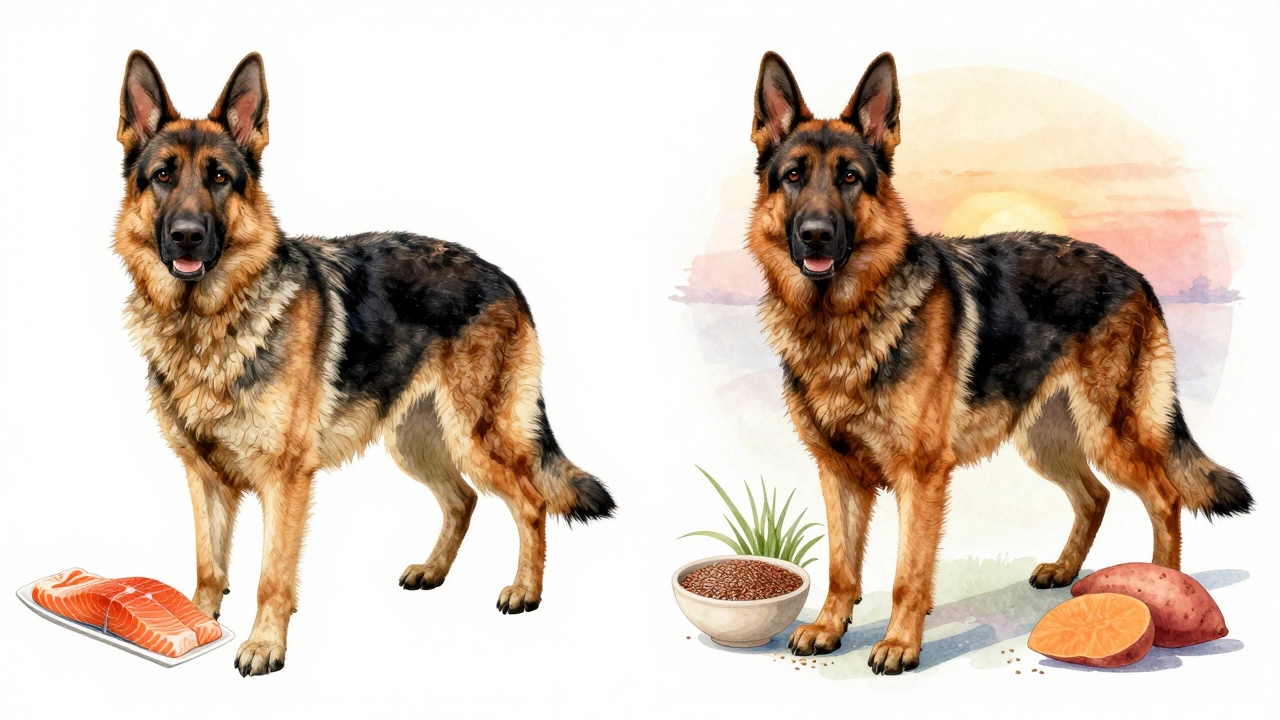
- Wild-caught salmon (2-3 times a week)
- Flaxseeds (ground, 1 tsp per 20 lbs)
- Eggs (cooked, 1-2 per week)
- Sweet potatoes (rich in vitamin A)
- Spinach (for vitamin E and zinc)
These aren’t magic bullets, but they add real nutrition without pills.
How Long Until You See Results?
Don’t expect overnight changes. Fur grows slowly. A dog’s entire coat renews every 3-4 months. That means:
- 4-6 weeks: Reduced shedding, less flakiness
- 8-12 weeks: Noticeable shine and softness
- 4-6 months: Full coat transformation
Consistency matters. Skip doses, and you’ll see no progress. Stick with it.
When to See a Vet
Supplements help-but they’re not a cure-all. If your dog has:
- Sudden hair loss
- Open sores or scabs
- Extreme itching or licking
- Weight loss or lethargy
…then it’s not a vitamin issue. It could be allergies, thyroid problems, parasites, or fungal infections. Blood tests and skin scrapings are needed. Don’t waste time or money on supplements if the root cause is medical.
Final Checklist: Does Your Dog Need Supplements?
Ask yourself these questions:
- Is my dog’s coat dull, brittle, or shedding heavily?
- Do they have dry, flaky skin?
- Are they on homemade, raw, or low-quality food?
- Have I ruled out allergies or skin infections with my vet?
If you answered yes to the first two and no to the last one, then a targeted supplement with omega-3, vitamin E, biotin, and zinc is worth trying. If you answered yes to the last one, skip the supplement and see your vet.
Can I give my dog human vitamins for a shiny coat?
No. Human vitamins often contain too much vitamin A, D, or iron, which can be toxic to dogs. Even a single human multivitamin can cause poisoning. Always use supplements made specifically for dogs.
How much fish oil should I give my dog?
Give 20-55 mg of combined EPA and DHA per pound of body weight daily. For example, a 50-lb dog needs 1,000-2,750 mg total. Always follow the product’s dosing chart and start low to avoid loose stools.
Is biotin safe for dogs?
Yes, biotin is safe and non-toxic even at high doses. Dogs don’t store excess biotin-it’s excreted. But it only helps if there’s a deficiency. If your dog already eats a balanced diet, extra biotin won’t make their coat shinier.
Can I use coconut oil instead of fish oil?
Coconut oil has some moisturizing benefits, but it lacks the essential omega-3 fatty acids (EPA and DHA) that reduce inflammation and repair skin. It’s not a replacement. Use it as a minor addition, not the main supplement.
How do I know if my dog’s supplement is working?
Look for reduced shedding, less dandruff, and a softer texture. After 8 weeks, your dog’s coat should feel noticeably smoother. If you don’t see changes by 12 weeks, the supplement likely doesn’t have enough active ingredients-or there’s another underlying issue.