Cat Weight & Body Condition Calculator
Cat Health Assessment
Health Assessment Results
Many cat owners think leaving food out all day is the easiest way to care for their cats. It’s convenient, it feels kind, and it seems like the cat can eat when it’s hungry. But is that really the best approach? The truth is, constant access to food can cause serious health problems - even if your cat seems perfectly fine.
Why Free Feeding Seems Like a Good Idea
It’s easy to see why free feeding became popular. Cats are natural grazers. In the wild, they hunt small prey multiple times a day - a mouse here, a bird there. They don’t sit down for two big meals. So, when you leave a bowl of dry food out, it feels like you’re respecting their natural rhythm. Plus, it’s simple. No timers, no measuring, no rushing home to feed them.
But here’s the catch: domestic cats aren’t wild hunters anymore. They don’t burn 200 calories chasing prey. Most indoor cats move very little. When you give them unlimited access to calorie-dense dry food, they eat far more than they need. And they gain weight - slowly, quietly, and often without you noticing until it’s too late.
The Hidden Dangers of Constant Food Access
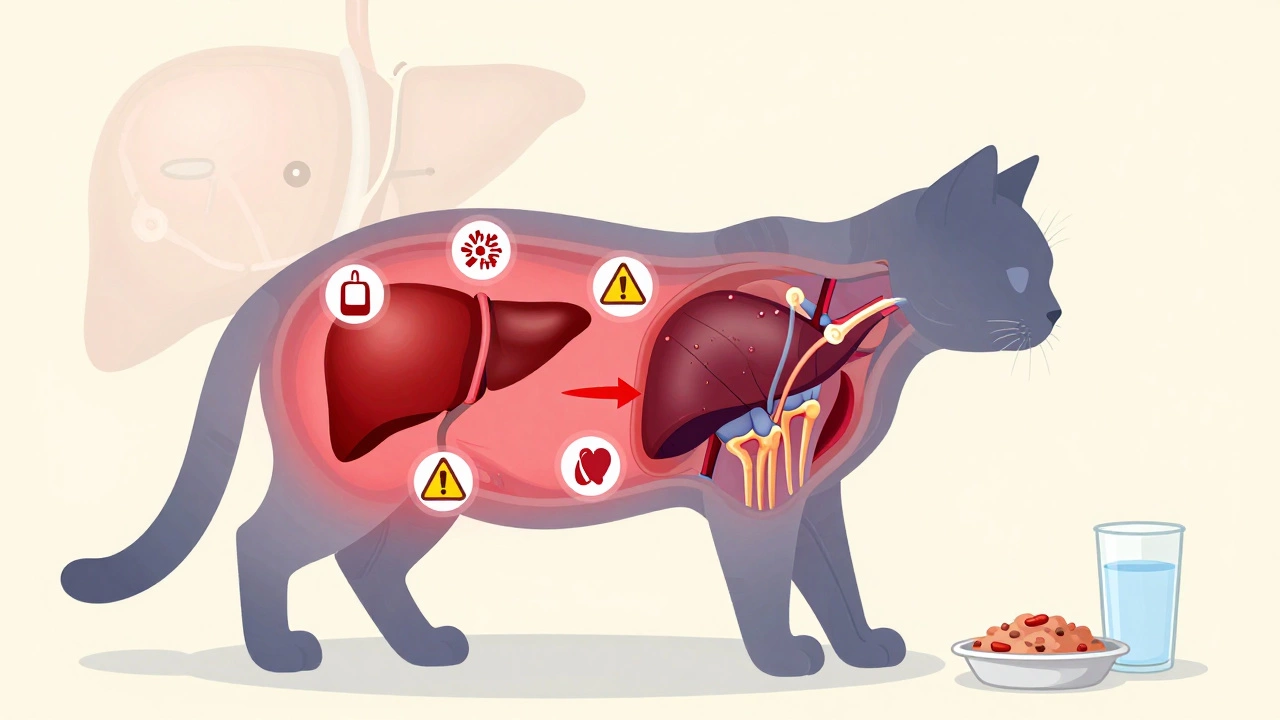
Obesity is the number one health issue in cats today. Over 60% of household cats in the U.S. and New Zealand are overweight or obese, according to the World Small Animal Veterinary Association. That’s not just about looks - it’s about life expectancy. Overweight cats are at much higher risk for diabetes, arthritis, urinary tract disease, and liver problems.
Free feeding also makes it impossible to notice when something’s wrong. If your cat suddenly stops eating, that’s a red flag. But if food is always there, you might not realize they’ve lost their appetite for two days until they’re lethargic and dehydrated. Early detection saves lives.
And then there’s the issue of portion control. Dry food is often high in carbohydrates - something cats don’t need. A typical cup of dry kibble can contain 300-400 calories. A healthy 10-pound cat only needs about 200-250 calories per day. Left to their own devices, many cats will eat 50% more than that. That’s like a human eating 3,000 calories a day when they only need 2,000.
What Does a Healthy Feeding Schedule Look Like?
Most vets recommend feeding adult cats two measured meals a day - morning and evening. This mimics their natural hunting rhythm and gives you control over intake. For a 10-pound cat, that’s usually about 1/3 to 1/2 cup of dry food split between meals, or a small can of wet food per meal.
Wet food is better for hydration and helps prevent urinary issues. If you’re feeding dry food, make sure fresh water is always available. But don’t rely on dry food alone. Many cats don’t drink enough water, and dry food only contains about 10% moisture. Wet food is 70-80% water.
Some owners worry about hunger between meals. But cats adapt quickly. If you’ve been free feeding, start by offering meals at set times and remove the food after 20-30 minutes. Don’t refill. Within a few days, your cat will learn the schedule. They might meow, pace, or stare at you. That’s not hunger - that’s habit.
When Is Free Feeding Actually Okay?
There are exceptions. Kittens under six months need more frequent meals - three to four times a day - because they’re growing fast. Senior cats with medical conditions like hyperthyroidism or diabetes may need special feeding plans, sometimes including free access to prescription food under vet supervision.
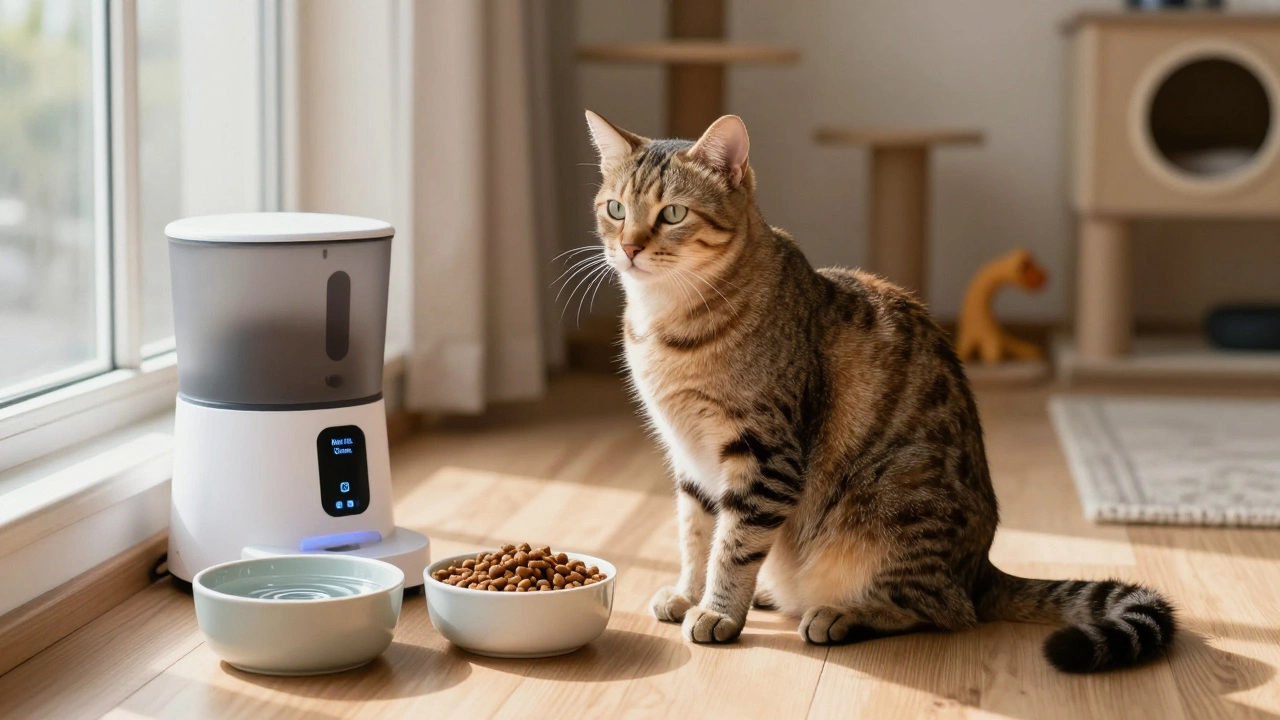
Some multi-cat households use automated feeders to give each cat their own portion at set times. That’s not free feeding - it’s scheduled, controlled access. But leaving a big bowl of food out for all cats to share? That’s a recipe for overeating and conflict.
Also, if your cat is underweight or recovering from illness, your vet might temporarily recommend free feeding to help them regain strength. But that’s a medical decision, not a lifestyle choice.
How to Transition from Free Feeding to Scheduled Meals
If you’ve been leaving food out all day, switching won’t happen overnight. Here’s how to do it without stressing your cat:
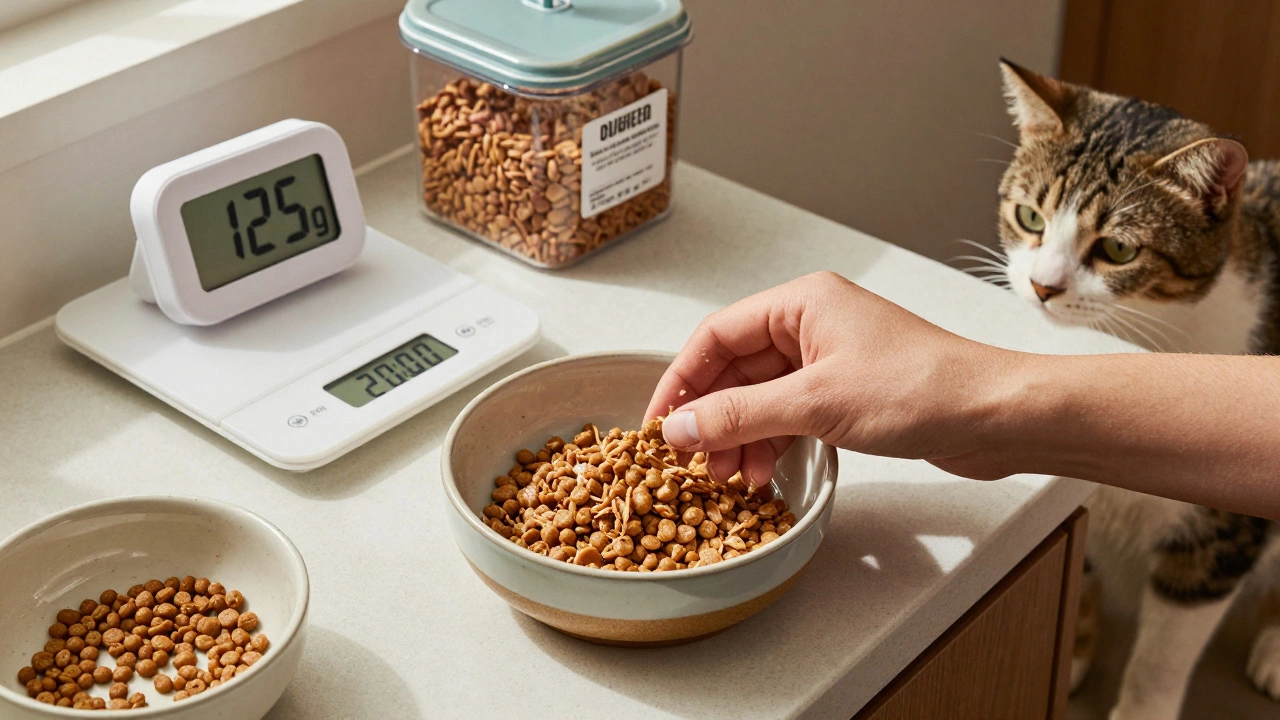
- Start by measuring out their daily food. Use a kitchen scale for accuracy.
- Divide it into two portions. Offer one in the morning, one in the evening.
- Remove the bowl after 20 minutes - even if they didn’t finish.
- Don’t give snacks or extra food between meals. No exceptions.
- Wait a week. Then, if your cat is still begging, try interactive feeders or puzzle toys. These slow down eating and stimulate mental activity.
It’s normal for cats to act like they’re starving for the first few days. They’re not. They’re just used to having food available. Stick with it. Within a week, most cats settle into the routine.
What About Automatic Feeders?
Automatic feeders can be helpful - but only if used correctly. They’re not a substitute for portion control. Set them to dispense measured amounts at set times, not to refill endlessly. Look for models that let you program multiple meals per day and control portion size. Avoid ones that just dump food into a bowl whenever the timer goes off.
Some models even let you record your voice. Try saying, “Time to eat,” before the feeder opens. It helps your cat associate the sound with mealtime, reducing anxiety.
Signs Your Cat Is Overeating
Watch for these red flags:
- Difficulty jumping onto the couch or bed
- A round, bulging belly with no waistline
- Excessive grooming or hairballs
- Increased thirst or urination
- Slower movement or reluctance to play
If you see any of these, it’s time to reassess feeding habits - and schedule a vet check. Weight loss should be gradual: 1-2% of body weight per week is safe. Too fast can cause liver damage.
What Do Vets Actually Recommend?
In New Zealand and the U.S., most veterinary nutritionists agree: scheduled meals are better than free feeding for the vast majority of cats. The American Association of Feline Practitioners (AAFP) recommends feeding adult cats two meals a day with wet food as the primary source of nutrition.
Why? Because it helps prevent obesity, improves digestion, encourages hydration, and gives owners a better chance to notice early signs of illness. It’s not about control - it’s about care.
And here’s something most owners don’t realize: cats that eat on a schedule are often calmer. They don’t spend all day hovering around the food bowl. They sleep, play, and rest in predictable patterns. That’s better for their mental health too.
Final Thought: It’s Not About Convenience - It’s About Health
Leaving food out all day might feel like the easy choice. But it’s not kind. It’s lazy. Cats can’t tell you they’re gaining weight. They can’t say they’re tired of being sluggish. They can’t ask for a better diet. That’s on you.
Feeding your cat two measured meals a day takes 10 minutes. It’s not hard. And the payoff? A healthier, more active, longer-lived cat. That’s worth a little extra effort.
Start today. Measure the food. Set the timer. Watch them thrive.