Cat Food Protein Calculator
Calculate Dry Matter Protein
Calculate the actual protein content after removing moisture. Essential for comparing wet and dry foods.
Dry Matter Protein
How to use this result:
30%+ protein on dry matter basis is ideal for cats.
Under 20% protein means insufficient nutrition.
Feeding your house cat the right food isn’t about what’s on sale or what your cat begs for most. It’s about matching their biology. Cats are obligate carnivores - meaning their bodies were built to live on meat. No grains. No vegetables. Just high-quality animal protein, fat, and the right balance of nutrients. If you’re wondering what the best food to feed a house cat is, the answer starts with understanding what your cat actually needs - not what the packaging claims.
What Cats Really Need to Thrive
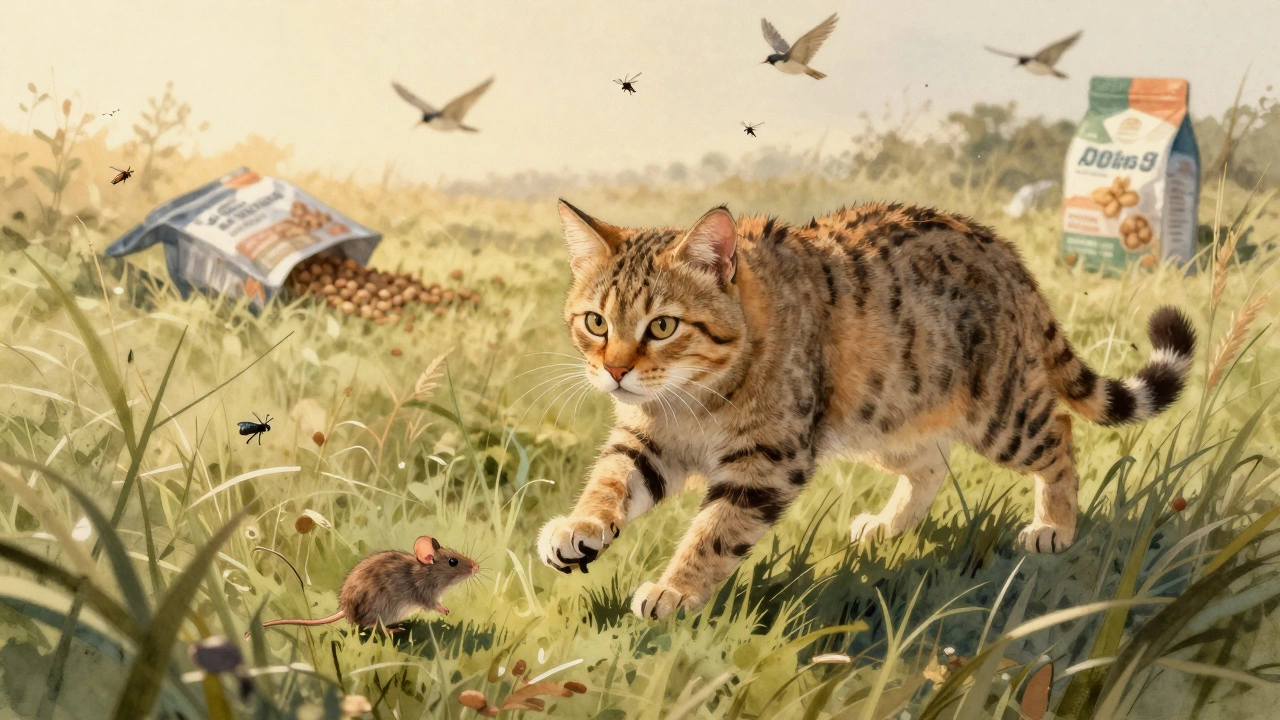
Your cat’s digestive system hasn’t changed in thousands of years. Wild cats eat small prey like mice, birds, and insects - all high in protein, moderate in fat, and low in carbs. That’s the blueprint. Commercial cat foods that are full of corn, wheat, or rice don’t match this. Even many dry foods, which are convenient, are often 30-40% carbohydrates. That’s too much. Cats don’t need carbs. They can’t process them well. Too many carbs can lead to obesity, diabetes, and even urinary problems.
Look at the first three ingredients on the label. If they’re not meat - like chicken, turkey, salmon, or beef - keep looking. The first ingredient should be a named animal protein, not "meat meal" or "poultry by-product." Whole meat is better. Also, avoid foods with artificial colors, flavors, or preservatives like BHA, BHT, or ethoxyquin. These have no place in a cat’s diet.
Wet Food vs Dry Food: The Real Difference
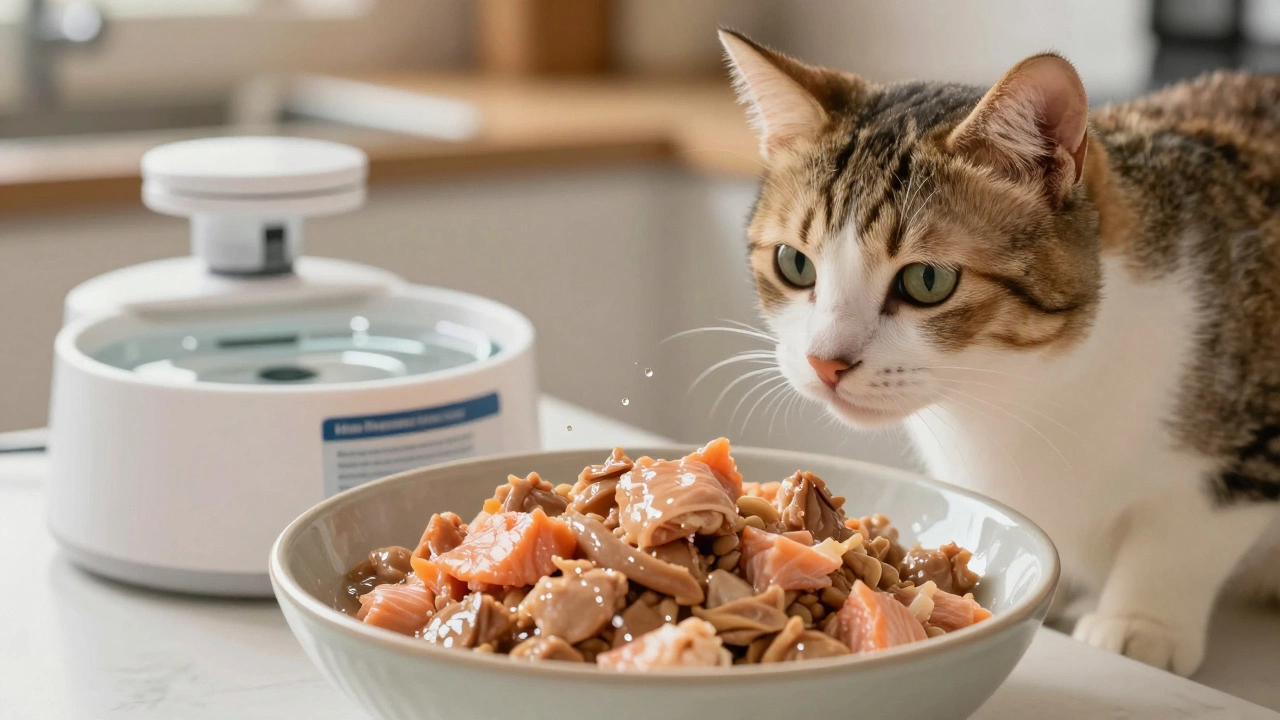
Wet food is usually the better choice for most house cats. Why? Water. Cats have a low thirst drive. In the wild, they get most of their water from prey. Dry food is only about 10% water. Wet food is 70-80%. That’s huge. Cats on dry food alone often don’t drink enough, which increases the risk of urinary tract infections and kidney disease - two of the most common health problems in older cats.
Studies from the University of California, Davis show that cats fed wet food have significantly better hydration levels and lower rates of lower urinary tract disease compared to those on dry food alone. Even if you feed dry food, adding a few tablespoons of wet food daily can make a real difference.
Wet food also tends to have more protein and fewer carbs. It’s harder to find a high-protein dry food that doesn’t rely on fillers. So if you’re trying to pick the best food, wet food wins on nutrition and hydration. But if your cat refuses wet food, don’t panic. Focus on the lowest-carb dry food you can find and make sure fresh water is always available.
What to Look for in Cat Food Labels
Reading cat food labels can feel like decoding a secret code. Here’s what actually matters:
- Protein source: Must be named animal protein (e.g., "chicken," "salmon," "lamb") - not "meat," "poultry," or "by-products."
- Protein percentage: Aim for at least 30% on a dry matter basis. Wet food has more water, so adjust. To calculate dry matter: subtract moisture percentage from 100, then divide protein percentage by that number. Example: 80% moisture, 10% protein → 10 ÷ 20 = 50% dry matter protein.
- Carbohydrates: Ideally under 10%. Most dry foods are 30-50%. If carbs aren’t listed, estimate by subtracting protein, fat, moisture, and ash from 100.
- AAFCO statement: Must say the food is "complete and balanced" for adult cats or all life stages. This isn’t marketing - it’s a legal requirement for nutritional adequacy.
- No artificial additives: Skip anything with BHA, BHT, ethoxyquin, or artificial colors.
Brands like Hill’s Science Diet, Royal Canin, and Purina Pro Plan are widely available and meet AAFCO standards. But don’t assume they’re the best just because they’re popular. Some of their formulas are high in carbs. Always check the ingredient list and nutritional profile.
Raw and Homemade Diets: Are They Worth It?
Some cat owners switch to raw or homemade diets because they believe it’s more natural. And in theory, it can be. But it’s risky if you don’t know what you’re doing. Cats need taurine - an amino acid found only in meat. A deficiency can cause blindness or heart failure. They also need vitamin A, arachidonic acid, and other nutrients that are hard to balance without supplements.
A 2023 study from the University of Guelph analyzed 200 homemade cat diets and found that 95% were nutritionally incomplete. Many lacked calcium, vitamin D, or taurine. Even experienced home cooks made these mistakes.
If you want to try raw or homemade, use a recipe formulated by a veterinary nutritionist - not one from a blog or YouTube video. Companies like BalanceIT or PetDiets.com offer tested recipes and supplements. It’s more expensive and time-consuming, but if done right, it can work.
What About Grain-Free and Limited Ingredient Diets?
Grain-free sounds healthier, but it’s not automatically better. Many grain-free foods replace grains with potatoes, peas, or lentils - which are still carbs. In fact, the FDA has been investigating a possible link between grain-free diets and dilated cardiomyopathy (DCM) in cats, though the evidence is still emerging. The real issue isn’t grains - it’s low-quality protein and poor formulation.
Limited ingredient diets (LIDs) are useful if your cat has food allergies. But true food allergies in cats are rare. More often, cats have intolerances to certain proteins - usually chicken or fish. If your cat has vomiting, diarrhea, or itchy skin, try switching to a novel protein like duck, rabbit, or venison - not just a grain-free version of the same food.
Feeding Tips for House Cats
Even the best food won’t help if it’s not fed right. Here’s what works in real life:
- Feed multiple small meals a day. Cats aren’t designed to eat once or twice. Two to four meals mimics their natural hunting pattern.
- Use puzzle feeders or slow-feed bowls. They slow down fast eaters and stimulate mental activity.
- Don’t leave dry food out all day. It loses freshness and encourages overeating.
- Always have fresh water nearby. Consider a cat water fountain - many cats prefer running water.
- Monitor weight. Even a 10% weight gain can lead to health problems. Keep your cat lean - you should be able to feel their ribs with light pressure.
Common Mistakes to Avoid
Here are the top five mistakes cat owners make with food:
- Feeding dog food by accident - it’s too low in taurine and too high in carbs.
- Giving table scraps - especially onions, garlic, dairy, or fish bones.
- Switching food too quickly - always transition over 7-10 days to avoid digestive upset.
- Assuming "premium" or "natural" means healthy - these are marketing terms with no legal definition.
- Ignoring your cat’s age. Kittens, adults, and seniors need different nutrient levels.
One client in Auckland switched her 12-year-old cat from dry to wet food after she was diagnosed with early kidney disease. Within three months, her cat’s hydration improved, her appetite came back, and her vet said her bloodwork was the best it had been in two years. That’s the power of the right food.
Final Answer: What’s the Best Food for a House Cat?
The best food for a house cat is a high-protein, low-carb, moisture-rich diet made from named animal ingredients. Wet food is usually the top choice because it matches their natural physiology. If you feed dry, choose the lowest-carb option with real meat as the first ingredient. Avoid fillers, artificial additives, and vague terms like "meat meal."
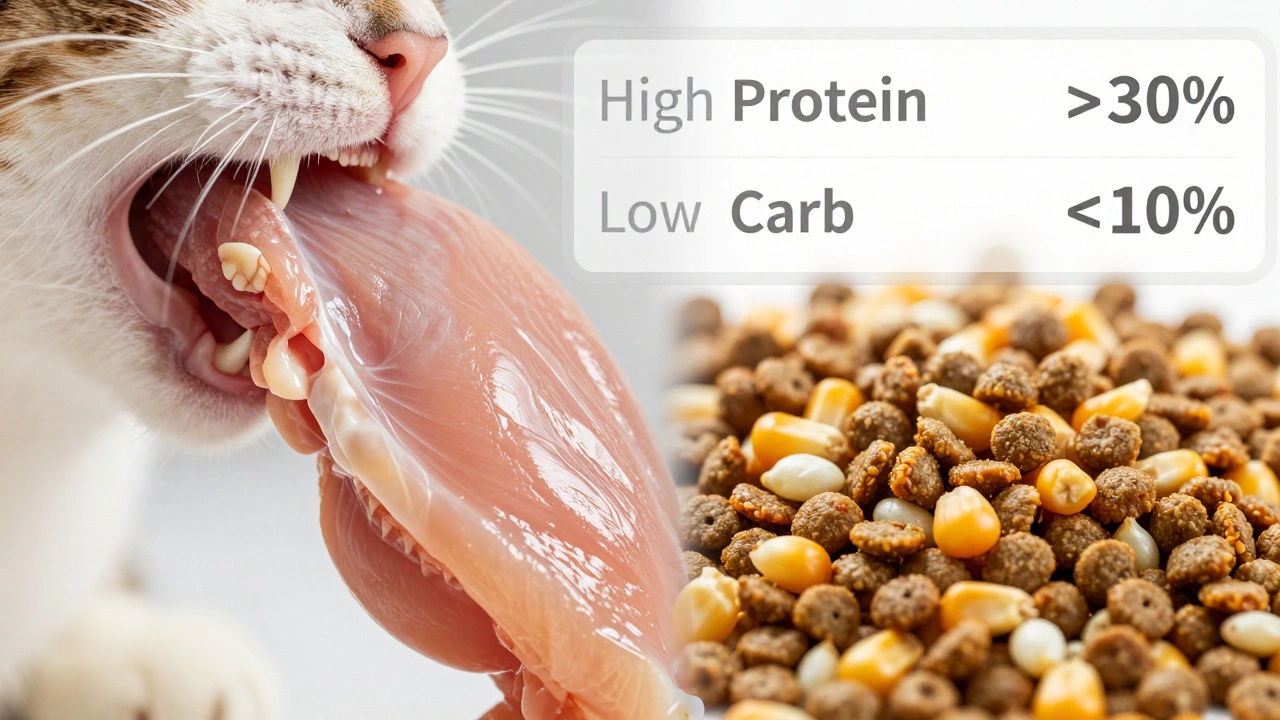
There’s no single brand that’s perfect for every cat. But if you focus on the numbers - protein over 30%, carbs under 10%, moisture over 70% - you’ll find food that truly supports your cat’s health. And if you’re unsure, talk to your vet. They can help you pick a food based on your cat’s age, weight, and health history.
Your cat isn’t a small dog. They don’t need grains. They don’t need vegetables. They need meat. Feed them like it.
Is wet food better than dry food for cats?
Yes, for most cats. Wet food has 70-80% water, which helps prevent dehydration and reduces the risk of urinary and kidney problems. It also typically has more protein and fewer carbs than dry food. While dry food is convenient, it’s not ideal for long-term health unless paired with plenty of fresh water and careful selection.
Can I feed my cat human food?
Some human foods are safe in tiny amounts - like plain cooked chicken or fish. But many are dangerous: onions, garlic, chocolate, caffeine, alcohol, grapes, and raw dough. Even small amounts can cause poisoning or digestive issues. It’s safer to stick to cat-specific food.
How do I know if my cat’s food is high quality?
Check the first three ingredients - they should be named meats like chicken, turkey, or salmon. Avoid foods with corn, wheat, soy, or artificial additives. Look for an AAFCO statement saying it’s "complete and balanced" for your cat’s life stage. Also, aim for at least 30% protein and under 10% carbohydrates on a dry matter basis.
Should I switch my cat’s food if they’re healthy?
If your cat is healthy, active, has a shiny coat, and good stools, you may not need to switch. But that doesn’t mean their current food is ideal. Many cats on dry food are quietly dehydrated or eating too many carbs. If you’re unsure, consult your vet or try switching to a higher-protein, wet food option for a few weeks to see how they respond.
What’s the best cat food brand?
There’s no single "best" brand. Top choices like Hill’s Science Diet, Royal Canin, and Purina Pro Plan offer good options, but so do smaller brands like Tiki Cat, Weruva, and Orijen. The key is matching the food to your cat’s needs - not the brand name. Always check the ingredient list and nutritional profile, not the marketing.
Next Steps for Cat Owners
Start by checking the label on your cat’s current food. Look at the first three ingredients. Does it list a real meat? What’s the moisture content? If you can’t find it, call the company - they’re required to provide it.
Then, consider switching one meal a day to wet food. Even if your cat is picky, try warming it slightly or mixing it with a little water. Many cats will adjust within a few days.
If your cat has health issues - like frequent urination, weight gain, or dull fur - talk to your vet. They can recommend a therapeutic diet or run blood tests to see if nutrition is part of the problem.
Feeding your cat right isn’t about spending the most money. It’s about spending it wisely. Choose quality over convenience. Your cat will thank you with more energy, better health, and a longer life.