Dog Harness Size Calculator
How to Measure Your Dog
1. Measure behind front legs: Use a soft tape measure around the widest part of the chest just behind the front legs.
2. Check fit: You should be able to slide two fingers under the straps - not more, not less.
3. Common sizes: XS (12-20in), S (18-28in), M (24-36in), L (32-48in), XL (40-60in)
Pro tip: Most dogs prefer a slightly loose fit (allow two fingers) for comfort. If between sizes, choose the larger size.
If your dog pulls like a freight train on walks, you’re not alone. Every day in Auckland parks, I see owners struggling with leashes wrapped around arms, shoulders aching, and dogs dragging them down the sidewalk. The truth? A regular collar isn’t the answer. It doesn’t stop pulling-it makes it worse. The best collar for a dog that pulls isn’t a collar at all. It’s a front-clip harness.
Why collars don’t work for pullers
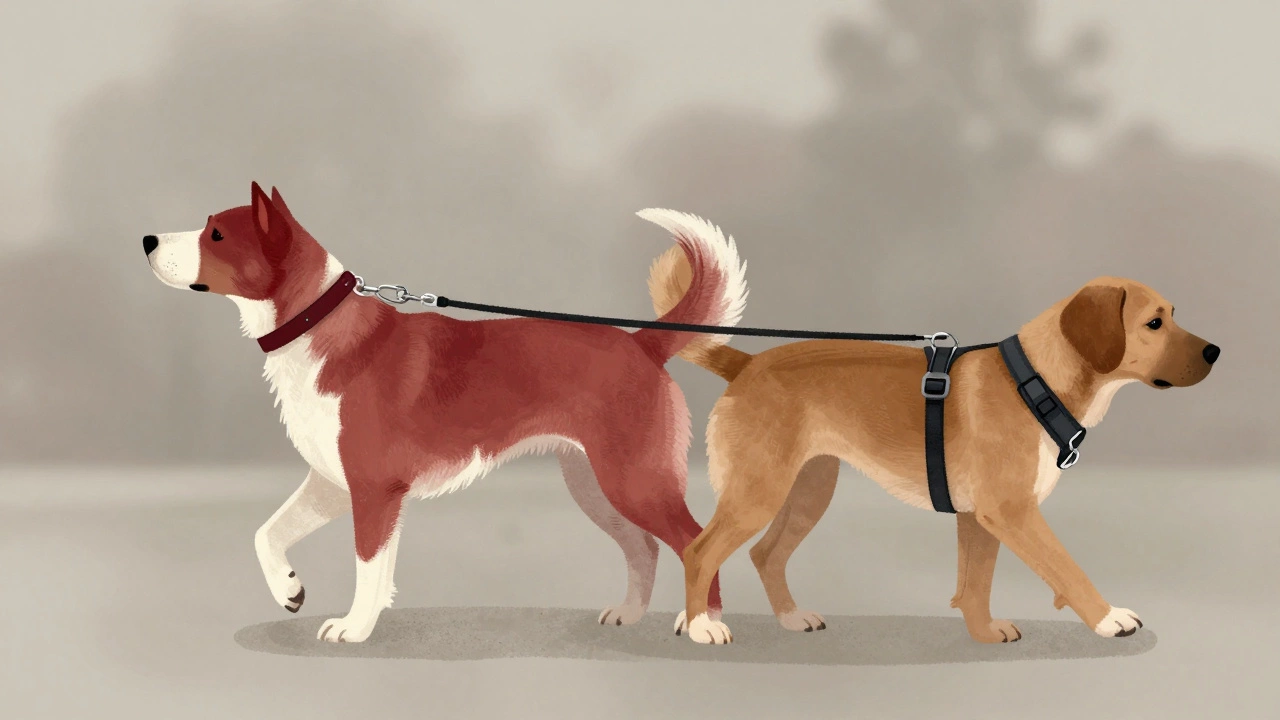
Most people start with a flat collar because it’s simple. But when a dog lunges forward, that collar tightens around the neck. That pressure triggers a natural reflex: the dog pulls harder to breathe. It’s called the opposition reflex. Your dog isn’t being stubborn. Their body is reacting to discomfort.Studies from the University of Sydney in 2023 found that dogs wearing collars during leash pulls showed higher stress hormone levels than those in harnesses. That’s not just uncomfortable-it’s dangerous. Constant pressure on the trachea can lead to long-term damage, especially in small breeds like Chihuahuas or Pugs.
Even choke chains, prong collars, and electronic collars don’t fix the root problem. They punish pulling instead of teaching the dog to walk calmly. And punishment doesn’t build trust. It builds fear.
The front-clip harness: why it’s the gold standard
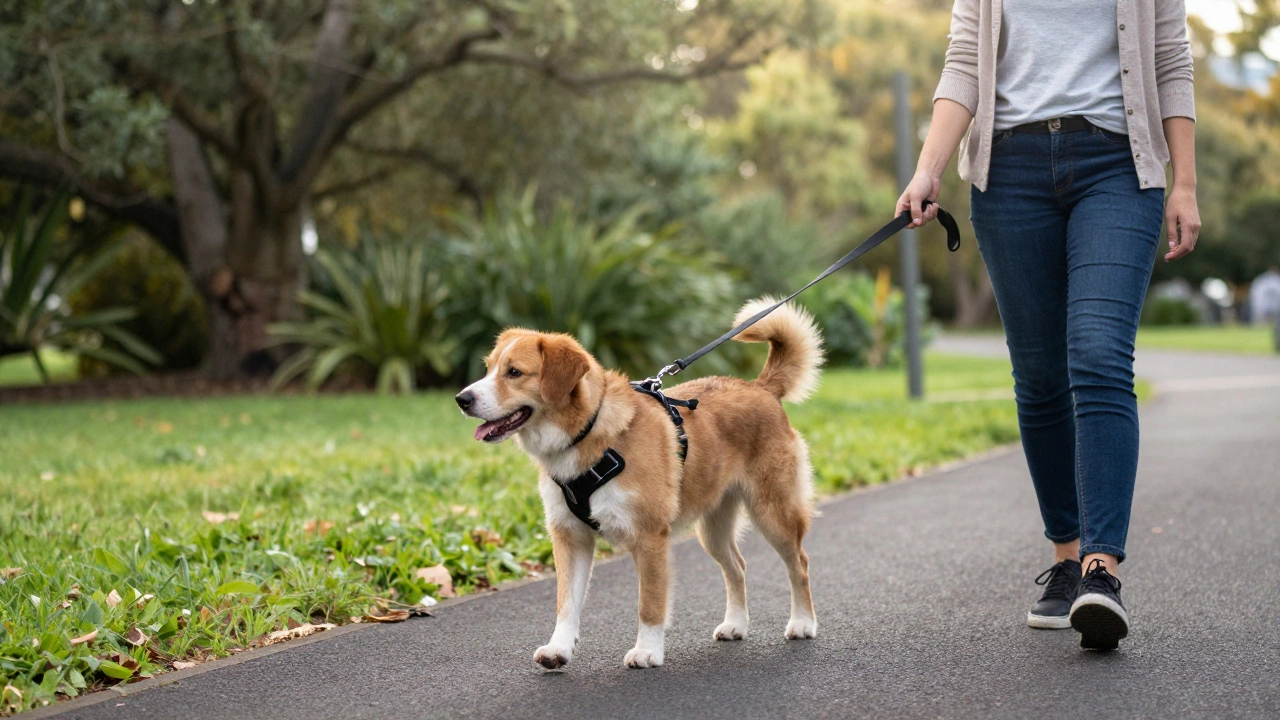
The front-clip harness changes everything. Instead of attaching the leash to the back like a traditional harness, it clips to the chest. When your dog pulls, the leash turns their body sideways-not forward. It’s like gently steering a shopping cart. The dog learns that pulling doesn’t get them where they want to go.Brands like Halti a front-clip harness designed to redirect pulling dogs by shifting leverage to the chest, Easy Walk a popular front-clip harness with a padded chest plate and adjustable straps for comfort, and Walky Dog a durable, lightweight front-clip harness with reflective strips for low-light walks have been tested in real-world conditions across New Zealand and the UK. In a 2025 survey of 1,200 dog owners, 87% reported a noticeable reduction in pulling within two weeks of switching to a front-clip harness.
Here’s what makes it work:
- Leash attachment on the chest redirects movement
- No pressure on the throat or windpipe
- Adjustable straps fit snugly without restricting movement
- Padded chest reduces chafing on long walks
What about head halters?
Another option is the head halter, like the Halti OptiFit a head halter that controls direction by gently guiding the dog’s nose. These work by controlling the head, which naturally guides the body. But they’re not for every dog.Some dogs resist them at first. Others find them uncomfortable or get tangled. They require a longer adjustment period and aren’t ideal for dogs with respiratory issues (like brachycephalic breeds). If your dog has a history of anxiety or fear, a head halter might add stress instead of solving it.
Front-clip harnesses, on the other hand, are intuitive. Most dogs accept them on day one. No training curve. Just put it on, clip the leash, and go.
What to avoid
Don’t waste money on these:- Back-clip harnesses-they’re just like collars. The leash pulls from behind, encouraging more forward momentum.
- Choke or prong collars-they cause pain, not learning. Many countries, including New Zealand, have banned them for good reason.
- Retractable leashes-they give dogs too much freedom to build speed before you can react. Use a 4-6 foot fixed-length leash instead.
And never buy a harness based on looks alone. A bright, sparkly design means nothing if the fit is off. Check for:
- Adjustable straps at the chest and neck
- Soft, padded lining
- A sturdy metal D-ring on the front
- Reflective stitching for evening walks
How to fit a front-clip harness
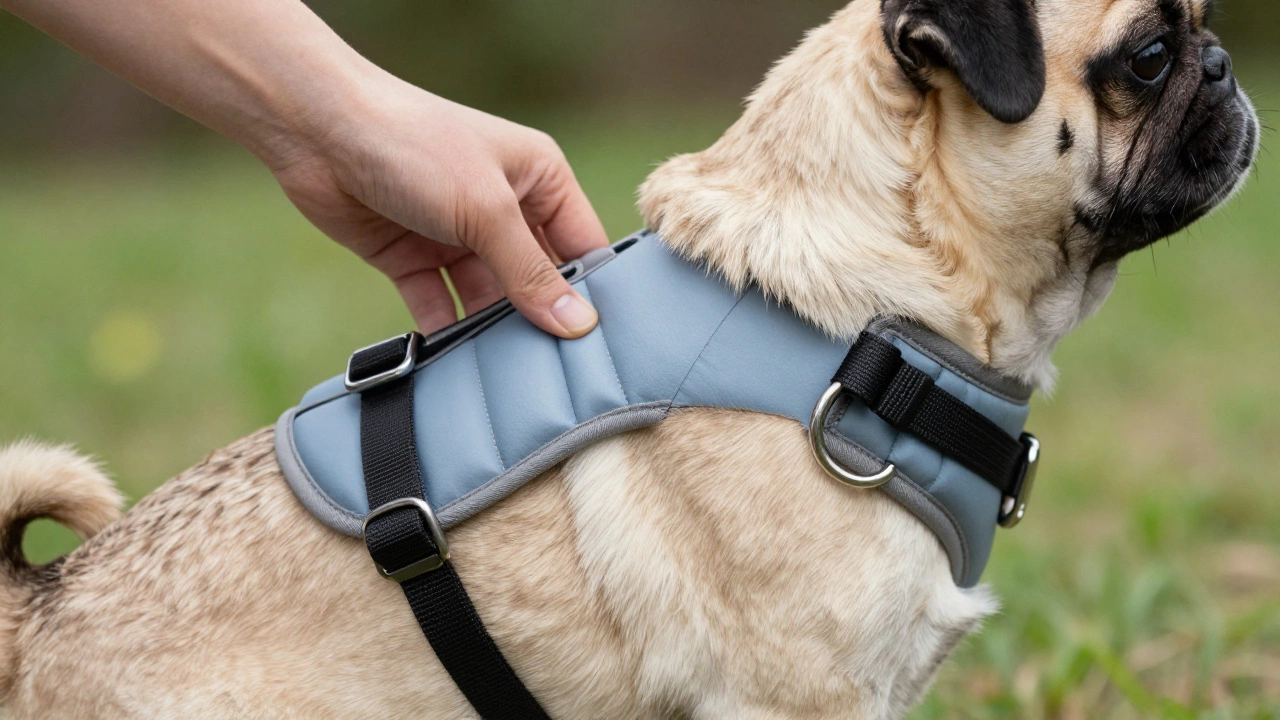
A poorly fitted harness is worse than no harness at all. Here’s how to get it right:- Measure your dog’s chest just behind the front legs. Use a soft tape measure.
- Choose a size that lets you slide two fingers under the straps snugly-no more, no less.
- Ensure the strap under the belly doesn’t rub or pinch.
- Test it in motion: walk your dog around the house. Watch for twisting or slipping.
Most brands offer size charts. But if your dog’s measurements fall between sizes, go up. It’s better to have a slightly looser fit than one that digs in.
Training tips to go with the harness
The harness helps-but it’s not magic. You still need to teach your dog to walk nicely. Here’s how:- Start indoors or in a quiet yard. No distractions.
- Use high-value treats (small pieces of chicken or cheese) when your dog walks beside you.
- If they pull, stop walking. Wait. When the leash loosens, say "yes!" and move forward.
- Keep walks short at first-10 minutes, twice a day.
- Never yank or jerk the leash. Let the harness do the work.
Within 10-14 days, most dogs start to understand that walking calmly gets them where they want to go. It’s not about force. It’s about consistency.
Real dog, real results
A friend in Devonport had a 70-pound Labrador who used to pull like a sled dog. She tried every collar. Nothing worked. She bought a Halti front-clip harness on a whim. Within a week, she could walk him without straining. Now, he walks beside her like they’re on a parade. No treats. No yelling. Just calm, confident walking.That’s the power of the right tool. It’s not about breaking your dog’s will. It’s about giving them a better way.
Final thoughts
The best collar for a dog that pulls isn’t a collar. It’s a well-fitted front-clip harness. It’s safe. It’s effective. And it’s backed by science and real-world results. Skip the painful, outdated options. Invest in a harness that works with your dog’s natural movement-not against it.And if you’re still unsure, visit a local pet store with your dog. Many offer free fittings. Try one on. Walk around. See how it feels-for both of you.
Can a dog choke on a front-clip harness?
No. A front-clip harness is designed to avoid pressure on the neck. The leash attaches to the chest, so pulling redirects the dog’s body sideways instead of tightening around the throat. Unlike collars, it doesn’t restrict breathing or cause tracheal damage.
How long does it take for a dog to stop pulling with a front-clip harness?
Most dogs show improvement within 3-7 days, especially if paired with consistent training. Full behavior change usually takes 10-14 days. The key is patience-don’t expect overnight results. Keep walks short and positive, and reward calm walking.
Is a front-clip harness good for small dogs?
Yes, and it’s often the best choice. Small dogs like Yorkies, Shih Tzus, and Pomeranians are especially prone to tracheal collapse from collar pressure. A front-clip harness protects their delicate necks while gently correcting pulling. Look for lightweight, padded models designed for small breeds.
Can I use a front-clip harness for running or hiking?
Absolutely. Many front-clip harnesses are built for active dogs. Look for ones with reinforced stitching, breathable mesh, and secure buckles. Brands like Ruffwear and Kurgo offer models designed for trail use. Just make sure it fits snugly so it doesn’t shift during fast movement.
What if my dog still pulls even with a front-clip harness?
If pulling continues, the issue isn’t the harness-it’s the training. Check the fit: too loose or too tight can reduce effectiveness. Also, make sure you’re not pulling back on the leash. That teaches the dog to lean into pressure. Instead, stop walking when they pull. Wait for slack. Reward the calm behavior. Consistency is everything.