Total Pet Travel Cost Calculator
Flight Details
Cost Comparison Results
Enter your flight details to see which airline offers the best value for traveling with your pet.
You pack your bags, book your flight, and then you remember: Fido needs a ticket too. Suddenly, that $300 round-trip just jumped to $400 or more. If you are planning a trip with your dog or cat in 2026, finding the lowest pet fee is not just about saving money-it is about avoiding surprise charges at the gate. The airline industry has shifted significantly over the last few years. While some carriers have raised prices due to increased demand for pet-friendly flights, others have kept their rates competitive to attract travelers who refuse to leave their companions behind.
The short answer? It depends on where you are flying. For domestic flights within the United States, Southwest Airlines remains the gold standard for low-cost pet travel. However, if you are looking at international routes or specific regional hubs, other carriers like JetBlue and Delta offer compelling value depending on your loyalty status and route availability. This guide breaks down exactly who charges what, so you can stop guessing and start booking.
Key Takeaways: Who Charges the Least?
- Domestic US Champion: Southwest Airlines charges a flat $95 each way for pets traveling in the cabin, regardless of distance.
- Best for Long-Haul Domestic: JetBlue charges $125 each way but offers a larger carrier allowance and often includes free checked baggage for humans, offsetting costs.
- International Budget Option: Air Canada and Lufthansa often provide lower per-kilo fees for cargo transport compared to major US carriers, though cabin fees vary by region.
- Loyalty Perks Matter: Delta SkyMiles Medallion members and United Premier members can sometimes waive or reduce pet fees, effectively making them the cheapest option for frequent flyers.
- Hidden Costs: Always check for "service animal" scams; airlines strictly enforce ESA rules now, meaning emotional support animals pay the same as regular pets unless they are certified service dogs.
Southwest Airlines: The Consistent Low-Cost Leader
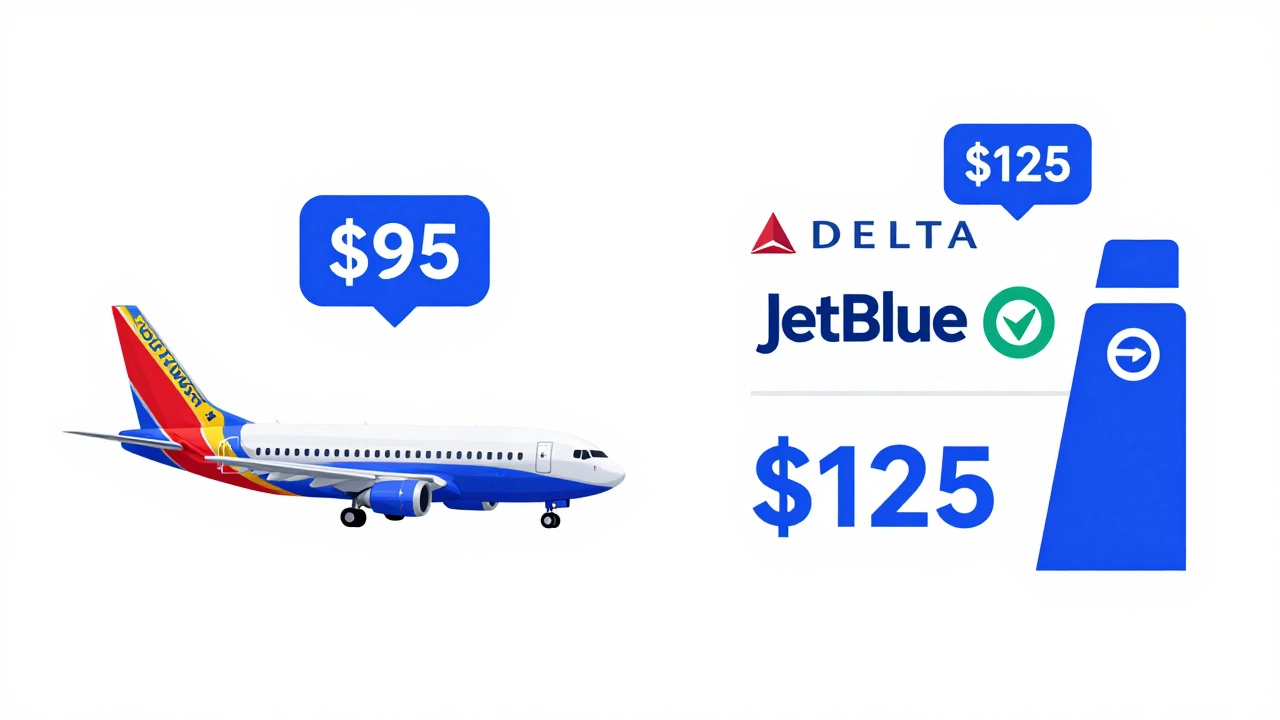
When we talk about the absolute lowest base fee for bringing a pet into the cabin, Southwest Airlines is hard to beat. Their policy is straightforward: $95 each way. That is it. Whether you are flying from Baltimore to Atlanta (a short hop) or Los Angeles to New York (a cross-country trek), the price does not change. This simplicity is refreshing in an industry that loves tiered pricing.
Why does this matter? Because predictability saves you money. With other airlines, you might see fees scale up based on distance or fuel surcharges. Southwest keeps it flat. However, there is a catch. Southwest only allows one small pet carrier per flight, and they fill up fast. You must call their reservations line to add your pet to the reservation because you cannot do it online. If you wait until check-in, you risk being bumped if the limit is reached.
| Airline | Fee Each Way | Carrier Size Limit | Pets Per Flight |
|---|---|---|---|
| Southwest Airlines | $95 | Fits under seat (approx. 16.25 x 13.5 x 8.5 inches) | 6 (varies by aircraft) |
| JetBlue | $125 | Larger allowance (up to 17.5 x 13 x 8 inches) | Varies by aircraft |
| Delta Air Lines | $125 | Fits under seat | Varies by aircraft |
| United Airlines | $125 | Fits under seat | Varies by aircraft |
| American Airlines | $125-$150 | Fits under seat | Varies by aircraft |
For most casual travelers, Southwest is the winner. But if you are flying internationally or need to check your pet as cargo, the math changes completely. Southwest does not accept pets as checked baggage or cargo. They only allow cats and dogs in the cabin. If your dog is too big to fit under the seat, Southwest is not an option for you, no matter how cheap the fee is.
JetBlue and Delta: Value Beyond the Base Fee
If Southwest’s single-pet-per-flight rule stresses you out, or if your pet is slightly larger, JetBlue and Delta become strong contenders. Both charge $125 each way, which is $30 more than Southwest. But here is where the "true cost" calculation gets interesting.
JetBlue is known for its spacious seats and generous personal item policies. Their pet carrier dimensions are slightly more forgiving than Southwest’s. More importantly, if you are already paying for Extra-Legroom seats or bundles that include checked bags for yourself, the relative impact of the $125 pet fee feels smaller. JetBlue also tends to have fewer restrictions on the number of pets allowed per flight on certain wide-body aircraft, reducing the anxiety of being bumped.
Delta Air Lines operates similarly with a $125 fee. However, Delta’s true advantage lies in its loyalty program. If you are a SkyMiles Medallion member (Platinum, Diamond, or even Gold in some cases), you may be eligible for waived pet fees or priority boarding for pets. For a family that flies Delta frequently, earning elite status can make the pet fee effectively zero. In this scenario, Delta becomes the cheapest option, beating Southwest hands down.
Consider this: If you fly twice a year with your dog, Southwest saves you $60 total ($30 x 2). If you fly six times a year and have Delta Gold status, you save $750 ($125 x 6). Context matters.
International Flights: The Hidden Cost Trap
Domestic fees are one thing; international pet travel is a different beast entirely. When you cross borders, you are dealing with customs regulations, health certificates, and often higher carrier fees. There is no single "lowest fee" airline globally because fees are structured differently across regions.
In Europe, carriers like Lufthansa and Air France typically charge between €70 and €100 each way for cabin pets. This converts to roughly $75-$110 USD, which is competitive with US domestic rates. However, European carriers are strict about carrier sizes. Your bag must fit perfectly under the seat, and weight limits (usually including the pet) are enforced rigorously.
For transatlantic flights, British Airways charges around £100 ($125 USD) each way. Emirates, a popular hub for long-haul travel, charges approximately $125 USD for cabin pets but requires them to be in approved carriers. The key difference here is the lack of flexibility. On long-haul international flights, space is tighter, and airlines are less likely to make exceptions.
If you are flying from North America to Asia or Australia, look at ANA (All Nippon Airways) or Qantas. ANA charges around $125 USD each way. Qantas, however, has complex rules depending on whether you are flying domestically within Australia or internationally. For intra-Australia flights, Qantas charges AUD 100 (approx. $65 USD) each way, which is incredibly cheap if you are traveling within the country.
Cargo vs. Cabin: When Size Matters
Not every pet fits in a bag. Large breeds like Golden Retrievers, Labradors, or Great Danes often cannot travel in the cabin. In these cases, you must ship them as cargo. Here, the concept of "lowest fee" shifts dramatically. Cargo fees are calculated by weight and dimension, not a flat rate.
United Airlines and American Airlines have robust cargo divisions. For a medium-to-large dog, expect to pay anywhere from $200 to $500+ depending on the distance and season. Summer months (June through August) are peak season for pet travel, and many airlines restrict cargo shipments due to heat embargoes. This means you might find the "cheapest" airline unavailable for your dates.
Specialized pet shipping services like Global Pet Express or PetAirways often negotiate bulk rates with airlines. While they charge a service fee, they can sometimes secure lower base airfare than you would get booking directly. For expensive breeds or anxious pets, the peace of mind is worth the extra cost. But if you are strictly looking for the lowest dollar amount, booking cargo directly with United or American via their freight portals is usually cheaper than using a third-party agent.
How to Avoid Surprise Fees and Bumps
Even if you pick the airline with the lowest listed fee, you can still end up paying more-or worse, getting stranded-by ignoring the fine print. Here is how to protect yourself.
- Call Early: Never assume you can add your pet at check-in. Most airlines require you to register your pet 24-48 hours before departure. Southwest requires a phone call. Do this as soon as you book your ticket.
- Measure Your Carrier Twice: Airlines measure the carrier *including* wheels and handles. A carrier that looks like it fits might be rejected at the gate. Buy a soft-sided carrier that can compress slightly if needed.
- Check Heat Embargoes: If you are traveling in summer, check if your airline has temperature restrictions for cargo pets. If the ground temperature exceeds a certain degree (often 85°F/29°C), your pet cannot fly as cargo. Plan your travel dates accordingly or choose a cabin-only airline.
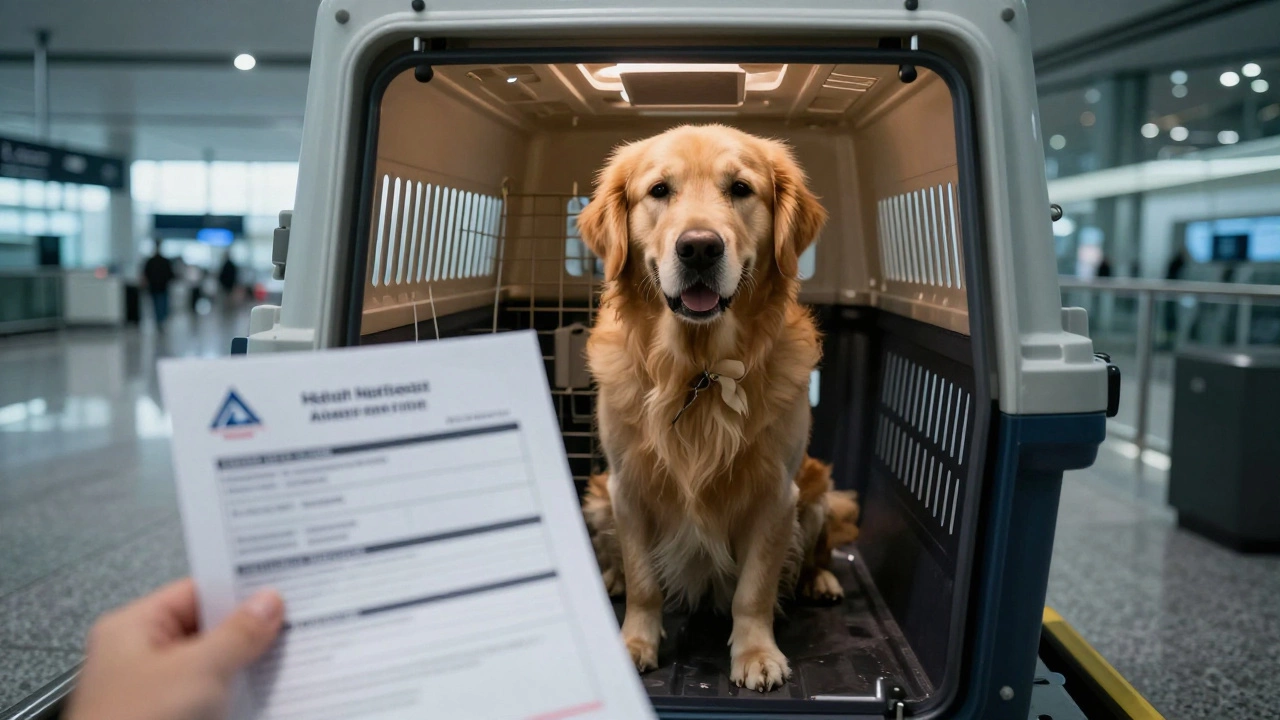
- Verify Health Certificates: For international travel, a USDA-endorsed health certificate is mandatory. These cost $100-$200 from a vet. Factor this into your total budget. The "lowest airline fee" doesn’t matter if you get turned away at customs for missing paperwork.
- Don’t Rely on Emotional Support Animal Status: Since 2021, most US airlines no longer recognize Emotional Support Animals (ESAs) as service animals. They must travel as regular pets and pay the full fee. Only certified Service Dogs (trained to perform tasks for a disability) travel for free. Misrepresenting an ESA as a service dog can result in fines and bans.
Regional Carriers and Budget Options
Sometimes the best deal isn’t with the major legacy carriers. Regional airlines like Alaska Airlines (which partners with Delta) charge $100-$125 each way. Alaska is particularly pet-friendly, allowing two pets per flight on some routes and offering a smoother experience for West Coast travelers.
In Latin America, Avianca and LATAM offer competitive rates for cabin pets, often ranging from $75 to $100 USD equivalent. If you are traveling within these regions, local carriers will almost always be cheaper than flying into a US hub and connecting.
Low-cost carriers like Spirit Airlines and Frontier do not allow pets in the cabin at all. This is a critical distinction. Many travelers assume "budget airline" means "cheap pet travel," but in reality, these ultra-low-cost carriers exclude pets entirely to maximize seat density. Always verify pet policy before booking with a budget brand.
Final Thoughts: Choosing the Right Airline for You
There is no single airline that is the cheapest for everyone. The "best" choice depends on your route, your pet’s size, and your loyalty status. For most US domestic travelers with small pets, Southwest Airlines offers the lowest transparent fee at $95 each way. For those who fly frequently or need larger carrier allowances, JetBlue and Delta provide better overall value, especially when loyalty perks are applied.
International travelers should compare European carriers like Lufthansa for mid-range fees and Asian carriers like ANA for consistency. Always remember that the ticket price is only part of the equation. Factor in carrier costs, vet certificates, and potential baggage fees for yourself. By planning ahead and understanding the hidden rules, you can keep your pet travel costs low and your stress levels even lower.
Does Southwest Airlines really have the lowest pet fee?
Yes, for domestic flights within the United States, Southwest Airlines charges a flat $95 each way, which is lower than most major competitors like Delta, United, and American Airlines, who charge $125 or more. However, Southwest only allows one pet carrier per flight, so you must book early.
Can I bring my pet for free on any airline?
Generally, no. Only certified Service Dogs (trained to perform specific tasks for a person with a disability) travel for free in the cabin. Emotional Support Animals (ESAs) are no longer exempt from fees on most US airlines and must pay the standard pet fee. Some elite loyalty members may get waivers, but this is rare.
Which airlines do not allow pets at all?
Ultra-low-cost carriers like Spirit Airlines and Frontier Airlines do not allow pets in the cabin. They focus on maximizing seat capacity and do not accommodate live animals. Always check the specific airline's pet policy before booking with a budget carrier.
How much does it cost to fly a large dog as cargo?
Cargo fees vary widely based on weight, dimensions, and distance. For a large dog, expect to pay between $200 and $500+ for a one-way domestic flight. International cargo fees can exceed $1,000. Prices increase during peak summer months due to heat embargoes and high demand.
Do I need a health certificate for domestic flights?
Most US airlines do not require a health certificate for domestic travel within the continental United States. However, Hawaii has strict quarantine and health certificate requirements. Always check the destination state's regulations and the airline's specific rules, as policies can change.
What is the best airline for international pet travel?
There is no single "best" airline, but Lufthansa and Air France are known for efficient pet handling in Europe, while ANA and Qatar Airways are highly rated for long-haul international routes. Look for airlines with dedicated pet lounges and clear climate-controlled cargo facilities. Always verify entry requirements for your destination country.