Puppy First Night Sleep Schedule Planner
Bladder Capacity Estimate
Based on the rule of thumb (1 hour per month of age + 1), a puppy this age can hold it for approximately 3 hours. You should plan to wake up for potty breaks during this window.
It is 11:30 PM. The house is quiet. You are exhausted from the day’s chaos of potty breaks and chewing incidents. Your new puppy is finally asleep in its crate or pen. The logical part of your brain says, "Let them sleep." But then you hear it-a high-pitched whine that turns into a full-blown howl. Your heart sinks. Did you make a mistake bringing this tiny creature home? Should you have left the puppy alone on its first night?
The short answer is no. Leaving a puppy completely alone and isolated during its first night is rarely a good idea. Puppies are social animals who have just been separated from their mother and littermates for the very first time. To them, silence isn't peaceful; it's terrifying. However, "not leaving them alone" doesn't mean they should be running loose in your living room either. It means managing their environment so they feel safe, secure, and close to you.
Understanding the Puppy's Perspective
To handle the first night correctly, you need to understand what is happening inside your puppy's head. At eight weeks old, a puppy has spent every second of its life surrounded by warmth, noise, and movement. Suddenly, it is placed in a cold, hard plastic box or an empty room in a strange house with giant, unpredictable humans.
This transition triggers a stress response. The whining you hear isn't manipulation; it is a distress signal. In the wild, a lone pup is vulnerable to predators. By vocalizing, the puppy is calling for its pack. If you ignore this call entirely, the puppy learns that it is truly abandoned. This can set the stage for severe separation anxiety later in life.
Think of it like moving to a new country where you don't speak the language, all by yourself, at two years old. You wouldn't expect immediate calmness. You would expect crying, confusion, and a desperate need for comfort. Your job is not to coddle the puppy into dependency, but to provide enough security to lower the panic threshold.
Setting Up the Safe Zone
Before the sun goes down, you need to prepare the sleeping area. The goal is to create a den-like environment that feels cozy and confined. Large spaces can actually increase anxiety because there is too much room to wander and nothing to hide behind.
Crate training is the gold standard for this, but it must be done right. If the crate is too big, the puppy will use one end as a bathroom and the other as a bed. You want the space to be just large enough for the puppy to stand up, turn around, and lie down. If you bought a crate for the adult size of the dog, use a divider to shrink the interior space.
Make the crate inviting. Line it with washable blankets that smell like the puppy's mother or littermates if possible. Many breeders send a small toy or blanket with the puppy. Place this item in the crate. Avoid plush toys that can be easily shredded and swallowed, as ingestion of fabric can lead to intestinal blockages, which are medical emergencies.
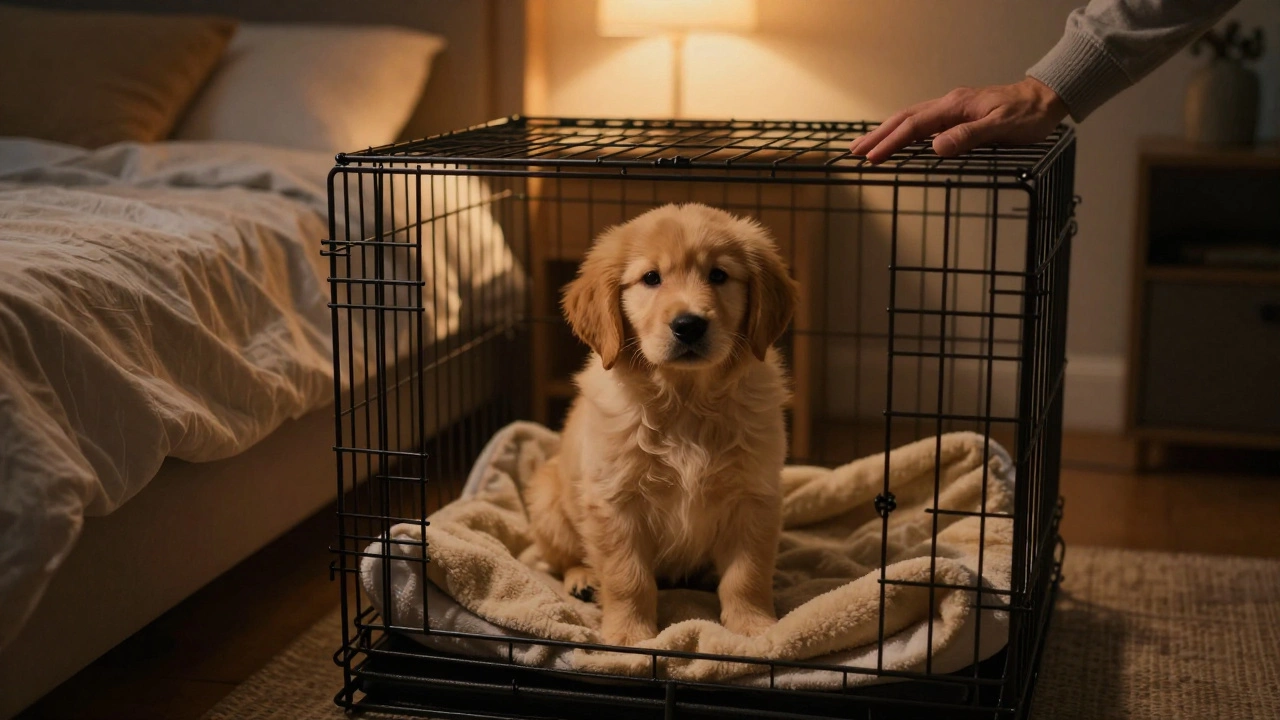
If you are not using a crate, set up a playpen in a corner of your bedroom. Block off a small section with baby gates or walls. The key is proximity. The puppy needs to know you are nearby, even if you aren't touching them.
The Pre-Bedtime Routine
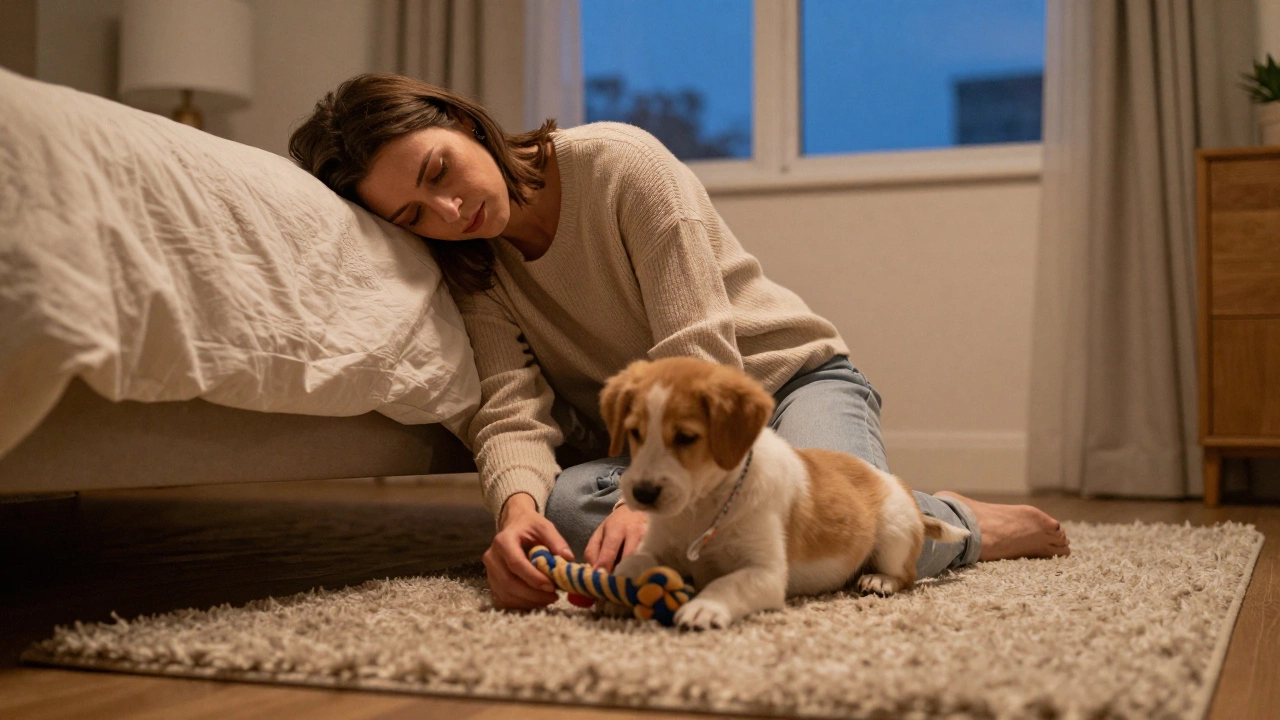
How you spend the hour before bedtime dictates how well the puppy sleeps. A tired puppy is a happy puppy, but an overstimulated puppy is a nightmare. You need to burn off energy without raising the adrenaline levels too high.
Start with a long walk outside. Let the puppy sniff everything. Sniffing is mentally exhausting for dogs. After the walk, engage in some gentle play inside-fetch a soft ball or tug on a rope toy. Keep the play session under 15 minutes. About 30 minutes before bed, stop all play. This signals to the puppy that the active part of the day is over.
The final step is crucial: the last potty break. Take the puppy out directly before you get ready for bed. Do not let them run around the yard. Go straight to the spot, wait for them to eliminate, offer a calm "good boy" or "good girl," and bring them back inside immediately. No rewards, no play, just business. This helps establish a clear association between going outside and doing their business.
Managing the First Night: Practical Strategies
Now comes the moment of truth. The puppy is in the crate or pen. You are in bed. Here is how to handle the inevitable whining without reinforcing bad behavior.
The Proximity Method: Place the crate next to your bed, not in another room. Hearing your breathing and seeing you move provides immense comfort. If the puppy whines, wait a few seconds. Sometimes they just check in. If the whining continues, place your hand gently on the side of the crate and say "shhh" in a low, monotone voice. Do not open the crate unless you suspect they need to pee. Opening the crate while they are whining teaches them that whining opens the door.
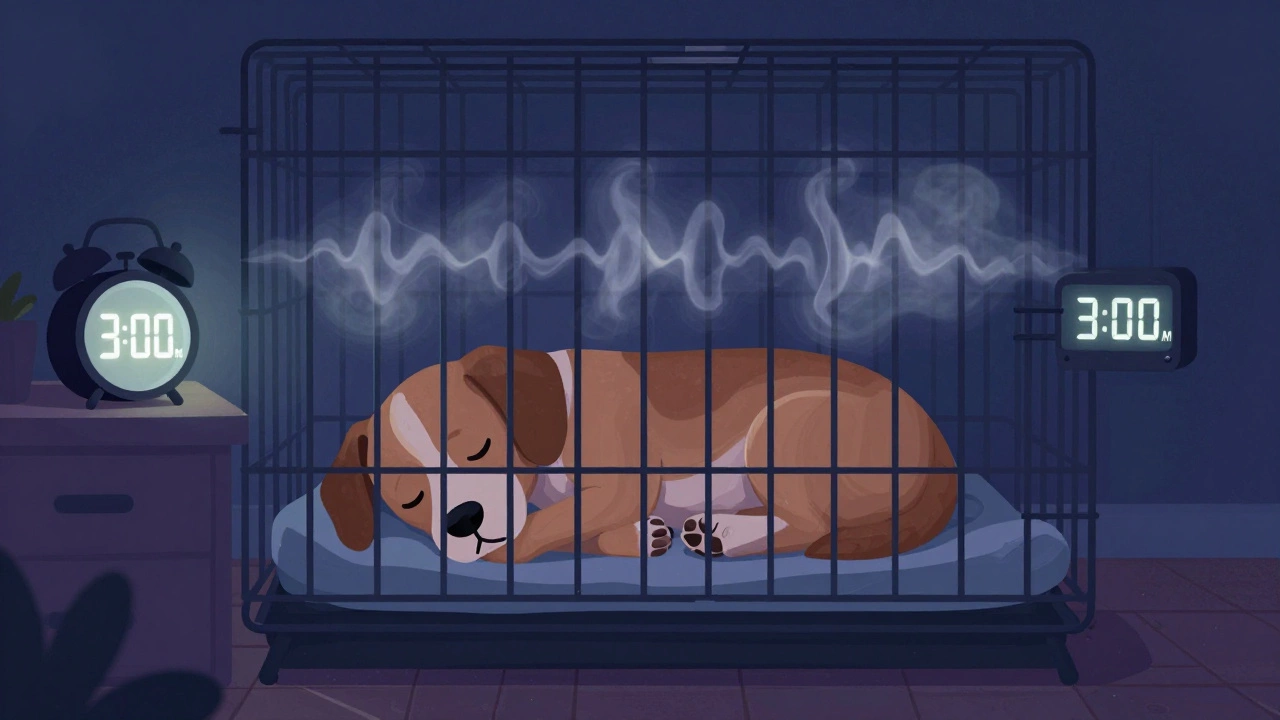
The Alarm Clock Strategy: Puppies cannot hold their bladder for long. A general rule of thumb is that a puppy can hold their urine for one hour per month of age, plus one. So, a two-month-old puppy can hold it for about three hours. Set alarms on your phone for 3 AM and 6 AM. When the alarm goes off, take the puppy out quietly. Use a flashlight, keep voices low, and go straight to the potty spot. Once they finish, put them back in the crate. This prevents accidents and shows the puppy that you are reliable.
White Noise: Sudden noises-a car door slamming, a fridge humming-can startle a puppy in the deep stages of sleep. A white noise machine or a fan running in the background masks these sounds and creates a consistent auditory environment similar to the rustling of leaves or wind in nature.
What Not to Do
In the heat of the moment, it is easy to make mistakes that seem helpful but actually hinder progress. Avoid these common pitfalls.
Do not bring the puppy into your bed. While co-sleeping might seem like the ultimate comfort, it sets a precedent that is very hard to break. If the puppy wakes up at 4 AM and finds you in bed, they may decide that the crate was a prison and the bed is the reward. They will learn to escape the crate or bark until you let them out. Consistency is key. If the crate is the sleeping spot tonight, it must be the sleeping spot tomorrow.
Do not punish the puppy for whining. Yelling or spraying water creates fear. Fear does not equal obedience; it equals trauma. A fearful puppy will still whine, but now they will also associate you with negative experiences. Instead, ignore the whining if you are sure their physical needs are met. Silence is a powerful teacher.
Do not give attention for waking up. If the puppy pees in the crate because you waited too long, clean it up calmly. Do not rub their nose in it. They do not understand retroactive punishment. Simply adjust your alarm clock for the next night to be earlier.
| Do This | Avoid This |
|---|---|
| Place crate next to your bed | Isolate puppy in another room |
| Use a divider for proper crate size | Leave crate fully open and spacious |
| Set alarms for potty breaks (every 2-3 hours) | Wait for the puppy to cry before checking |
| Provide a familiar-smelling blanket | Give plush toys that can be eaten |
| Keep interactions boring and calm | Play energetic games right before bed |
Transitioning to Independence
The first night is just the beginning. Over the next few weeks, you will gradually increase the distance between your bed and the puppy's crate. Move the crate a foot away each night. Then move it to the doorway. Finally, move it to the desired location in the house.
This gradual desensitization helps the puppy build confidence. As they grow older, their bladder capacity increases, and their need for constant reassurance decreases. By the time they are four months old, most puppies can sleep through the night without interruption.
Remember, patience is your most valuable tool. There will be nights when you get little sleep. There will be accidents. But by providing a structured, safe, and comforting environment, you are building a foundation of trust. The puppy learns that you are the leader who protects them, not the person who abandons them. This bond will pay dividends in training and companionship for years to come.
How long can I leave a puppy alone on the first night?
You should not leave a puppy alone for more than 2-3 hours on the first night. At eight weeks old, their bladder control is minimal, and their anxiety levels are high. Plan to wake up multiple times to take them out for potty breaks. Gradually extend this time as they age and gain bladder strength.
Is it okay to put the puppy in my bed?
While tempting, it is generally not recommended for the first night if you plan to crate train later. Co-sleeping creates a habit that is difficult to break. If you choose to co-sleep, be prepared to maintain that arrangement consistently, or risk creating separation anxiety when you eventually try to move them out.
Why is my puppy crying in the crate?
Crying is a natural distress signal. The puppy is likely scared, lonely, or needs to eliminate. Check if they need to pee first. If not, the crying is usually due to separation anxiety. Provide comfort by keeping the crate near your bed and using a calm voice, but avoid opening the crate unless necessary to prevent reinforcing the behavior.
Can I use a playpen instead of a crate?
Yes, a playpen is a viable alternative. Ensure the playpen is small enough to discourage bathroom accidents in one corner. Place a comfortable bed and water bowl inside. Like a crate, the playpen should be located in your bedroom initially so the puppy feels your presence.
How do I stop my puppy from whining at night?
Ignore the whining if you have already taken them out to pee and ensured they are comfortable. Responding to whining with attention teaches them that whining gets results. Wait for a moment of silence before rewarding them with praise or treats. Consistency is key to breaking this cycle.