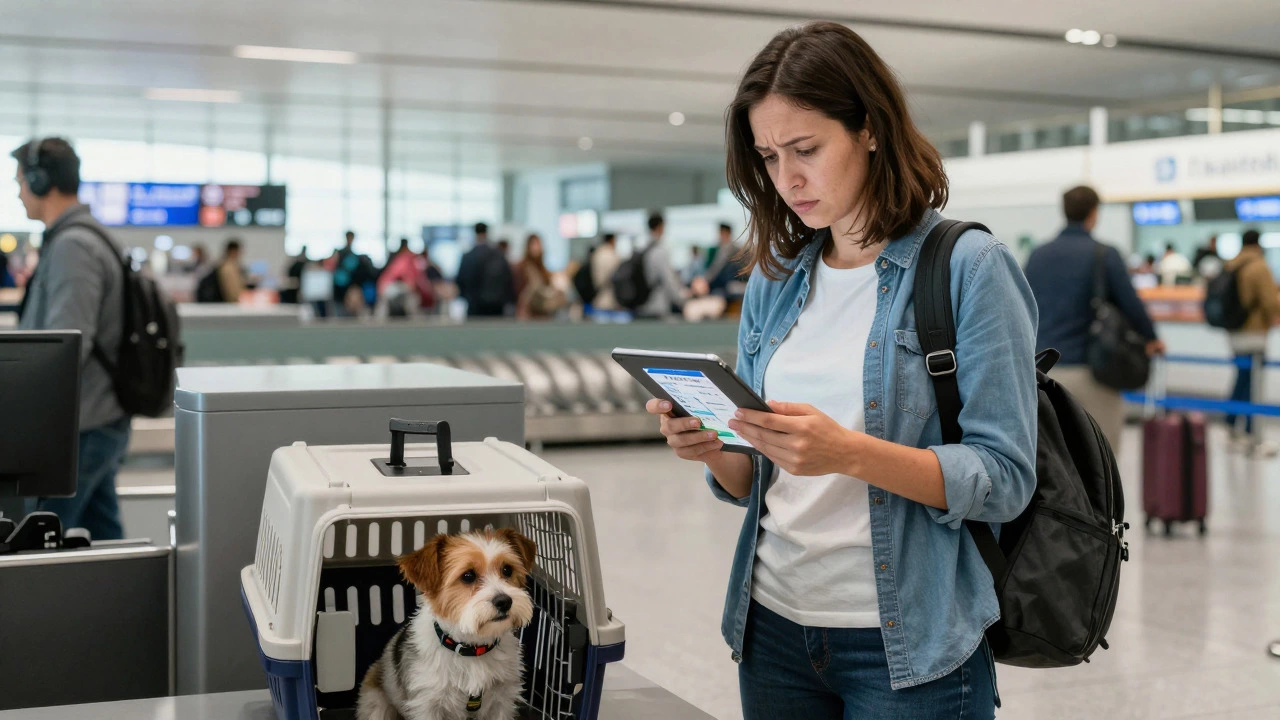
Pet Travel Cost Calculator & Strategy Tool
Flight Details
Additional Costs
Estimated Total Cost
Based on current inputs and standard industry averages.
Cost Breakdown
Strategy Analysis
Here is the hard truth you need to hear before booking that flight: no major commercial airline offers completely free pet travel. If you are looking for a carrier that lets your dog or cat ride along without charging a single cent, you will be disappointed. Every airline treats animals as extra baggage or special cargo, and they all attach a price tag to that privilege.
However, "free" doesn't always mean $0. It often means "included in what you already pay." Some airlines bundle small pets into their standard carry-on allowance if you have a premium ticket, while others offer loyalty waivers. Understanding the difference between a flat fee, a bundled cost, and a true waiver is the key to saving money on your next trip with your furry companion.
The Myth of the Free Ride
Why do airlines charge for pets? It comes down to space, safety, and logistics. A seat on a plane is sold based on weight and volume. When you bring a crate into the cabin, it occupies floor space under a seat. That space could otherwise be used for revenue-generating luggage or equipment. In the cargo hold, animals require specific climate-controlled zones and handling procedures that differ from standard freight.
Most carriers view pets as "excess baggage." For example, major US carriers like Delta, American, and United typically charge between $125 and $150 each way for a pet in the cabin. International carriers can be even steeper, often ranging from $100 to $200 depending on the route. These fees are non-refundable and usually non-transferable. You cannot buy a "pet pass" and save it for later; the fee is tied to the specific reservation.
There is no global standard for these fees. One airline might charge $95 for a short-haul European flight, while another charges €150 for the same route. This variability is why searching for "do pets fly free" rarely yields a simple yes or no-it depends entirely on the carrier’s current policy and your ticket class.
When Pets Might Be Included (The Loopholes)
While outright free flights are rare, there are scenarios where the cost is effectively zero because it is absorbed elsewhere. These are not loopholes in the legal sense, but rather structural benefits of certain ticket types or loyalty programs.
| Scenario | How It Works | Likelihood |
|---|---|---|
| Premium Economy/Business Class | Some airlines include one small pet in the cabin allowance for high-tier tickets due to more available floor space. | Moderate (Varies by airline) |
| Frequent Flyer Elite Status | Top-tier members may receive one free checked pet per year or waived cabin fees. | Low to Moderate |
| Service Animals | Legally required to fly free in the cabin under regulations like the ACAS (US) or EU Regulation 1107/2006. | High (If properly documented) |
| Airline Credit Cards | Co-branded cards sometimes offer annual credits that can offset pet fees. | Moderate |
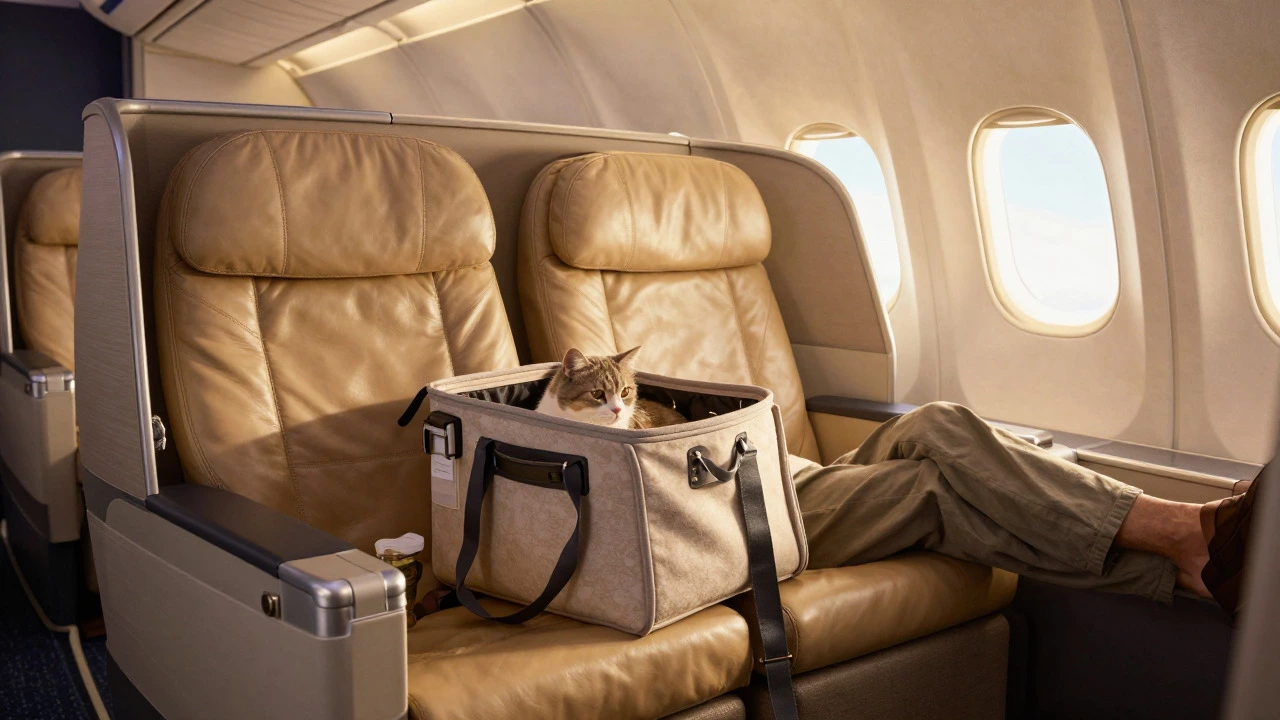
Premium Cabin Bundles: Airlines like Lufthansa or Singapore Airlines sometimes allow passengers in Business or First Class to check a pet for free or at a reduced rate. The logic is simple: you are paying a significant premium for your own comfort, and the airline has more flexibility to accommodate your pet without disrupting economy class operations. Always check the fine print of your fare rules. Look for terms like "additional baggage allowance" which may encompass live animals.
Loyalty Program Perks: Frequent flyer programs are another avenue. For instance, some Star Alliance Gold members or SkyTeam Elite Plus holders get waived fees for checking a pet as cargo once a year. This isn't "free" in the sense that you didn't earn it, but it saves you the hundreds of dollars in standard fees. If you fly regularly, accumulating status might be the most cost-effective way to transport your pet long-term.
Service Animals vs. Emotional Support Animals
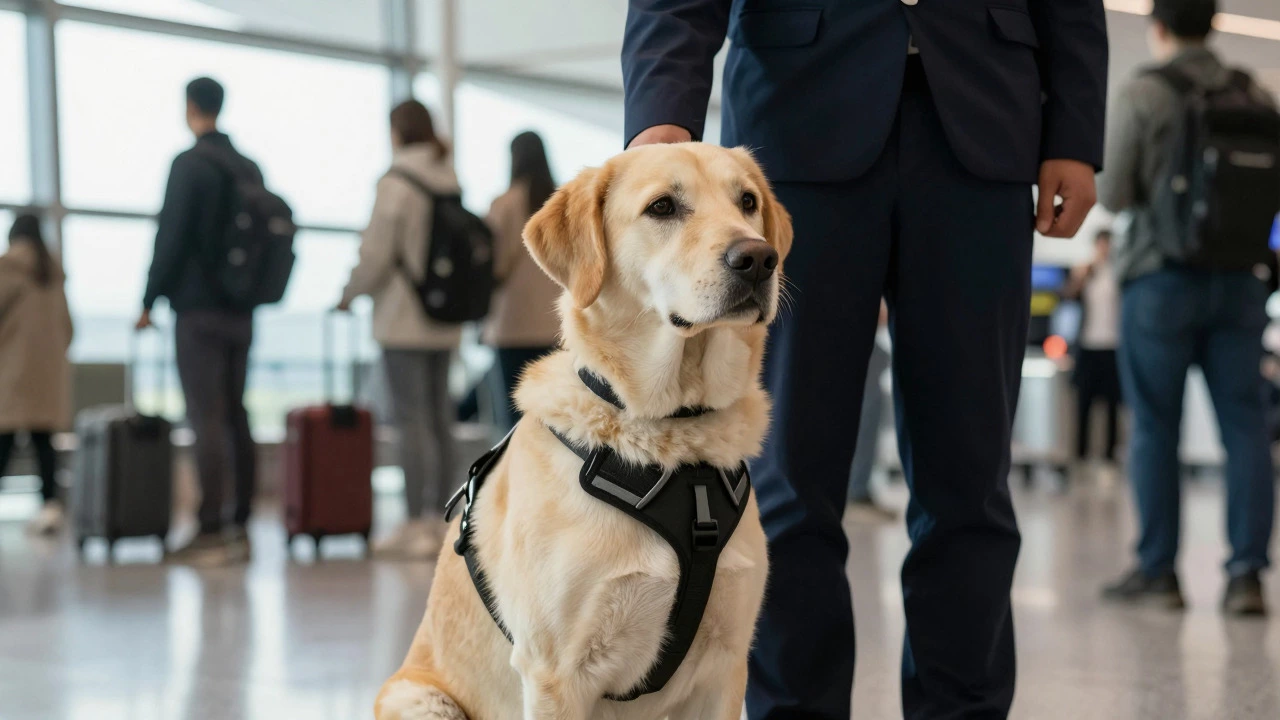
This is the most critical distinction in modern pet travel. Years ago, emotional support animals (ESAs) flew free alongside passengers. That era ended abruptly around 2021 when the Department of Transportation in the US and similar bodies globally reclassified ESAs as pets. Today, only Service Animals-specifically trained dogs (and in some cases, miniature horses) that perform tasks for a disability-are guaranteed free access in the cabin.
If you have a legitimate service animal, you must provide documentation. In the US, this often includes an attestation form signed by you, confirming the animal is trained to mitigate your disability. Airlines can ask two specific questions: Is the dog a service animal required because of a disability? What work or task has the dog been trained to perform? They cannot ask about the nature of your disability or demand medical records. However, they can deny boarding if the animal behaves poorly or is too large to fit safely at your feet.
Emotional support animals, therapy animals, and comfort animals now fall under standard pet policies. They must fly in a carrier, count toward the limit of pets allowed on board, and incur the standard fee. Do not attempt to pass off an ESA as a service animal. Airlines have become adept at spotting fake vests and fraudulent paperwork, and penalties can include being banned from the carrier or facing fines.
Regional Differences: Europe, Asia, and Beyond
Your location significantly impacts whether you find any semblance of "free" travel. Policies vary wildly across continents.
European Carriers: Many European low-cost carriers, such as Ryanair or EasyJet, do not allow pets in the cabin at all unless they are service animals. You must ship them as cargo, which is expensive. Full-service carriers like Air France or KLM charge fixed fees (e.g., €70-€100) regardless of distance. However, some regional trains in Europe, like those operated by SNCF in France or DB in Germany, allow small pets to travel for free if they stay in a carrier under the seat. This is a crucial alternative to consider for shorter trips within the continent.
Asian Carriers: Countries like Japan and South Korea have strict biosecurity laws. While airlines like ANA or Korean Air allow pets in the cabin, the fees are substantial ($200+). Furthermore, many Asian countries require complex quarantine procedures for incoming animals, adding thousands of dollars in government fees on top of airline charges. There are virtually no "free" options here due to the high regulatory overhead.
Australian and New Zealand Routes: As someone living in Auckland, I see this firsthand. Qantas and Air New Zealand have strict biosecurity protocols. Pets generally cannot fly in the cabin on international flights unless they are service animals. Domestic flights allow small pets in the cabin for a fee (around AUD $100-$150). There are no free options, but the process is highly regulated to prevent the introduction of diseases like Foot and Mouth Disease.
Hidden Costs Beyond the Ticket
Even if you find an airline that waives the base fee, other costs inevitably arise. Budgeting for "free" pet travel requires looking at the total expense picture.
- IATA-Approved Crates: Airlines require specific crates that meet International Air Transport Association standards. A quality hard-sided crate for a medium-sized dog can cost $100-$300. Soft-sided carriers for cabin travel range from $50-$150. You cannot use a generic pet carrier; it must withstand pressure changes and secure your pet firmly.
- Veterinary Health Certificates: Most airlines require a health certificate issued by a vet within 10 days of travel. This visit costs $50-$150. For international travel, you may need additional vaccinations (rabies titers) and government endorsements, pushing costs to $300-$500.
- Ground Transportation: If your pet flies as cargo, you often need to drive them to the airport's cargo facility yourself, which may be far from the passenger terminal. Some airports offer shuttle services for a fee.
- Insurance: Standard travel insurance rarely covers pet loss or injury. Specialized pet travel insurance can cost 5-10% of the total trip value but provides peace of mind against delays or medical emergencies abroad.
Strategies to Minimize Pet Travel Costs
Since "free" is off the table, how do you reduce the financial impact? Here are practical steps based on current industry practices.
- Book Directly: Third-party booking sites often fail to apply pet fees correctly or add hidden surcharges. Booking directly with the airline ensures you see the exact pet fee upfront and can manage your reservation easily if plans change.
- Use Co-Branded Credit Cards: If you frequently fly with one airline, their credit card might offer an annual pet fee credit. For example, some Delta or United cards provide a statement credit for incidental fees, which can cover the pet charge.
- Choose Non-Stop Flights: Connecting flights increase stress for your pet and often incur multiple pet fees (one for each leg). A direct flight might be slightly more expensive for you, but cheaper overall when you factor in the single pet fee versus two.
- Travel Off-Peak: While pet fees are usually fixed, availability is not. Airlines limit the number of pets in the cabin (often 4-6 per flight). Booking during low-season months increases your chances of securing a spot without needing to upgrade your ticket to ensure space.
- Consider Alternative Transport: For distances under 500 miles, driving might be cheaper and less stressful. Gas and tolls often cost less than a round-trip pet fee plus airfare. Pet-friendly road trips also allow for bathroom breaks and exercise.
What to Do If Your Pet Is Denied Boarding
Despite best efforts, things go wrong. Overbooking is common, and since pets are limited per flight, yours might be bumped. If this happens, you have rights.
First, know the policy. Under US DOT regulations, airlines must notify you if pet space is unavailable. If you booked well in advance, they should have honored your request. If they bump your pet, they are obligated to help you rebook on the next available flight with pet space. They may also refund the pet fee if you choose not to fly. Keep all receipts and correspondence. If the airline fails to assist, file a complaint with the relevant aviation authority (like the DOT in the US or CAA in the UK).
Never assume your pet is safe just because you paid the fee. Call the airline 24 hours before departure to confirm your pet is listed on the manifest. Arrive early at the airport to handle any last-minute issues. Stress affects both you and your animal, so preparation is your best defense against unexpected costs and heartbreak.
Is there any airline that allows pets to fly in the cabin for free?
No major commercial airline offers completely free cabin travel for pets. All carriers charge a fee, typically ranging from $95 to $200 each way. The only exceptions are certified service animals, which fly free by law, and occasional waivers for elite frequent flyers or premium ticket holders.
Do emotional support animals still fly for free?
No. Since 2021, most airlines, including all major US carriers, no longer recognize emotional support animals (ESAs) as service animals. ESAs are now treated as regular pets and must travel in a carrier, subject to standard fees and quantity limits.
How much does it cost to fly a dog internationally?
International pet travel costs vary widely. Airline fees range from $100 to $300 each way. However, total costs often exceed $1,000 when including IATA-approved crates, veterinary health certificates, rabies titers, and potential quarantine fees in destination countries like Australia or Japan.
Can I avoid pet fees by booking business class?
Sometimes. Some airlines, particularly in Europe and Asia, waive pet fees for passengers holding Business or First Class tickets. This is not universal, so you must check the specific fare rules of your airline. Even if the fee is waived, you still need to reserve a spot for your pet in advance.
What documents do I need to fly with my pet?
For domestic flights, you typically need a recent vaccination record and sometimes a health certificate. For international travel, you need a valid passport-style health certificate, proof of rabies vaccination, and potentially a rabies titer test. Service animals require specific attestation forms proving their training and necessity.
Are there any trains that allow pets to travel for free?
Yes. Several European train operators, such as SNCF (France) and Deutsche Bahn (Germany), allow small pets in carriers to travel for free. In the US, Amtrak charges a fee ($25-$100 depending on distance), so free rail travel is mostly a European benefit for short-distance trips.
What happens if the flight is overbooked and my pet is bumped?
If your pet is bumped due to overbooking, the airline is generally required to help you rebook on the next available flight with pet space. They may also refund the pet fee if you decide not to travel. Always confirm your pet's status on the manifest 24 hours before departure to minimize this risk.