Indoor Dog Safety Risk Calculator
Select the options that apply to your dog and home environment to determine if it is safe to leave their collar on.
Recommendation
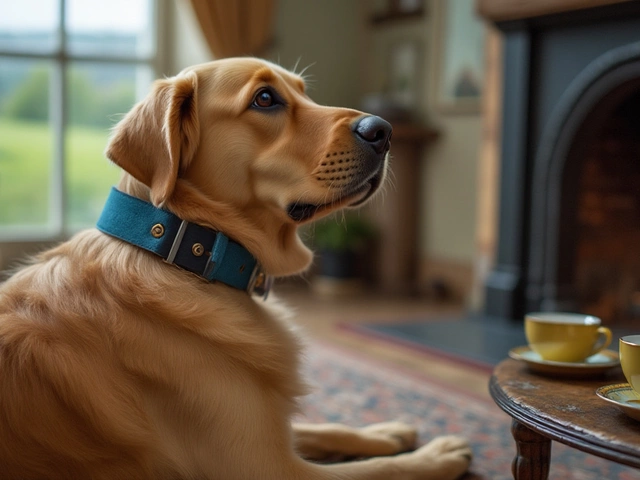
It happens to almost every dog owner. You come home from work, your dog greets you at the door, and you go about your evening routine without a second thought. The collar stays on. It’s comfortable for you-it’s right there if you need to grab the leash for a quick bathroom break or an unexpected walk. But while that metal buckle sits quietly against your dog’s neck, it might be setting up a dangerous trap.
The idea of leaving a collar on your dog indoors is convenient, but convenience often comes with hidden costs. For many breeds and living situations, a collar left unattended inside the house is not just unnecessary; it’s a significant safety hazard. From snagging on furniture to causing serious injury during play, the risks are real and well-documented by veterinarians and animal behaviorists alike.
The Hidden Danger of Snag Points
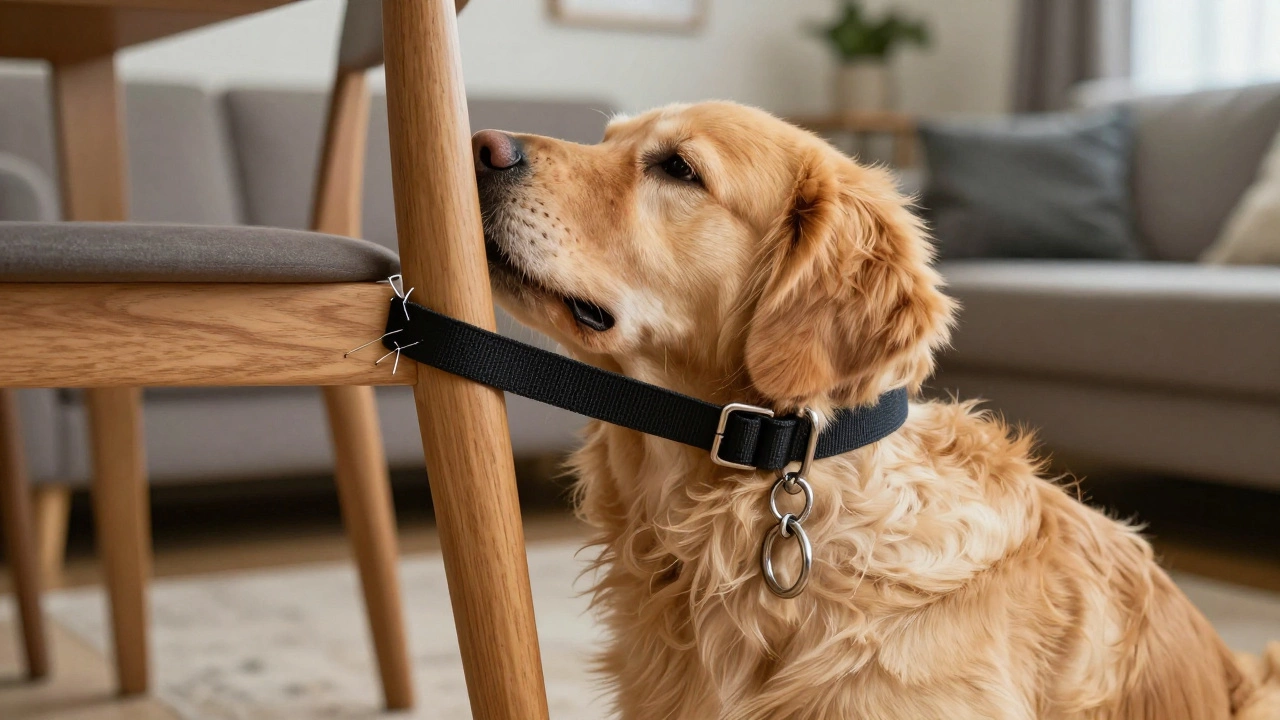
The most immediate risk of leaving a dog collar a band worn around a dog's neck for identification, control, or fashion on indoors is the potential for snagging. Dogs don’t move in straight lines. They weave through legs, jump onto sofas, duck under tables, and squeeze through gaps between chairs. A collar, especially one with a D-ring, a buckle, or a decorative charm, creates a protrusion that can catch on anything.
Consider the common household items that become deadly traps:
- Baby gates: This is perhaps the most notorious hazard. If a dog pushes its head through the mesh or slats of a baby gate while wearing a collar, the ring can get caught. As the dog panics and pulls back, the collar tightens. This can happen in seconds, leading to strangulation or severe tracheal damage before you even realize what happened.
- Furniture legs and handles: Wooden chair legs, cabinet knobs, and drawer handles are perfect-sized hooks for a collar ring. A playful pounce or a curious sniff can result in the dog getting suspended or choked.
- Other pets: If you have multiple dogs or cats, collars can get tangled together during play or grooming sessions. One dog pulling away while the other holds on can cause serious neck injuries to both animals.
These aren’t hypothetical scenarios. Veterinary emergency rooms see cases of "collar entrapment" regularly. The mechanism of injury is simple: the collar catches, the dog struggles, and the pressure increases rapidly. Unlike a slip lead or a properly fitted martingale collar designed for walking, a standard flat collar offers no release mechanism when tension is applied from the wrong angle.
Tracheal Damage and Respiratory Issues
Beyond acute accidents, chronic wear of a collar can contribute to long-term health issues, particularly for certain breeds. The trachea (windpipe) is a delicate structure made of cartilage rings. Constant pressure from a collar, especially if the dog pulls occasionally even indoors or if the collar is too loose and rubs, can irritate the trachea.
This is especially critical for small breed dogs like Pomeranians, Yorkshire Terriers, and Chihuahuas, as well as brachycephalic breeds like Pugs and Bulldogs. These dogs are prone to tracheal collapse a condition where the cartilage rings of the windpipe weaken and flatten. While genetics play the primary role, external factors like constant collar pressure can exacerbate the condition. Over time, this can lead to chronic coughing, difficulty breathing, and reduced quality of life.
If your dog wears a collar 24/7, you’re denying their neck skin the chance to breathe. Moisture from sweat or water after a bath can get trapped under the collar, leading to hot spots, fungal infections, or dermatitis. Removing the collar when the dog is safely indoors allows the skin to dry out and heal, preventing these secondary infections.
Behavioral Impact: Control vs. Comfort
Dogs are sensitive to physical sensations. A collar is a tool of control, used primarily for leashing and guidance. When left on constantly, it can create a subtle state of low-level stress or discomfort for some dogs. Think about wearing a watch or a bracelet all day, every day, even while sleeping. For many people, it becomes annoying or restrictive. For a dog, whose body language and comfort levels are harder to read, this restriction can manifest as restlessness or anxiety.
Furthermore, leaving a collar on can interfere with proper training cues. If you use a collar for correction or guidance during walks, having it on indoors blurs the line between "work mode" and "relax mode." Dogs benefit from clear contexts. When the collar is off, it signals that they are free to roam, sleep, and relax without the expectation of being led or controlled. This distinction helps reduce overall household stress for both you and your pet.
Safety Exceptions: When the Collar Stays On
While the general rule is "take the collar off indoors," there are specific exceptions where keeping the collar on is necessary for safety and legal compliance. Understanding these nuances is key to responsible ownership.
| Scenario | Reason to Keep On | Recommended Action |
|---|---|---|
| Identification Tags | Legal requirement in many areas; crucial if dog escapes | Use a breakaway collar or ensure tags are lightweight |
| Medical Alerts | Diabetes, epilepsy, or allergies require immediate info | Keep collar on but monitor fit daily |
| GPS Trackers | Prevention of loss in high-risk escape environments | Use a harness-mounted GPS instead if possible |
| Microchip Backup | Tags provide instant visual ID; microchips require scanning | Ensure tags are always present if collar is worn |
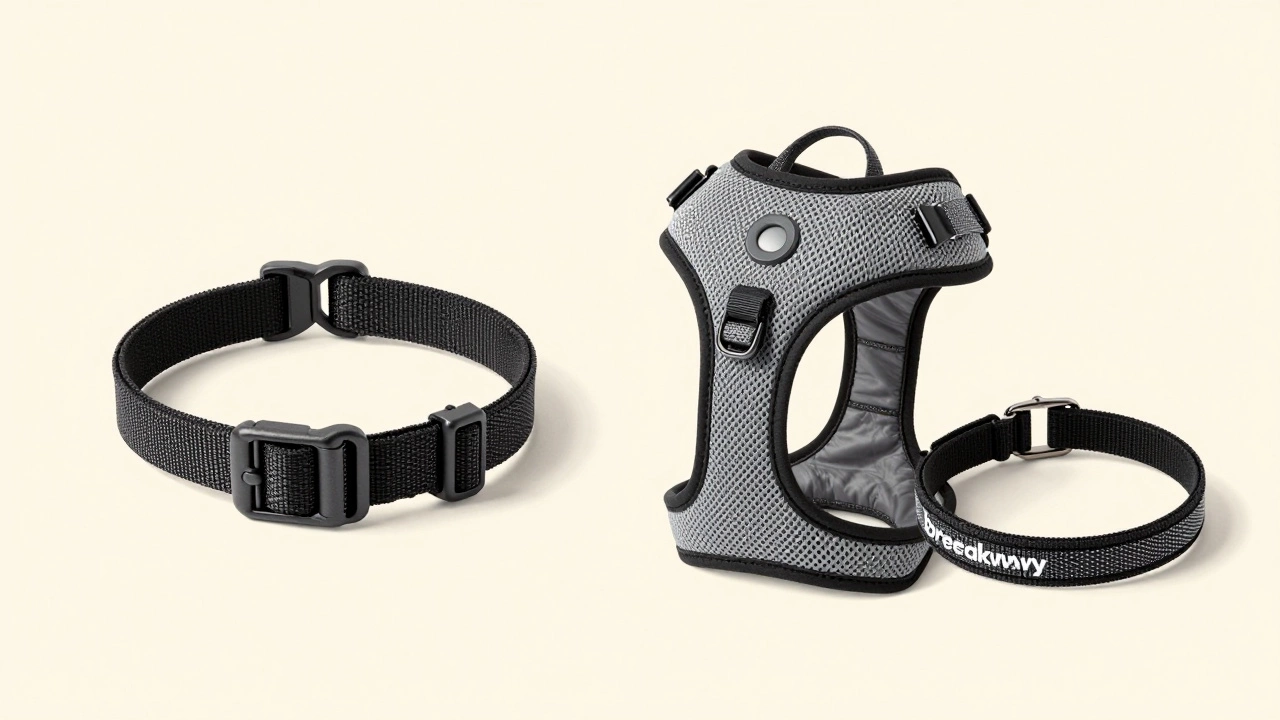
If your dog has a history of bolting out the door, the convenience of removing the collar may outweigh the benefits. In these cases, the solution isn’t to keep a standard collar on, but to switch to a safer alternative. A breakaway collar a collar designed to open automatically when pulled with force is essential. These collars have a clasp that releases under moderate pressure, preventing strangulation if the collar gets caught. They still hold tags securely enough for normal movement but snap open if snagged on a fence or gate.
Alternatives to Traditional Collars
If you’re concerned about identification or tracking but want to eliminate the risks of a traditional collar, several alternatives exist. Modern pet gear has evolved to prioritize safety without sacrificing functionality.
- Harnesses: A well-fitted harness distributes pressure across the chest and shoulders, eliminating strain on the neck. Many modern harnesses include loops for attaching ID tags or GPS trackers. They are ideal for dogs that pull, have respiratory issues, or are prone to escaping.
- Breakaway Collars: As mentioned, these are the safest option for indoor wear if you must have a collar. Look for brands with reliable, tested release mechanisms. Avoid cheap knockoffs that may not release consistently.
- Tattooing: While less common now due to microchipping, tattoos on the inner thigh or ear can serve as permanent ID. However, they are difficult to read and not universally recognized, so they should only be a backup.
- Microchipping: This is the gold standard for permanent identification. A microchip is implanted under the skin and contains a unique number linked to your contact information. It doesn’t replace tags, but it ensures your dog can be returned even if they lose their collar.
For most owners, the best approach is a hybrid strategy. Use a harness for walks and outdoor activities, and remove all gear when the dog is safely indoors. If identification is a concern, consider a lightweight breakaway collar worn only when the dog is in areas where they might encounter strangers or escape risks, such as near open doors or windows.
Practical Tips for Safe Indoor Management
Making the switch to collar-free indoor time requires a bit of planning, but it’s straightforward. Here’s how to manage the transition smoothly:
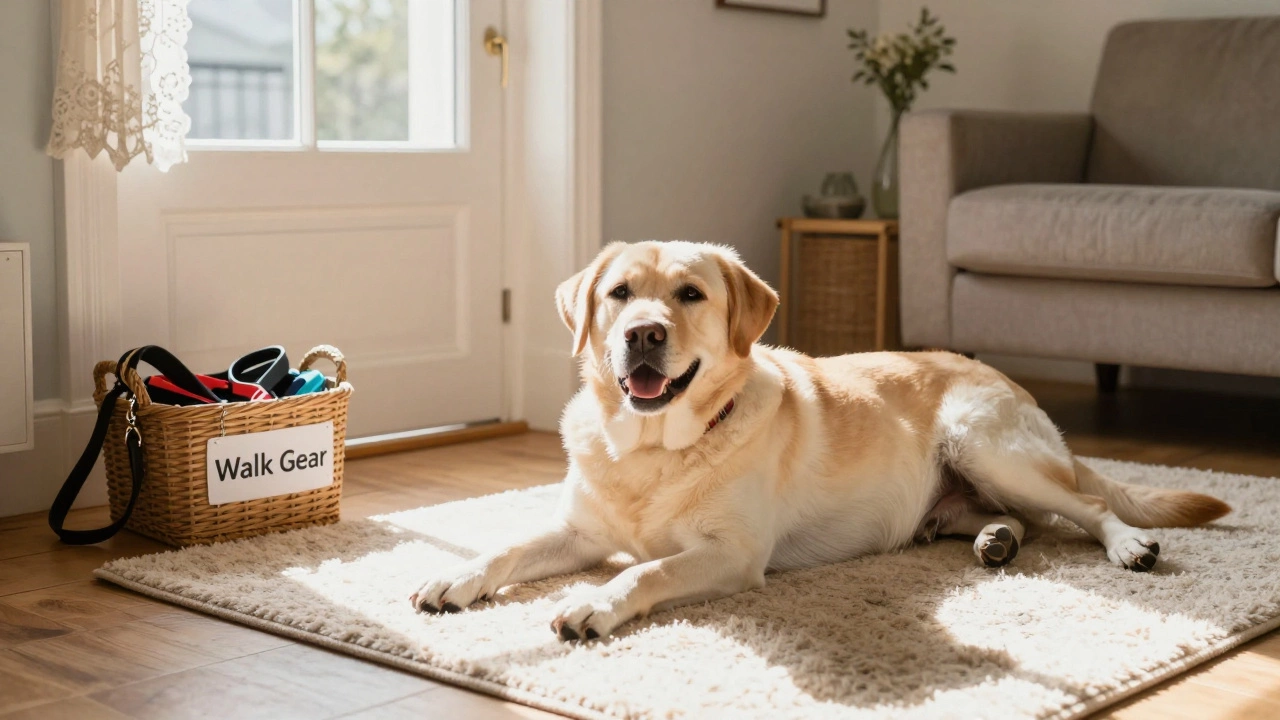
- Create a "Collar Station": Designate a hook or basket near the entryway where collars and leashes are stored immediately upon coming inside. This builds a habit for you and reduces the chance of forgetting.
- Check Fit Regularly: If you do leave a collar on, check the fit weekly. Dogs gain and lose weight, and a collar that was once snug can become dangerously loose or tight. You should be able to fit two fingers comfortably under the collar.
- Supervise Play: Even without a collar, supervise your dog during vigorous play, especially with other pets. Tangles and accidental bites can still occur, though the risk of strangulation is significantly lower.
- Secure Your Home: Since you won’t have a collar to quickly grab your dog in an emergency, ensure your home is dog-proofed. Secure trash cans, block off hazardous areas, and keep doors closed to prevent escapes.
Remember, the goal is not to restrict your dog’s freedom but to enhance their safety. By removing unnecessary restraints indoors, you allow your dog to move naturally and comfortably, reducing the risk of injury and promoting better overall health.
Conclusion: Prioritizing Safety Over Convenience
The decision to leave a collar on your dog indoors is often driven by habit rather than necessity. While it seems harmless, the risks of snagging, tracheal damage, and skin irritation are real and potentially serious. By understanding these dangers and adopting safer alternatives like breakaway collars or harnesses, you can protect your dog while still maintaining proper identification and control when needed.
Every dog is different, and what works for one household may not suit another. Assess your dog’s behavior, your home environment, and local laws to make the best choice. Ultimately, a safe and comfortable dog is a happy dog, and small changes like removing the collar indoors can make a big difference in their quality of life.
Is it okay to leave my dog's collar on overnight?
Generally, no. Leaving a collar on overnight poses a strangulation risk if the dog gets tangled in bedding or furniture. Additionally, it can cause skin irritation and prevent the neck area from breathing. Remove the collar before bedtime unless your dog has a medical condition requiring constant monitoring via a tag.
What is a breakaway collar and how does it work?
A breakaway collar is designed with a special clasp that opens when pulled with a specific amount of force. This prevents the collar from tightening around the dog's neck if it gets caught on an object. It is the safest type of collar for indoor use because it eliminates the risk of strangulation while still holding ID tags securely during normal activity.
Can I use a harness instead of a collar for ID tags?
Yes, many modern harnesses have designated loops or D-rings for attaching ID tags. This is a great alternative for dogs who should not wear collars due to health issues or behavioral tendencies. Ensure the tags are lightweight to avoid noise and discomfort during movement.
How tight should a dog collar be?
A dog collar should be snug but not tight. You should be able to comfortably slide two fingers under the collar against the dog's neck. If it’s too loose, it can slip over the head or catch on objects. If it’s too tight, it can restrict breathing and cause skin damage. Check the fit regularly as your dog grows or changes weight.
Are there any dogs that should never wear a collar?
Dogs with tracheal collapse, respiratory issues, or a history of escaping by backing out of collars should avoid traditional collars. Breeds like Pugs, Bulldogs, and small toy breeds are particularly susceptible to neck injuries. For these dogs, a harness is the recommended alternative for both walks and identification purposes.