You’ve heard coconut oil is great for your dog’s coat, skin, and even digestion. You’ve rubbed a little on their fur, watched them lick it off, and now you’re wondering: do I have to rinse coconut oil off my dog? The answer isn’t simple-it depends on why you’re using it, how much you applied, and what kind of dog you’re dealing with.
Why People Use Coconut Oil on Dogs
Coconut oil isn’t just a kitchen staple-it’s become a go-to natural remedy for dog owners. It’s packed with medium-chain fatty acids, especially lauric acid, which has antimicrobial and anti-inflammatory properties. Many pet parents use it to:
- Reduce itchy, flaky skin from allergies or dryness
- Improve coat shine and reduce shedding
- Help heal minor cuts, hot spots, or flea bites
- Support digestion and boost immunity when given internally
Some use it as a leave-in conditioner after bathing. Others apply it spot-on to irritated areas. But if you’re putting it on the outside, you’re probably wondering: should I wash it off?
When You Should Rinse Coconut Oil Off
Yes, you should rinse it off in these situations:
- You applied a lot of it-If you drenched your dog’s fur in coconut oil like it’s a hair mask, it’ll attract dirt, dust, and debris. Your dog will roll in the grass and come back looking like they’ve been coated in grease.
- Your dog has oily skin to begin with-Some breeds, like Cocker Spaniels or Basset Hounds, naturally produce more sebum. Adding coconut oil on top can clog pores and lead to skin infections.
- You’re using it for a skin condition-If your vet recommended coconut oil for a hot spot or fungal infection, leaving it on without cleaning the area can trap bacteria and slow healing.
- Your dog is prone to licking-Even if you’re applying it topically, your dog will lick it off. If you’ve used too much, they’ll ingest more than they should, which can cause diarrhea or pancreatitis.
One dog owner in Wellington told me her Labrador started vomiting after she left coconut oil on his belly for three days straight. He’d been licking it nonstop. She didn’t realize how much he was swallowing until the vet said his triglycerides were sky-high.
When You Can Leave Coconut Oil On
There are times when rinsing isn’t necessary-and leaving it on helps:
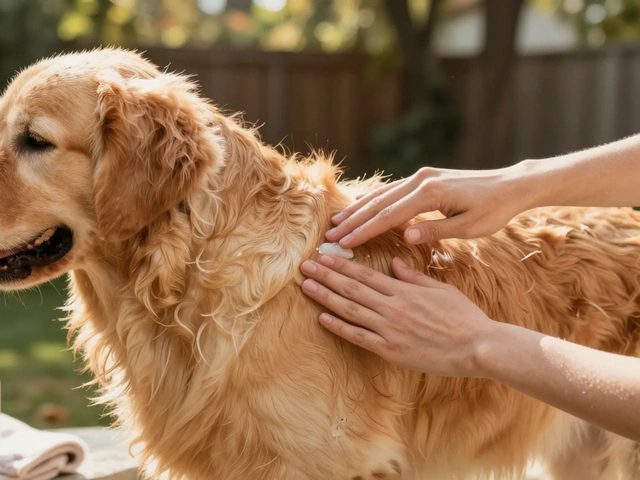
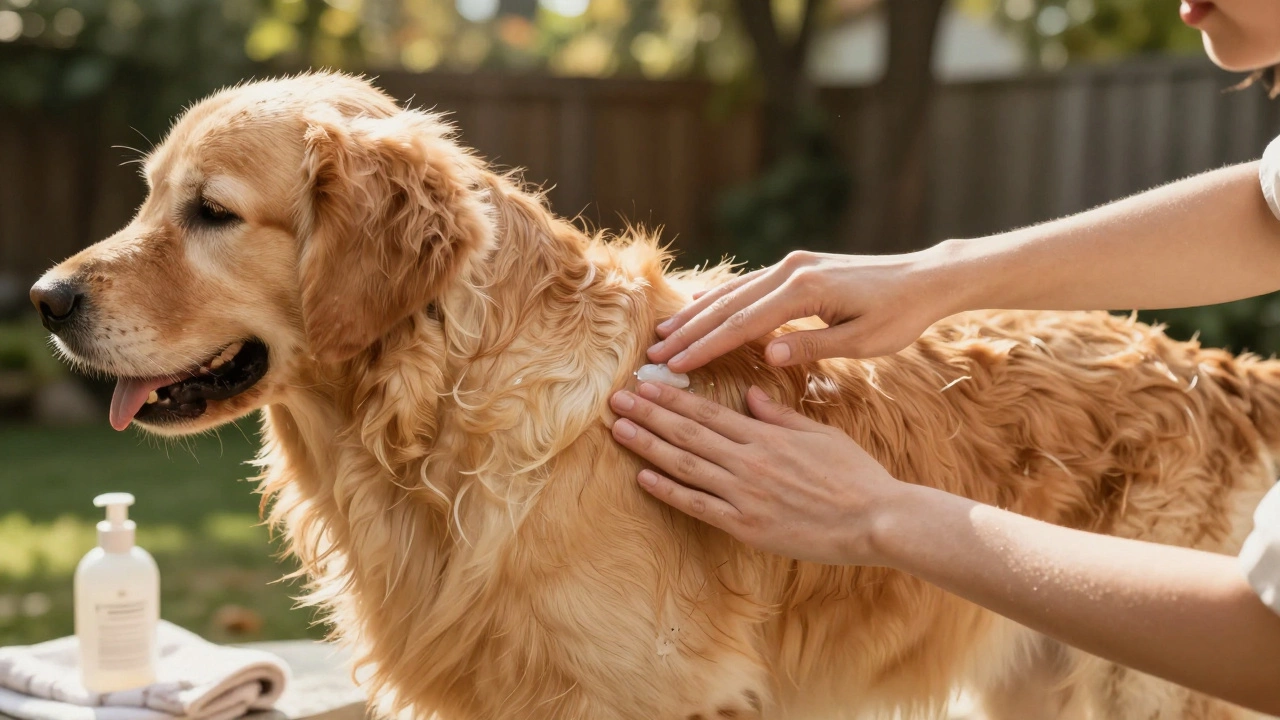
- Small amounts for coat shine-A pea-sized amount rubbed between your palms and lightly smoothed over the fur? No rinse needed. It’ll absorb into the hair shaft without greasing up the skin.
- After a bath as a leave-in treatment-If you’ve washed your dog with a gentle shampoo and then applied a tiny bit of coconut oil to the ends of their coat, let it sit. It helps lock in moisture without weighing them down.
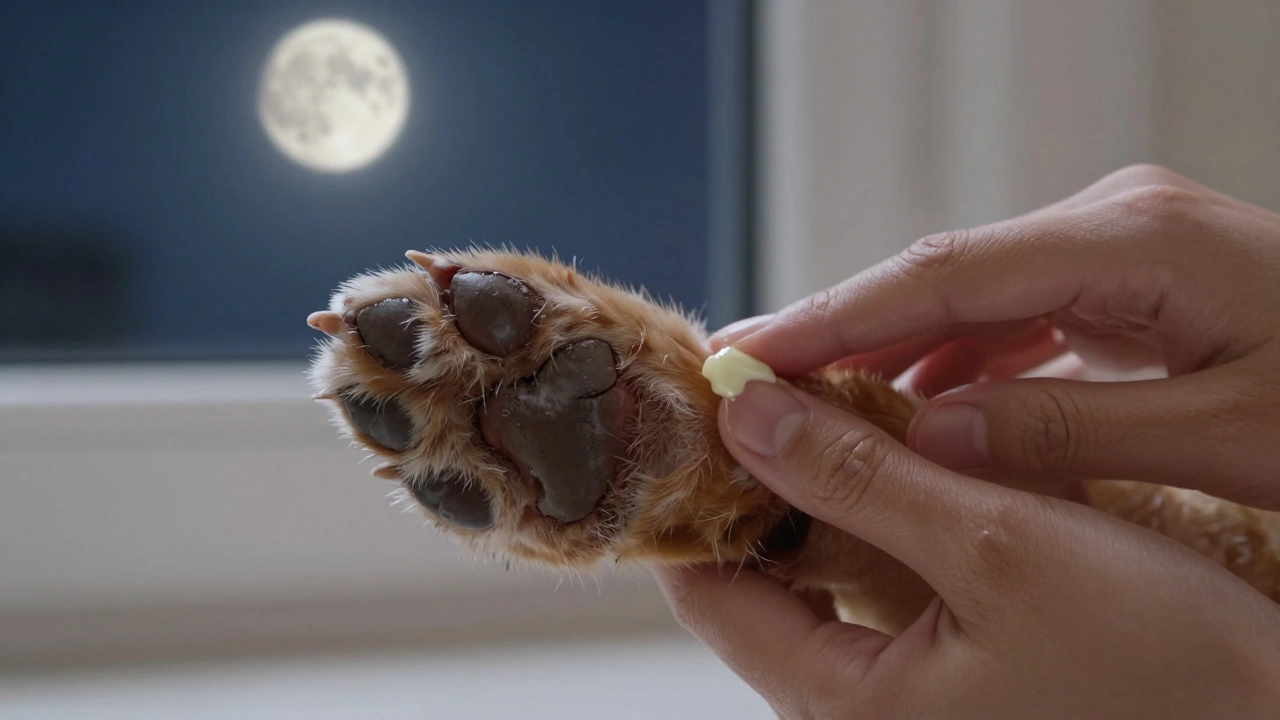
- On paws for dryness-Dogs in dry climates or those who walk on salted sidewalks in winter often get cracked paw pads. A thin layer of coconut oil rubbed in before bed? Leave it. It’ll soak in overnight.
- For ear cleaning (with caution)-Some owners use coconut oil to soften earwax. If you’re using it as part of a cleaning routine, wipe away the excess with a cotton ball. Don’t let it pool inside the ear canal.
How Much Is Too Much?
There’s no official guideline, but most vets agree on these limits:
- Topical use-A teaspoon for a small dog (under 20 lbs), a tablespoon for a medium dog (20-50 lbs), and up to two tablespoons for large breeds (50+ lbs). Apply no more than once a day.
- Internal use-Start with 1/4 teaspoon per 10 pounds of body weight, once daily. Increase slowly over a week if tolerated. Never exceed 1 teaspoon per 10 pounds.
Too much coconut oil-inside or out-can lead to loose stools, greasy fur, and weight gain. One study from the University of Melbourne in 2023 found that 37% of dogs given more than 1 tsp per 10 lbs daily developed mild gastrointestinal upset within two weeks.
How to Clean It Off Properly
If you decide to rinse it off, don’t just use water. Coconut oil is a fat, and water alone won’t remove it. Here’s what works:
- Use a mild dog shampoo. Avoid human shampoos-they’re too harsh and strip natural oils.
- Wet your dog’s coat thoroughly with warm water.
- Lather the shampoo into the fur, focusing on areas with the most oil.
- Rinse until the water runs clear. If your fingers still feel greasy, rinse again.
- Follow up with a conditioner if your dog’s coat feels dry after washing.
Some owners swear by a vinegar rinse (1 part apple cider vinegar to 4 parts water) after shampooing to remove residue and balance skin pH. It’s safe if you avoid the eyes and ears, and many find it helps with odor.
What Happens If You Don’t Rinse It Off?
Leaving coconut oil on for days without cleaning can cause:
- Fur matting-Oil traps dead hair and skin flakes, creating clumps that pull on the skin.
- Attracting dirt and fleas-Fleas are drawn to oily skin. One groomer in Christchurch said she saw a 40% spike in flea cases during winter when owners overused coconut oil as a ‘natural repellent’.
- Blocked pores-Especially in short-haired breeds like Boxers or Beagles, excess oil can lead to folliculitis, a painful skin infection.
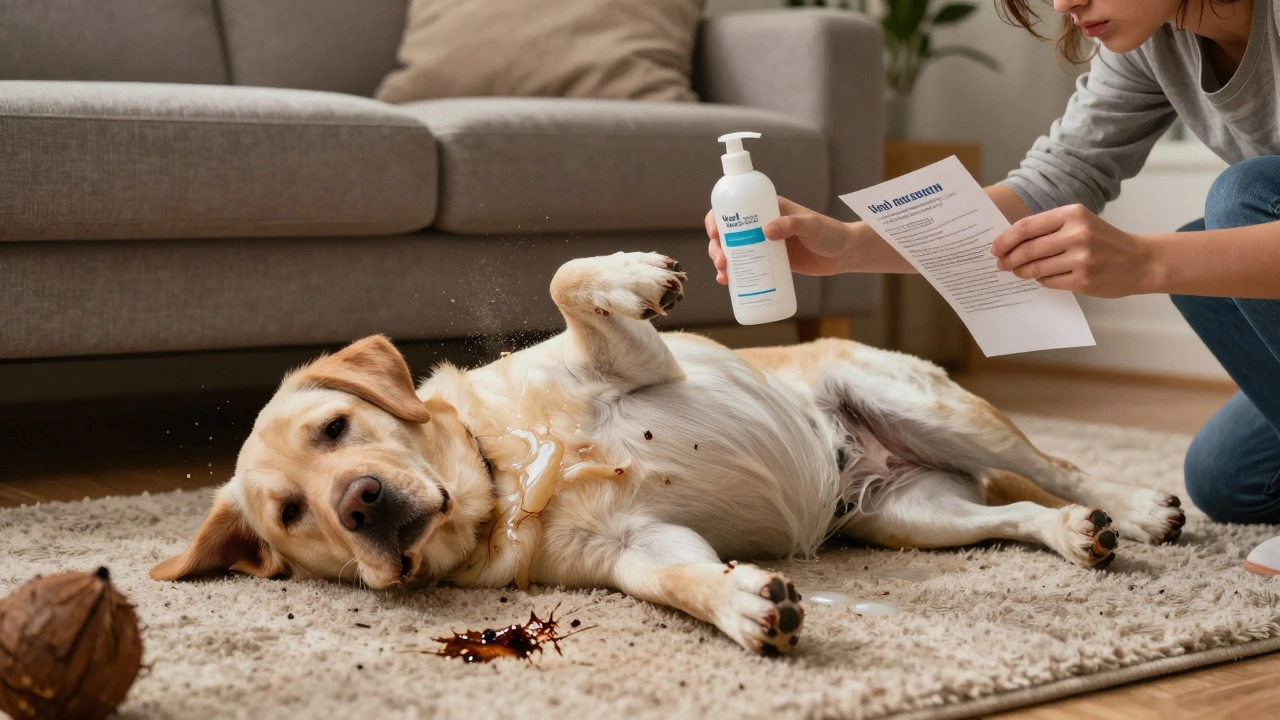
- Sticky furniture and carpets-Your dog will leave greasy marks on couches, beds, and car seats. Cleaning those stains is a nightmare.
It’s not that coconut oil is bad-it’s that people treat it like a magic spray. It’s a tool. Use it right, and it helps. Use it wrong, and it causes more problems than it solves.
Alternatives to Coconut Oil
If you’re unsure about coconut oil, here are safer, equally effective options:
- Omega-3 fatty acids-Fish oil or flaxseed oil supplements reduce inflammation and improve skin health from the inside out.
- Shea butter-Great for paws and dry patches. Less greasy than coconut oil and doesn’t attract dirt as much.
- Colloidal oatmeal baths-Soothe itchy skin without any oils. Available as dog shampoos or DIY soaks.
- Veterinary-grade moisturizers-Products like Dermoscent or Allerderm are formulated for canine skin and won’t clog pores.
One dog with chronic allergies in Auckland switched from coconut oil to a fish oil supplement and a colloidal oatmeal shampoo. Within three weeks, her scratching dropped by 80%. No more greasy spots on the couch.
Final Answer: Should You Rinse Coconut Oil Off Your Dog?
Yes-if you used a lot of it, if your dog has oily skin, or if you’re treating a skin issue. No-if you used a tiny amount for shine or on dry paws.
The key is moderation. Think of coconut oil like sunscreen: a little helps, too much burns. Apply only what’s needed, wipe away excess, and always watch for signs your dog isn’t tolerating it-itching, redness, diarrhea, or greasy fur that won’t clean up.
If you’re unsure, talk to your vet. They can tell you if your dog’s skin type suits coconut oil-or if there’s a better option.
Can I leave coconut oil on my dog overnight?
Yes, but only if you’ve applied a very small amount-like a pea-sized dab on dry paws or a light rub on the tail tip. Never leave a thick layer on the body overnight. It can trap heat, cause skin irritation, and attract dirt. If your dog licks it off while sleeping, they may ingest too much and get diarrhea.
Is coconut oil safe for puppies?
It’s generally safe in tiny amounts for puppies over 8 weeks old, but their skin is more sensitive. Start with a drop on the paw and watch for redness or licking. Never give it internally without vet approval. Puppies have delicate digestive systems, and too much fat can cause pancreatitis.
Does coconut oil help with dog allergies?
It can help with surface-level itching caused by dry skin, but it doesn’t treat the root cause of allergies like pollen, dust mites, or food sensitivities. For true allergies, you need to identify the trigger and use vet-recommended treatments like antihistamines or hypoallergenic diets. Coconut oil is a comfort, not a cure.
Can I use coconut oil on my dog’s ears?
Only if your vet says it’s okay. A tiny amount can soften earwax, but never pour it in. Use a cotton ball to gently wipe the outer ear. Don’t use it if your dog has an ear infection-oil can trap moisture and worsen yeast or bacterial growth.
How often should I apply coconut oil to my dog?
Once or twice a week is enough for most dogs. Daily use is rarely needed and can lead to greasy fur, skin issues, or weight gain. Always monitor your dog’s skin and stool-if they start looking oily or have loose poop, cut back or stop.