Pet Travel Cost Calculator
Estimate Your Pet Travel Costs
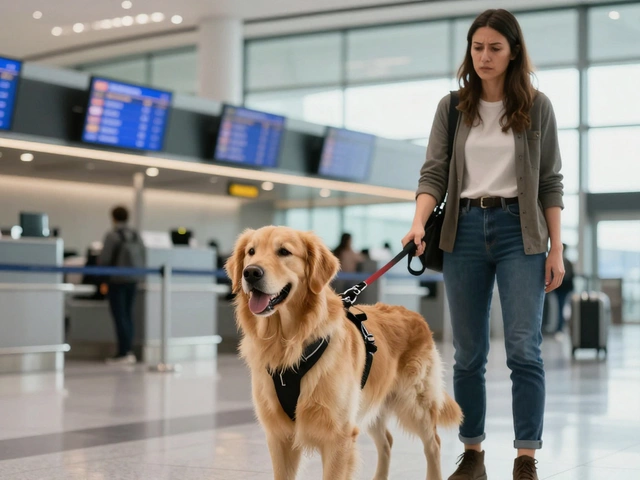
Most people wonder if they can just buy an extra seat for their dog like they would for a child. The short answer? No, you can’t buy a seat for your dog on a commercial airline. But that doesn’t mean you can’t fly with your dog-it just means you need to follow the rules that actually exist.
Why Airlines Don’t Let You Buy Dog Seats
Airlines aren’t being mean. They’re following strict safety and space rules set by aviation authorities. A dog isn’t a passenger-it’s cargo, even if it’s your best friend. That means your dog can’t sit in a seat next to you unless it’s a certified service animal, and even then, it has to behave and fit under the seat without blocking aisles or emergency exits.Imagine a 70-pound Labrador trying to squeeze into a seat meant for a human. The seatbelt wouldn’t hold. The tray table would snap. And if the plane hits turbulence? You’d be holding onto your dog while the flight crew scrambles to manage a safety hazard. That’s why airlines treat pets as checked baggage or in-cabin carry-ons-with size and weight limits.
How to Fly With Your Dog-The Real Ways
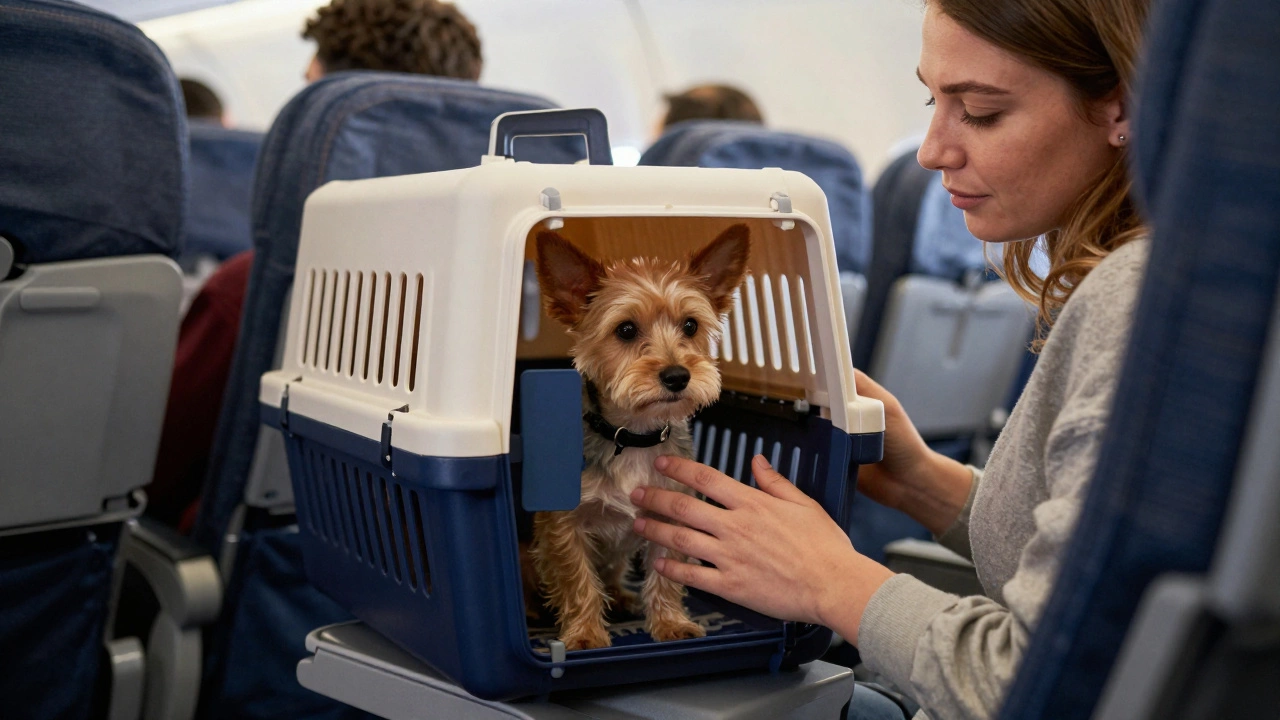
There are two legal, safe ways to fly with your dog: in the cabin or in the cargo hold. Neither involves buying a seat.In-cabin travel is for small dogs only. Most airlines allow dogs under 20 pounds (9 kg), including the carrier, to travel under the seat in front of you. The carrier must be hard-sided, ventilated, and fit within the airline’s exact dimensions-usually around 17 x 10 x 9 inches. Soft carriers often get rejected at the gate because they can’t hold shape under pressure.
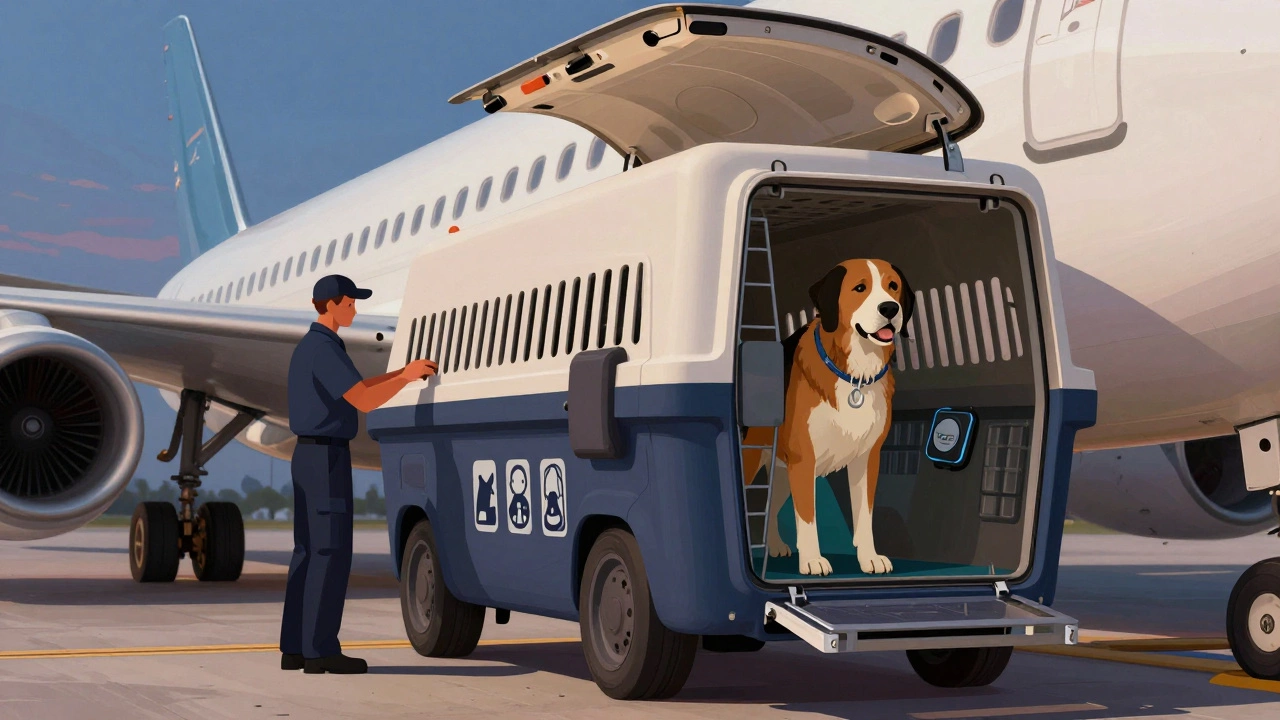
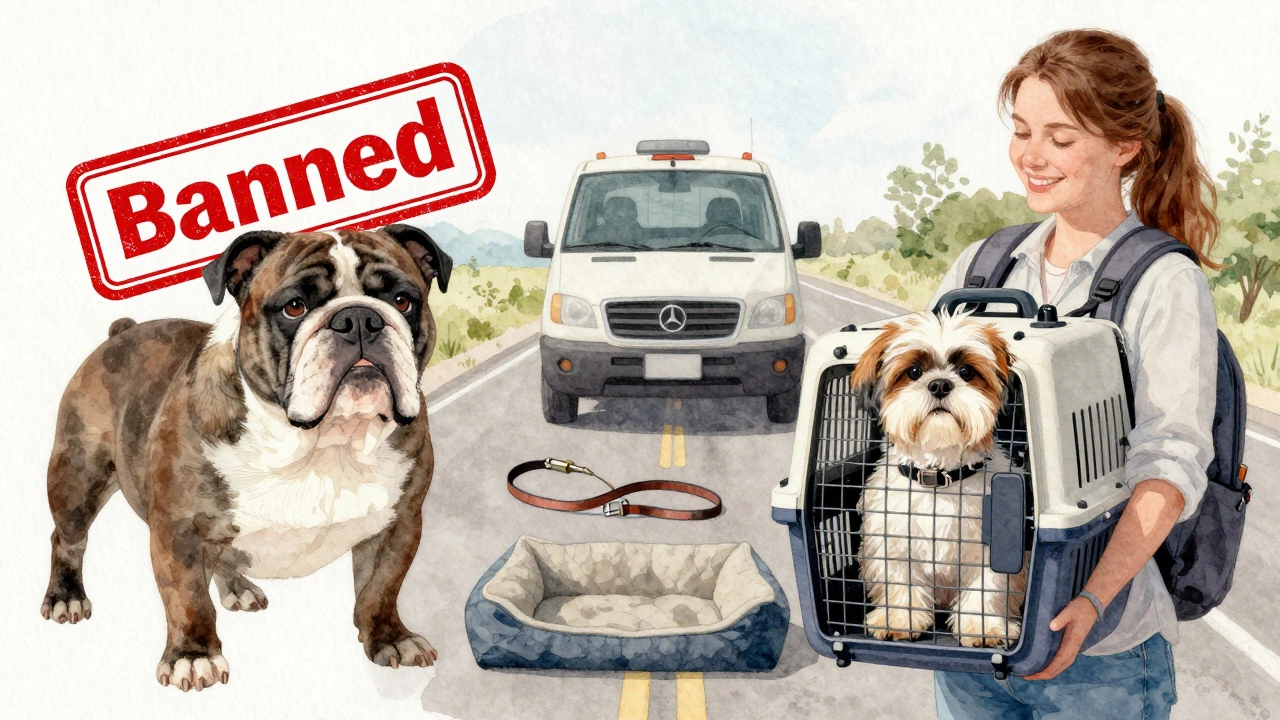
Cargo hold travel is for larger dogs. Your dog travels in a climate-controlled, pressurized compartment separate from luggage. This isn’t as scary as it sounds. Airlines like Delta, United, and American have specialized pet transport teams. They monitor temperature, pressure, and movement. Dogs are loaded last and unloaded first. Still, it’s not for every dog. Brachycephalic breeds (like Bulldogs or Pugs) are banned from cargo on many airlines because they struggle to breathe in low-oxygen environments.
Costs: What You’ll Actually Pay
You can’t buy a seat, but you can pay fees that feel like it.In-cabin pet fees range from $100 to $250 one-way, depending on the airline and route. For example, JetBlue charges $125, while Alaska Airlines charges $100. These fees are non-negotiable and must be paid at booking-no last-minute upgrades.
Cargo fees are trickier. They’re based on weight, container size, and distance. A 50-pound dog flying from Auckland to Sydney might cost $400-$600. International flights? You’re looking at $800-$1,500, including health certificates, customs paperwork, and quarantine fees if required.
Some airlines offer premium pet services. United’s PetSafe program includes a dedicated pet handler, temperature-controlled vehicles, and GPS tracking. That’s not a seat-but it’s the closest thing to peace of mind.
What Airlines Actually Allow
Not all airlines treat pets the same. Here’s what you’ll find across major carriers:| Airline | In-Cabin Max Weight | Cargo Allowed? | Brachycephalic Breeds? | Booking Required? |
|---|---|---|---|---|
| Air New Zealand | 8 kg (17.6 lbs) | Yes | No | Yes, 48+ hours ahead |
| Qantas | 7 kg (15.4 lbs) | Yes | Banned | Yes, 7 days ahead |
| Delta | 20 lbs (9 kg) | Yes | Banned | Yes, 24 hours ahead |
| United | 20 lbs (9 kg) | Yes | Banned | Yes, 48 hours ahead |
| American Airlines | 20 lbs (9 kg) | Yes | Banned | Yes, 48 hours ahead |
Notice a pattern? Most airlines have a hard cap on in-cabin weight. And nearly all ban flat-faced breeds from cargo. That’s not discrimination-it’s survival. A Pug’s airway collapses under stress. Airlines have seen dogs die in transit because they weren’t cleared for flight.
What You Need Before You Book
Flying with a dog isn’t like booking a hotel. You need documents. Here’s the checklist:- Health certificate issued by a vet within 10 days of travel (required by all airlines)
- Microchip (ISO 11784/11785 standard) for international flights
- Vaccination records (rabies shot must be current)
- Acclimation certificate (if flying in extreme temperatures)
- Carrier compliance-IATA-approved, with water and food bowls attached
For international trips, you’ll also need an import permit. New Zealand requires a 10-day quarantine for dogs arriving from most countries. Australia? 10 days minimum. The EU? Up to 4 months of paperwork. Don’t skip this step. A missing signature can mean your dog gets stuck in a holding facility for weeks.
When Flying With Your Dog Is a Bad Idea
Not every dog should fly. Here’s when you should leave your dog at home:- Your dog is older than 10 years-joint pain and heart strain make flying risky
- Your dog has anxiety or barks nonstop-this can trigger panic in other passengers
- Your dog is sick, even mildly-a cold can turn into pneumonia mid-flight
- You’re flying during summer heat-cargo holds can hit 35°C even if the cabin is cool
- You’re traveling with a puppy under 8 weeks-too young for vaccines or stress
I’ve seen owners try to sneak a dog into the cabin in a purse. They get caught. The dog gets turned away. The owner loses their ticket. And the dog? Ends up in a stress-induced panic. It’s not worth it.
Alternatives to Flying With Your Dog
If flying isn’t safe or affordable, consider these options:- Ground transport-pet-friendly bus services like PetRelocation or Greyhound’s pet cargo option (available in the U.S. and Canada)
- Professional pet transporters-companies that drive dogs door-to-door with vet checks along the way
- Boarding or pet sitters-many offer video updates and daily walks. Far less stressful than flying
- Delay your trip-wait for a pet-friendly vacation package or a direct flight with fewer stops
One client in Auckland moved to Melbourne with her 12-year-old Shih Tzu. Instead of flying, she booked a 3-day road trip with a pet transport company. The dog slept through most of it. She got to see her pet arrive calm, clean, and happy. That’s the goal.
Final Tip: Book Early, Plan Late
Airlines limit the number of pets per flight. Some only allow 2 in-cabin pets per plane. If you wait until the day before, you’re out of luck. Book your pet’s spot the moment you book your ticket. Call the airline directly-online systems often don’t let you add pets until you’re past the payment screen.And always, always bring a towel, a water bottle, and a favorite toy. Your dog doesn’t care about the seat. It cares about your voice, your smell, and the fact that you’re there. Even if it’s under the seat. Even if it’s in a crate. As long as you’re close, it’s home.
Can I buy a seat for my dog on an airplane?
No, you cannot buy a seat for your dog on any commercial airline. Dogs are not considered passengers and must travel either in-cabin (in an approved carrier under the seat) or in the cargo hold. Only certified service animals are allowed in the cabin without a carrier, and they must remain under the seat and behave without disturbing others.
How much does it cost to fly with a dog?
In-cabin fees range from $100 to $250 one-way, depending on the airline and route. Cargo fees vary by weight, distance, and destination-typically $400 to $1,500 for international flights. Additional costs include health certificates, microchipping, quarantine, and import permits. Always check the airline’s pet fee schedule before booking.
Which airlines allow dogs in the cabin?
Most major airlines allow small dogs in the cabin if they fit in an approved carrier under the seat. Air New Zealand, Qantas, Delta, United, American Airlines, and JetBlue all permit in-cabin pets with weight limits between 7-9 kg (15-20 lbs). Always confirm the exact carrier dimensions with your airline before booking.
Can I fly with a Bulldog or Pug?
Most airlines ban brachycephalic breeds like Bulldogs, Pugs, and French Bulldogs from cargo hold travel due to breathing risks. Some allow them in-cabin if they meet size limits, but many still refuse them due to safety concerns. Always check with your airline directly-some have seasonal bans during hot weather.
What documents do I need to fly with my dog?
You need a health certificate from a vet issued within 10 days of travel, proof of rabies vaccination, a microchip (ISO standard for international flights), and an IATA-approved carrier. For international trips, you’ll also need an import permit and possibly a quarantine plan. New Zealand and Australia require additional paperwork and mandatory quarantine periods.
Is it safer to fly my dog in the cabin or cargo?
In-cabin is safer for small, calm dogs because they’re with you and in a controlled environment. Cargo is safe for larger dogs if the airline has a good pet transport program and the weather is mild. But cargo carries higher risks: temperature extremes, delays, rough handling. Never fly a senior, sick, or anxious dog in cargo. Always choose in-cabin if possible.
Can I bring my dog on a flight from New Zealand to Australia?
Yes, but only under strict rules. Your dog must be microchipped, vaccinated for rabies, and have a health certificate issued within 10 days of departure. You must apply for an import permit from the Australian Department of Agriculture. Upon arrival, your dog will undergo a mandatory 10-day quarantine at an approved facility. No exceptions. Plan at least 3 months ahead.