Dog Walking Gear Selector
Select your dog's characteristics to find the most effective gear and training combination.
Quick Wins for a Better Walk
- Switch to a front-clip harness to redirect momentum.
- Stop moving the second the leash goes tight.
- Reward "loose leash walking" with high-value treats.
- Use a fixed-length leash instead of a retractable one.
- Keep walks interesting with frequent changes in direction.
The Gear Guide: Which Collar or Harness Actually Works?
Not all walking tools are created equal. In fact, using the wrong one can actually make pulling worse or, worse yet, cause injury to your dog's trachea. Let's break down the options based on how they actually affect a dog's movement.First, let's talk about the standard flat collar. While great for holding ID tags, it's often the worst choice for a puller. When a dog pulls on a Flat Collar, the pressure hits the throat. This can lead to collapsing tracheas, especially in breeds like Yorkies or Pugs. Plus, many dogs experience an "opposition reflex," where they instinctively pull harder against the pressure.
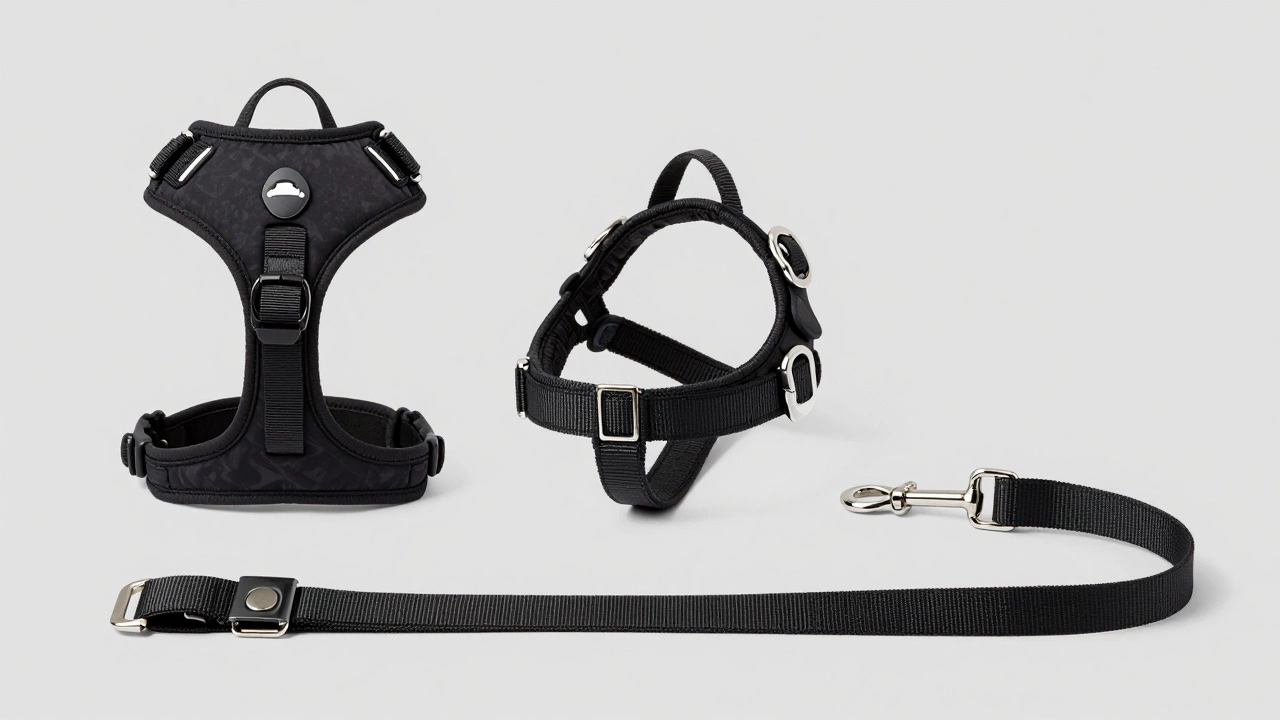
Then there are the harnesses. A No-Pull Harness is a game-changer because of the front attachment point. When the dog pulls, the front clip redirects their chest back toward you, making it physically difficult for them to keep charging forward. Unlike back-clip harnesses, which actually encourage pulling by acting like a sled, front-clip versions break the dog's forward momentum.
For those dealing with very strong dogs, a Gentle Leader (a head halter) can be effective. It works similarly to a horse halter, giving you control over the head. If the head is turned, the body usually follows. However, these require a transition period and aren't suitable for dogs with facial injuries or those who are highly stressed by things on their face.
| Gear Type | How it Works | Best For | Risk Level |
|---|---|---|---|
| Front-Clip Harness | Redirects chest sideways | Most dogs, beginners | Low |
| Head Halter | Controls head direction | Powerful, stubborn pullers | Medium (requires training) |
| Flat Collar | Simple neck loop | Trained, non-pullers | High (for pullers) |
| Martingale Collar | Tightens to prevent slipping | Sighthounds/Greyhounds | Low/Medium |
Why Your Retractable Leash Might Be the Problem
It's tempting to give your dog "freedom" with a retractable leash, but if you're trying to stop pulling, put it away. Retractable leashes teach dogs that pulling is the only way to get more space. Every time they pull and the leash extends, they're getting a reward.
A standard 6-foot nylon or leather leash is a much better tool. It provides a clear boundary. When the leash reaches its end, the dog feels a consistent stop, which is a necessary signal for them to pay attention to you. Using a Fixed-Length Leash allows you to implement a "stop and wait" strategy, which is the cornerstone of loose-leash training.
Training the Brain: The "Be a Tree" Method
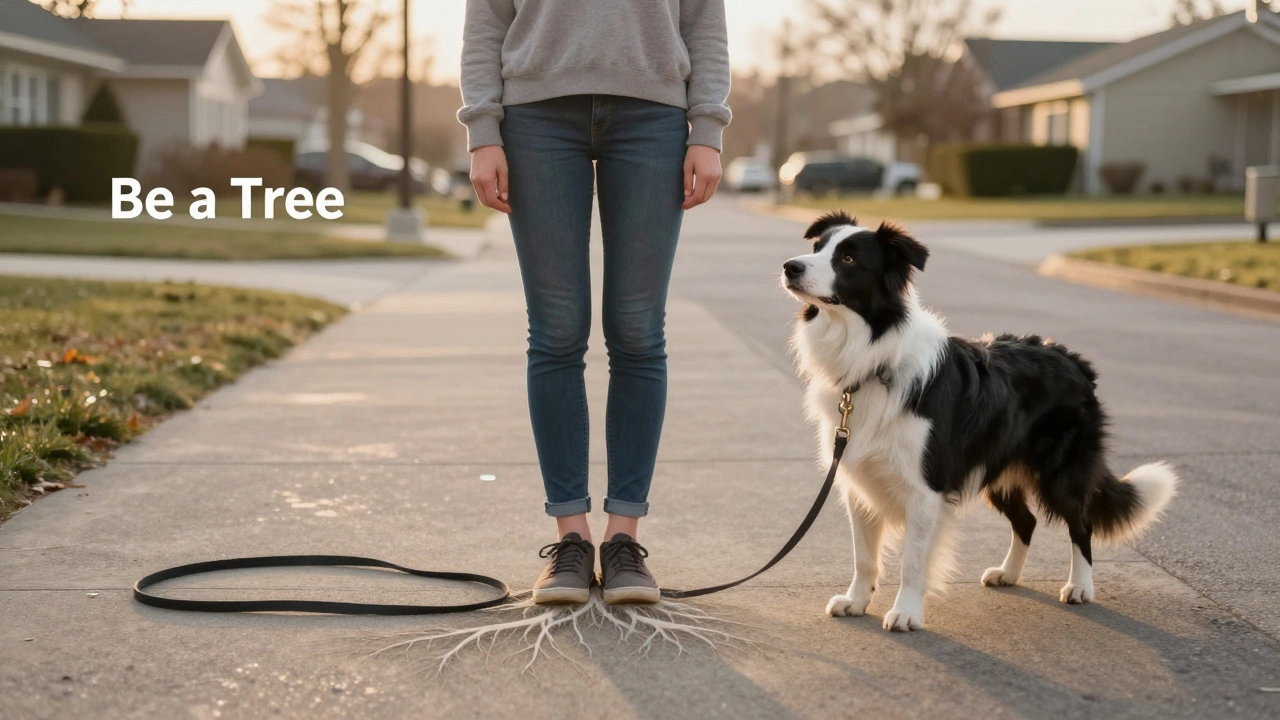
Gear helps, but training solves the problem. The most effective method for stopping pulling is remarkably simple: stop moving. The moment the leash goes taut, imagine you've grown roots into the sidewalk. Become a tree. Do not yank back, do not shout; just stop.
Wait for the dog to realize that the forward motion has ceased. Usually, they'll look back at you, move a step toward you, or slacken the leash. The second that happens-boom-reward them with a treat or praise and start moving again. You are teaching the dog a new rule: Taut leash = No movement. Slack leash = Progress.
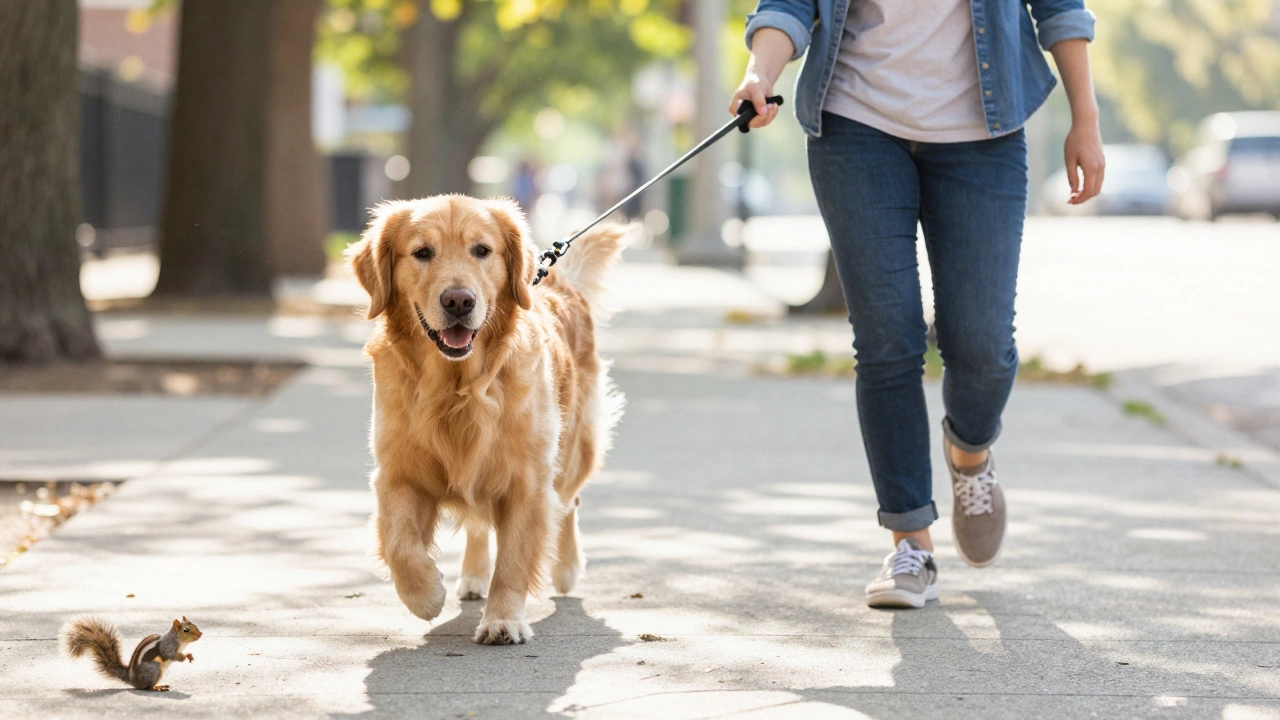
If you're dealing with a high-energy breed like a Border Collie or a Golden Retriever, the excitement can be overwhelming. In these cases, try "intermittent direction changes." Every few minutes, casually turn around and walk the other way. This forces the dog to keep an eye on you to see where the walk is going, rather than just towing you toward the next smell.
Common Mistakes That Keep Dogs Pulling
One of the biggest errors is "the tug-of-war." When a dog pulls, many owners instinctively pull back. This triggers the opposition reflex. Instead of stopping the dog, you're just engaging in a strength contest that the dog usually wins (or that hurts their neck). Your goal isn't to overpower them, but to make pulling an ineffective strategy.
Another pitfall is inconsistent rewarding. If you let your dog pull "just this once" because you're in a hurry to get home, you've just reinforced the pulling behavior. Dogs thrive on consistency. If you are 100% consistent with the "stop and wait" method for two weeks, you'll see more progress than you would in two months of inconsistent training.
Customizing Your Approach by Dog Size
Training a Chihuahua is a different beast than training a Great Dane. For smaller dogs, the pulling is often less about strength and more about frantic energy. Use a lightweight Harness to avoid putting pressure on their delicate windpipes and focus on high-frequency rewards.
For giant breeds, safety is the priority. A powerful pull from a 50kg dog can cause joint strain for the owner. In these scenarios, a combination of a front-clip harness and a waist-leash can help distribute the weight and give you more stability. Remember, the goal with big dogs is to prevent the "lunge" before the full pull happens.
Can a dog be too old to learn to stop pulling?
Absolutely not. While puppies might learn faster, adult dogs can absolutely unlearn pulling. It just takes more patience because they have a more ingrained habit. The key is to be consistent and use high-value treats that they don't get at any other time of the day.
Are prong collars effective for stopping pulling?
Prong collars use a correction-based approach. While some trainers use them, they can cause fear or aggression if used incorrectly. For most pet owners, a positive reinforcement approach with a no-pull harness is safer and builds a stronger bond between the owner and the dog.
What are the best treats for loose-leash training?
You need something "high-value" that the dog finds irresistible. Small pieces of boiled chicken, freeze-dried liver, or tiny cubes of cheese work well. The treat should be small enough that the dog can eat it quickly without stopping the flow of the walk for too long.
Does a no-pull harness actually train the dog?
The harness is a management tool-it stops the pulling physically. However, it doesn't "teach" the dog to walk calmly. To truly train the dog, you must combine the harness with positive reinforcement and the "be a tree" method so they understand why the slack leash is the goal.
How long does it take to see results?
If you are consistent every single walk, you'll usually see a difference in 7 to 14 days. The dog will start glancing back at you to check if they're doing it right. Once they start doing this "checking behavior," you've won half the battle.
Next Steps for a Stress-Free Walk
If you're just starting, begin your training in a low-distraction environment, like your own hallway or backyard. If you jump straight into a busy park with other dogs and squirrels, your dog's brain will be too overloaded to learn the new rules. Gradually move to the street, then the block, and finally the park.
If you've tried everything and your dog still lunges or pulls violently, it might be worth consulting a certified professional dog trainer. Some pulling is actually caused by reactivity or anxiety, which requires a different approach than simple excitement. A pro can help you identify if your dog is "pulling to explore" or "pulling to get away" from something that scares them.