Most cat owners know cat food is designed to meet their pet’s nutritional needs. But what happens when you run out? Or your cat refuses to eat their usual bowl? Maybe you’re curious if that bit of chicken on your plate is okay to share. The truth is, cats can eat some human foods-but not all, and not all the time. Feeding your cat anything other than proper cat food should be a temporary fix, not a replacement. And it’s not as simple as tossing them a scrap from your dinner.
Why Cat Food Exists
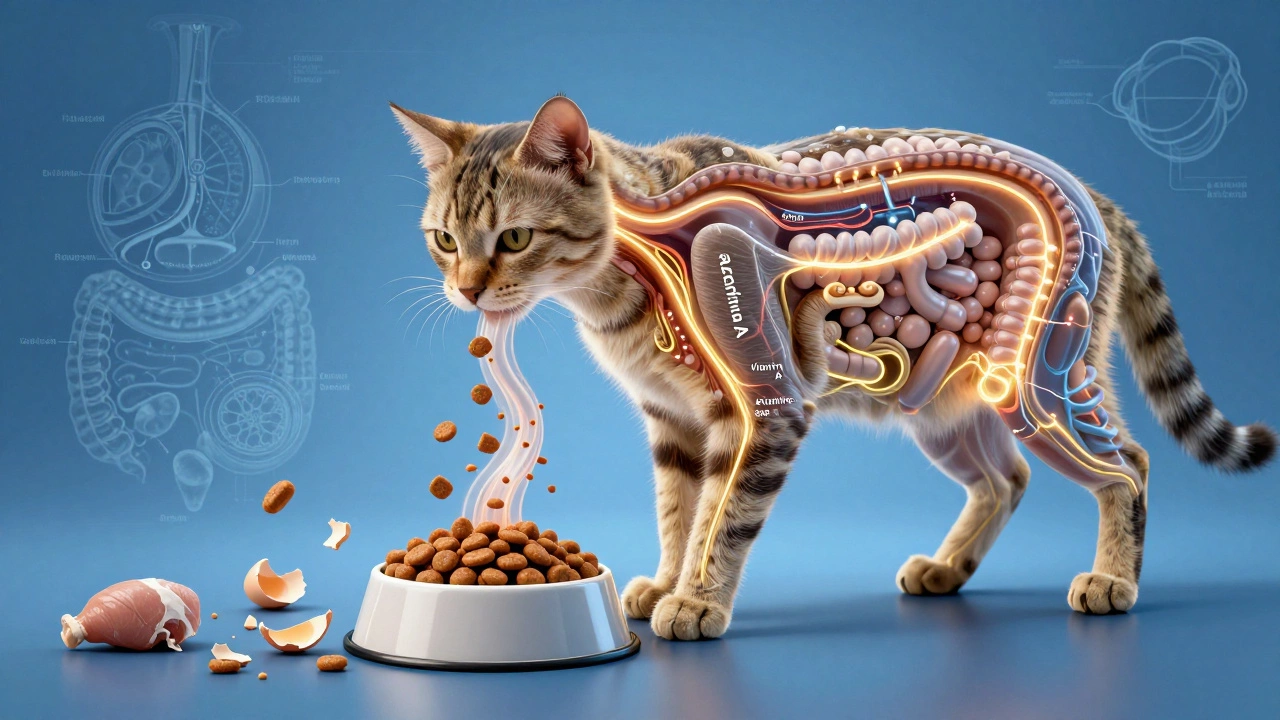
Cat food isn’t just convenient-it’s science. Cats are obligate carnivores, meaning their bodies need nutrients found almost exclusively in animal tissue. They can’t make taurine, arginine, vitamin A, or arachidonic acid on their own. Without these, they develop serious health problems: heart failure, blindness, skin issues, even death. Commercial cat food is balanced to deliver these in exact amounts. Human food? It rarely gets it right.
Even if your cat seems fine eating leftovers, long-term imbalances show up slowly. A cat fed only tuna or chicken for weeks can end up with severe nutritional deficiencies. That’s why veterinarians stress: human food is a treat, not a meal.
Safe Human Foods for Cats (in Small Amounts)
Some human foods are safe for cats as occasional snacks. These should make up less than 10% of their daily intake. Always serve plain, unseasoned, and cooked.
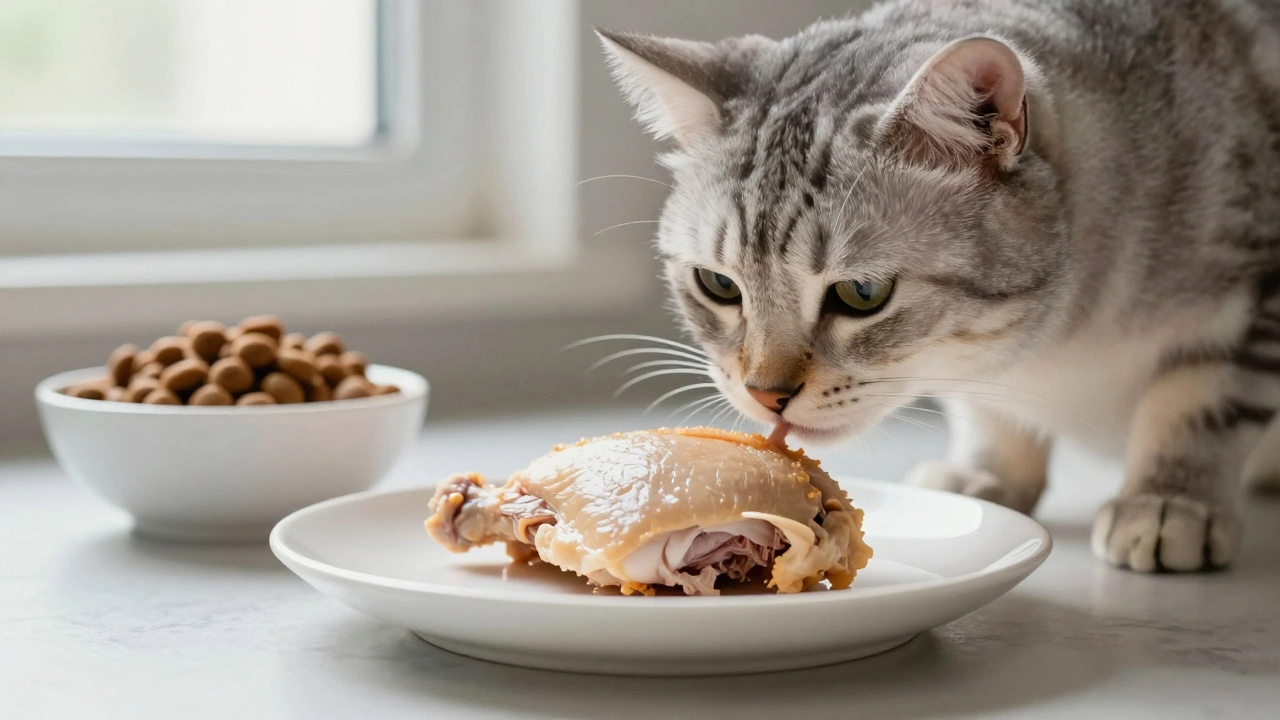
- Plain cooked chicken or turkey-boneless, skinless, no salt or spices. A few bites can be a great protein boost.
- Plain cooked fish-like salmon or tuna (canned in water, not oil). Avoid raw fish due to bacteria and thiaminase, which breaks down vitamin B1.
- Hard-boiled eggs-fully cooked, no seasoning. Eggs offer protein and amino acids cats need.
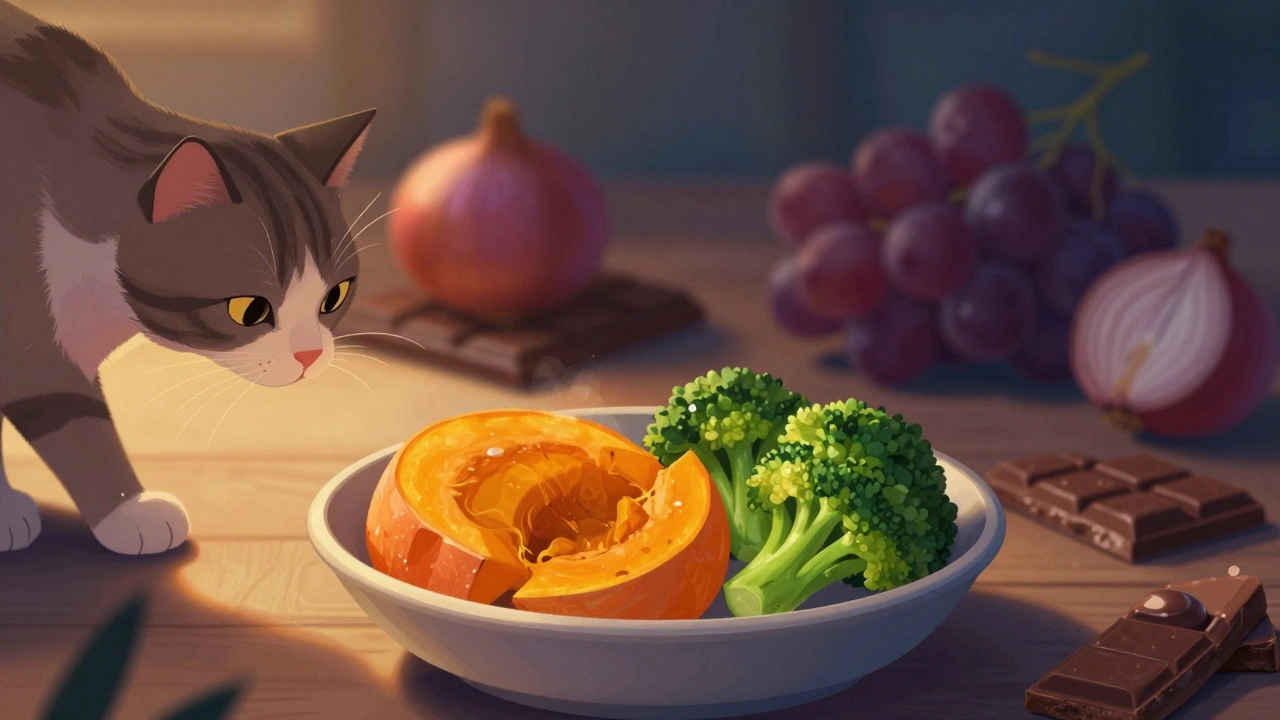
- Small pieces of cooked pumpkin-plain, no sugar or spices. Helps with digestion and hairballs.
- Steamed broccoli or carrots-tiny amounts. Cats don’t digest plants well, but these are harmless in moderation.
These foods are safe, but they’re not complete. A teaspoon of chicken won’t replace taurine. A spoonful of pumpkin won’t fix a vitamin A deficiency. Think of them like candy for your cat-fun once in a while, but not dinner.
Human Foods That Are Dangerous
Some foods that are harmless to us are deadly to cats. Keep these away completely.
- Onions, garlic, chives-even small amounts damage red blood cells and cause anemia.
- Chocolate-contains theobromine and caffeine, both toxic to cats. Dark chocolate is worst.
- Grapes and raisins-cause sudden kidney failure, even in tiny doses.
- Dairy products-most adult cats are lactose intolerant. Milk can cause vomiting and diarrhea.
- Caffeine-coffee, tea, energy drinks. Can cause rapid breathing, heart palpitations, seizures.
- Alcohol-even a sip can lead to coma or death.
- Xylitol-found in sugar-free gum, peanut butter, baked goods. Triggers insulin release, causing dangerous drops in blood sugar.
- Raw meat and eggs-risk of salmonella or E. coli. Also, raw fish destroys vitamin B1.
If your cat eats any of these, contact your vet immediately. Don’t wait for symptoms. Some poisons act fast.
What About Raw Diets or Homemade Cat Food?
You might hear about raw diets or homemade cat food as “more natural.” Some owners swear by them. But here’s the catch: most homemade recipes are nutritionally incomplete. A 2021 study from the University of California, Davis, found that 95% of homemade cat food recipes online lacked at least one essential nutrient. Taurine was the most common missing ingredient.
If you want to try homemade, work with a veterinary nutritionist. They’ll give you a recipe that’s balanced. Don’t guess. Don’t follow TikTok trends. Cats don’t have second chances with nutrition.
What to Do When Cat Food Runs Out
Running out of cat food happens. Here’s what to do:
- Give a small amount of plain cooked chicken or boiled egg. Just enough to keep them from getting hungry.
- Call your vet or local pet store. Many have emergency supplies or can recommend nearby places.
- Check if your cat’s brand offers sample packs or delivery. Some online retailers deliver within hours.
- Never go more than 24 hours without food. Cats can develop hepatic lipidosis (fatty liver disease) if they stop eating.
Even if your cat seems fine without food, their body is already under stress. A 24-hour fast is dangerous. Don’t wait until they’re lethargic.
Signs Your Cat Isn’t Getting Proper Nutrition
Malnutrition doesn’t always look like starvation. Here’s what to watch for:
- Dull, brittle fur or excessive shedding
- Weight loss despite eating
- Dull eyes or eye discharge
- Weakness or stumbling
- Diarrhea or vomiting that won’t go away
- Not grooming themselves
If you see any of these, take your cat to the vet. Blood tests can show nutrient deficiencies. Early action prevents long-term damage.
Alternatives to Commercial Cat Food
Not all cat food is the same. If your cat refuses their current food, try these options before turning to human food:
- Wet food-higher moisture, often more palatable. Good for cats who don’t drink enough water.
- Different protein sources-switch from chicken to duck, rabbit, or salmon. Some cats just get bored.
- Freeze-dried raw-rehydrated with water. Closer to natural prey texture.
- Prescription diets-for cats with kidney disease, allergies, or other conditions. Only use if vet recommends.
Try warming wet food slightly. Cats prefer food at body temperature. It smells stronger and feels more like fresh prey.
Final Advice: When in Doubt, Stick to Cat Food
There’s no substitute for properly formulated cat food. Even the safest human foods can’t match the balance of nutrients in a good commercial diet. Treats, scraps, and emergency snacks are fine-but only as temporary fixes.
If your cat refuses food regularly, don’t assume they’re picky. It could be dental pain, a thyroid issue, or stress. A vet visit is better than guessing.
Keep a small bag of emergency cat food in your pantry. Or sign up for auto-delivery. It’s cheaper than a vet bill for malnutrition.
Your cat doesn’t need variety. They need consistency. And they need the right nutrients-every single day.