Puppy Crate Time Calculator
Calculate the maximum safe crate time for your puppy based on their age. Follow these guidelines to prevent stress, accidents, and behavioral issues.
The safe crate time is calculated using: age in months + 1 hour (up to a maximum of 4 hours)
Example: A 3-month-old puppy can be crated for up to 4 hours. Never exceed 4 hours for any puppy.
Recommended Crate Time
Important: This is the maximum time your puppy can safely be crated. Always take your puppy out to potty before and after crating. Never force crating for longer than this time.
Crating a puppy during the day is one of the most debated topics among new dog owners. You want to keep your pup safe, prevent destructive chewing, and help with house training-but you also don’t want to traumatize them or turn the crate into a prison. So, should you lock your puppy in his crate during the day? The answer isn’t yes or no. It’s how and when.
What a Crate Is Supposed to Do
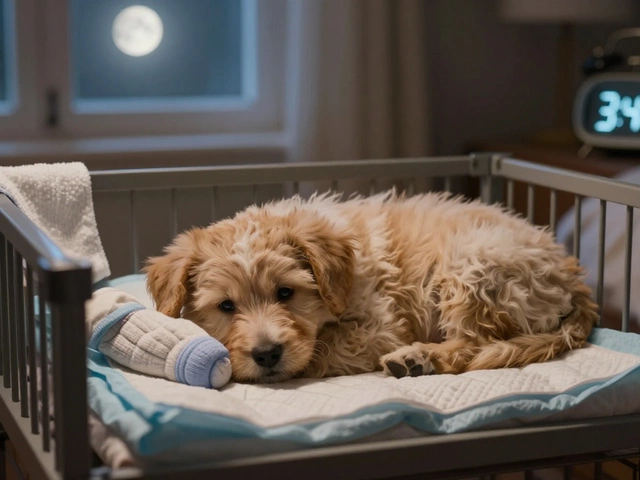
A crate isn’t a punishment tool. It’s a den. In the wild, dogs seek out enclosed, quiet spaces to rest and feel secure. A properly introduced crate becomes that safe spot for your puppy. When used right, it helps with potty training because dogs naturally avoid soiling their sleeping area. It also keeps them from chewing shoes, digging up carpets, or swallowing things they shouldn’t when you’re not watching.But if you shove a puppy in there for hours without preparation, you’re not creating safety-you’re creating anxiety. Puppies under 12 weeks can’t hold their bladders for more than 2-3 hours. Forcing them to sit in a crate longer than that leads to accidents, stress, and a bad association with the crate itself.
How Long Is Too Long?
There’s a simple rule: your puppy can hold it for about one hour per month of age, plus one. So a 3-month-old puppy can manage about 4 hours max. That doesn’t mean you should push them to that limit every day. Most experts recommend no more than 3-4 hours at a time during the day, with breaks for potty trips, water, and play.Think about it like this: if your 4-month-old puppy is crated for 8 hours straight while you’re at work, that’s not training-it’s neglect. You’re asking a child to sit in a bathroom for a full workday. No one expects that from a toddler. Don’t expect it from your puppy.
What Happens When You Over-Crate
Crating too long or too often leads to real problems:- Separation anxiety - If your puppy learns that being alone means being locked up, they start panicking when you leave, even if the crate door is open.
- Bladder and bowel issues - Puppies forced to hold it too long may develop urinary tract infections or lose their natural instinct to avoid soiling.
- Crate aversion - They start barking, whining, or scratching at the door because the crate feels like a trap, not a safe space.
- Behavioral regression - House training progress stalls or reverses. You think you’re helping, but you’re undoing weeks of work.
A 2023 study from the University of Edinburgh followed 217 puppy owners who crated their pups for more than 6 hours daily. Over 60% reported increased anxiety behaviors within 3 months. That’s not a coincidence. It’s a pattern.
When Crating Makes Sense
There are good reasons to use a crate during the day:- You’re home but can’t supervise (cooking, showering, working on the computer).
- Your puppy is in the middle of house training and you need to prevent accidents.
- You’re away for a few hours and need to keep them safe from hazards.
- You’re using it as a temporary timeout after overexcited chewing or nipping.
But even then, it needs structure. Here’s how to do it right:
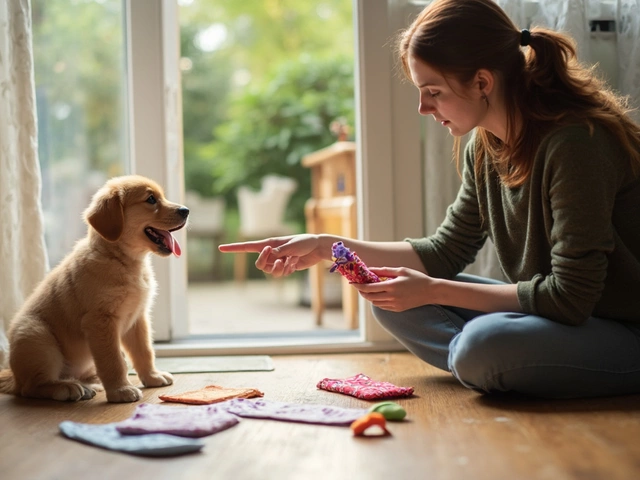
- Introduce the crate as a positive space. Toss treats inside, feed meals in it, leave the door open.
- Start with short sessions-10 minutes while you’re in the same room.
- Gradually increase time over days, not hours.
- Never use the crate as punishment. If your puppy misbehaves, redirect, don’t lock them up.
- Always take them out to potty before and after crating.
- Use a comfortable bed, water (if over 2 hours), and a chew toy.
Alternatives to All-Day Crating
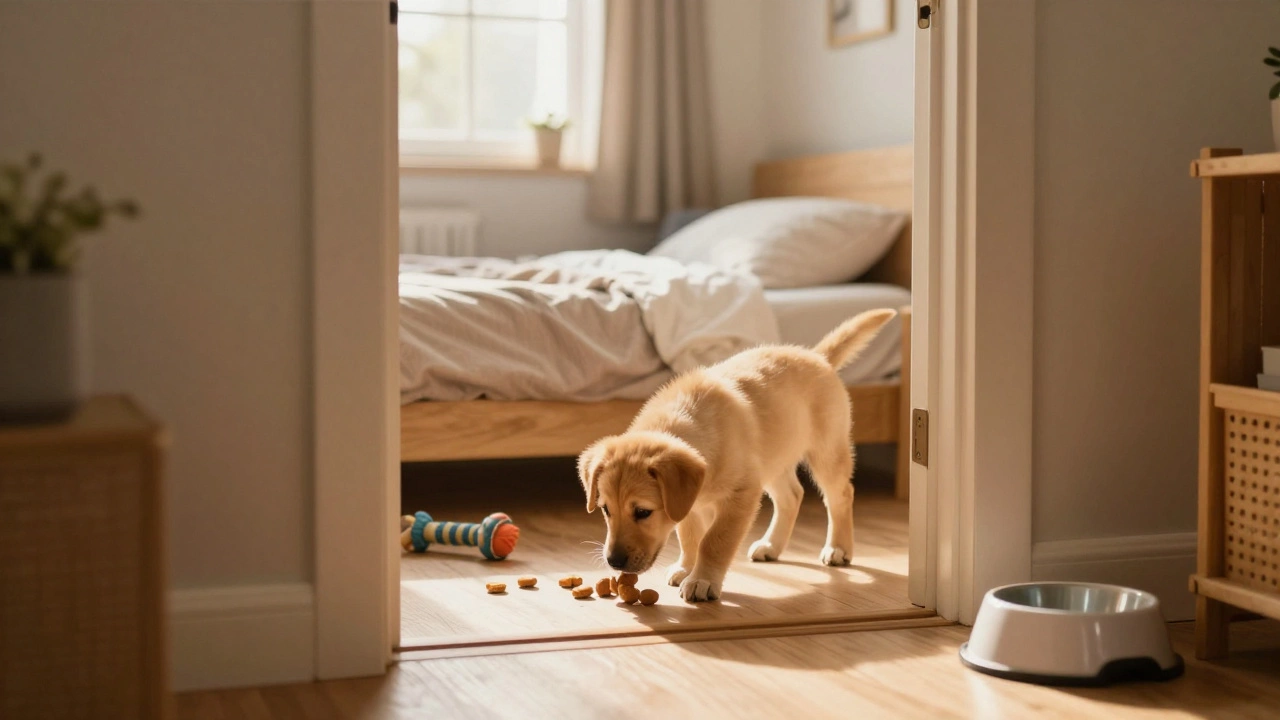
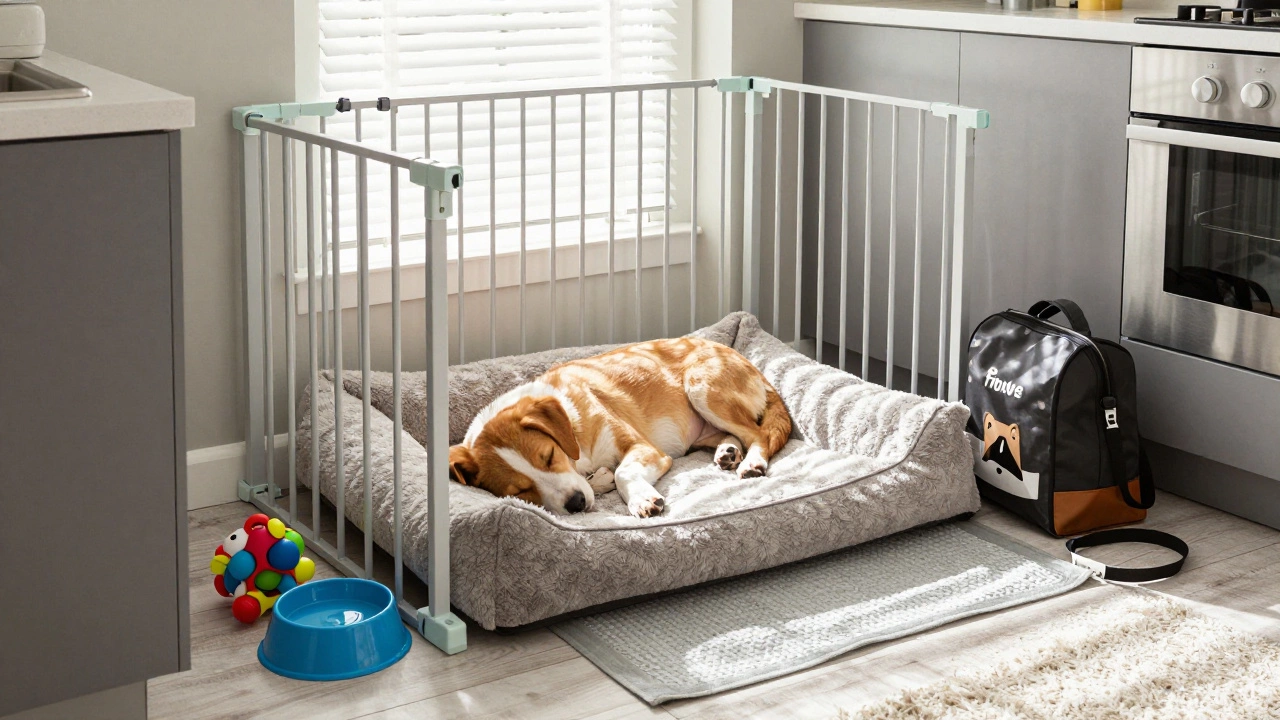
If you work long hours, crating your puppy for 8+ hours isn’t just unfair-it’s risky. Here’s what works better:- Puppy-proofed room - Use baby gates to confine them to a safe area with a potty pad, water, toys, and a bed. This gives them space to move without danger.
- Dog walker or pet sitter - Even a 15-minute midday break to go outside makes a huge difference in their mental and physical health.
- Daycare - If available, a reputable puppy daycare gives socialization, exercise, and supervision.
- Automatic treat dispenser - Keeps them mentally engaged while you’re away.
One owner I spoke with switched from crating her 5-month-old puppy for 7 hours to using a gated kitchen with a potty pad and a puzzle toy. Within two weeks, her puppy stopped chewing furniture and started napping calmly during the day. No more whining. No more accidents. Just a happy, tired pup.
Signs Your Puppy Is Struggling With Crating
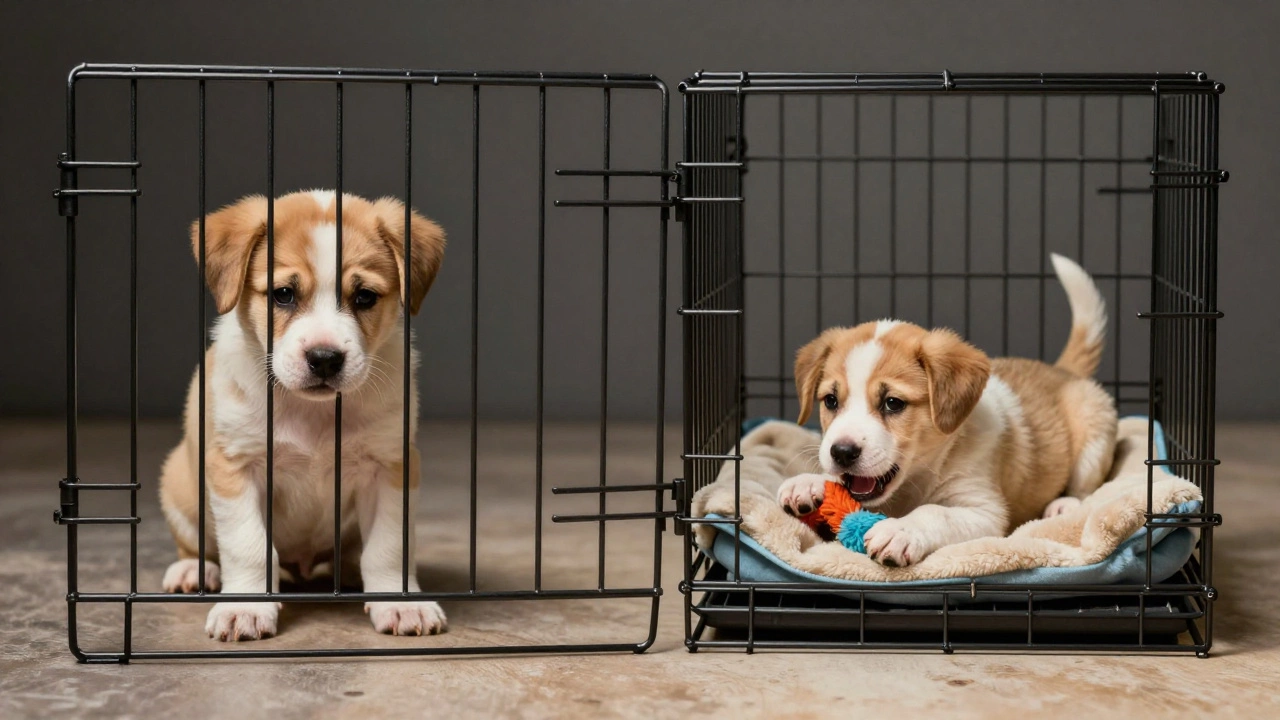
Watch for these red flags:- Constant barking or howling for more than 10-15 minutes after being crated.
- Scratching or chewing at the crate door.
- Accidents inside the crate-even if they’ve been trained.
- Refusing to enter the crate even with treats.
- Shaking, panting, or drooling when near the crate.
If you see any of these, stop forcing the crate. Go back to basics. Make the crate fun again. Maybe try a different location. Or switch to a puppy-proofed room until they’re older.
When to Stop Crating
Most puppies outgrow the need for crating between 6 and 12 months. Signs they’re ready:- No longer chewing things when unsupervised.
- Consistently holding it for 6+ hours.
- Can be left alone without destructive behavior.
- Shows no anxiety when you leave the house.
When they’re ready, don’t just yank the crate away. Leave it open in the corner. Let them choose when to use it. Many dogs keep using their crate as a cozy nap spot well into adulthood.
Final Answer: Should You Lock Your Puppy in His Crate During the Day?
Yes-but only if it’s short, positive, and part of a bigger plan. Never lock your puppy in for more than 4 hours during the day. Never use it as a babysitter. Never ignore signs of distress. Crating works when it’s a tool, not a cage.Your puppy isn’t trying to be bad. They’re trying to survive a world that’s too big, too loud, and too full of things to chew. Give them structure, not isolation. Give them safety, not silence. And if you’re away too long? Find someone who can let them out. Their body, mind, and trust in you depend on it.
Can I leave my puppy in the crate all day while I work?
No. Most puppies under 6 months can’t hold their bladder for more than 4 hours. Leaving them crated for 8+ hours increases the risk of accidents, anxiety, and bladder problems. Use a puppy-proofed room, hire a dog walker, or consider daycare instead.
Is it cruel to crate a puppy during the day?
It’s not cruel if done correctly. A crate becomes a safe den when introduced positively and used in short, supervised sessions. But if you use it as punishment, leave them locked for too long, or ignore signs of stress, then yes-it becomes cruel. The difference is intention and timing.
How do I get my puppy to like the crate?
Make it inviting. Feed meals inside, toss high-value treats in, leave the door open, and play calming music nearby. Never force them in. Start with just a few minutes while you’re home, then slowly increase time. A happy puppy will walk in on their own.
Should I cover the crate at night?
You can, but only if your puppy seems to prefer it. Some dogs feel more secure with a light blanket over the top, mimicking a den. Others get anxious if they can’t see out. Try it for a night and watch their behavior. If they settle faster, keep it. If they whine more, remove it.
My puppy cries in the crate-should I let them out?
If they’re crying for less than 10 minutes and you’ve just put them in, wait it out. They’re testing boundaries. But if they’re screaming, panting, or scratching for more than 15-20 minutes, they’re likely stressed. Check if they need to potty, are too hot/cold, or are in pain. Don’t reward crying with attention, but don’t ignore distress either.