
Coconut Oil vs. Fish Oil Calculator
Select your dog's primary health concern to determine which supplement is most appropriate, based on scientific evidence and veterinary recommendations.
Recommendation
Dosage
Coconut Oil Benefits
Coconut oil is excellent for coat shine and mild skin issues. It contains MCTs that provide quick energy and have antimicrobial properties.
Fish Oil Benefits
Fish oil contains EPA and DHA which provide strong anti-inflammatory effects for joint pain, allergies, and skin issues. It has strong scientific backing.
When you’re trying to improve your dog’s coat, ease joint pain, or boost their immune system, you’ve probably heard about coconut oil and fish oil. Both are popular supplements, and both come with big claims. But which one actually works better for your dog? It’s not about which is "better"-it’s about what your dog needs right now.
What coconut oil does for dogs
Coconut oil is mostly made of medium-chain triglycerides (MCTs), especially lauric acid. These fats are easy for dogs to digest and can be used quickly for energy. Many dog owners swear by it for skin and coat health. If your dog has dry, flaky skin or a dull coat, coconut oil can help. It’s also used topically to soothe minor hot spots or cracked paws.
Some studies suggest MCTs may support brain function in older dogs. A 2021 study from the University of California, Davis, found that dogs given MCTs daily showed improved cognitive performance over 90 days. That doesn’t mean it reverses dementia, but it might slow the decline.
Coconut oil also has mild antimicrobial properties. That’s why it’s sometimes added to ear cleaners or used to help with minor yeast infections. But don’t expect it to replace vet-prescribed treatments for serious infections.
What fish oil does for dogs
Fish oil is rich in omega-3 fatty acids-specifically EPA and DHA. These are the same compounds that help reduce inflammation in humans. For dogs, that means real relief for arthritis, allergies, and itchy skin.
A 2020 clinical trial published in the Journal of Veterinary Internal Medicine tracked 65 dogs with osteoarthritis. Half received fish oil daily; the other half got a placebo. After 8 weeks, the fish oil group showed a 38% improvement in mobility and a noticeable drop in pain scores. No other supplement in the study came close.
Fish oil also helps with kidney disease, heart conditions, and even some types of allergies. Dogs with atopic dermatitis often see less scratching and fewer flare-ups when on fish oil. It’s not a cure, but it’s one of the few supplements with solid, peer-reviewed backing.
Comparing the two: side by side
| Feature | Coconut Oil | Fish Oil |
|---|---|---|
| Primary Active Ingredients | Lauric acid, MCTs | EPA, DHA (omega-3s) |
| Best for | Coat shine, mild skin issues, energy | Inflammation, joint pain, allergies, heart health |
| Digestive impact | Can cause loose stools if overused | May cause fishy burps or mild diarrhea |
| Scientific backing | Low to moderate | Strong |
| Storage | Shelf-stable, doesn’t go rancid easily | Needs refrigeration after opening |
| Cost per dose | $0.10-$0.20 | $0.25-$0.60 |
Here’s the bottom line: coconut oil is a gentle all-rounder. Fish oil is a targeted treatment. If your dog has chronic joint pain or allergies, fish oil wins. If they just need a shiny coat and a little energy boost, coconut oil might be enough.
When to use coconut oil
Coconut oil works best as a daily maintenance tool. Try it if:
- Your dog’s coat looks dry or brittle
- They have occasional dandruff or flaky skin
- You want a natural way to support digestion
- They’re underweight and need extra calories
Start with 1/4 teaspoon per 10 pounds of body weight. Give it once a day with food. Watch for loose stools-if that happens, cut back. Too much can cause pancreatitis in sensitive dogs.
When to use fish oil
Fish oil is the go-to when inflammation is the issue. Use it if:
- Your dog has arthritis or limps after naps
- They scratch constantly, even without fleas
- They’ve been diagnosed with kidney or heart disease
- You’re managing allergies that don’t respond to antihistamines
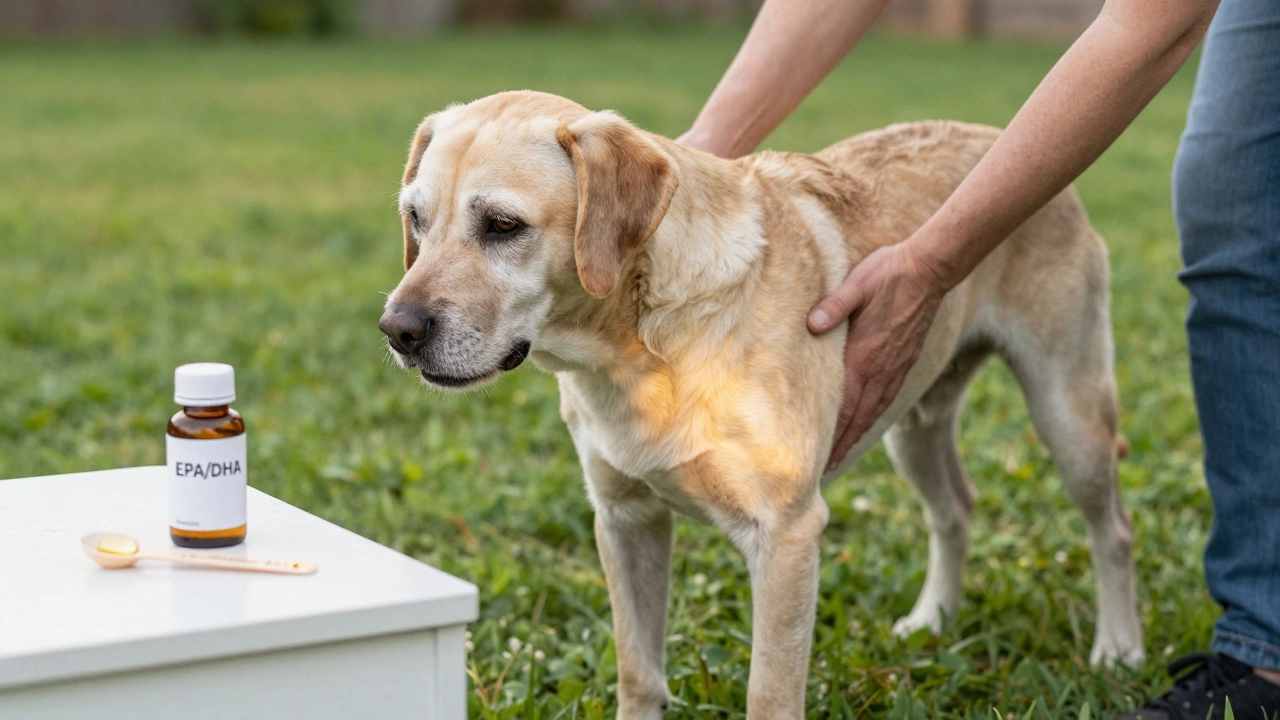
Dosage matters. A good rule: 20 mg of EPA per pound of body weight daily. So a 50-pound dog needs about 1,000 mg of EPA. Check the label-some oils list total omega-3s, not just EPA. Always choose a product tested for heavy metals and purified for dogs.
Can you use both?
Yes, but don’t just pour them together. They serve different purposes. If your dog has both a dull coat and painful joints, you can use both-but space them out. Give coconut oil in the morning with breakfast, and fish oil with dinner. That way, you avoid overloading their system.
Some premium dog foods now include both. If you’re feeding one of those, you might not need extra supplements at all. Check the guaranteed analysis on the bag.

What to avoid
Not all oils are created equal. Avoid:
- Virgin coconut oil meant for humans-some contain additives or flavorings
- Fish oil with added vitamins A or D-too much can be toxic to dogs
- Low-quality fish oil that smells rancid or doesn’t list EPA/DHA amounts
Always buy from brands that test for PCBs and mercury. Look for certifications like IFOS (International Fish Oil Standards). Brands like Nordic Naturals and VetriScience have passed these tests consistently.
Real-world results
One client in Auckland had a 9-year-old Labrador with severe hip dysplasia. She tried glucosamine, then CBD, then fish oil. Within six weeks of fish oil, the dog was climbing stairs without hesitation. The vet noted a 30% drop in inflammation markers.
Another owner used coconut oil for her Shih Tzu’s dry skin. The coat became glossy, and the dandruff vanished. But when the dog started licking its paws raw from allergies, coconut oil didn’t help. Fish oil did-within weeks, the licking stopped.
These aren’t anecdotes. They’re common outcomes backed by vet observations and lab results.
Final verdict
Coconut oil isn’t better than fish oil. And fish oil isn’t better than coconut oil. They’re different tools.
If your dog has inflammation-joints, skin, gut, heart-go with fish oil. It’s the only supplement with proven anti-inflammatory power in dogs.
If your dog just needs a healthier coat, more energy, or a gentle digestive aid, coconut oil is safe and effective.
For most dogs, especially older ones or those with chronic issues, fish oil should be the foundation. Coconut oil can be a nice bonus.
Can I give my dog coconut oil every day?
Yes, most dogs can have coconut oil daily. Start with a small amount-1/4 teaspoon per 10 pounds of body weight-and watch for loose stools. If their digestion stays normal, you can slowly increase to 1 teaspoon per 10 pounds. Too much can cause diarrhea or pancreatitis, especially in breeds prone to it, like Miniature Schnauzers.
Is fish oil safe for puppies?
Yes, but dosage matters. Puppies under 6 months should get half the adult dose. Fish oil supports brain and eye development, which is why many premium puppy foods include it. Always choose a purified, heavy-metal-free product. Avoid fish oil with added vitamin D-puppies are more sensitive to overdosing.
Does fish oil make dogs smell fishy?
Some dogs get fishy burps or slightly fishy-smelling breath. That’s normal. It doesn’t mean the oil is bad. If the smell is overwhelming or your dog refuses to eat, try a different brand. Some use enteric-coated softgels or add natural flavors like chicken to mask the taste. Refrigerating the bottle can also reduce odor.
Can coconut oil help with dog bad breath?
It might help a little. Lauric acid has mild antibacterial effects, so it can reduce oral bacteria. But bad breath usually comes from gum disease or dental plaque. Coconut oil won’t replace brushing or professional cleanings. Use it as a supplement, not a solution.
How long until I see results from fish oil?
Most dogs show improvement in 3 to 6 weeks. Skin and coat changes happen faster-sometimes in 2 weeks. For joint pain or inflammation, it takes longer. Give it at least 8 weeks before deciding it’s not working. Consistency matters more than dose.