Dry Dog Food Safety Calculator
Food Safety Calculator
Did you know? Dry dog food can safely sit out for 4-6 hours in cool, dry conditions (below 70°F/21°C). Above 70°F (21°C), the safe time drops to 2-3 hours. Moisture absorption makes kibble a breeding ground for bacteria like Salmonella and E. coli.
Results
Leaving dry dog food in a bowl overnight might seem harmless-after all, it’s not milk or meat that spoils fast. But if your dog doesn’t finish their meal in one sitting, you’re risking more than just a messy kitchen. The real question isn’t just about freshness-it’s about your dog’s health.
How long is too long?
Dry dog food can safely sit out for up to 4 to 6 hours in a cool, dry room. After that, it starts to lose quality and becomes a magnet for bacteria, mold, and pests. If the temperature is above 70°F (21°C), that window shrinks to just 2 to 3 hours. High heat and humidity speed up spoilage, even if the kibble looks fine.
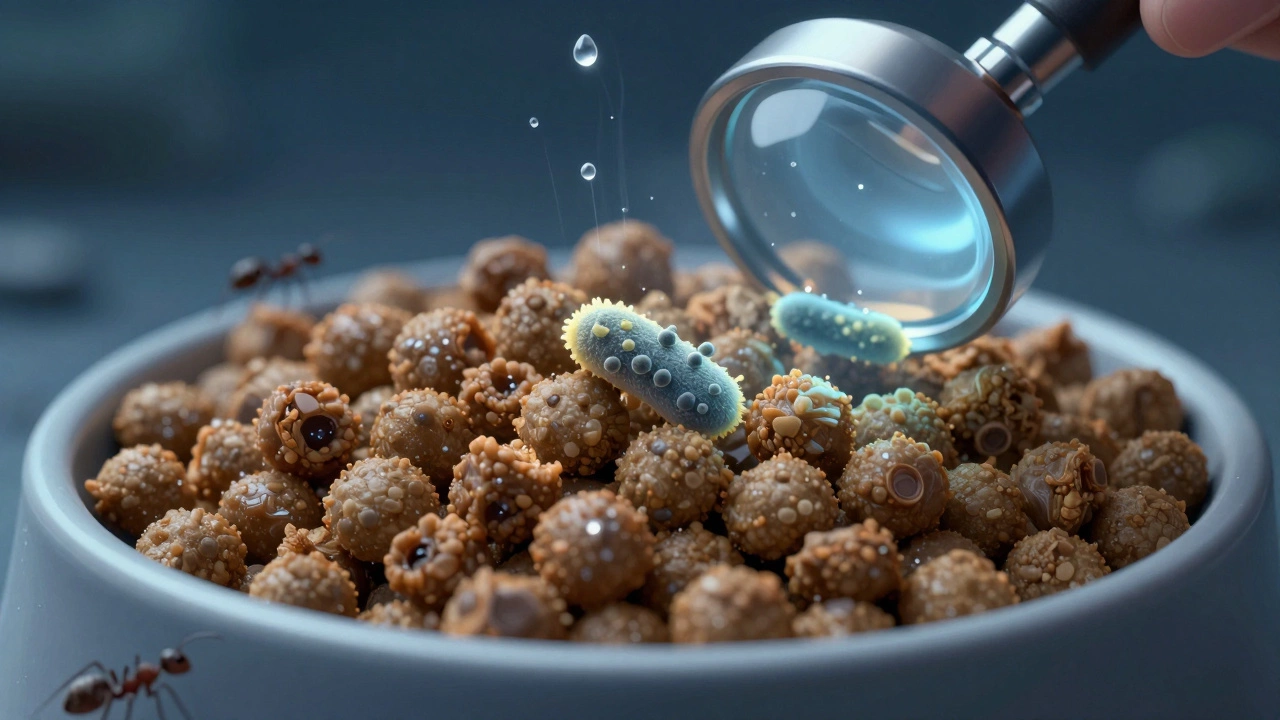
Here’s what happens when food sits too long: moisture from the air gets absorbed by the kibble. This softens it, making it easier for bacteria like Salmonella and E. coli to grow. You won’t always see mold, smell rot, or notice bugs-but your dog’s gut doesn’t need that risk. One study from the University of Illinois found that dry food left out for 8 hours in a typical home environment had over 10 times more bacterial growth than freshly opened food.
Why does it matter if it looks fine?
Just because the kibble hasn’t turned slimy or moldy doesn’t mean it’s safe. Bacteria multiply silently. Your dog might eat it without any immediate reaction, but over time, repeated exposure to low-level contamination can lead to chronic digestive issues-loose stools, vomiting, or even loss of appetite. Puppies, senior dogs, and dogs with weak immune systems are especially vulnerable.
Also, fats in the food go rancid. Dry dog food contains oils to make it palatable and nutritious. When exposed to air for too long, those oils oxidize. Rancid fat doesn’t just taste bad-it loses nutritional value and can irritate your dog’s liver and digestive tract. You won’t smell it right away, but your dog will know the difference. Many dogs will walk away from food that’s gone stale, even if they normally devour it.
What about overnight?
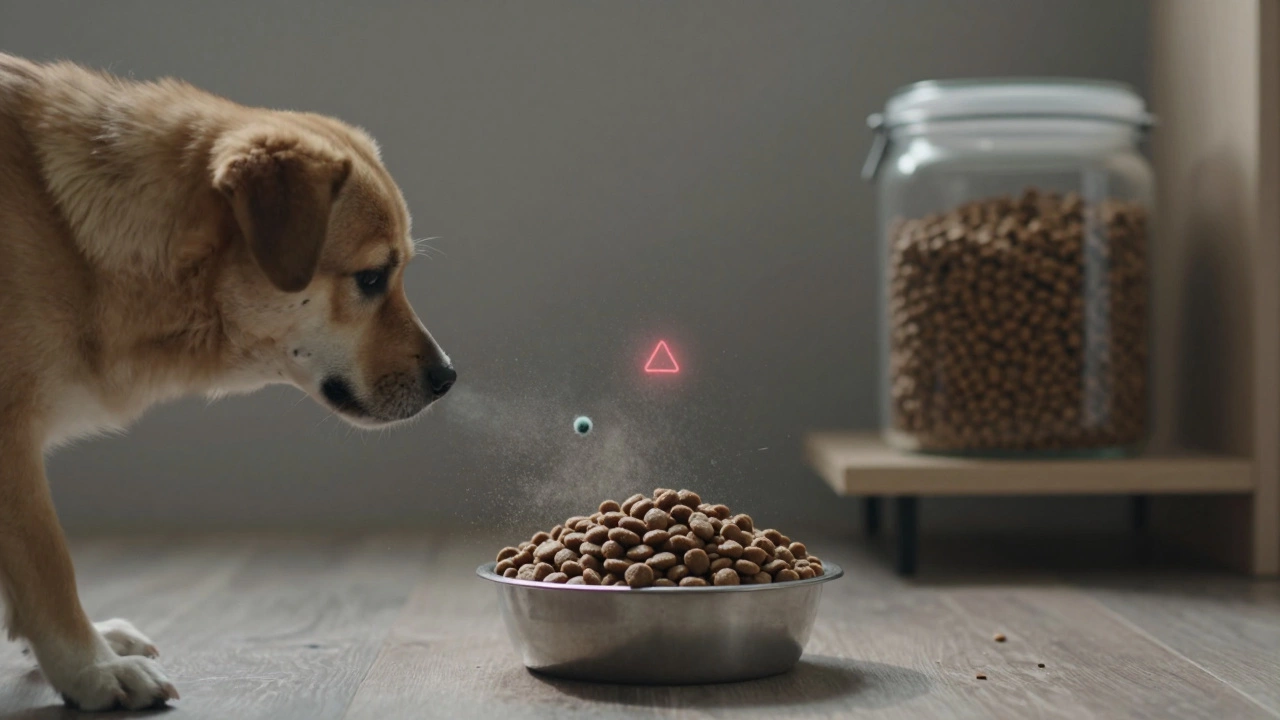
Leaving dry food out overnight is not recommended. Even in a clean kitchen, overnight exposure means 8 to 12 hours of humidity, dust, and potential insect access. Ants, cockroaches, and even flies can be drawn to the scent. A single ant carrying bacteria into the bowl can contaminate the whole portion. And if your dog eats it later, they’re ingesting those pathogens.
Some owners think, “My dog eats it slowly, so it’s fine.” But dogs don’t graze like horses. They eat in bursts. If they leave half the bowl, it’s not because they’re full-it’s because the food isn’t fresh anymore. Their instincts are telling them to avoid it. Ignore that signal, and you’re overriding their natural caution.
What’s the best practice?
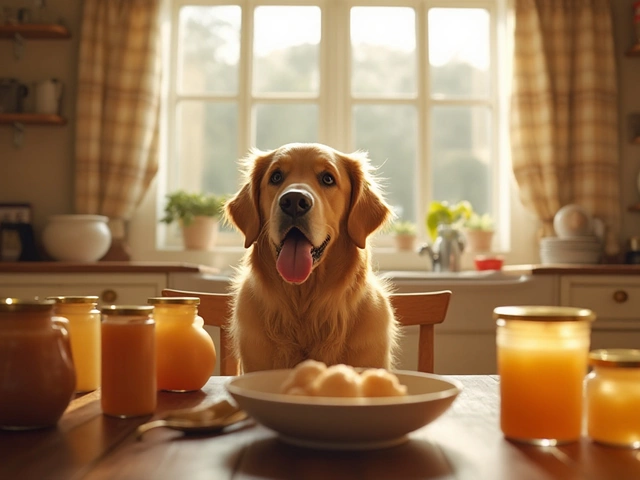
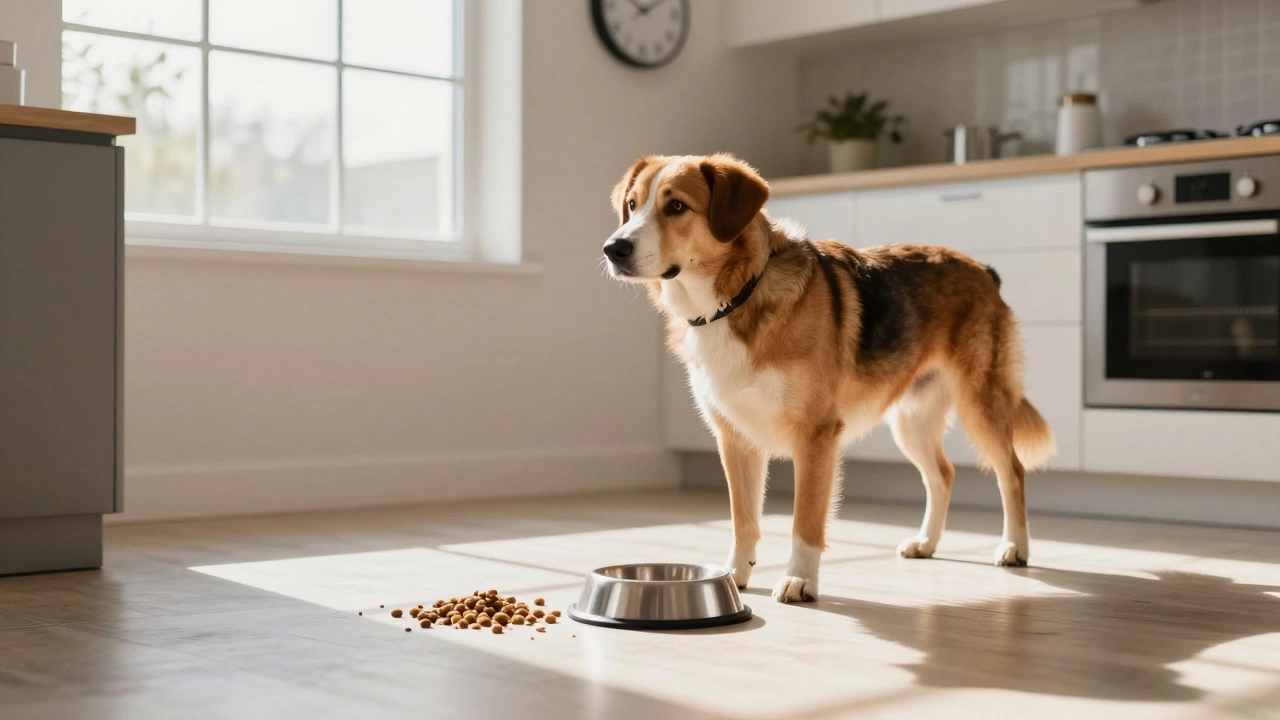
Stick to a simple routine: feed your dog measured portions, and remove the bowl after 20 to 30 minutes. If they don’t finish it, toss the leftovers. Don’t save it for later. Don’t mix it with fresh food. Don’t reheat it. Just discard it.
This might sound wasteful, but it’s cheaper than vet bills. A single case of food poisoning can cost $300 to $800 in diagnostics and treatment. Discarding 1 cup of kibble costs less than $0.25.
For dogs who eat slowly, try using a slow-feeder bowl. These designs make it harder to gulp food fast, so they eat more evenly and finish within the safe window. Or feed smaller meals twice a day instead of one large one.
Storage matters more than you think
Even if you’re good about removing the bowl, your food storage could be sabotaging freshness. Dry dog food should be kept in an airtight container made of BPA-free plastic, glass, or stainless steel. The original bag? Not enough. Once opened, it’s just a paper wrapper that lets in air and moisture.
Store the container in a cool, dark place-like a pantry, not the garage or under the sink. Heat and light break down vitamins and accelerate rancidity. Always keep the bag inside the container so you can check the expiration date and lot number. Write the opening date on the container with a marker. Most dry foods stay fresh for 6 to 8 weeks after opening if stored properly. After that, nutrients degrade and flavor fades.
Signs your dog’s food has gone bad
You don’t need a lab to tell if the food is unsafe. Watch for these red flags:
- A sour, rancid, or chemical smell
- Kibble that’s sticky, oily, or clumped together
- Mold spots-white, green, or black fuzz
- Visible insects or webbing
- Your dog suddenly refuses to eat it, even if they’re hungry
If you see any of these, throw it out immediately. Don’t try to salvage it by mixing in fresh food. Contamination spreads.
Special cases: humid climates and outdoor feeding
If you live in a humid area like Florida, Texas, or coastal California, dry food spoils faster. In those climates, limit bowl time to under 2 hours. Consider feeding your dog indoors, even if they’re used to eating outside.
Never leave food out for outdoor dogs all day. Even in shaded areas, temperature swings and moisture from dew or rain can ruin it. If your dog eats outside, use a covered, elevated bowl and remove leftovers within an hour.
What about wet food?
Wet food spoils in under an hour, so this rule doesn’t apply to canned food. But if you’re mixing wet and dry, the same 20-minute rule applies. Moisture from the wet food accelerates spoilage in the dry kibble.
Bottom line
Don’t leave dry dog food in a bowl longer than 4 hours-and ideally, no more than 30 minutes. Your dog’s digestive system isn’t built to handle old, contaminated food. It’s not about being picky-it’s about preventing illness. Fresh food means a healthier dog, fewer vet visits, and more energy for walks, play, and cuddles.
Make it a habit: measure, serve, remove. It’s simple, cheap, and keeps your dog safe.