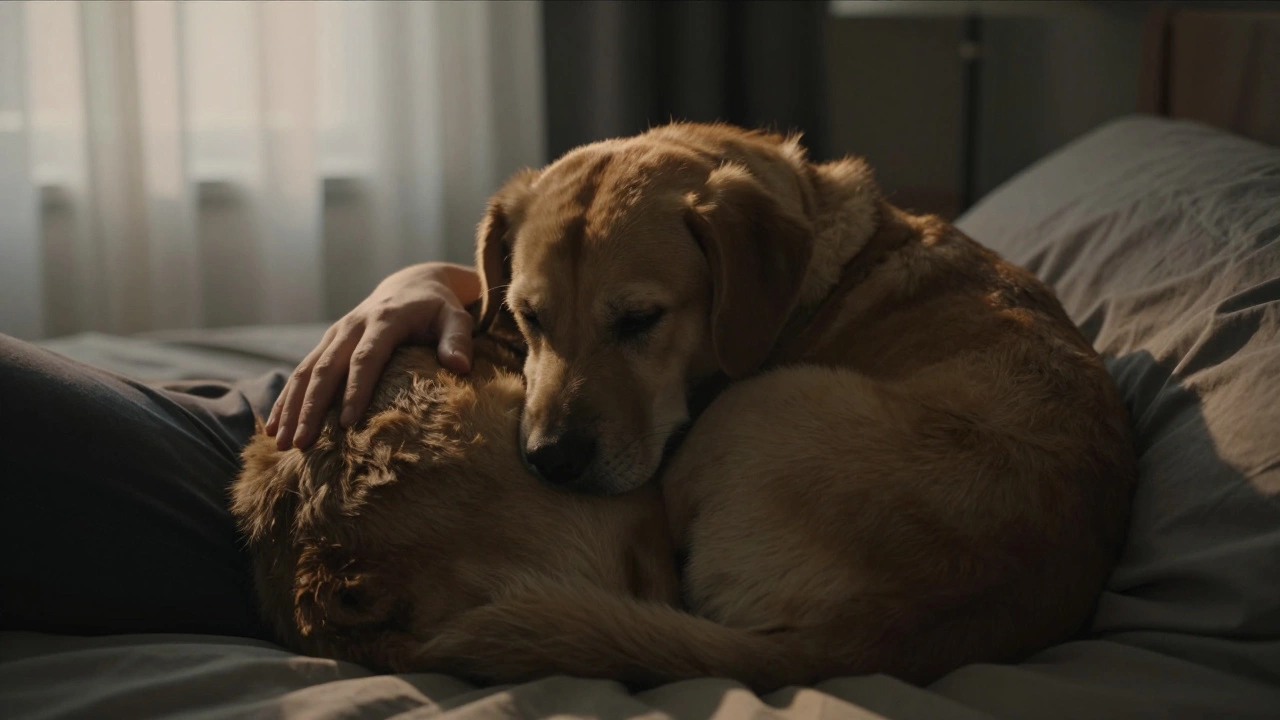
Ever wake up with your dog curled up against your side, warm and heavy, breathing slow and steady? It’s not just coincidence. Most dogs don’t just sleep near their favorite person-they choose to be right next to them, every single night. And it’s not because the couch is cozier or the floor is colder. It’s deeper than that.
It’s About Safety, Not Comfort
Dogs are pack animals by nature. In the wild, sleeping close to the group meant protection from predators, warmth in cold nights, and quick alerts if danger showed up. Even though your dog lives in a climate-controlled home with no wolves outside, that instinct hasn’t faded. When your dog picks your side of the bed over the fancy orthopedic dog bed you bought, it’s not being stubborn. It’s choosing safety.A 2020 study from the University of Tokyo found that dogs showed lower heart rates and less stress hormone release when sleeping within arm’s reach of their owner compared to sleeping alone in another room. The presence of their person acted like a biological calm-down signal. That’s why your dog might whine or pace if you move to the guest room-they’re not being clingy. They’re feeling exposed.
Who Is the Favorite Person?
Not every dog picks the same person. Usually, it’s the one who feeds them, plays with them the most, and gives them attention without conditions. But sometimes it’s the quiet one-the person who sits still and lets the dog rest on their lap without pulling them into play. Dogs don’t pick favorites based on who gives the best treats. They pick the one who makes them feel most understood.In households with multiple people, you can often tell who the favorite is by where the dog sleeps when given a choice. If your dog sleeps on the floor beside your partner’s side of the bed but curls up on the pillow next to you when you’re sick, you’re probably their emotional anchor. Dogs notice subtle shifts in your mood, your scent, your breathing. They bond with the person who feels most like home.
What If Your Dog Sleeps in the Dog Bed?
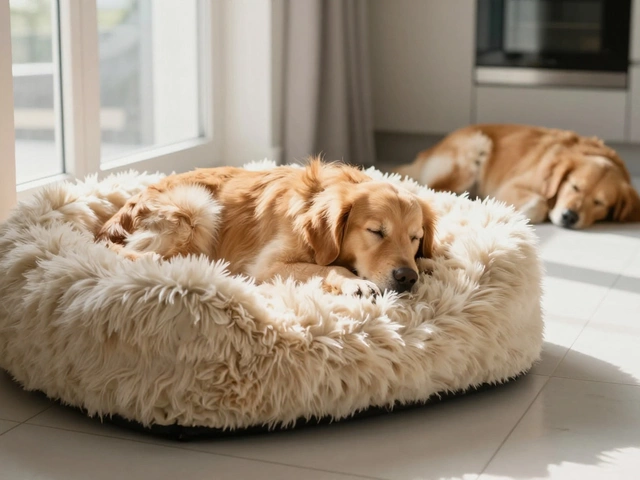
You bought that plush, heated, memory-foam dog bed. You placed it right beside your bed. You even put one of your old T-shirts inside to make it smell like you. And still, your dog ignores it. Why?It’s not the bed’s fault. It’s the distance. A dog bed-even the best one-is still a separate space. Dogs don’t sleep for comfort alone. They sleep for connection. If your dog only uses the dog bed when you’re not home, they’re not rejecting the bed. They’re waiting for you.
Some dogs will use the dog bed as a daytime nap spot but move to your side at night. That’s normal. It’s like how you might sit on the couch to read during the day but still crawl into bed with your partner at night. The dog bed is a backup. Your lap or your side is the destination.
How to Encourage Your Dog to Sleep in Their Own Bed
If you want your dog to sleep in their own bed-whether for space, snoring, or allergies-you can train them to do it. But you need to make their bed more appealing than your side.- Place the bed right next to your bed, not across the room. Distance matters.
- Use a blanket or shirt that smells like you. Scent is the strongest trigger for dogs.
- Make it warm. A heated pad set on low works better than just a fluffy cushion.
- Reward them every time they choose it. Toss a treat on it before bed. Say, “Good bed,” and give a gentle pat.
- Don’t punish them if they jump onto your bed. Just gently guide them back without making a big deal. Consistency beats force.
It takes time. Most dogs adjust in 2-4 weeks if you’re consistent. But if they still come to your side every night? That’s not a failure. That’s love.
When Sleeping Together Is a Problem
There are times when sharing your bed isn’t healthy-for you or your dog.If your dog is large, heavy, or has joint issues, sleeping on a human bed can strain their hips or spine. Small dogs can get crushed. Dogs with anxiety or aggression issues might become possessive of the bed. And if you have allergies, asthma, or sleep disorders like insomnia, sharing space can make things worse.
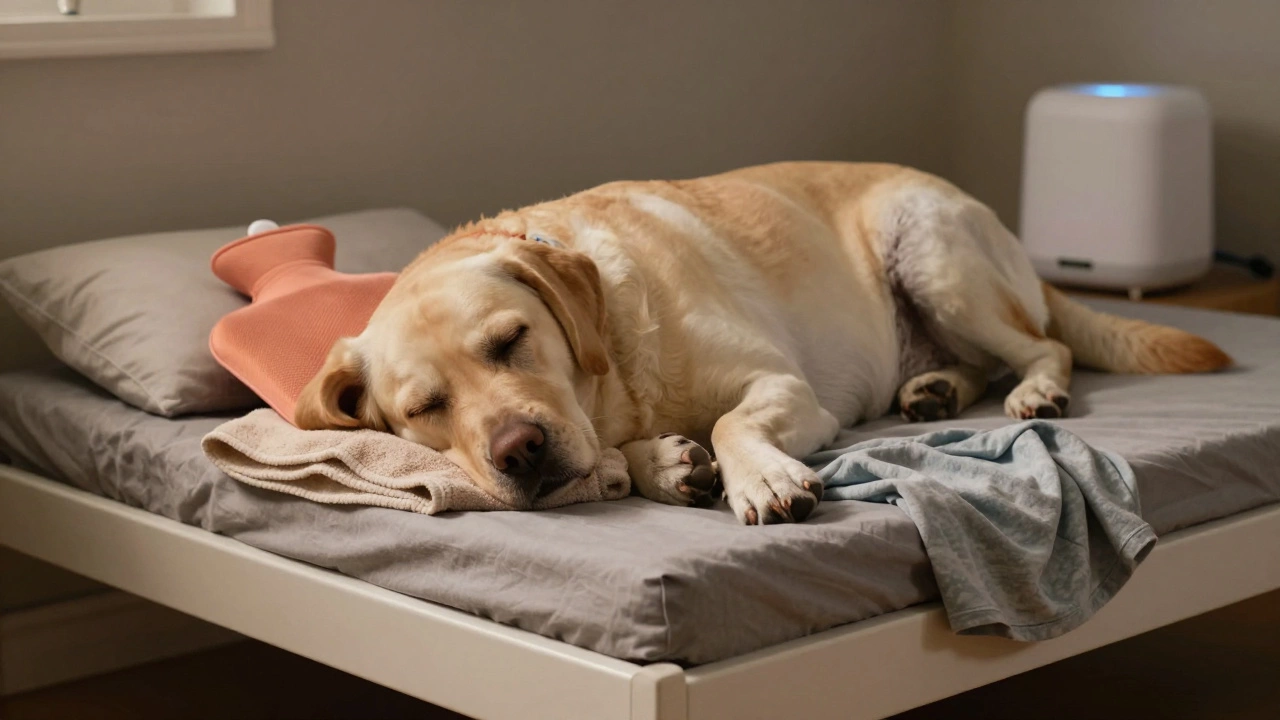
In these cases, don’t feel guilty. Instead, create a cozy alternative. A heated dog bed in a quiet corner of your bedroom, with a nightlight and a white noise machine, can feel just as safe. Some owners even use a dog crate with a soft bed and a favorite toy-it mimics a den, which many dogs find comforting.
One owner in Auckland told me her 90-pound Labrador used to knock her out of bed every night. She bought a large, raised orthopedic bed with sides and placed it beside the bed. She started leaving a warm water bottle wrapped in a towel inside it. Within three weeks, the dog chose the bed every night. She didn’t force it. She made it better.
What Your Dog’s Sleeping Position Tells You
How your dog sleeps next to you isn’t random. Their position speaks volumes.- Curled up in a ball - They’re relaxed but keeping an eye out. Common in dogs who are still learning trust.
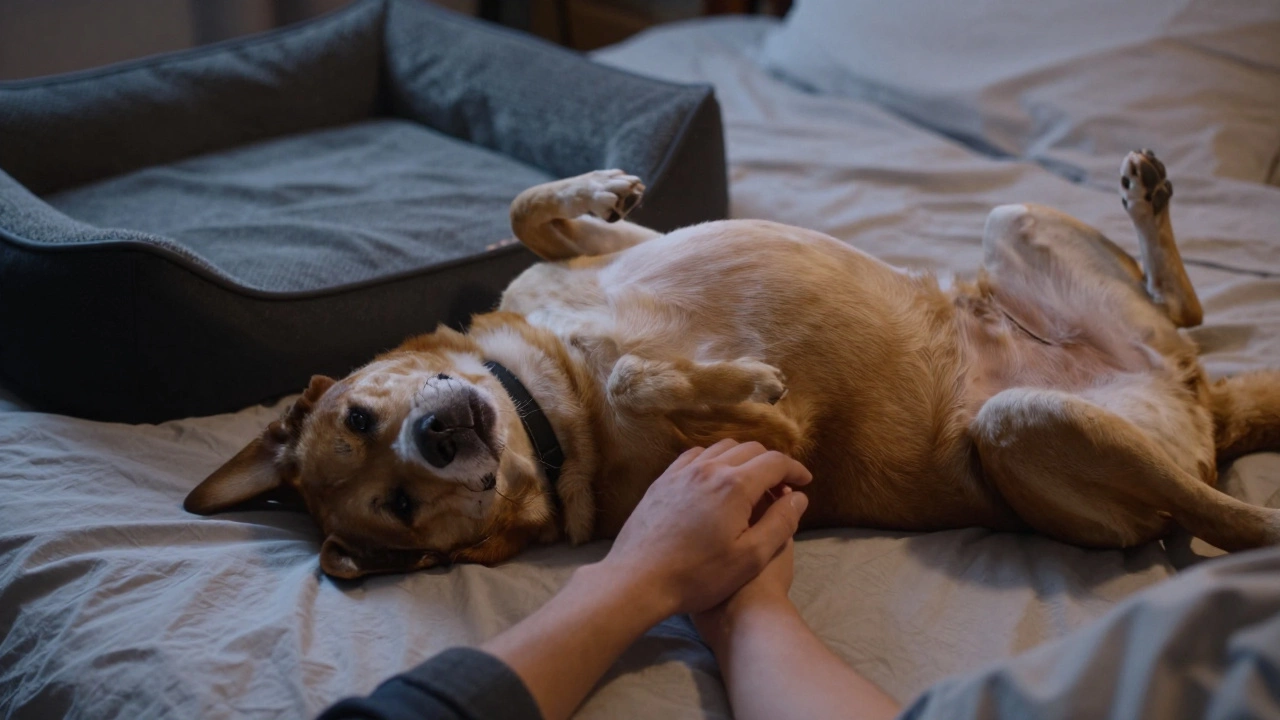
- On their back, belly exposed - Total trust. Only the safest dogs sleep this way around people.
- Legs stretched out, touching you - They’re claiming you as theirs. This is a bonding behavior.
- Head on your arm or chest - They’re seeking comfort, often during times of stress or change.
These aren’t just cute habits. They’re signals. If your dog suddenly stops sleeping next to you, or starts sleeping far away, it could mean pain, anxiety, or illness. A change in sleeping behavior is one of the first signs of trouble in dogs.
It’s Not Just About the Bed
The dog bed is just a tool. The real question isn’t where your dog sleeps-it’s why they choose to be near you. Dogs don’t need to understand human emotions to feel them. They sense your calm, your tension, your sadness. They mirror your rhythm. When you’re asleep, they’re still watching over you. That’s not obedience. That’s loyalty.So if your dog still sleeps on your pillow, even after you’ve bought ten different beds, don’t take it personally. Take it as a gift. They’ve chosen you-not because you’re the best feeder, or the best walker, or the best toy thrower. They chose you because, in their world, you’re the safest place to be.
Why does my dog sleep right against me instead of on their own bed?
Dogs sleep against their favorite person because they feel safest there. Even with a perfect dog bed, the warmth, scent, and presence of their human trigger a deep instinct to stay close. It’s not about comfort-it’s about security. Their body knows that being near you means protection, even if they’ve never faced real danger.
Can my dog sleep with me if they have anxiety?
Yes, but it depends. For many anxious dogs, sleeping next to their person reduces stress and helps them feel grounded. But if the dog becomes overly dependent or shows signs of separation anxiety when you’re not in bed, it might reinforce the issue. In those cases, use the bed as a bridge: start with the dog bed right beside yours, then slowly move it a few inches away each week. Reward calm behavior on the bed, not just when they’re with you.
Do all dogs pick a favorite person?
Most do, but not all. Dogs in multi-person households often bond strongest with the person who gives them the most consistent attention-not necessarily the most treats or playtime. Quiet, predictable people often become favorites because they’re less overwhelming. Some dogs, especially those with past trauma, may not form a strong attachment to anyone and prefer sleeping alone. That’s normal too.
Should I let my puppy sleep with me?
It’s fine if you’re prepared for the long-term. Puppies often sleep with their littermates for warmth and comfort, so being near you feels natural. But if you plan to move them to their own bed later, start training early. Use a small crate or bed beside your bed with a warm blanket. Let them get used to the space before they’re fully grown. Waiting until they’re big makes it harder to change habits.
What if my dog only sleeps next to me when I’m sick?
That’s a sign of deep empathy. Dogs can detect changes in your body temperature, breathing, and scent when you’re unwell. They often respond by staying closer, as if they’re trying to help. It’s not manipulation-it’s instinct. Your dog isn’t being clingy. They’re being a caregiver.
If your dog still chooses your side every night, don’t try to change it unless you have to. They’re not just sleeping next to you. They’re saying, without words, that you’re their safe place. And in a world full of noise, that’s one of the quietest, most powerful things a dog can give you.