Dog Sleep Environment Assessment
How to Use This Tool
Answer a few simple questions about your dog and home environment to receive personalized recommendations based on veterinary science and canine behavior research.
Your Dog's Characteristics
Your Personalized Recommendation
Ever watched your dog curl up in their bed at night and wondered if they need a nightlight? Maybe you’ve left a dim lamp on because you think it helps them feel safe. Or maybe you’ve turned off every light and noticed your dog still sleeps like a rock. So, should dogs sleep in the dark? The answer isn’t as simple as yes or no-it’s about biology, behavior, and what your dog actually needs.
Do Dogs See in the Dark?
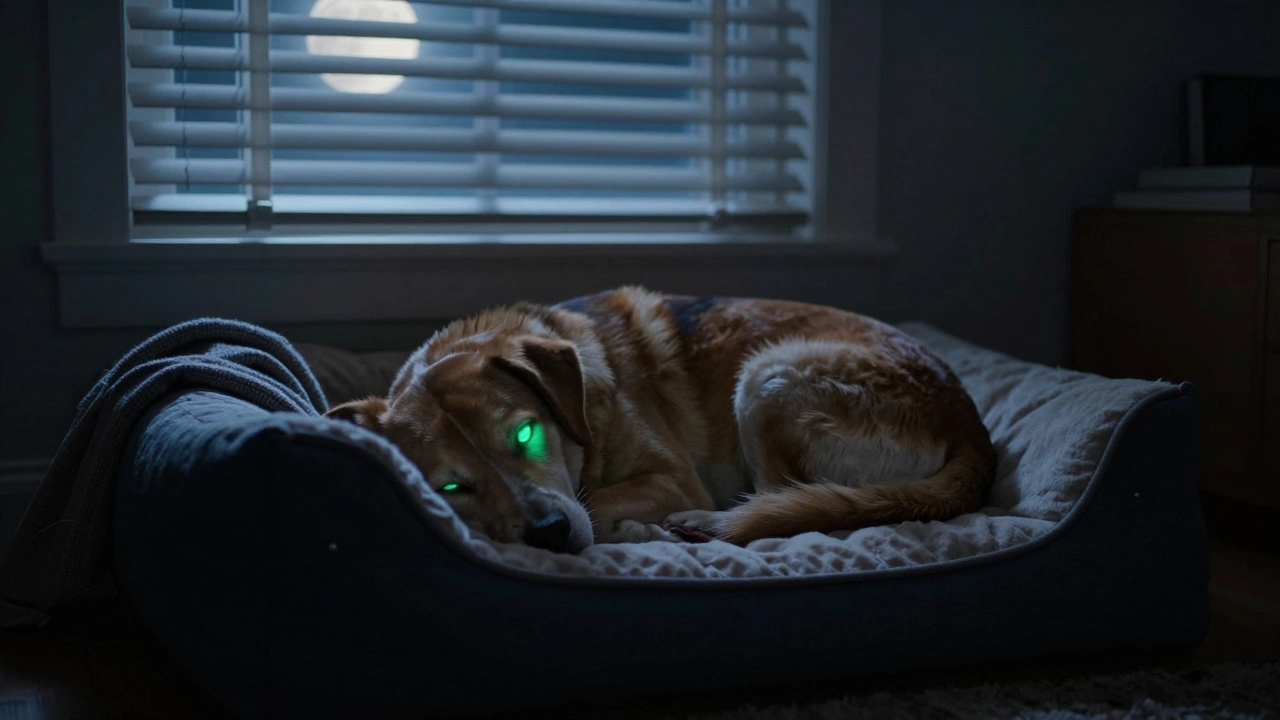
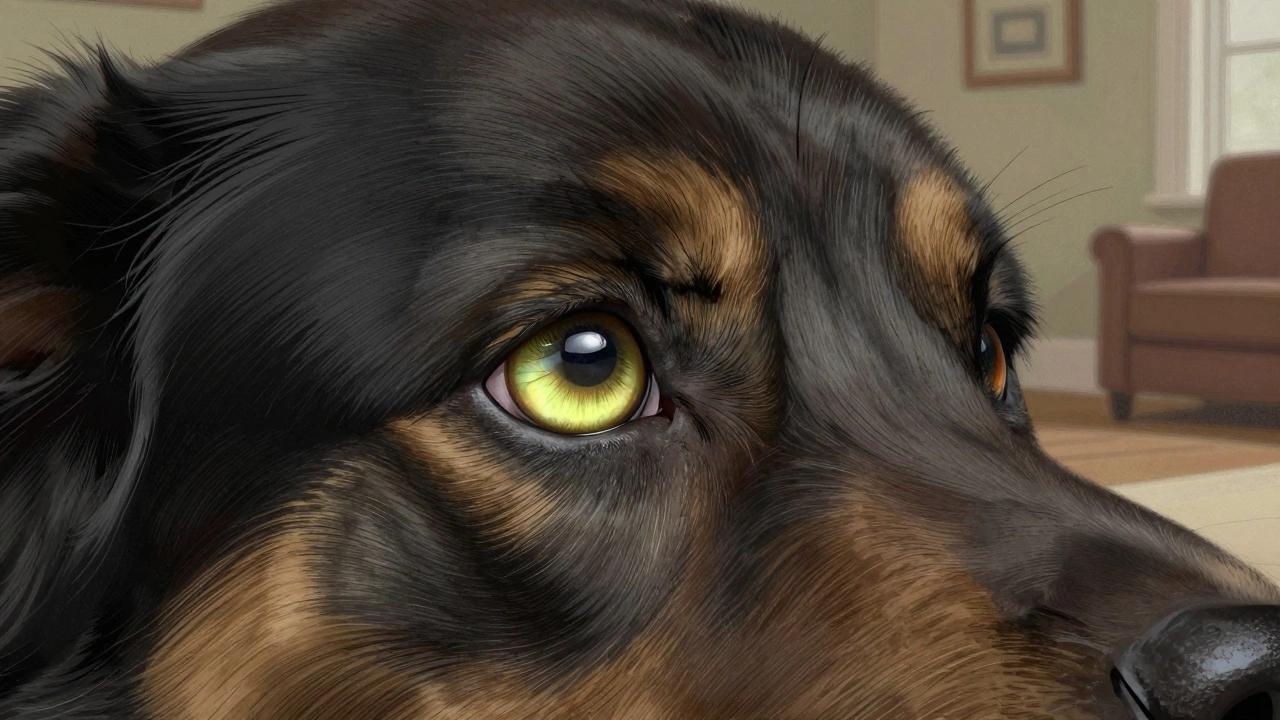
Dogs don’t see in complete darkness like some superhero animals, but they don’t need much light to get around at night. Their eyes are built differently than ours. They have a higher number of rod cells in their retinas, which are sensitive to low light. Plus, they have a special layer behind the retina called the tapetum lucidum-a reflective surface that bounces light back through the eye, giving their photoreceptors a second chance to catch it. That’s why your dog’s eyes glow green or yellow in photos taken with flash.
Studies show dogs can see in light levels about five times dimmer than what humans need. That means if you can barely make out the shape of your couch in the dark, your dog can probably see your slippers on the floor. They don’t need a nightlight to navigate their own home. In fact, most dogs sleep just fine in pitch black, especially if their environment is familiar.
How Dogs Sleep: The Science Behind Their Rest
Dogs sleep an average of 12 to 14 hours a day, with puppies and older dogs often sleeping up to 18 to 20 hours. Their sleep isn’t one long stretch like ours. It’s broken into short cycles-about 16 minutes of deep sleep followed by 5 minutes of lighter sleep. During those lighter phases, they might twitch, whine, or paddle their legs. That’s not dreaming about chasing squirrels (though they probably are)-it’s just their brain cycling through REM and non-REM stages.
Unlike humans, dogs don’t rely on circadian rhythms tied to bright daylight. They’re crepuscular by nature, meaning they’re most active at dawn and dusk. That’s when their wild ancestors hunted. So, darkness doesn’t confuse them-it’s part of their natural rhythm. In fact, many dogs sleep better in the dark because it signals their body it’s time to rest, just like it does for humans.
When a Nightlight Might Actually Help
There are exceptions. If your dog is elderly, blind, or anxious, a dim light might make them feel more secure. Dogs with cognitive dysfunction syndrome (similar to dementia in humans) often get disoriented at night. They might pace, whine, or try to find their way to a door they can’t remember how to open. A soft nightlight can reduce their confusion and prevent accidents.
Similarly, dogs with separation anxiety might sleep better with a faint glow. It’s not that they need to see-they need to feel connected. A low-watt bulb or LED strip near their bed can create a sense of safety without disrupting their sleep cycle. Just make sure it’s not too bright. A 5-watt nightlight is enough. Bright lights, especially blue-white LEDs, can suppress melatonin, the hormone that helps both dogs and humans fall asleep.
What About Light Pollution?
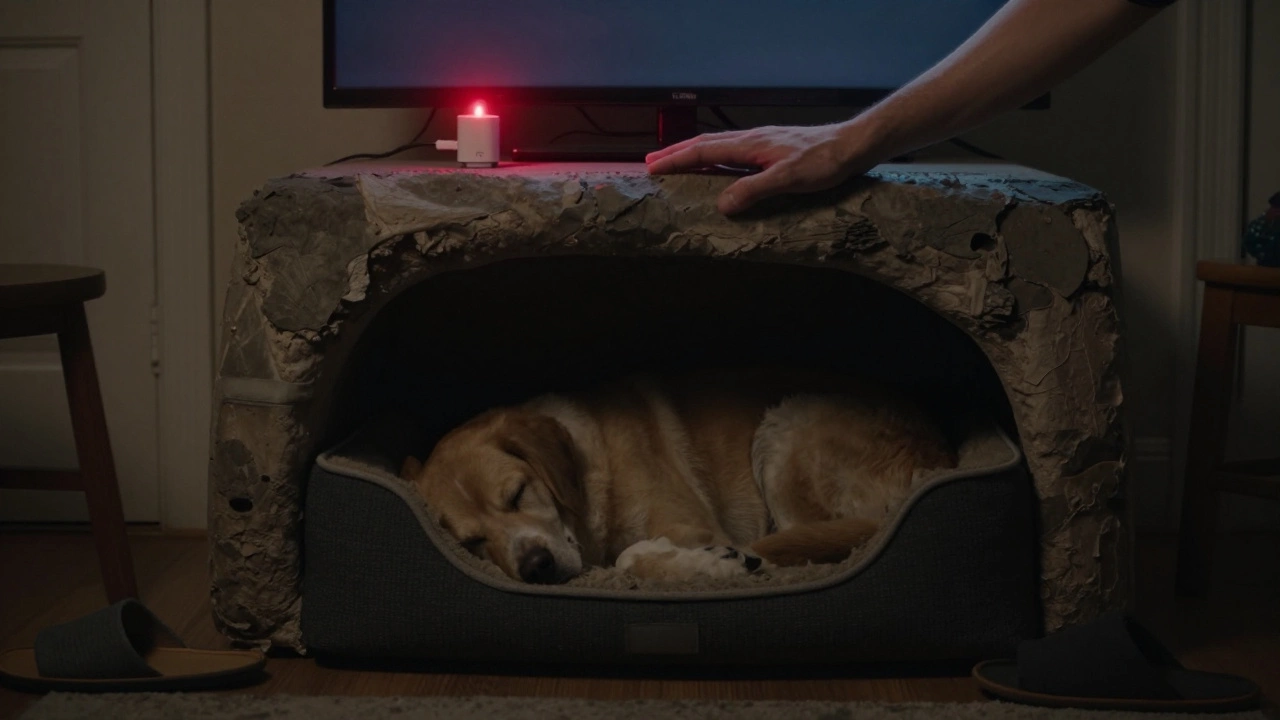
Think about your home at night. Is there a TV glowing from the living room? A streetlamp shining through the window? A phone charger blinking red on the nightstand? These aren’t just annoyances for you-they’re disruptions for your dog too.
A 2020 study published in the Journal of Veterinary Behavior found that dogs exposed to constant low-level artificial light at night had more fragmented sleep and higher stress hormone levels. Even if your dog doesn’t wake up, their body is still reacting. Their nervous system stays slightly on edge, preventing true rest. That’s why dogs who sleep near windows with streetlights often seem tired even after 14 hours of “sleep.”
Turn off the TV. Close the blinds. Cover blinking LED lights. Your dog doesn’t need to see the clock to know it’s bedtime. They just need quiet and dark.
Where They Sleep Matters Too
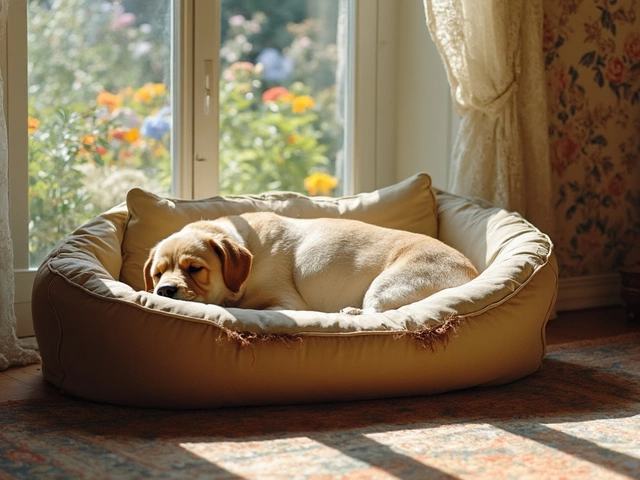
The type of dog bed they use can influence how comfortable they are in the dark. A bed with high sides or a cave-like design gives dogs a sense of security. Many dogs prefer to burrow or nestle into enclosed spaces-it mimics the den-like environments their ancestors lived in. If your dog sleeps on a flat mat in the middle of the room, they might feel exposed, even in the dark.
Try switching to a bolstered bed or a covered dog house. Some dogs will even drag blankets over themselves to create their own little cave. That’s not odd behavior-it’s instinct. And when they’re tucked in, they sleep more deeply, whether the room is lit or not.
What Do Dogs Prefer? Observing Real Behavior
Here’s something simple you can do: turn off all the lights in your house for three nights and watch your dog. Do they seem restless? Do they whine or get up to find you? Or do they flop down the moment the lights go out and sleep through the night?
Most dogs will do the latter. A 2023 survey of over 1,200 dog owners found that 78% of dogs slept better in complete darkness. Only 12% showed signs of distress when lights were turned off, and most of those were senior dogs or those with vision problems. The rest? They didn’t care. They just wanted quiet, warmth, and safety.
That’s the real takeaway. Dogs don’t fear the dark. They fear the unknown. If their environment is predictable-same bed, same routine, same quiet-they’ll sleep deeply, no matter how dark it is.
What About Puppies?
Puppies are different. At first, they’re used to the warmth and noise of their littermates. Being alone in a dark room can be scary. It’s okay to leave a dim light on for the first few nights after bringing a puppy home. But don’t make it permanent. Start dimming the light over a week. Move it farther from the bed. Eventually, turn it off completely. Puppies adapt quickly once they learn their new home is safe.
Don’t confuse puppy crying with fear of darkness. More often, they’re calling for you because they’re lonely, not because they can’t see. A soft voice, a warm blanket, or a ticking clock (to mimic a heartbeat) can help more than a light.
Final Answer: Should Dogs Sleep in the Dark?
Yes-most dogs should sleep in the dark. Their eyes are built for it. Their bodies are wired for it. Their brains rest better in it. Unless your dog has a medical condition, vision loss, or severe anxiety, a dark room is the best environment for deep, restorative sleep.
Don’t feel guilty for turning off the lights. You’re not being cruel-you’re giving them what nature intended. A quiet, dark space is the closest thing to a wild den they’ll ever get in your home. And that’s exactly what they need to wake up refreshed, calm, and ready for the day.
If you’re still unsure, start with a simple test: one week with no lights, one week with a dim nightlight. See which version leaves your dog more relaxed in the morning. Their behavior will tell you the answer better than any article ever could.