Canine Time Perception Simulator
Calculate Your Dog's Temporal Experience
Enter your typical daily schedule to see how your dog perceives your absence based on scientific research about canine time perception.
Temporal Analysis Results
Temporal Perception Breakdown
Key Behavioral Indicators
Recommendations
You walk out the door. The click of the latch echoes in the hallway. Your dog watches you go, tail still wagging slightly, then drops to the floor with a heavy sigh. It’s a scene familiar to millions of pet owners. But here is the question that keeps us up at night: Does your dog actually know when you are coming back? Or do they live in an eternal state of abandonment, only relieved by your sudden reappearance?
The short answer is yes, but not in the way humans understand time. Dogs don't have internal clocks or calendars. They don't check their watches and think, "My human should be home in twenty minutes." Instead, they rely on a sophisticated blend of scent detection, routine recognition, and emotional memory. To understand if your dog knows you're returning, we need to look at how their brains process the world differently from ours.
The Science of Canine Time Perception
Humans measure time abstractly. We use seconds, minutes, and hours as rigid containers for our activities. Dogs, however, perceive time through physiological changes and environmental cues rather than abstract units. Research into animal cognition suggests that dogs experience time relative to their emotional state and biological rhythms.
A study conducted at Oxford University in 2019 shed light on this phenomenon. Researchers tracked dogs' reunion behaviors after varying periods of separation-ranging from 30 minutes to several hours. The findings were striking. Dogs showed significantly higher levels of excitement and physical affection when left alone for two hours compared to thirty minutes. However, the difference between four hours and eight hours was negligible. This suggests a "ceiling effect" in their temporal awareness. They can distinguish between short and medium absences, but long absences blur together into a single category of "a long time."
This doesn't mean they are confused. It means their metric for time is different. For a dog, time is measured in heartbeats, hunger cycles, and the fading intensity of scents. When you leave for ten minutes, the air still smells strongly of you. When you leave for six hours, that scent has dissipated, replaced by the stale air of the empty house. This sensory shift signals to them that a significant amount of time has passed.
Scent as a Clock
If you want to understand how a dog tracks your return, you have to talk about smell. A dog's olfactory system is roughly 40 times more sensitive than a human's. They possess up to 300 million olfactory receptors in their noses, compared to our measly six million. For a dog, scent isn't just information; it is a timeline.
When you leave the house, you leave behind a trail of pheromones and skin cells. As time passes, these chemical signatures degrade. Your dog can literally smell how long ago you were there. If your coat jacket on the chair still carries your strong, fresh scent, your dog interprets this as "recent departure." If the scent has faded to a faint whisper, they interpret it as "extended absence."
This ability allows them to anticipate your return based on environmental decay. They aren't counting down the seconds; they are monitoring the freshness of your presence. This is why leaving a piece of unwashed clothing near their bed can be so comforting-it provides a constant, stable reference point for your existence, even when you are gone.
The Power of Routine and Circadian Rhythms
Beyond scent, dogs are masters of pattern recognition. Most households operate on a predictable rhythm. You wake up at 7 AM. You feed the dog at 7:15 AM. You leave for work at 8:00 AM. You return at 5:30 PM. Over weeks and months, your dog internalizes this schedule. Their circadian rhythm-their internal body clock-syncs with yours.
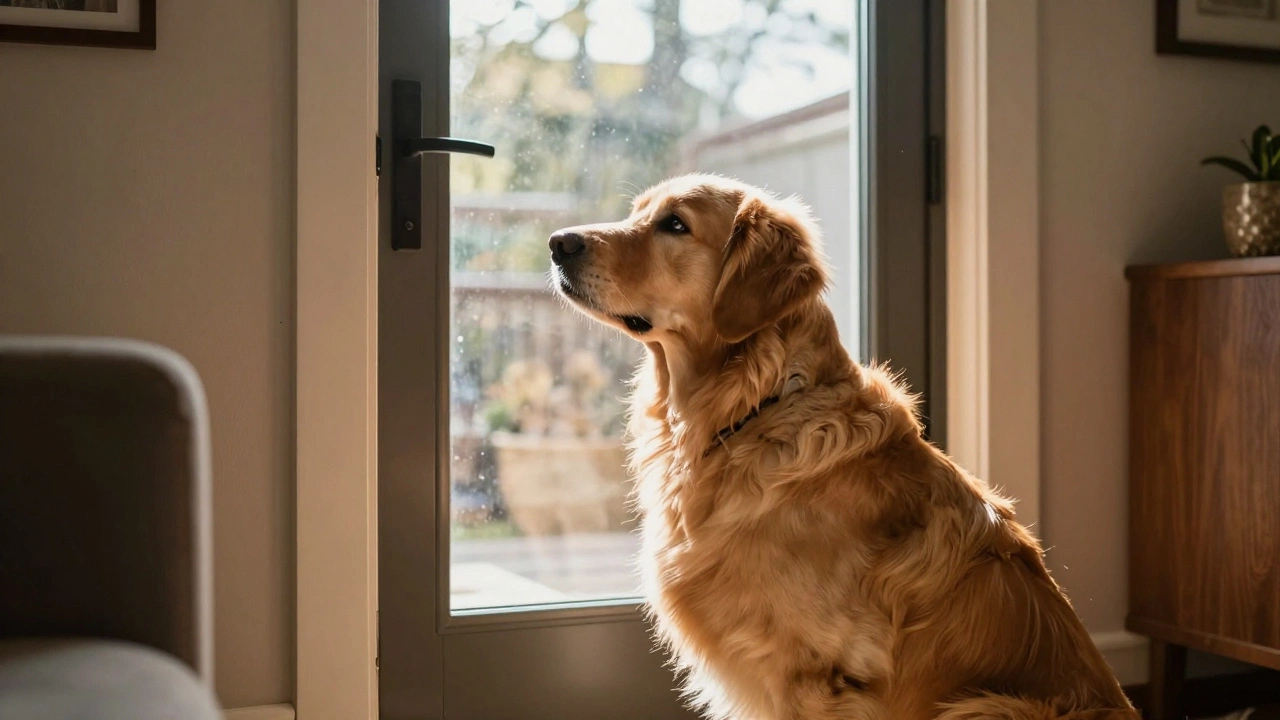
Have you ever noticed your dog waiting by the door exactly fifteen minutes before you usually arrive? That isn't magic. It is biological conditioning. Just as a student might feel hungry right before lunchtime because their body expects food, your dog's body prepares for your return. Their cortisol levels may drop, their salivation increases, and their energy spikes. They are physically ready for interaction because their brain predicts it.
This predictive ability is rooted in the hippocampus, the part of the brain responsible for memory and spatial navigation. Studies show that dogs can remember sequences of events. If the sequence is "Sunlight angle X + Sound of Car Y = Human Z arrives," they will wait for those specific triggers. When you change your routine, such as working from home one day and going to the office the next, you disrupt this mental map. This disruption often leads to confusion or anxiety, proving that their expectation of your return is tightly linked to external cues.

Emotional Memory vs. Factual Recall
There is a distinction between knowing *when* you are coming back and knowing *that* you will come back. Dogs possess what psychologists call episodic-like memory. This allows them to recall specific past events. If you consistently return home every evening, your dog forms a strong associative link between your departure and your arrival.
However, this memory is heavily influenced by emotion. Positive associations strengthen the bond. If your returns are always celebrated with treats, play, and affection, your dog learns that "separation ends in reward." This reduces the stress of being alone. Conversely, if your departures and arrivals are chaotic or stressful, the dog may associate your return with anxiety rather than joy.
It is also important to note that dogs do not hold grudges in the human sense. If you are late, they do not think, "You promised to be back at 5, and now it is 6. You broke your word." They simply experience the delay as an extension of uncertainty. Once you appear, the relief overrides any previous frustration. Their primary drive is connection, not contractual obligation.
Signs Your Dog Anticipates Your Return
How can you tell if your dog is actively expecting you? Watch for these behavioral cues:
- The Pre-Arrival Ritual: Your dog positions themselves near the entrance, window, or driveway well before your usual arrival time.
- Vocalization Changes: Whining, barking, or howling begins shortly before you enter the property, triggered by hearing your car or footsteps.
- Physical Preparation: You might see them fetch their leash, toy, or bowl, signaling readiness for the post-return routine (walks, meals).
- Heightened Alertness: Ears perk up, head tilts, and intense focus on potential entry points.
These behaviors demonstrate that your dog is not passively waiting. They are actively monitoring the environment for signs of your approach. This level of engagement shows a deep cognitive understanding of your daily patterns.
Managing Separation Anxiety
Understanding that dogs track your comings and goings is crucial for managing separation anxiety. Some dogs struggle with the gap between departure and return. They may destroy furniture, bark excessively, or soil the house. This is not revenge; it is distress.
To help your dog cope, consistency is key. Stick to a regular schedule as much as possible. If you must vary your routine, provide enrichment activities to keep them occupied during the "unknown" periods. Puzzle toys, frozen Kongs, or interactive games can distract them from the passage of time.
Additionally, practice desensitization. Leave the house for short periods-five minutes, then ten, then twenty-and gradually increase the duration. Reward calm behavior upon your return. Wait five minutes after entering before greeting your dog. This teaches them that your arrival is not a cause for panic, but a normal, manageable event.
The Role of Technology in Modern Pet Care
In recent years, technology has bridged the gap between owner and pet during separations. Smart cameras with two-way audio allow you to check on your dog and speak to them remotely. While this cannot replace physical presence, it can provide reassurance. Hearing your voice can trigger the same calming response as your physical presence, thanks to the strong auditory bond you share.
Automatic feeders and water dispensers also help maintain routine. By ensuring your dog gets fed at the same time every day, regardless of your location, you reinforce the predictability of their environment. This stability reduces anxiety and helps them feel secure even when you are away for extended periods.
Conclusion: Trusting the Bond
So, do dogs know you are coming back? In a practical sense, yes. They use scent, sound, sight, and routine to build a mental model of your schedule. They may not know the exact minute, but they know the general timeframe. More importantly, they trust that you will return. This trust is built on thousands of repeated experiences where you left and came back.
Your dog's world revolves around connection. Their anticipation of your return is a testament to the strength of your bond. By understanding how they perceive time and space, you can create a more comfortable, less anxious environment for them. Whether you are heading to work or planning a trip, remember that your dog is watching, listening, and waiting-not with judgment, but with hope.
Do dogs miss you when you are gone?
Yes, dogs form strong social bonds with their owners. Studies show that dogs experience stress when separated from their primary caregivers and exhibit signs of relief and joy upon reunion. This emotional response indicates that they do indeed miss their owners during absences.
How long does it take for a dog to forget its owner?
Dogs have excellent long-term memory, especially for people and places associated with positive emotions. Even after years apart, many dogs can recognize their former owners through scent and voice. There is no set time limit for forgetting, as memories are reinforced by emotional significance.
Can dogs tell what time it is?
Dogs cannot read clocks or understand abstract time concepts like hours and minutes. However, they have a strong internal circadian rhythm and can detect subtle changes in light, sound, and routine that signal the time of day. This allows them to anticipate regular events like meal times or walks.
Why does my dog get excited when I come home?
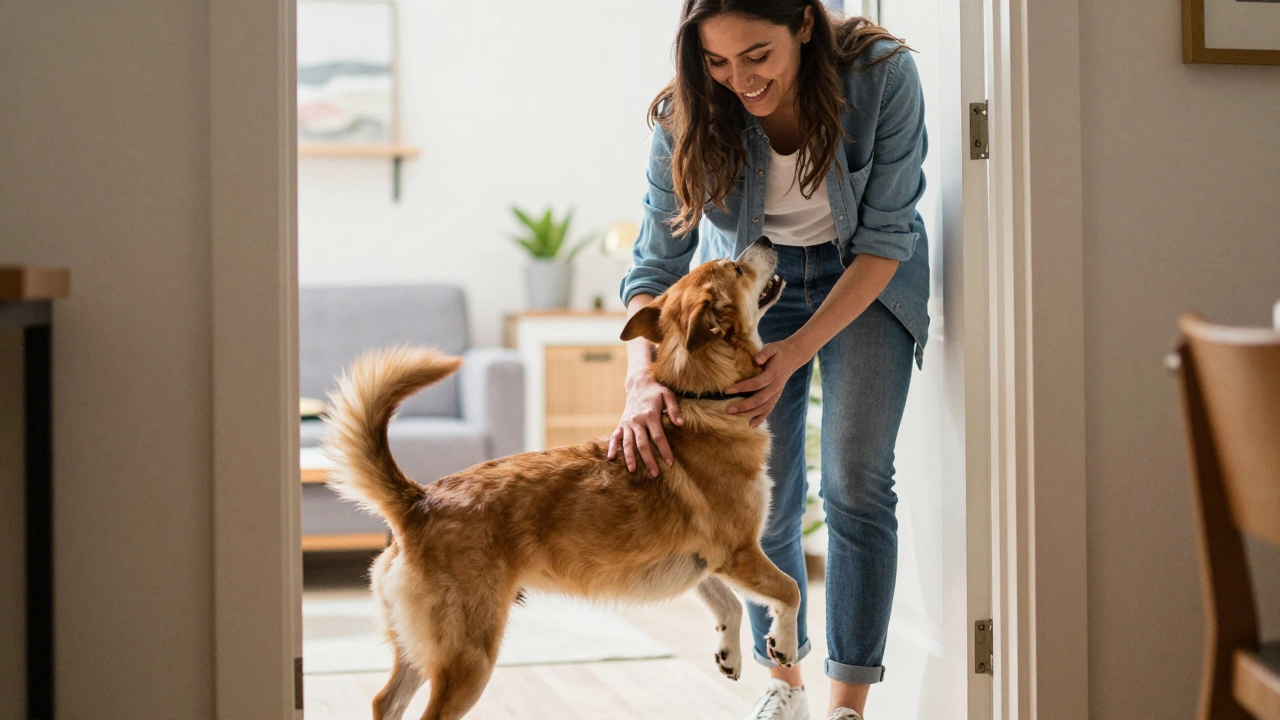
Your dog's excitement is a release of pent-up energy and emotion. Being alone can be boring or stressful for social animals like dogs. Your return signals safety, companionship, and often rewards like food or play. The wagging tail, jumping, and whining are all expressions of happiness and relief.
Does my dog know I love him?
While dogs may not understand love in the complex human philosophical sense, they absolutely understand affection and care. They respond to tone of voice, body language, and consistent positive interactions. Oxytocin, the "love hormone," is released in both dogs and humans during positive interactions, creating a mutual bond of trust and attachment.