Puppy Sleep Calculator
Determine the ideal bedtime for your 8-week-old puppy based on their sleep needs and your desired wake-up time.
Puppies this age need 18-20 hours of sleep per day. Our recommendation helps ensure your puppy gets enough rest for healthy development.
At eight weeks old, your puppy is still a baby. They’re learning the world, figuring out where they fit in, and adjusting to a new home. One of the biggest questions new owners ask is: What is a good bedtime for an 8-week-old puppy? The answer isn’t just about when to turn off the lights-it’s about building a routine that helps your puppy sleep through the night, stay healthy, and grow into a calm, well-adjusted dog.
Why Sleep Matters for an 8-Week-Old Puppy
Puppies this young need 18 to 20 hours of sleep every day. That’s not just naps between play sessions-it’s deep, restorative sleep that helps their brains and bodies develop. Their immune systems are still building strength. Their muscles and bones are growing fast. And their nervous systems are learning how to handle stress, noise, and new experiences.
If your puppy isn’t getting enough sleep, you’ll see signs: excessive biting, constant whining, accidents in the house, or hyperactivity that won’t settle. Sleep isn’t a luxury for a puppy-it’s a requirement.
What Time Should You Put Your 8-Week-Old Puppy to Bed?
There’s no magic hour, but most experts agree on a consistent bedtime between 8 p.m. and 10 p.m. For an 8-week-old, aiming for 9 p.m. is ideal. Why? Because their tiny bladders can’t hold urine for more than 3 to 4 hours at a time. If you put them to bed at midnight, you’re setting yourself up for 3 a.m. bathroom breaks.
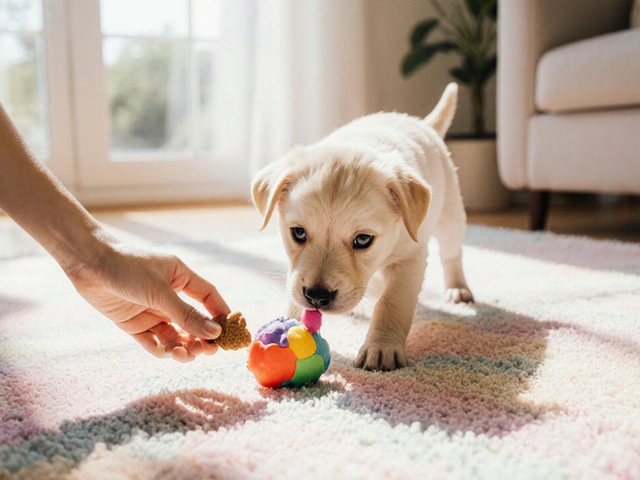
Here’s how to make it work: Start winding down at 8 p.m. Take your puppy outside for a final potty break. Give them a quiet chew toy-something safe and soothing, like a stuffed Kong with a little peanut butter. Then, put them in their crate or bed in a quiet part of the house. Keep the lights dim. No TV. No loud talking. This signals that it’s time to rest.
Consistency is more important than the exact time. If you put them to bed at 9 p.m. every night, their body will start to expect it. After a few days, they’ll settle faster and cry less.
How to Handle Nighttime Crying
It’s normal for an 8-week-old puppy to cry at night. They’re separated from their littermates and mom for the first time. The house is quiet. The darkness feels big. They’re scared, confused, and lonely.
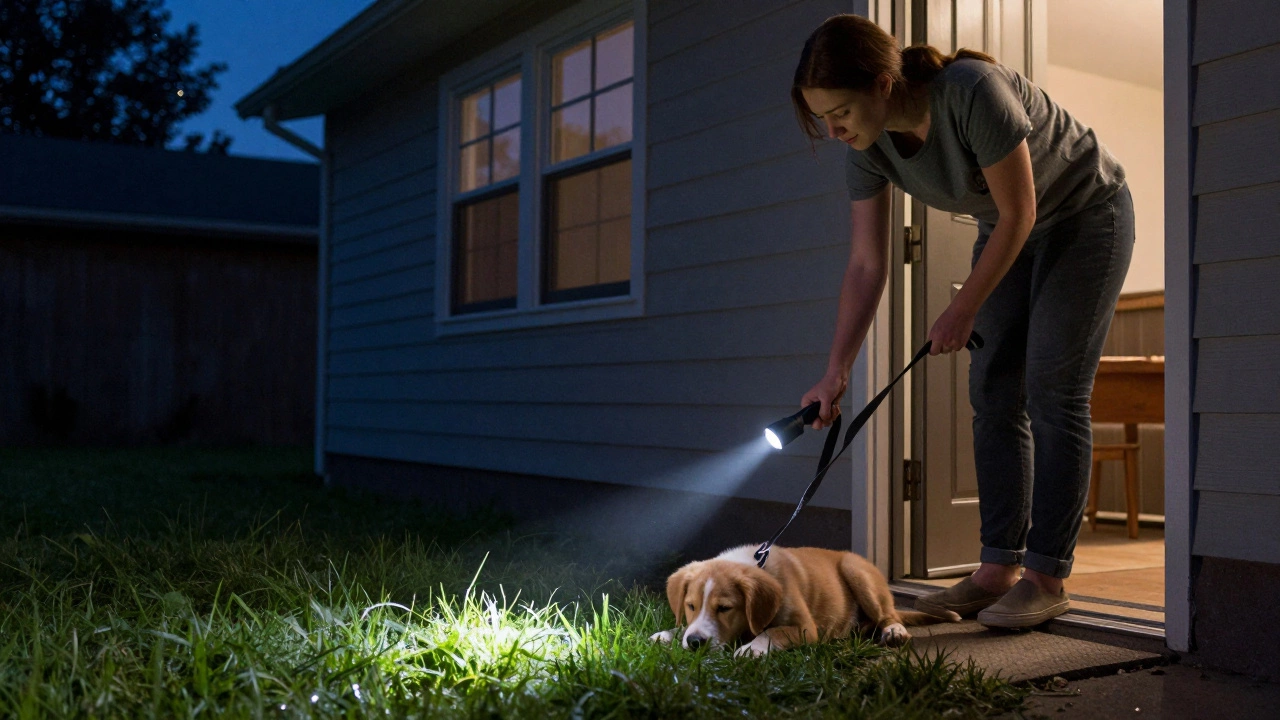
Don’t rush to pick them up every time they whine. That teaches them crying gets attention. Instead, wait 5 to 10 minutes. Sometimes they’ll settle on their own. If they’re still crying, take them outside quietly-no play, no talking, no eye contact. Just potty, then back to bed.
After the first week, most puppies cry less. By week three or four, many are sleeping 6 to 7 hours straight. If your puppy is still crying nonstop after 10 days, check for signs of illness: fever, diarrhea, vomiting, or lethargy. If any of those are present, call your vet.
Where Should Your Puppy Sleep?
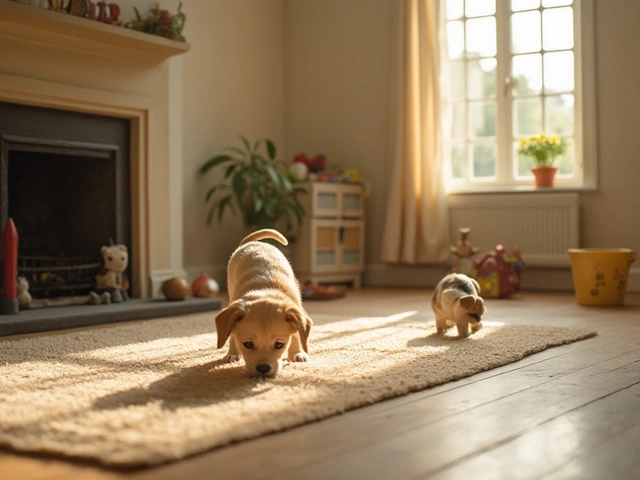
Your puppy needs a safe, cozy, and confined space. A crate is the best option. It gives them a den-like feeling, which dogs naturally prefer. Make sure the crate is big enough for them to stand, turn around, and lie down-but not so big they can use one end as a bathroom.
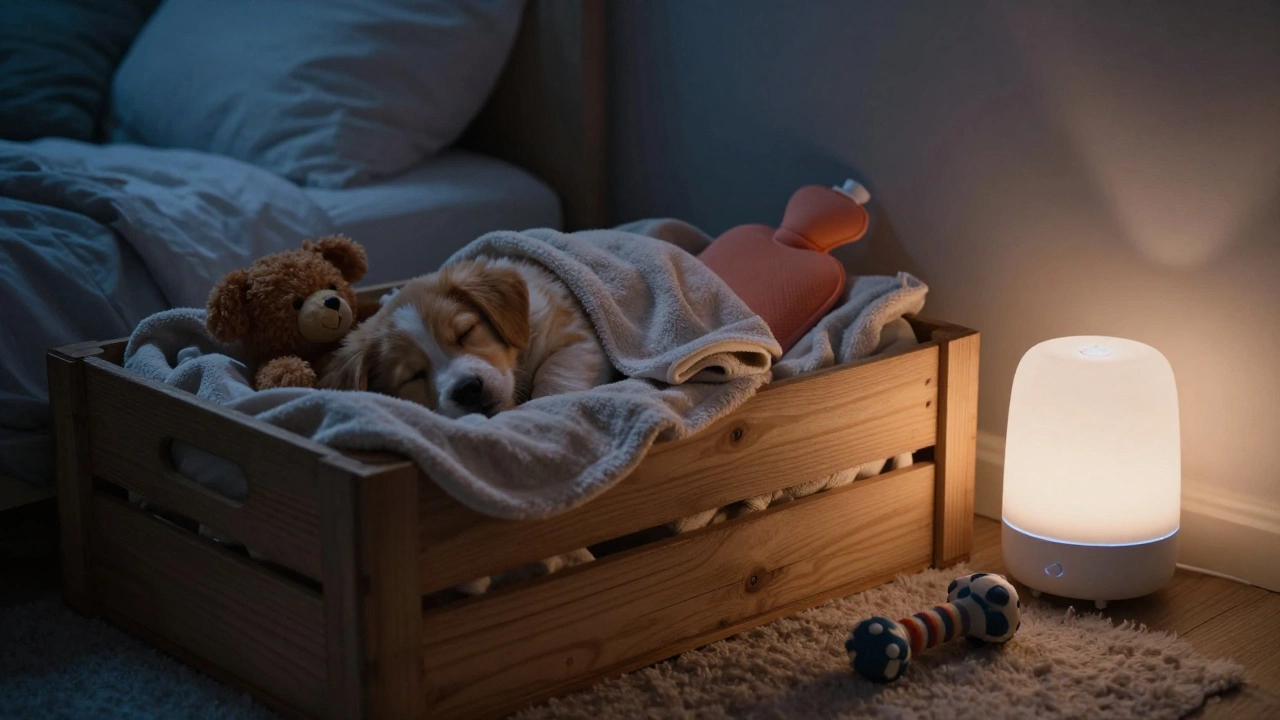
Line the bottom with a soft blanket or puppy pad. Add a stuffed toy that smells like their littermates-this helps them feel secure. Some owners put a ticking clock or a warm water bottle wrapped in a towel near the crate to mimic body heat and heartbeat sounds.
Don’t let them sleep in your bed. Not yet. It’s tempting, but it creates long-term habits that are hard to break. Plus, puppies this young need structure. Your bed isn’t a safe, predictable space for them.
What to Avoid
Many new owners make the same mistakes:
- Letting the puppy sleep anywhere-on the couch, in the laundry room, or in the kitchen. These places are too exposed or too noisy.
- Feeding right before bed. That increases the chance of nighttime accidents.
- Playing rough games in the hour before bed. Tug-of-war or chase games spike adrenaline, making it harder to settle.
- Ignoring the bedtime routine. If you’re inconsistent, your puppy won’t know what to expect.
Also, avoid using a puppy pad in the crate. Puppies naturally avoid soiling their sleeping area. If you give them a pad, they might learn to pee there-and that’s harder to unlearn later.
What to Expect in the First Few Weeks
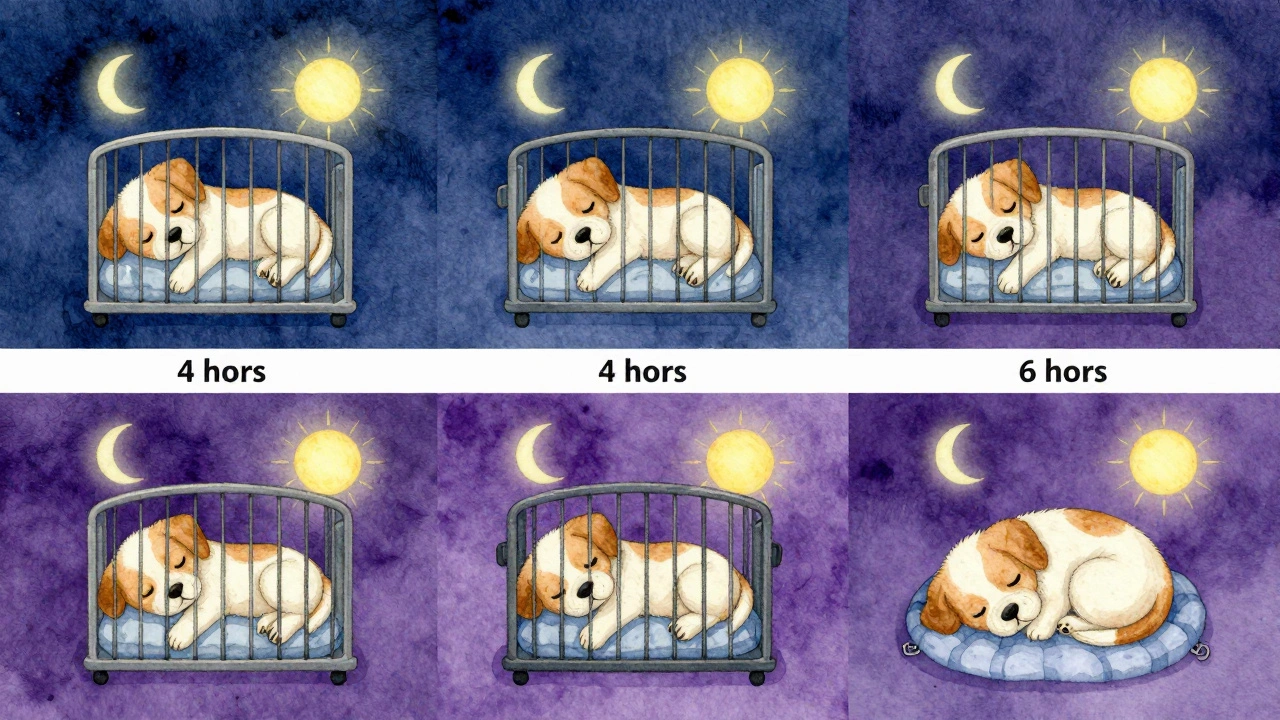
Week 1: Expect multiple bathroom trips. You’ll likely wake up every 2 to 3 hours. Set alarms if you need to. This is normal.
Week 2: Your puppy might start sleeping 4 hours straight. Crying will still happen, but less often.
Week 3: Most puppies sleep 5 to 6 hours at a stretch. Nighttime accidents drop by half.
Week 4: Many puppies can now sleep 6 to 7 hours without waking. You’re starting to see real progress.
By 12 weeks, most puppies can sleep through the night-8 to 10 hours-if they’ve had a consistent routine.
Tools That Help
Some simple tools make bedtime easier:
- Calming spray with lavender or chamomile (dog-safe formulas only).
- White noise machine or a fan to drown out sudden sounds.
- Soft crate mat that’s easy to clean.
- Safe chew toys like a frozen Kong with yogurt and banana-this keeps them occupied and calm.
Don’t rely on sleep aids or medications unless your vet recommends them. Most puppies just need time, routine, and patience.
When to Call the Vet
Most nighttime issues are behavioral. But if your puppy is:
- Whining nonstop for more than 30 minutes, even after potty breaks
- Shaking, panting, or drooling excessively
- Not eating or drinking
- Has diarrhea or vomiting
Then it’s time to call your vet. These could be signs of parasites, illness, or stress-related issues.
Final Tip: Be Patient
Every puppy is different. Some sleep like angels from day one. Others take weeks. Don’t compare your puppy to others online. Focus on progress, not perfection.
By week six, you’ll start to notice your puppy settling into a rhythm. By eight weeks, you’ll be amazed at how much they’ve changed. And by the time they’re six months old, you’ll look back and wonder how you ever survived those first sleepless nights.
Good sleep now means a calmer, healthier dog later. Stick with it. They’ll thank you for it-with quiet nights and happy, rested days.