Dog Time Estimator
How Your Dog Experiences Time
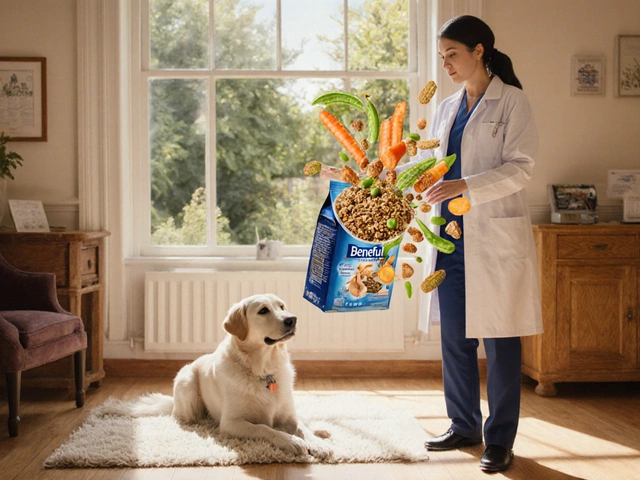
Based on the article "Can Dogs Tell How Long You're Gone? What Science Says About Their Sense of Time", dogs don't count hours like humans. They experience time through sensory cues: fading scents, routine patterns, and environmental changes.
Input Your Situation
Results
Your Dog's Reaction
Your dog will likely show moderate excitement based on your absence duration and routine predictability.
Excitement Level
Anxiety Level
Recommended Tips
- Leave a familiar scent Recommended
- Keep routines consistent Essential
- Use puzzle toys Optional
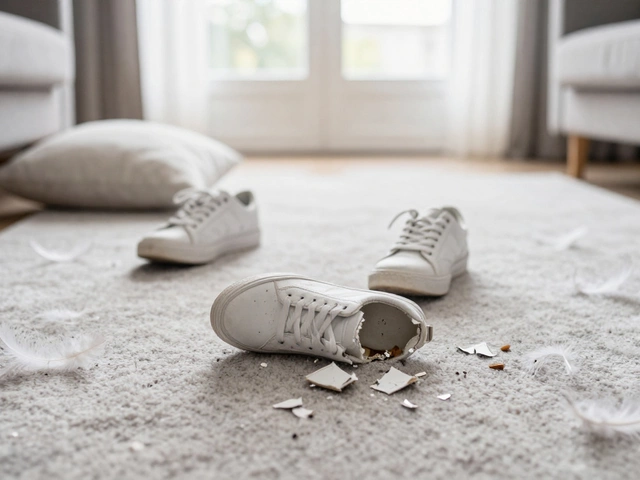
Ever come home to a muddy paw print on the couch, a shredded pillow, or a dog staring at the door like you’ve been gone for a week-when you were only out for 45 minutes? You’re not imagining it. Your dog reacts differently depending on how long you’re away. But can they actually tell how long you’re gone? The answer isn’t simple, but science gives us a clear picture.
They don’t count hours like you do
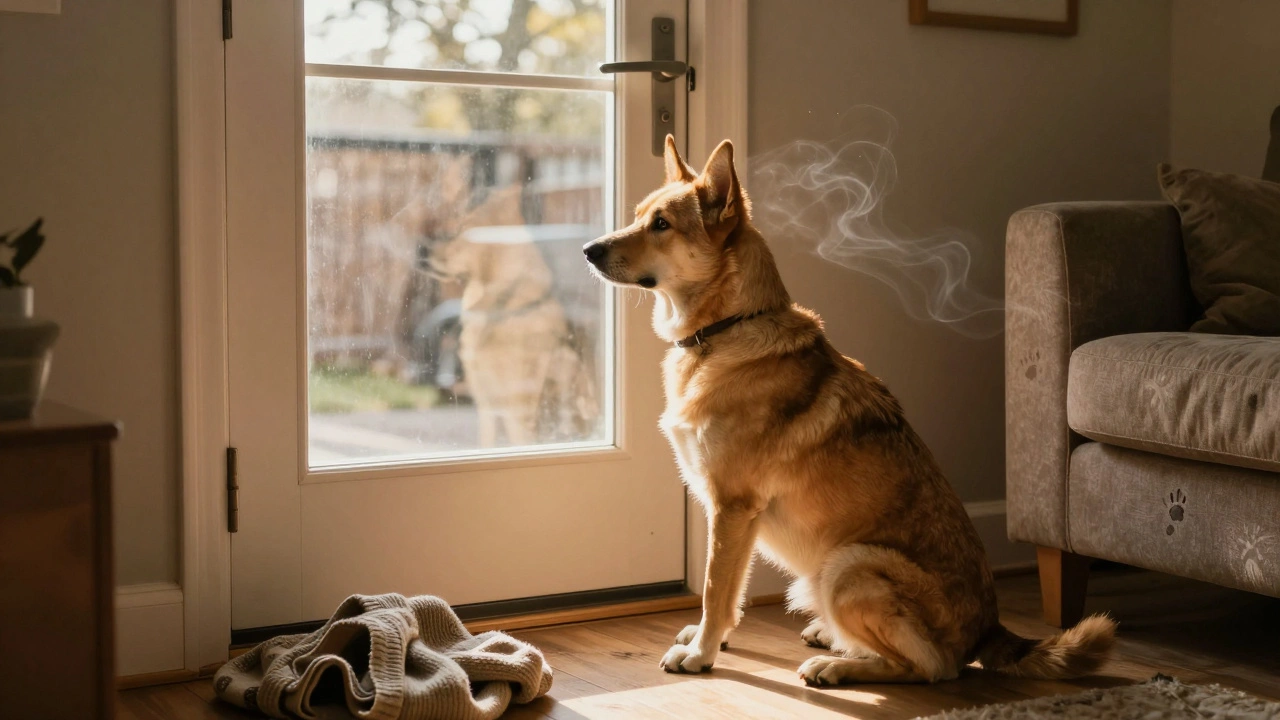
Dogs don’t have clocks, calendars, or the ability to think in minutes and hours. They don’t say, “It’s been three hours since Mom left.” Instead, they experience time through sensory cues: smells fading, sounds changing, routines breaking. Their sense of time is tied to their environment, not abstract numbers.
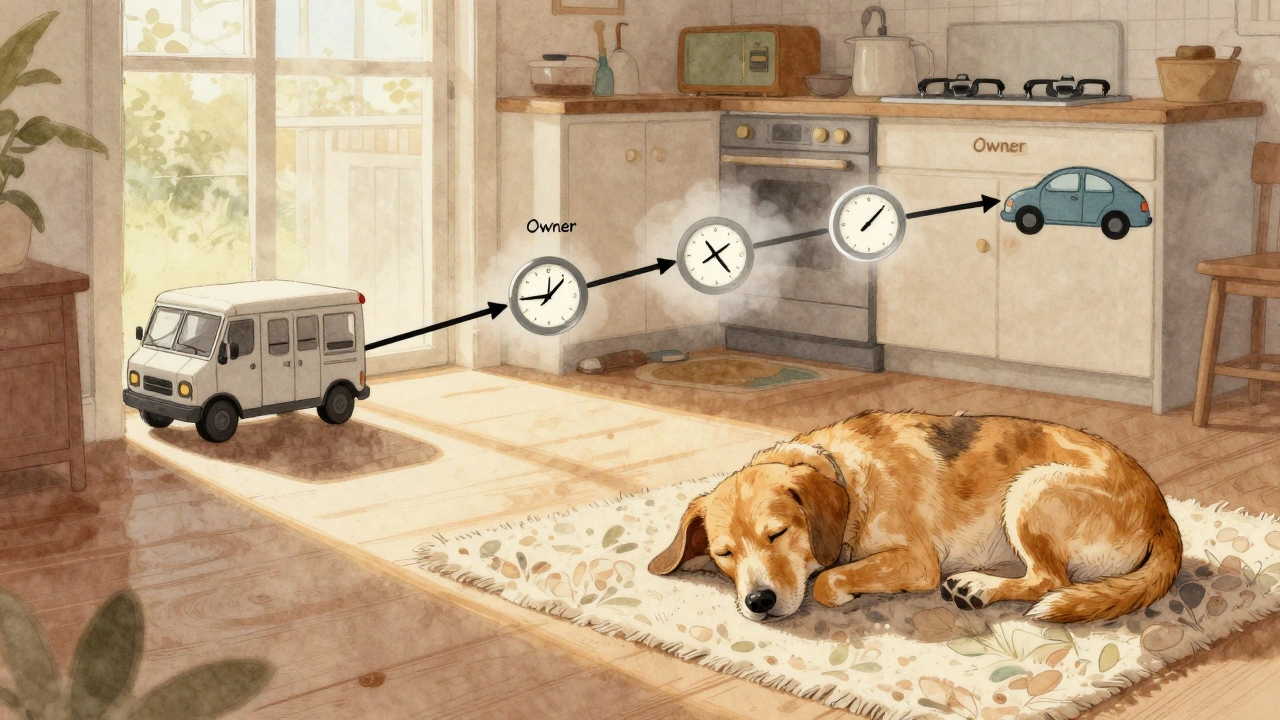
Think of it like this: you know your coffee maker turns on at 7 a.m. because you hear the gurgle and smell the brew. Your dog knows you’re coming home because the neighbor’s car pulls out at 5:30 p.m., or the mail truck rumbles down the street at 4 p.m. These are the real markers they use.
Smell is their timeline
Your scent is the most powerful timekeeper in your dog’s world. When you leave, your smell starts to fade. Studies from the University of Lincoln in the UK found that dogs showed significantly more excitement when their owner returned after two hours compared to just 30 minutes. But after four hours, the excitement didn’t increase much more. That suggests they notice the difference between short and medium absences-but after a point, the scent decay plateaus.
That’s why your dog might go nuts when you return from the grocery store but barely look up when you come back from work. It’s not that they don’t care. It’s that your scent has already faded to a similar level in both cases. Their emotional response is tied to how much your smell has changed, not how long you’ve been gone.
They notice routines, not clocks
Dogs live in rhythms. If you leave at 8 a.m. every weekday and come back at 6 p.m., your dog learns that pattern. They don’t need to know the time-they know that after the vacuum runs, the door closes, and the TV turns off, you’re gone. And when the car starts, the door opens, and your keys jingle, you’re back.
This is why dogs often seem to “know” when you’re coming home even when you change your schedule. They’re not psychic. They’re reading the subtle cues around them: the neighbor walking the dog at 5:15, the sun hitting the kitchen floor at a certain angle, the sound of the bus stopping two blocks away.
When routines break-like on holidays or during travel-dogs get confused. That’s why a weekend trip to the coast might cause more stress than a week of workdays. Their internal clock is thrown off. The cues they rely on are gone.
Separation anxiety isn’t about time-it’s about predictability
Some dogs panic when left alone for even 10 minutes. Others nap through an eight-hour workday. The difference isn’t just breed or age-it’s predictability. Dogs with separation anxiety aren’t reacting to how long you’re gone. They’re reacting to the unpredictability of your return.
If you leave at random times, come home late without warning, or sometimes disappear for days, your dog’s nervous system stays on high alert. They don’t know when the next departure will happen. That uncertainty creates chronic stress. It’s not about the duration. It’s about the lack of control.
On the flip side, dogs with consistent routines-even if you’re gone for long hours-often handle it fine. They’ve learned the pattern. They know the door closing means a nap. The sound of your shoes means you’re back. That predictability is calming.
What happens when you’re gone for days?
If you’re on a holiday and leave your dog with a sitter or at a kennel, they don’t think, “She’s been gone for five days.” They think, “The smells are different. The food tastes different. The person who walks me doesn’t smell like home.”
Studies show dogs can recognize their owner after weeks or even months apart. But their behavior changes based on how long you’ve been gone. After a few days, they may stop waiting by the door. They might eat less. They might sleep more. That’s not boredom-it’s adaptation.
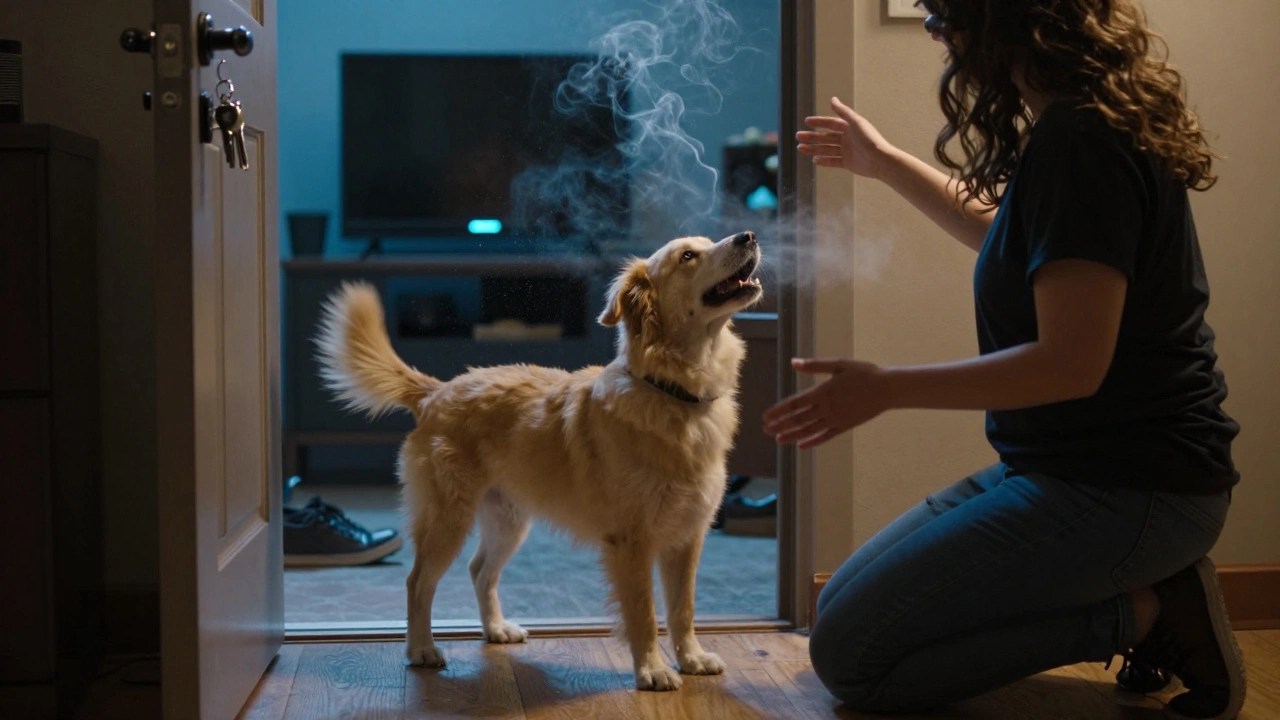
When you return, they might act like you’ve been gone forever. Tail wagging, jumping, licking-intense excitement. But that’s not because they counted the days. It’s because your scent, your voice, your presence is back. The world feels normal again.
How to help your dog when you’re away
Here’s what actually works, based on real dog behavior science:
- Keep routines steady. Leave and come home at the same times if you can. Even on weekends.
- Leave a piece of clothing with your scent. A worn T-shirt or sock helps anchor them to your presence.
- Don’t make a big deal when you leave or return. Calm, quiet departures reduce anxiety. No dramatic goodbyes.
- Use puzzle toys or frozen Kongs. These keep them mentally busy and tie your absence to something positive.
- Don’t punish accidents. If your dog pees on the rug while you’re gone, it’s not revenge. It’s stress. Punishing them makes it worse.
Some owners try leaving the TV or radio on. It helps a little-but only if it’s familiar. A random playlist won’t do much. But if you usually have your favorite podcast on while you’re cooking, playing that same audio while you’re gone can be a comfort.
Why this matters for dog-friendly holidays
If you’re planning a holiday and want to bring your dog, or leave them behind, understanding how they experience time changes everything. You don’t need to feel guilty for leaving them for a long weekend. What matters is consistency before you go and comfort while you’re away.
Bring your dog on a short trip? Great. They’ll enjoy the change of scenery. But if you’re going away for more than a few days, make sure their usual routine is preserved. Same food. Same walk time. Same person feeding them. That’s more important than any fancy boarding facility.
If you’re leaving your dog with a sitter, give them a list of your daily cues: “The door closes at 8:15 a.m.,” “The mail comes at 4:05 p.m.,” “He eats at 6:30 p.m. after the kettle whistles.” These details help your sitter mimic your presence-even if you’re 500 kilometers away.
Bottom line: They feel your absence, but not like you do
Dogs don’t measure time in hours. They measure it in smells, sounds, and routines. They know when you’ve been gone too long-not because they’re counting, but because their world feels off-kilter. Their love isn’t based on how long you were away. It’s based on how safe you make them feel when you’re back.
So next time your dog greets you like you’ve been gone for years, don’t think they’re dramatic. Think: they missed you. And that’s all that matters.