Dog Grooming Time Estimator
Enter details and click estimate
Time Breakdown
Breakdown will appear here
Imagine booking a haircut for yourself. You sit in the chair, the stylist chops away for twenty minutes, and you walk out looking fresh. Now imagine that same appointment lasting four hours. For many dog owners, this is the reality of professional dog grooming, which involves the professional cleaning, trimming, and maintenance of a dog's coat, skin, nails, and ears. When you see an invoice for three or four hours of work on a single session, it’s natural to feel skeptical. Did they just wash the dog slowly? Were they taking breaks? Or is there something more happening behind that closed door?
The short answer is no, the groomer isn’t wasting time. A four-hour session usually signals a specific combination of factors: a large breed with a dense double coat, significant matting that requires hand-stripping, or a nervous dog that needs careful desensitization. Understanding what actually happens during those hours changes the perspective from "why is this so expensive?" to "thank goodness my dog is in safe hands."
The Hidden Complexity of Coat Types
Not all fur is created equal. If you have a short-haired Labrador, washing and drying might take thirty minutes. But if you own a Standard Poodle, a Samoyed, or a Golden Retriever, you are dealing with a biological complexity that demands patience.
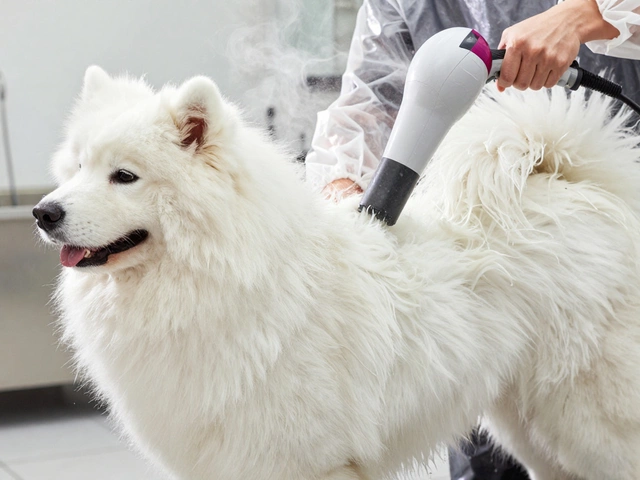
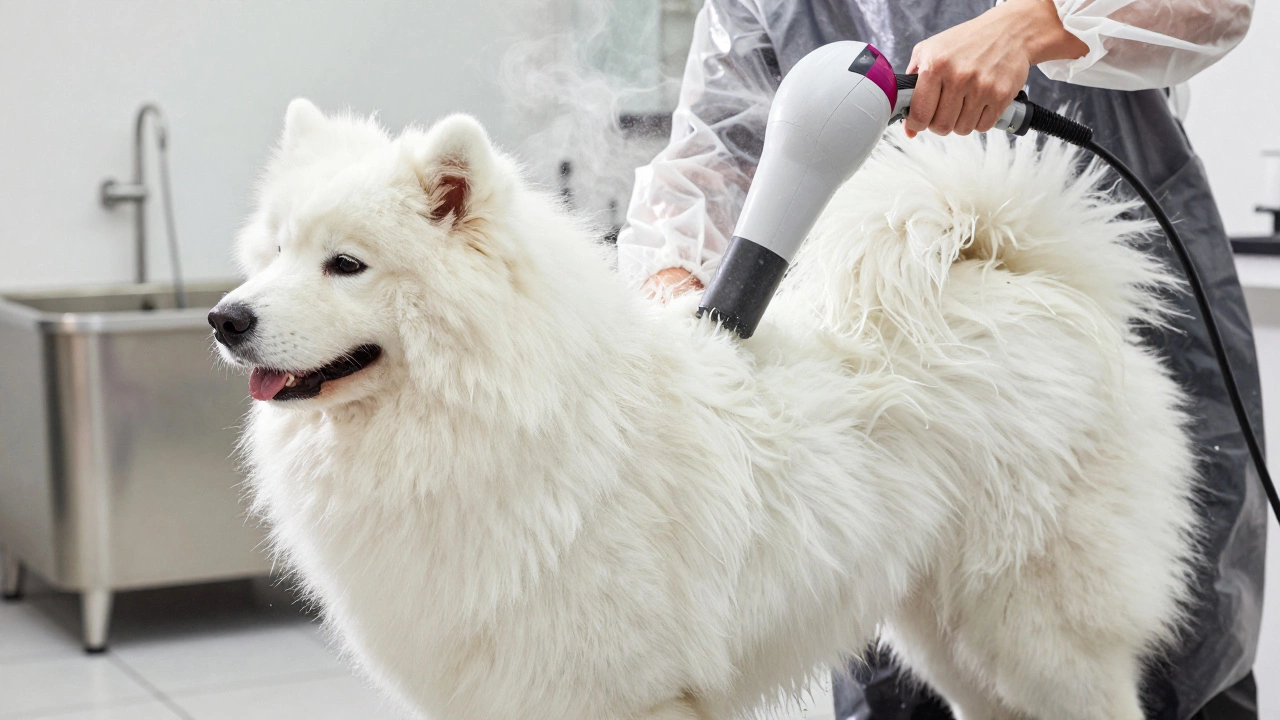
Dogs with double coats have two layers: a soft, dense undercoat for insulation and a harsher, longer outer coat for protection. In breeds like the Samoyed, which originated in Siberia and has a thick double coat designed to withstand extreme cold, these layers can grow inches long. To properly groom such a dog, you cannot just blast them with a dryer. You must use high-velocity dryers to blow the undercoat out without blowing the topcoat around. This process alone can take forty-five minutes to an hour for a large dog.
Then there is the issue of texture. Wire-haired breeds like the Schnauzer or Terrier often require hand-stripping rather than clipping. Clipping removes the dead hair but leaves the root, causing the next growth cycle to be softer and less weather-resistant. Hand-stripping involves pulling out dead hairs by the root using a stripping knife or fingers. It is tedious, precise work. Doing this on a full body can easily consume two hours of focused labor. It’s not just cutting; it’s maintaining the structural integrity of the coat.
The Matting Factor: Detangling vs. Shaving
The biggest time sink in any grooming salon is mats. If a dog comes in with severe matting, especially close to the skin, the groomer faces a critical decision: shave it off or detangle it. Most ethical groomers will recommend shaving because mats pull on the skin, causing pain and potential infection. However, some clients request a "full groom" despite the mats, or the mats are only partial.
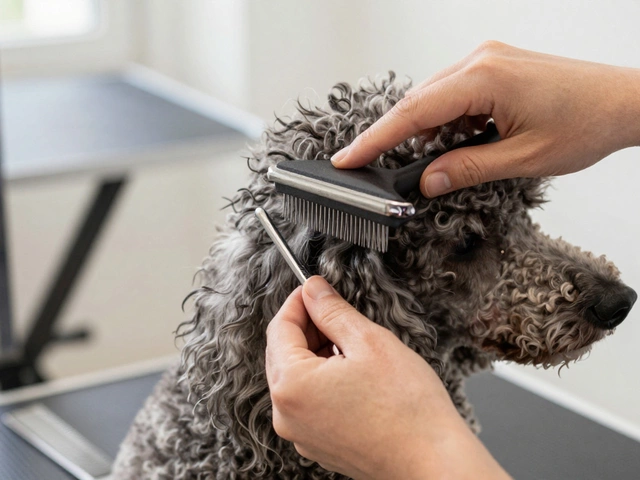
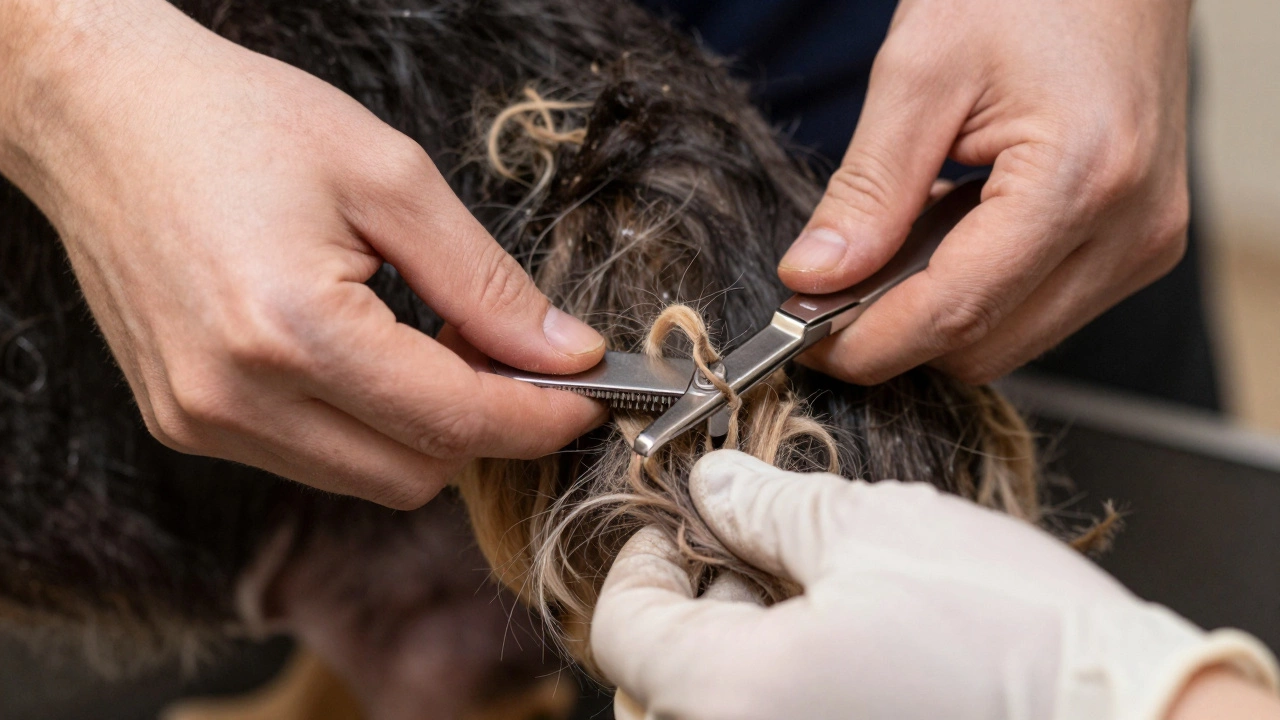
Detangling mats by hand is excruciatingly slow. You cannot simply run scissors through a mat because the skin folds into the tangles, creating a high risk of accidental cuts. The groomer must use a dematting tool or their fingers to gently tease apart the knots, working millimeter by millimeter. A single large mat on a hind leg can take twenty minutes to resolve safely. If a dog has multiple mats across the rump, legs, and neck, adding up to an extra hour or more is common. This isn't inefficiency; it's injury prevention.
| Issue | Severity | Additional Time | Reason for Delay |
|---|---|---|---|
| Mats (Light) | Surface level | 15-30 mins | Requires careful combing to avoid skin irritation |
| Mats (Severe) | Close to skin | 1-2+ hours | Risk of cuts; often requires shaving instead |
| Nail Grinding | Thick/Dark nails | 10-20 mins | Grinding prevents splitting; slower than clipping |
| Ear Cleaning | Waxy/Infected | 10-15 mins | Must flush and dry thoroughly to prevent yeast |
| Behavioral Calming | Anxious/Aggressive | 30-60 mins | Needs breaks, treats, and gentle handling |
Behavioral Management Takes Time
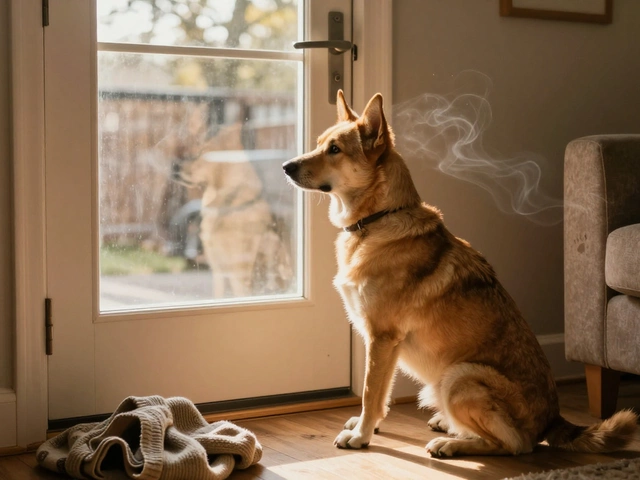
We often forget that dogs are sentient beings with varying temperaments. A four-hour groom might include a significant portion dedicated to behavioral management. If your dog is fearful of the bath tub, the dryer noise, or having their paws handled, the groomer cannot rush. Rushing a scared dog leads to bites, scratches, and trauma for both the animal and the staff.
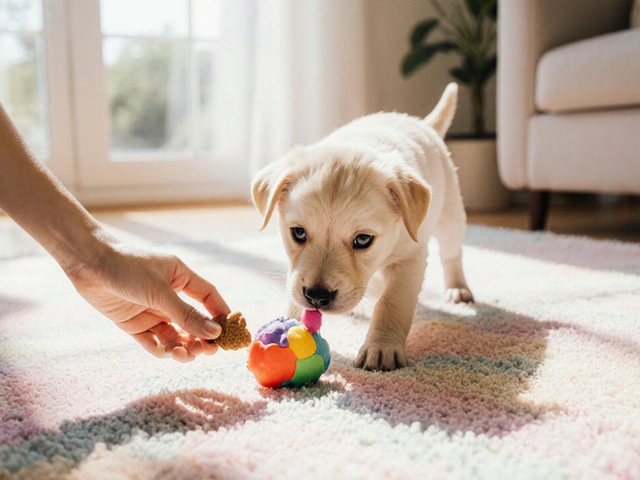
Professional groomers use positive reinforcement techniques. They might spend ten minutes just letting the dog sniff the room, offering treats, and building trust before even turning on the water. During the nail trim, if the dog pulls away, the groomer stops, reassures, and tries again. This stop-and-go process extends the timeline significantly. In Auckland, where many urban dogs live in apartments and may have less exposure to varied stimuli, anxiety-related delays are increasingly common. A calm, cooperative dog might get groomed in half the time of a reactive one. You are paying for the safety and emotional well-being of your pet, not just the cut.
The Full Service Checklist
When you book a "standard groom," you might expect a quick trim. But a professional service includes steps that owners rarely perform at home. Here is what typically fills those four hours:
- Initial Consultation & Health Check: The groomer checks for lumps, bumps, parasites, or skin infections. This medical observation is crucial.
- Bathing & Conditioning: Using specialized shampoos for skin pH balance, followed by conditioners to protect the coat. This isn't a quick rinse; it involves massaging products into the skin and rinsing until the water runs clear.
- Drying: As mentioned, high-velocity drying is essential to prevent moisture-related skin issues. Brushing out the coat while drying prevents new tangles.
- Coat Trimming/Styling: Precision scissoring around the face, feet, and sanitary areas. This requires artistic skill and steady hands.
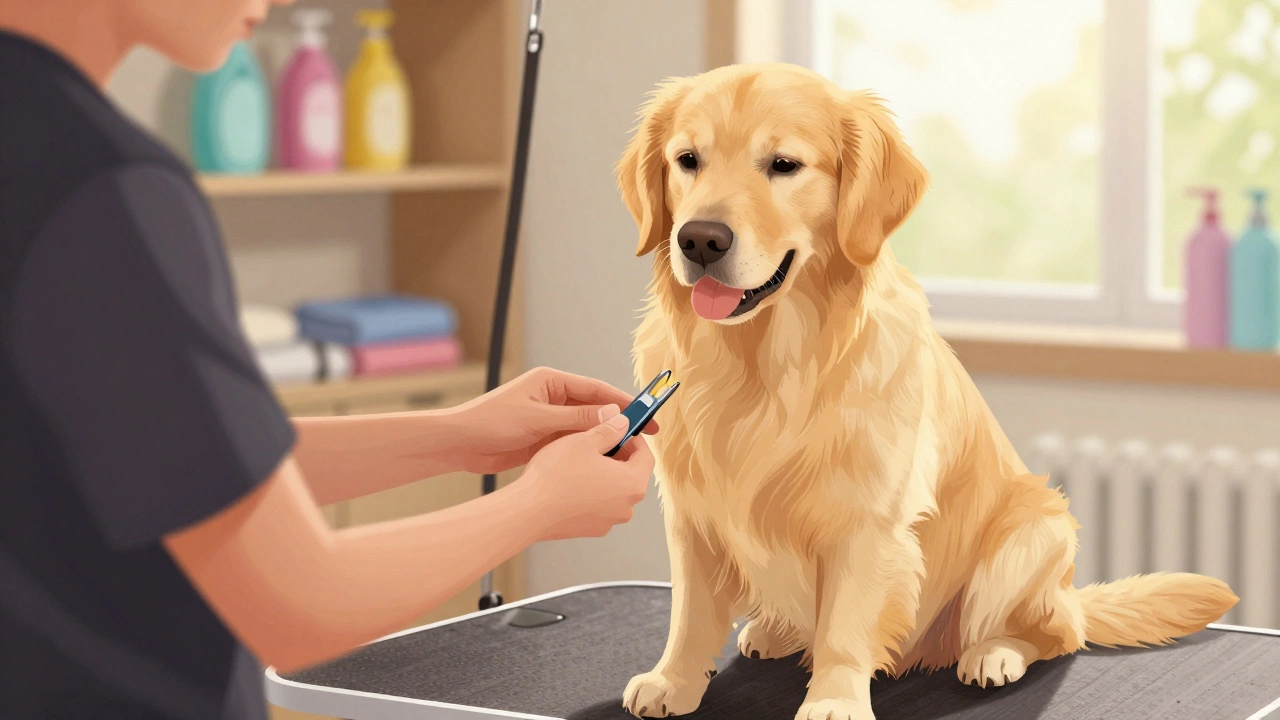
- Hygiene Details: Nail grinding (safer than clipping), ear cleaning, anal gland expression (if requested and needed), and teeth brushing.
- Final Blow-Dry & Styling: Fluffing the coat and applying finishing sprays or deodorizers.
Each of these steps has quality control measures. For example, after trimming the paws, the groomer brushes the pads to remove debris. After ear cleaning, they ensure the canal is dry. These small details add up. Skipping them saves time but compromises health.
Home Grooming vs. Professional Efficiency
You might wonder, "Can I do this myself faster?" Possibly, but likely not better. Home grooming lacks industrial-grade equipment. Your household dryer takes twice as long to dry a wet Great Dane as a commercial force-dryer. Your clippers may overheat or lack the power to cut through thick fur, leading to pulling. Furthermore, most owners struggle with blind spots-trimming the back of the tail or the underside of the chin is difficult without experience.
Professional groomers also work in batches. While one dog dries, another gets bathed. However, the clock for your dog starts when they arrive and ends when they leave. The four-hour window ensures that your dog receives undivided attention during critical phases like nail trimming and facial styling, where distraction could lead to injury.
How to Reduce Grooming Time and Costs
If four hours feels excessive, there are ways to streamline future visits. Regular maintenance is key. Bringing your dog in every six weeks instead of twelve prevents mats from forming. Brushing at home between appointments keeps the coat loose and manageable. Some groomers offer "mini-grooms" or "bath and tidy" services that skip the full haircut, focusing only on hygiene. These sessions can be completed in one to two hours.
Additionally, training your dog at home to tolerate handling makes the professional visit smoother. If your dog is comfortable with their paws being touched and their mouth being opened, the groomer spends less time on behavioral management and more time on the actual grooming tasks.
Is it normal for a small dog to take 4 hours to groom?
For a small dog, four hours is unusual unless there is severe matting, behavioral aggression, or a very complex breed-specific style required. Small dogs typically take 1.5 to 2.5 hours. If your small dog took four hours, ask the groomer for a detailed breakdown of where the time was spent.
Why does my groomer charge by the hour?
Many groomers charge by the hour because each dog presents unique challenges. Factors like coat density, behavior, and matting vary wildly. Hourly billing ensures fairness; you pay for the actual effort required rather than a flat rate that might undercompensate the groomer for difficult cases.
Can I speed up the process by pre-brushing?
Yes, pre-brushing helps, but don't expect a discount. The groomer still needs to check for hidden mats and ensure the coat is perfectly smooth. However, a well-brushed dog will dry faster and trim more evenly, potentially reducing the total time by 15-30 minutes.
What should I do if my dog is anxious during grooming?
Inform the groomer beforehand. Ask if they offer calming aids like pheromone sprays or if they can schedule shorter, more frequent sessions to build tolerance. Never sedate your dog for grooming unless prescribed by a vet for medical reasons, as it carries risks.
Does the groomer take breaks during the 4 hours?
Groomers may rotate between dogs (e.g., while one dries, they start another), but your dog's clock usually pauses during non-active times like waiting for shampoo to soak in. The billed time reflects active labor and direct supervision. They do not abandon your dog to take a lunch break mid-session.