Starving Cat Re-Feeding Calculator
Safe Feeding Guidance
WARNING: Never feed dry food to starving cats. Use only high-protein wet food with < 10% carbs and > 40% protein.
Feeding Schedule
Day 1: 1/4 can every 4 hours (6 feedings)
Day 2: 1/3 can every 4 hours (6 feedings)
Day 3: 1/2 can every 6 hours (4 feedings)
EMERGENCY ALERT
Your cat's condition requires immediate veterinary attention. Call a vet within 24 hours. Do not continue feeding without professional guidance.
Safety Confirmation
This feeding schedule follows the 3-day re-feeding protocol. You're using safe, wet food with:
- Over 40% protein (dry matter basis)
- Less than 10% carbohydrates
- No grains, corn, or soy
If your cat hasn’t eaten in days and looks like skin stretched over bones, you’re not just worried-you’re terrified. A starving cat isn’t just hungry; it’s in medical crisis. The wrong food can kill faster than the hunger itself. This isn’t about picking a fancy brand or checking ingredient lists for organic claims. This is about survival. And the truth is, most cat owners don’t know how to feed a starving cat safely.
Starvation Changes Everything
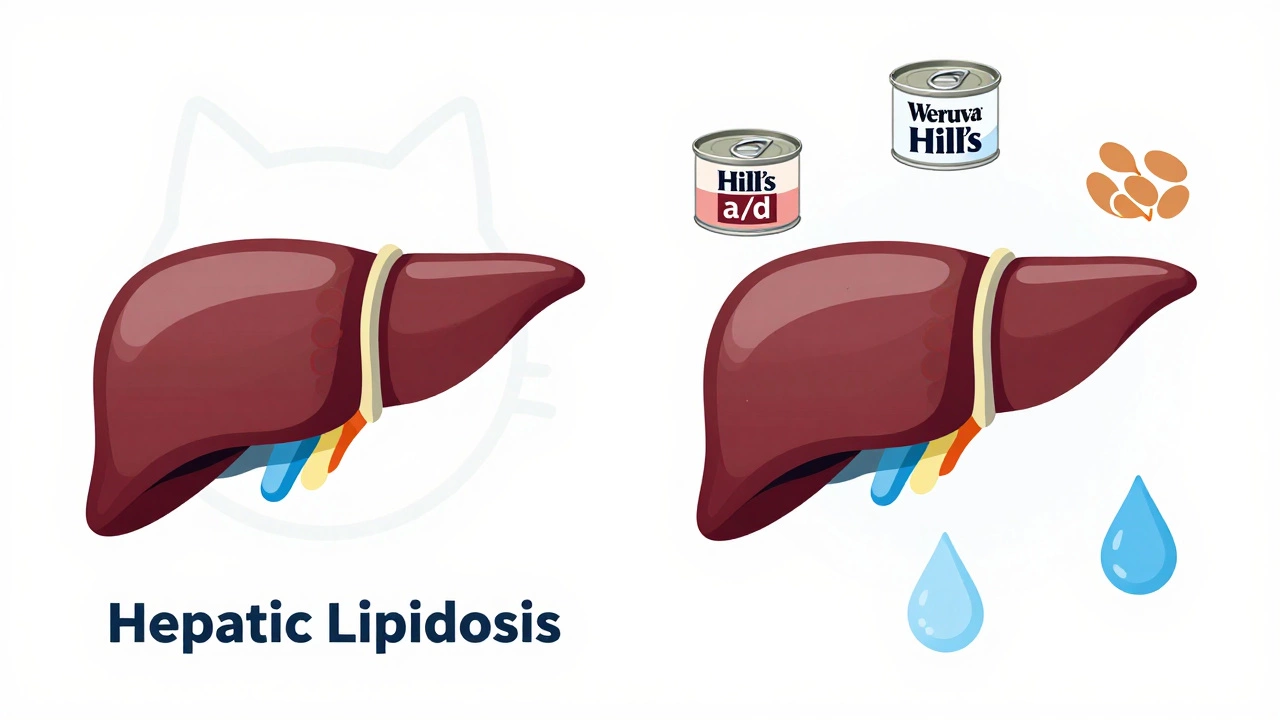
A cat that hasn’t eaten for more than 48 hours starts breaking down its own muscle and fat for energy. But unlike humans, cats can’t handle prolonged fasting without risking a deadly condition called hepatic lipidosis-fatty liver disease. Their liver gets overwhelmed trying to process fat too fast, and within days, it shuts down. This isn’t rare. It’s the #1 cause of death in neglected or abandoned cats brought to shelters.
When you finally get food in front of a starving cat, your instinct is to give them everything at once. That’s the worst thing you can do. Re-feeding syndrome kicks in when a malnourished body suddenly gets a flood of calories. Electrolytes crash. Organs fail. Death can happen within 24 hours.
What You Need: High-Quality, Low-Carb, High-Protein Wet Food
The best cat food for a starving cat isn’t about price or packaging. It’s about composition. Look for wet food with:
- At least 40% protein (on a dry matter basis)
- Less than 10% carbohydrates
- No grains, corn, or soy
- High moisture content (over 75%)
Why? Cats are obligate carnivores. Their bodies are built to run on meat protein and fat-not carbs. Carbs spike blood sugar and trigger insulin, which pushes nutrients into fat storage instead of healing tissue. That’s the opposite of what a starving cat needs.
Brands like Weruva a grain-free, high-protein wet cat food brand made with real meat and low-carb ingredients, Hill’s Prescription Diet a/d a veterinary-formulated, highly digestible recovery food for cats with severe malnutrition, and Tiki Cat Puka Puka a high-protein, low-carb wet food with added taurine and omega-3s for tissue repair are designed for this exact situation. They’re not marketing gimmicks. They’re medical tools.
Don’t Use Dry Food or Cheap Wet Food
Most grocery store cat foods are 20-30% carbs. That’s like giving a diabetic human a candy bar. Even if it says "natural" or "with real chicken," the first three ingredients are often chicken by-product meal, corn gluten, and rice. These fill the bowl but starve the cells.
Dry food? Absolutely not. A starving cat is already dehydrated. Dry food has less than 10% water. Wet food has over 75%. Giving dry food to a cat in this state is like giving salt water to someone stranded at sea.
Even some "premium" wet foods are traps. Check the label. If it says "chicken flavor," it doesn’t mean there’s chicken in there. It means a few grams of chicken meal and a lot of artificial flavoring. Look for "chicken" or "salmon" as the first ingredient-no "meal," no "by-products."
How to Feed: The 3-Day Re-Feeding Protocol
You can’t just pour a whole can in front of them. Here’s the safe way:
- Day 1: Give 1/4 of a 3-ounce can every 4 hours. That’s 6 small meals. Don’t force it. If they won’t eat, try warming the food to body temperature (microwave for 5 seconds, stir well). Smell is everything. Add a sprinkle of powdered taurine (available at vet clinics) if you can.
- Day 2: Increase to 1/3 of a can every 4 hours. Watch for vomiting or diarrhea. If it happens, stop feeding for 2 hours, then try again with half the amount.
- Day 3: Move to 1/2 can every 6 hours. If they’re eating well and no vomiting, you can start transitioning to regular feeding by Day 4.
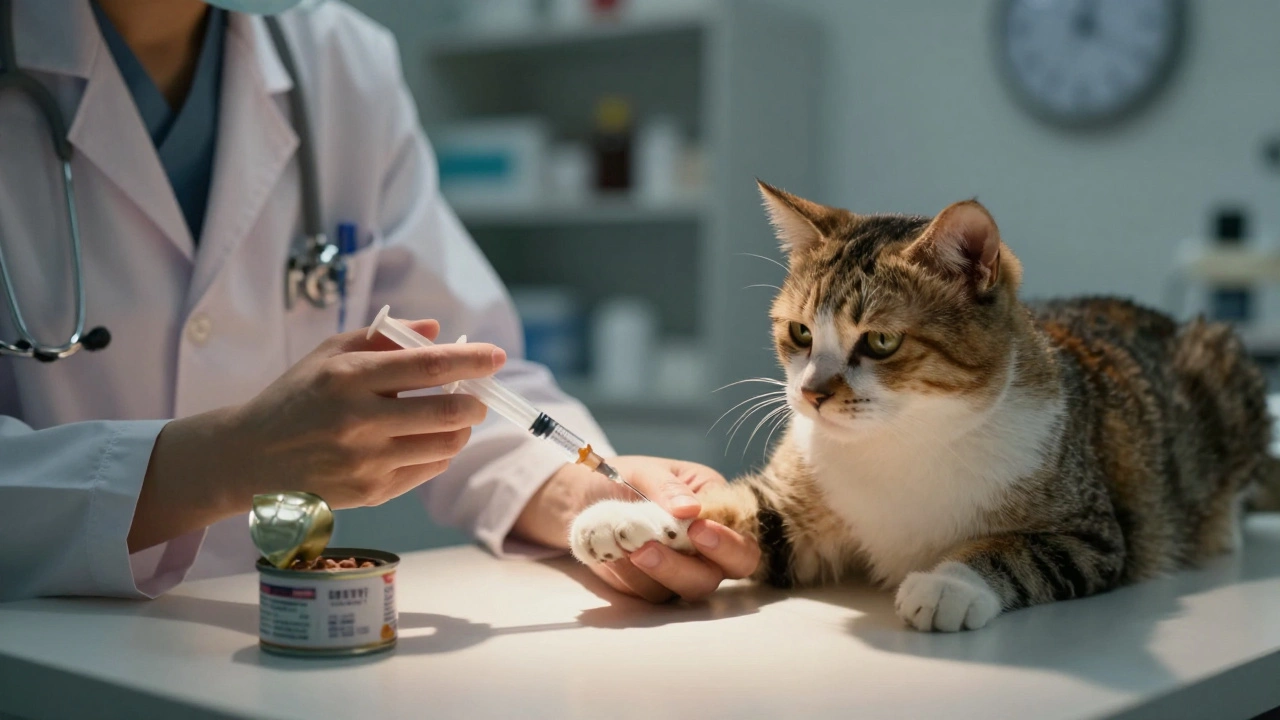
Always use a syringe (without a needle) or a small spoon if they’re too weak to lick. Never force-feed. That causes aspiration pneumonia.
What to Avoid
- Human food-even tuna or chicken breast. Too much salt, wrong nutrients, can trigger pancreatitis.
- Almond milk, oat milk, or dairy. Cats are lactose intolerant. Even a splash can cause explosive diarrhea.
- Raw meat. Bacteria like Salmonella and E. coli can kill a weakened immune system.
- Over-the-counter supplements. Unless prescribed by a vet, they can throw off electrolyte balance.
When to Go to the Vet
Even if your cat starts eating, you still need to see a vet within 24 hours. Starvation isn’t just about food. It’s about:
- Low potassium (causes muscle weakness, heart issues)
- Low phosphorus (leads to red blood cell breakdown)
- Dehydration (can’t be fixed by food alone)
- Underlying illness (kidney disease, cancer, hyperthyroidism)
A vet will give subcutaneous fluids, check blood levels, and may prescribe a potassium supplement or appetite stimulant like mirtazapine. This isn’t optional. It’s life-saving.
What Happens After Recovery
Once they’re eating regularly for 5-7 days, slowly transition to a maintenance diet. Keep it high-protein, low-carb. Avoid all dry food. Switch to wet food with at least 50% protein. Feed 3-4 small meals a day. Weigh them weekly. A healthy adult cat gains 0.5-1 pound per week after recovery.
Long-term, feed them a brand like Orijen Cat & Kitten a biologically appropriate, high-meat-content wet or dry food for sustained recovery or Instinct Original Grain-Free a nutrient-dense, protein-rich option with added probiotics for gut repair. These aren’t just "good" foods-they’re designed for cats with damaged metabolisms.
Why This Matters Beyond the Food
Most starving cats aren’t just neglected-they’re sick. FIV, FIV, dental disease, or parasites often cause appetite loss. If you’re feeding a stray, get them tested. If it’s your own cat, ask why they stopped eating. Was it stress? Pain? A new litter box? The food isn’t the problem-it’s the symptom.
Feeding a starving cat isn’t about kindness. It’s about science. Get the food right, and you give them a shot. Get it wrong, and you might end up burying them anyway.
Can I feed my starving cat tuna?
No. Tuna lacks the right balance of nutrients and has too much mercury and sodium. It can cause thiamine deficiency, which leads to seizures and death. Even as a treat, it’s dangerous for a starving cat.
How long does it take for a starving cat to recover?
It depends. Mildly malnourished cats may gain weight in 2-3 weeks. Severely emaciated cats can take 3-6 months to fully recover, especially if they have organ damage. The key is slow, steady feeding and vet monitoring.
Is wet food better than dry food for a starving cat?
Yes, always. Wet food provides hydration, is easier to digest, and has higher protein and lower carbs. Dry food can worsen dehydration and doesn’t support tissue repair the way meat-based wet food does.
Can I make homemade food for a starving cat?
Not without veterinary guidance. Homemade diets are risky because they’re often missing taurine, vitamin A, or other critical nutrients. A single imbalance can cause blindness, heart failure, or death. Stick to vet-approved commercial foods until the cat is stable.
What if my cat won’t eat anything?
Call a vet immediately. A cat that refuses food for more than 24 hours is in danger. They may need a feeding tube, IV fluids, or an appetite stimulant. Don’t wait. This is an emergency.
Next Steps
If your cat is starving right now, here’s what to do in the next 10 minutes:
- Find the nearest 24-hour vet clinic or emergency animal hospital.
- Call ahead. Tell them you have a starving cat and need advice on immediate feeding.
- Go to the nearest pet store or pharmacy and buy one can of Hill’s a/d or Weruva. Don’t wait for delivery.
- Warm the food slightly. Offer 1/4 can in small portions over the next 12 hours.
- Do not give water by force. Let them lick it if they want.
Time is the one thing you can’t get back. Feed right, act fast, and give your cat the chance they deserve.