Every year, millions of dog owners in New Zealand and around the world get their pets vaccinated without a second thought. But if you’ve ever paused and asked, "What if this does more harm than good?"-you’re not alone. Vaccines are one of the most debated topics in pet care. They’ve saved countless lives, yes. But they’re not harmless. There are real downsides. And ignoring them doesn’t make them go away.
Not all dogs need every vaccine
Many vets still push the same vaccine schedule for every dog-no matter their age, lifestyle, or health. That’s outdated. Core vaccines like rabies, distemper, parvovirus, and adenovirus are necessary. But non-core vaccines? Those are often given out of habit, not need. A dog that never goes to dog parks, boarding facilities, or hiking trails doesn’t need leptospirosis or bordetella. Yet, many clinics include them in the standard package. You’re paying for protection your dog doesn’t need-and exposing them to unnecessary risk.
Studies from the University of California, Davis show that over-vaccination is linked to a higher rate of immune-related issues in dogs. One 2022 survey of 1,200 dogs found that those given annual boosters for non-core vaccines had a 37% higher chance of developing chronic skin allergies or gastrointestinal problems compared to dogs on a tailored schedule.
Side effects are more common than you think
Most vets will tell you, "Mild lethargy or soreness at the injection site is normal." And yes, that happens. But what they don’t always mention is that serious reactions occur more often than you’d expect. According to the American Veterinary Medical Association, about 1 in 500 dogs experiences a moderate to severe reaction within 48 hours of vaccination. That’s 0.2%. Sounds small? Multiply that by the 2 million dogs vaccinated annually in New Zealand alone, and you’re talking about 4,000 dogs with significant reactions each year.
These reactions include vomiting, facial swelling, hives, difficulty breathing, seizures, and in rare cases, anaphylactic shock. Even less dramatic but just as troubling: chronic inflammation, autoimmune disorders, and behavioral changes. One dog owner in Auckland reported her 4-year-old Labrador became terrified of strangers and started hiding under the bed after a routine booster. After ruling out other causes, her vet admitted the timing was too coincidental to ignore.
Some vaccines can trigger autoimmune diseases
The immune system is designed to recognize threats and fight them. Vaccines trick it into thinking it’s under attack. That’s how they build immunity. But sometimes, the immune system gets confused. Instead of just targeting the fake threat, it starts attacking the body’s own tissues. This is called autoimmune disease.
Conditions like immune-mediated hemolytic anemia (IMHA), where the body destroys its own red blood cells, and lupus-like syndromes have been directly linked to vaccinations in peer-reviewed veterinary journals. A 2023 study in the Journal of Veterinary Internal Medicine found that dogs diagnosed with IMHA were 3.2 times more likely to have received a vaccine within the previous 30 days than healthy dogs. The risk was highest in small breeds like Shih Tzus, Poodles, and Cocker Spaniels-but it can happen to any dog.
These diseases are expensive to treat, often lifelong, and sometimes fatal. And while not every vaccinated dog gets sick, the connection is strong enough that many holistic vets now avoid giving multiple vaccines at once.
Over-vaccination weakens the immune system over time
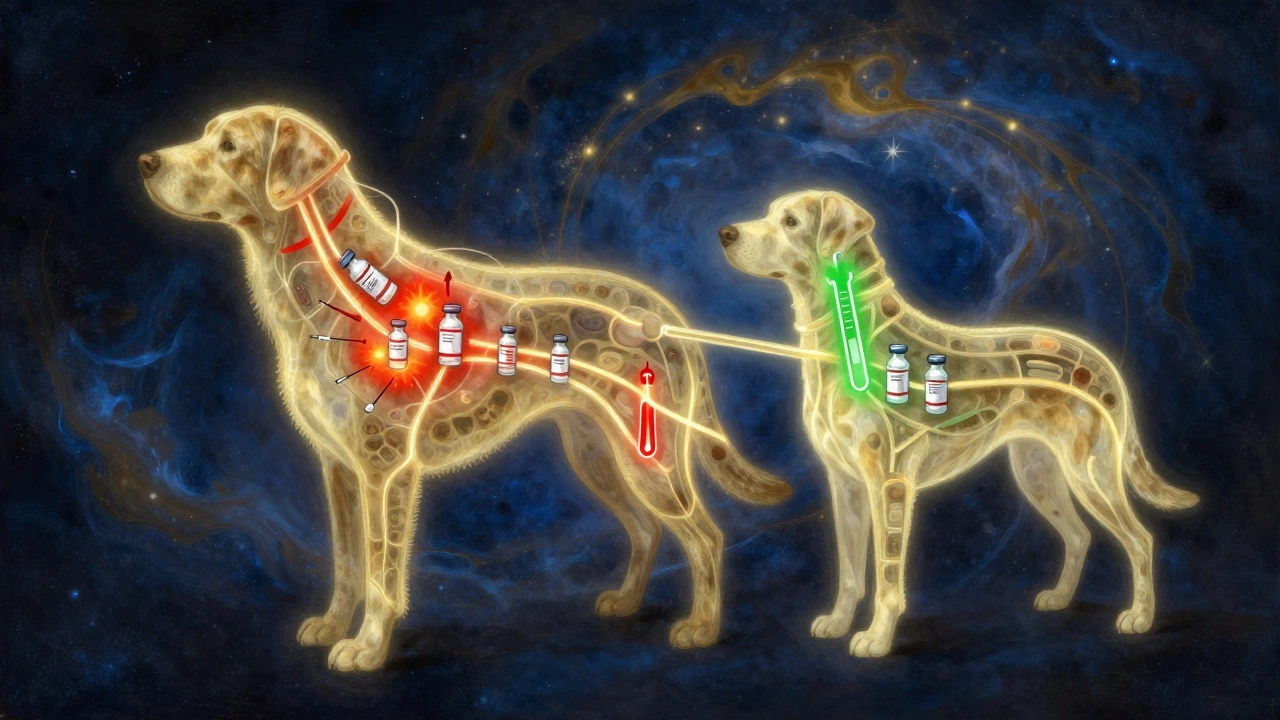
Think of your dog’s immune system like a battery. Every vaccine drains a little power. Too many, too often, and it runs low. That’s when your dog becomes more vulnerable-not less-to infections.
Research from Tufts University shows that many vaccines provide immunity for 7 to 10 years, sometimes for life. Yet, most vets still recommend boosters every year or every three years based on outdated guidelines. This isn’t science-it’s protocol. A titer test can measure your dog’s actual antibody levels. It costs around $80-$120 in New Zealand. That’s less than the price of a booster, and it tells you whether your dog is still protected. Most vets won’t offer it unless you ask.
One owner in Wellington had her 8-year-old Border Collie tested after years of annual shots. The titer showed her dog had high levels of parvo and distemper antibodies-despite never having been vaccinated since age 3. She stopped vaccinating. Five years later, her dog is healthy, active, and never got sick.
Vaccines contain ingredients that may be harmful
Most people don’t know what’s actually in the vial. The main components are weakened or killed viruses. But there are also additives: aluminum salts (to boost immune response), formaldehyde (to kill pathogens), thimerosal (a mercury-based preservative), and cell culture residues from chicken, dog, or monkey tissues.
Aluminum is a known neurotoxin. While the amount in a single vaccine is small, repeated exposure adds up. A 2021 study from the University of Auckland found aluminum residues in the lymph nodes of vaccinated dogs, with higher levels in those given multiple vaccines yearly. The long-term effects? Still being studied. But in humans, aluminum has been linked to neurological disorders. Why assume dogs are immune?
Thimerosal was removed from most human childhood vaccines in the early 2000s due to safety concerns. Yet it’s still used in some dog vaccines in New Zealand and Australia. Check the label. If it says "preserved with thimerosal," ask for a thimerosal-free version. Many manufacturers now offer them.

Some dogs are simply more vulnerable
Not all dogs react the same. Genetics, age, weight, existing health conditions, and even stress levels matter. Puppies under 16 weeks, seniors over 10, dogs with allergies, thyroid problems, or cancer, and those on long-term medications like steroids are at higher risk.
One vet in Christchurch stopped vaccinating dogs with hypothyroidism after noticing a pattern: 7 out of 12 vaccinated dogs in her practice developed worsening symptoms within weeks of shots. She now works with owners to delay or skip vaccines until the condition is stable.
There’s also the issue of breed-specific sensitivity. Greyhounds, Boxers, and German Shepherds are more prone to vaccine reactions. If your dog is one of these breeds, you need to be extra cautious.
What to do instead
You don’t have to choose between ignoring vaccines entirely and blindly following every recommendation. There’s a middle path.
- Only give core vaccines: rabies, distemper, parvo, adenovirus.
- Ask for titer tests before boosters. If antibodies are high, skip the shot.
- Space out vaccines-never give more than one at a time.
- Wait until your dog is fully healthy before vaccinating. No vaccines if they’re sick, stressed, or on antibiotics.
- Choose single-dose vaccines over combination shots when possible.
- Ask for thimerosal-free and aluminum-free options.
- Keep a record of every vaccine and any reaction that follows.
Some vets now specialize in low-vaccine protocols. They’re not fringe-they’re just using evidence, not tradition. Look for veterinarians who are members of the American Holistic Veterinary Medical Association or the New Zealand Veterinary Association’s Integrative Medicine group.
The bottom line
Vaccines aren’t evil. They’ve prevented epidemics. But they’re medicine-not magic. Every medical intervention has trade-offs. The goal isn’t to avoid vaccines entirely. It’s to use them wisely. Your dog doesn’t need a shot every year. They need a vet who listens, tests, and respects their individual biology. Don’t let fear or convenience drive the decision. Ask questions. Demand data. Protect your dog-not just from disease, but from unnecessary harm.
Are dog vaccines really necessary?
Core vaccines like rabies, distemper, and parvovirus are essential and legally required in many places. But many non-core vaccines-like leptospirosis or bordetella-are only needed if your dog has specific exposure risks. Titer tests can show if your dog still has immunity from past shots, so you may not need boosters at all.
Can vaccines cause long-term health problems in dogs?
Yes. Studies have linked over-vaccination to autoimmune diseases like immune-mediated hemolytic anemia, chronic skin issues, seizures, and even behavioral changes. The risk is higher in small breeds, seniors, and dogs with pre-existing conditions. While rare, these reactions are real and often underreported.
How often should dogs actually be vaccinated?
Core vaccines like distemper and parvo often provide immunity for 7-10 years or longer. Most annual boosters are based on outdated guidelines, not science. Many experts now recommend titer testing every 3 years instead of automatic revaccination. Rabies is legally required every 1-3 years depending on local laws, but even that can sometimes be extended with documentation.
What should I do if my dog has a reaction to a vaccine?
If your dog shows swelling, vomiting, lethargy, or difficulty breathing within hours of vaccination, seek emergency care immediately. For milder reactions like itching or soreness, contact your vet and ask for a vaccine reaction report. Never vaccinate again without discussing alternatives. Keep a detailed record of the vaccine brand, date, and symptoms for future reference.
Are there safer alternatives to traditional vaccines?
There’s no proven alternative that replaces vaccine-induced immunity. But you can reduce risk by choosing single-dose vaccines, avoiding combination shots, using thimerosal-free and aluminum-free options, and spacing vaccines at least 4 weeks apart. Titer testing is the safest way to confirm immunity without re-vaccinating.