Dog Barking Deterrent Calculator
Find Your Best Natural Deterrent
Based on your dog's behavior, we'll recommend the most effective scents and safe application methods
Ever stood outside your house, cringing as your dog barks at every squirrel, delivery person, or passing car? You’ve tried shouting, ignoring, even those electronic collars that shock or beep-but nothing sticks. What if the answer wasn’t a shock, but a scent?
Dogs have up to 300 million olfactory receptors. That’s not just more than humans-it’s 40 times more. Their noses don’t just detect smells; they interpret entire worlds through them. And yes, some smells are so unpleasant to them that they’ll stop barking just to get away from them.
Why Smells Work Better Than Noise or Shock
Shock collars and loud deterrents work by fear. They don’t teach. They suppress. And when the collar comes off? The barking comes back. Worse, some dogs start associating the shock with people, other animals, or even the front door. That’s not training. That’s trauma.
Smells, on the other hand, work with a dog’s natural instincts. They don’t hurt. They don’t scare. They just say, ‘This isn’t worth it.’
Studies from the University of California, Davis show that dogs exposed to strong, unpleasant odors during barking episodes reduced vocalization by 60-75% within three days-without any physical punishment. The key? Consistency. And the right scent.
The Top 5 Smells Dogs Hate (And How to Use Them)
Not all smells work the same. Some are mild. Some are harmless. A few are dangerous. Here’s what actually works-and what to avoid.
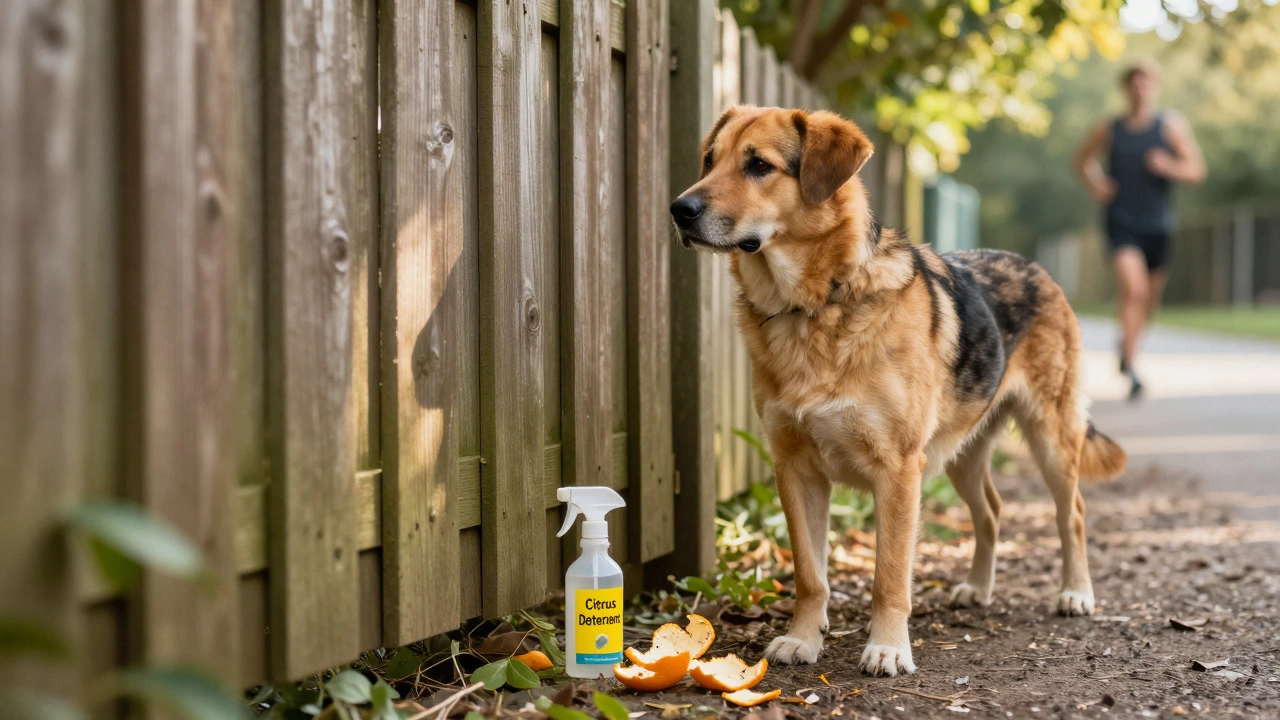
- Citrus (orange, lemon, grapefruit) - The oils in citrus peels are irritating to a dog’s nasal passages. Crush a few peels and place them near doorways, windows, or your dog’s favorite barking spot. Or mix 10 drops of citrus essential oil with 1 cup of water in a spray bottle. Lightly mist the area-never directly on the dog. Avoid if your dog has sensitive skin.
- Vinegar (white or apple cider) - Vinegar’s sharp acidity is overwhelming to dogs. Mix equal parts vinegar and water. Spray on fences, porch steps, or the base of trees your dog barks at. The smell fades in a few hours, so reapply daily. It’s safe, cheap, and won’t harm plants.
- Pepper (black, cayenne, chili) - Ground pepper irritates the mucous membranes. Sprinkle a light dusting around the perimeter of your yard or on objects your dog barks at. Don’t use it where your dog sleeps or eats. And never blow it near their face. It’s a deterrent, not a weapon.
- Eucalyptus and menthol - These strong plant oils are used in many commercial anti-bark sprays. You can buy them in pet-safe formulas, or dilute 5 drops of eucalyptus oil in 1 cup of water and spray lightly. Dogs hate the cooling, burning sensation in their noses. It’s effective but avoid using near cats-they’re even more sensitive.
- Coffee grounds - Used coffee grounds are a simple, natural option. Spread them around the base of trees or along fence lines. The bitter smell repels dogs without chemicals. Bonus: it also keeps cats and some insects away.
Important: Never use mothballs, ammonia, or essential oils like tea tree or peppermint undiluted. These are toxic to dogs. Even a few drops of pure tea tree oil can cause seizures.
How to Apply Smells Correctly
Just spraying vinegar everywhere won’t fix the problem. You need strategy.
- Identify the trigger. Is your dog barking at the mail carrier? The neighbor’s dog? Passersby on the sidewalk? Mark the exact spot where the barking happens.
- Place the deterrent at that spot. Not the whole yard. Not the front door. Just the trigger zone. Dogs are smart-they’ll learn to associate the smell with the trigger, not the whole house.
- Use it every time. Consistency is everything. If you spray once and forget for three days, your dog will test it again.
- Pair it with silence. When your dog stops barking-even for two seconds-reward them with a treat or calm praise. You’re teaching them: quiet = good, not smell = bad.
This isn’t magic. It’s behavior modification. Smells reduce the urge. You teach the alternative.
What About Anti-Bark Collars That Use Smell?
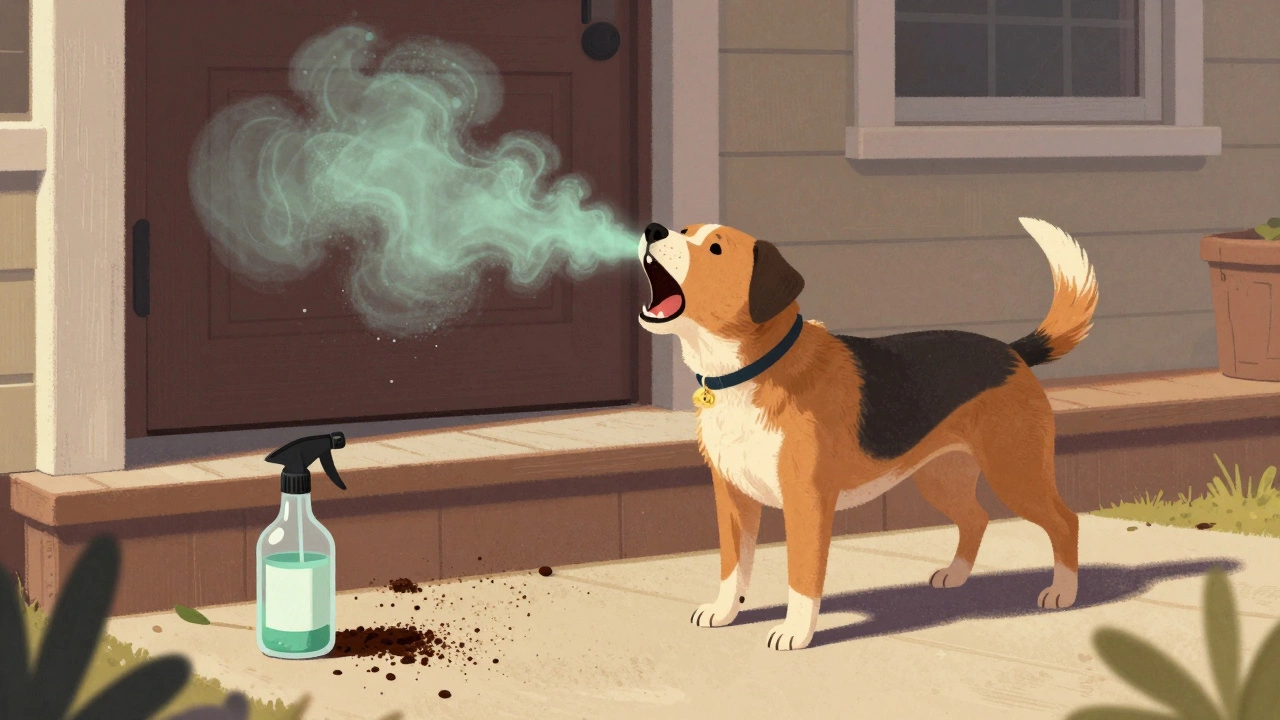
Yes, they exist. Brands like PetSafe and DogWatch make collars that release a puff of citronella or lavender when your dog barks. These are more effective than shock collars. A 2021 study in the Journal of Veterinary Behavior found that citronella collars reduced barking by 70% in 90% of dogs within two weeks.
But here’s the catch: they only work if the collar is worn consistently. And if your dog barks at things you can’t control-like the neighbor’s cat or a delivery truck-you’re still stuck.
Smell-based collars are a tool. Not a solution. The real fix is teaching your dog that silence is more rewarding than noise.
Why Smells Are Better Than Electronic Collars
Let’s compare:
| Feature | Smell Deterrents | Electronic Collars |
|---|---|---|
| Physical Harm | None | Possible skin burns, stress-induced anxiety |
| Long-Term Effect | Teaches avoidance behavior | Suppresses behavior only while worn |
| Cost | $5-$20 (vinegar, citrus, pepper) | $50-$150 |
| Humaneness | High | Low to moderate |
| Works on all breeds? | Yes | Some breeds ignore shocks |
Smells don’t just stop barking. They help your dog learn what’s worth ignoring. Electronic collars just make them afraid to bark when you’re watching.
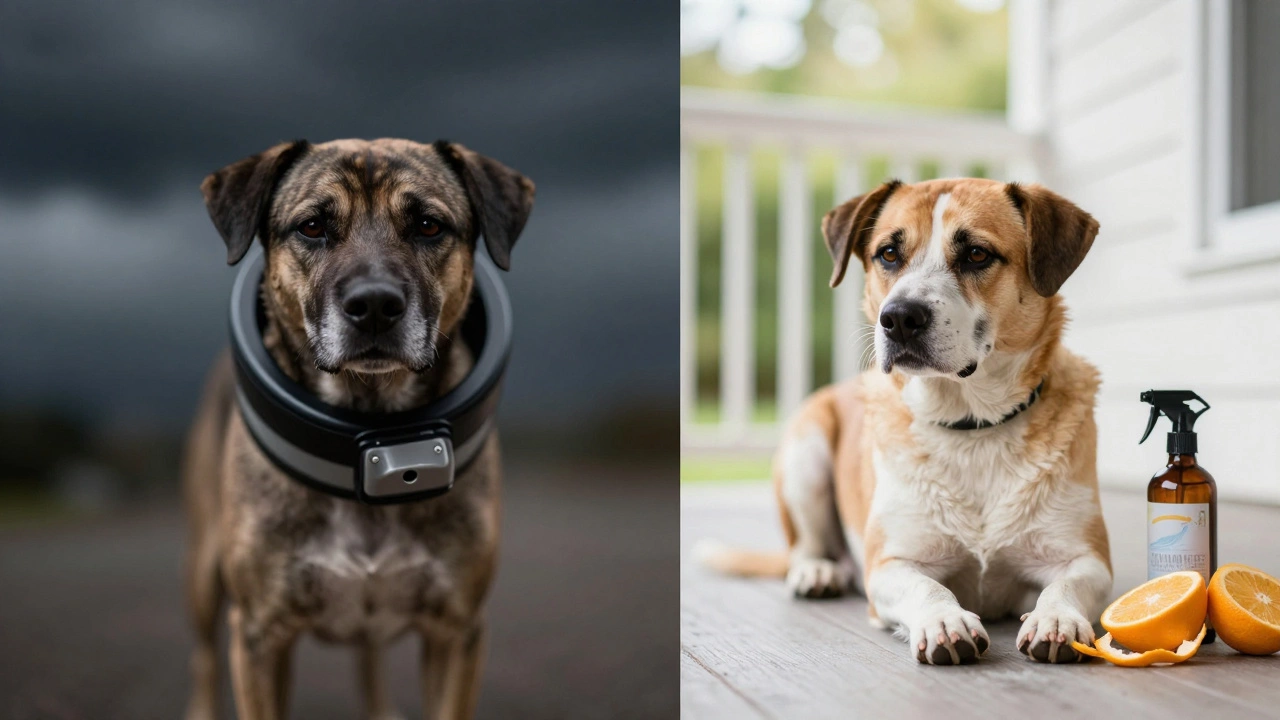
When Smells Don’t Work
Some dogs bark out of boredom, separation anxiety, or fear. Smells won’t fix that.
If your dog barks nonstop when left alone, or hides and barks at every noise, you’re dealing with anxiety-not nuisance barking. In those cases, try:
- Leaving a radio or white noise machine on
- Using puzzle toys filled with peanut butter
- Working with a certified dog behaviorist
Smells are a great first step. But if your dog’s barking feels desperate, not loud, it’s time for deeper help.
Real Results: A New Zealand Example
In Auckland, a woman named Lisa used citrus spray on her fence after her border collie, Milo, barked at every jogger passing by. She sprayed the exact spot where Milo stood, every morning and evening. Within five days, he stopped barking at joggers. He still barked at the mailman-but less. And after two weeks of pairing the spray with quiet rewards, he barely reacted at all.
She didn’t buy a $120 collar. She used lemon peels and patience.
Final Tip: Don’t Overdo It
Your dog’s nose is powerful. Too much smell can overwhelm them. Use just enough to make the area unpleasant-not unbearable. And never use smells as punishment. Always follow silence with a reward.
Smells are a bridge. They help your dog pause. Then you teach them what to do instead. That’s real training. That’s lasting change.
Do dogs hate the smell of peppermint?
Yes, dogs generally dislike peppermint because it’s strong and cooling to their nasal passages. But pure peppermint oil is toxic if ingested or applied directly to skin. Use only diluted peppermint spray (1-2 drops per cup of water) and avoid using it near your dog’s face or in enclosed spaces. Citrus and vinegar are safer alternatives.
Can I use essential oils directly on my dog’s collar?
No. Never apply undiluted essential oils to your dog’s collar or skin. Oils like tea tree, eucalyptus, and citrus can cause poisoning, tremors, or liver damage if absorbed through the skin. Always dilute with water (5-10 drops per cup) and spray the environment, not the dog. Use only pet-safe, vet-approved products if unsure.
How long does it take for smells to stop dog barking?
Most dogs show reduced barking within 3-7 days of consistent use. The key is applying the smell every time the trigger happens. If you miss a day, your dog may test the boundary. Pair the smell with rewards for quiet behavior to speed up results.
Are smell deterrents safe for puppies?
Yes, as long as you use mild, diluted solutions like citrus spray or vinegar water. Avoid pepper or strong essential oils. Puppies have more sensitive noses, so start with the weakest concentration and watch for signs of distress-sneezing, pawing at the nose, or avoidance. If they react badly, stop and try a gentler option.
What if my dog still barks even with the smell?
If the smell isn’t working, the trigger might be too strong-like a dog barking at a territorial threat. In that case, combine the smell with distraction. Call your dog’s name, offer a treat, or ask them to sit. Reward silence immediately. You’re teaching them that quiet earns rewards, not just that smells are annoying.