8-Week-Old Puppy: Training, Care, and What to Expect
When you bring home an 8-week-old puppy, a young dog just leaving its litter and entering a new home. Also known as a weaned puppy, this stage is when their brain is most open to learning—and most vulnerable to bad habits. This isn’t just about potty training or chewing. It’s about building trust, establishing routines, and teaching them how to be part of your world.
At this age, their bladder control is still developing, so accidents are normal—not disobedience. They need to go out every 1-2 hours, especially after eating, drinking, or waking up. A consistent schedule is your best tool. Crate training for puppies, using a safe, sized-appropriate space to help them learn boundaries and feel secure isn’t punishment—it’s a den. Most puppies naturally avoid soiling where they sleep, making crates one of the most effective tools for housebreaking. Pair it with positive reinforcement: praise, tiny treats, and calm excitement when they get it right.
Don’t use punishment. Yelling, rubbing their nose in accidents, or alpha rolls don’t work—they only create fear. Instead, focus on positive reinforcement puppy, rewarding good behavior to encourage repetition. When they sit instead of jumping, give a treat. When they chew on a toy instead of your shoe, celebrate. Their world is new, and everything is a lesson. Even biting is part of learning bite inhibition—redirect them to a chew toy, then praise when they let go.
They need sleep—lots of it. Up to 18-20 hours a day. Overstimulation leads to exhaustion, which turns into tantrums or destructive behavior. Keep play sessions short and calm. Introduce them to new sounds, surfaces, and people slowly. A walk around the block is enough. Too much too soon stresses them out.
Food matters. At 8 weeks, they’re still on puppy-specific kibble, usually fed 3-4 times a day. Avoid table scraps. Even small amounts of chocolate, grapes, or onions can be deadly. Stick to vet-approved food and watch for signs of digestive upset—diarrhea or vomiting means a call to the vet.
And yes, they’ll test you. They’ll ignore commands. They’ll pee on the rug. They’ll bite your ankles. But this isn’t defiance—it’s development. Every behavior you respond to now becomes a habit. The choices you make in these early weeks shape the dog they become. That’s why so many owners feel overwhelmed. It’s not that they’re failing—it’s that they haven’t been shown what works.
Below, you’ll find real, practical advice from owners who’ve been there. No fluff. No theory. Just step-by-step methods for stopping indoor accidents, choosing the right crate, using treats without overfeeding, and handling biting without fear. You’ll also find what not to do—because some advice you hear online can actually hurt your puppy’s development. What you’ll find here is what works, in real homes, with real 8-week-old puppies.
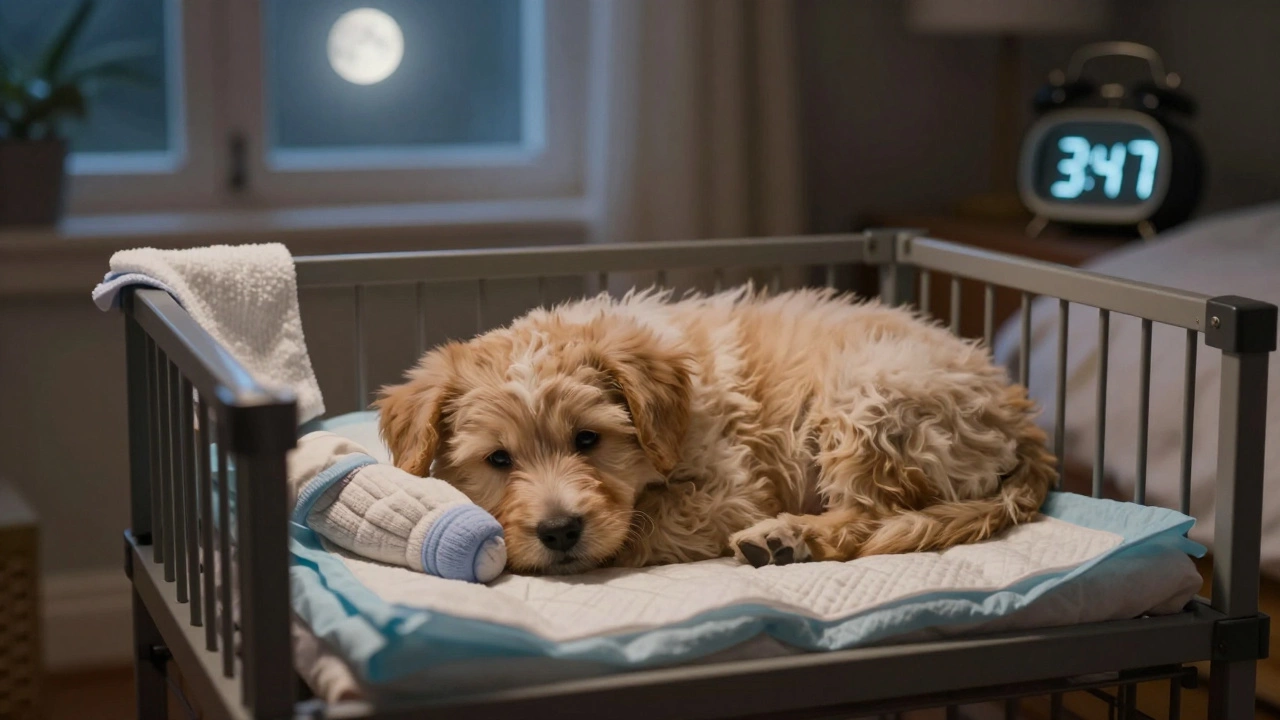
Can an 8-Week-Old Puppy Stay in a Crate All Night?
An 8-week-old puppy can't sleep through the night without needing to go outside. Learn how to set up a safe, realistic overnight routine that supports their development and builds trust.