Many dog owners swear by bone broth as a natural way to boost their dog’s health. But is it really good for dogs-or just another trendy human food with no real benefits? The answer isn’t simple, and it depends on how you make it, how much you give, and your dog’s individual needs.
What Is Bone Broth, Really?
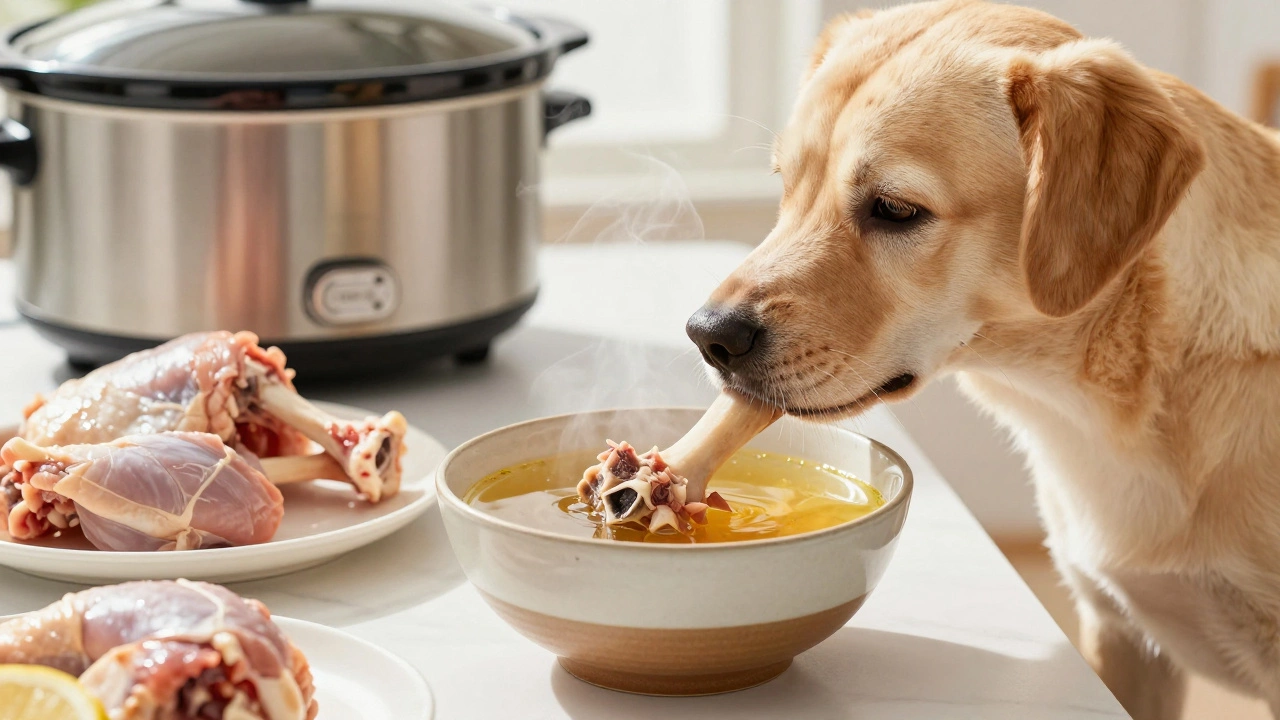
Bone broth is made by simmering animal bones-usually from chicken, beef, or turkey-in water for 12 to 24 hours. The long cooking time pulls out collagen, amino acids, and minerals like calcium, magnesium, and phosphorus from the bones and connective tissues. Unlike regular stock or soup, bone broth is thick, gelatinous, and rich in nutrients that are hard to get from kibble alone.
When made properly, bone broth contains:
- Collagen and gelatin-supports joint health and skin elasticity
- Glycine and proline-amino acids that help repair gut lining
- Minerals like calcium, magnesium, and zinc-often lacking in processed dog foods
- Glucosamine and chondroitin-naturally occurring compounds that help maintain cartilage
These aren’t just buzzwords. A 2021 study from the University of Sydney’s Veterinary Nutrition Lab found that dogs fed bone broth daily for 8 weeks showed measurable improvements in joint mobility and reduced markers of inflammation compared to dogs on standard diets.
Why Dog Owners Turn to Bone Broth
Most people start giving bone broth to their dogs for one of three reasons:
- Appetite stimulation-Dogs with reduced appetite due to illness, age, or stress often perk up at the smell of warm broth.
- Hydration support-Especially useful for dogs who don’t drink enough water, or those recovering from vomiting or diarrhea.
- Joint and gut support-Older dogs, large breeds like Labradors or German Shepherds, and dogs with arthritis or IBD (inflammatory bowel disease) often respond well to the natural anti-inflammatory properties.
One owner in Auckland, Lisa M., started giving her 11-year-old Border Collie a daily spoonful of homemade broth after he developed chronic diarrhea. Within three weeks, his stools normalized, and he started wagging his tail again. "It wasn’t a miracle," she said, "but it was the first thing that actually helped without drugs."
How to Make Safe Bone Broth for Dogs
Not all bone broth is created equal. Store-bought versions often contain salt, garlic, onion, or additives that are toxic to dogs. Even homemade broth can be dangerous if not prepared correctly.
Here’s how to make bone broth that’s safe and effective:
- Use raw or roasted bones-Chicken, beef, or turkey bones work best. Avoid cooked chicken bones-they can splinter.
- No seasoning-Skip salt, garlic, onion, pepper, and herbs like thyme or rosemary. Even small amounts of garlic can cause anemia in dogs.
- Simmer for 12-24 hours-This extracts the maximum nutrients. Use a slow cooker or stovetop on low heat.
- Skim the fat-After cooling, remove the solidified fat layer on top. Too much fat can trigger pancreatitis.
- Strain thoroughly-Remove all bone fragments. Even tiny pieces can cause internal injury.
Store in the fridge for up to 5 days or freeze in ice cube trays for easy portioning. A typical serving size is 1-2 tablespoons for small dogs, up to ½ cup for large breeds.
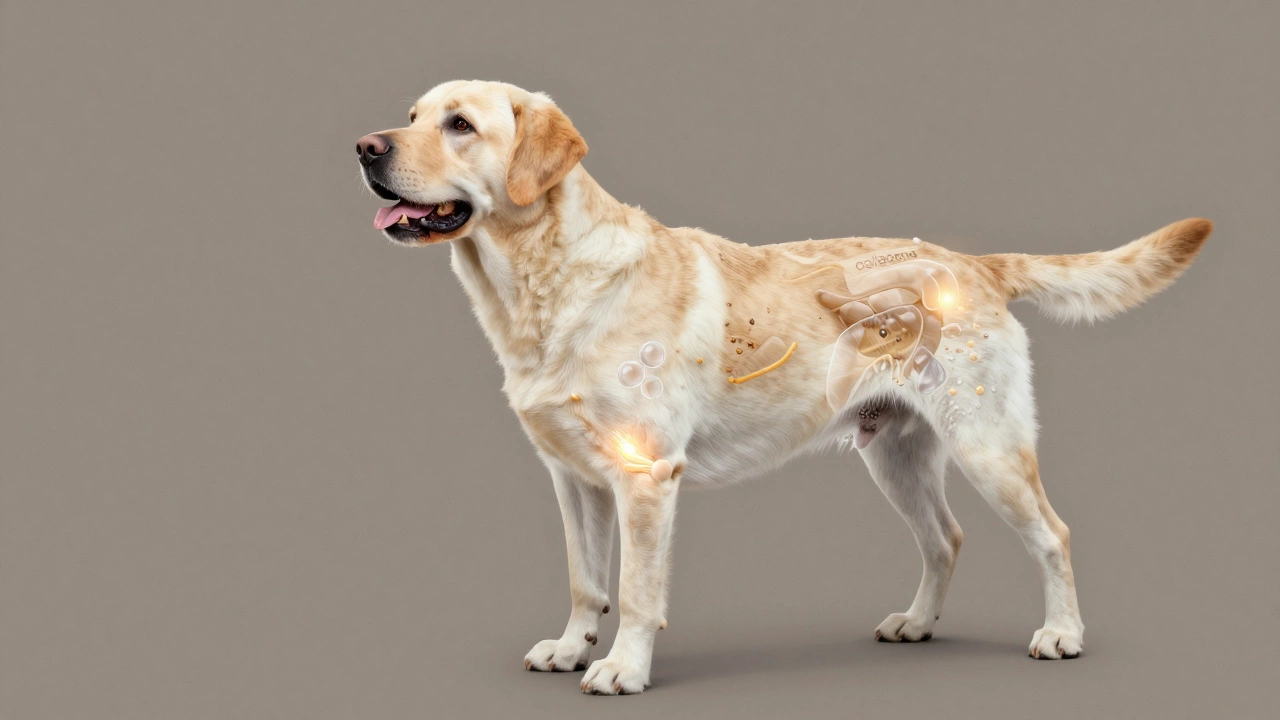
When Bone Broth Can Do More Harm Than Good
Bone broth isn’t a magic cure-all. In some cases, it can make things worse.
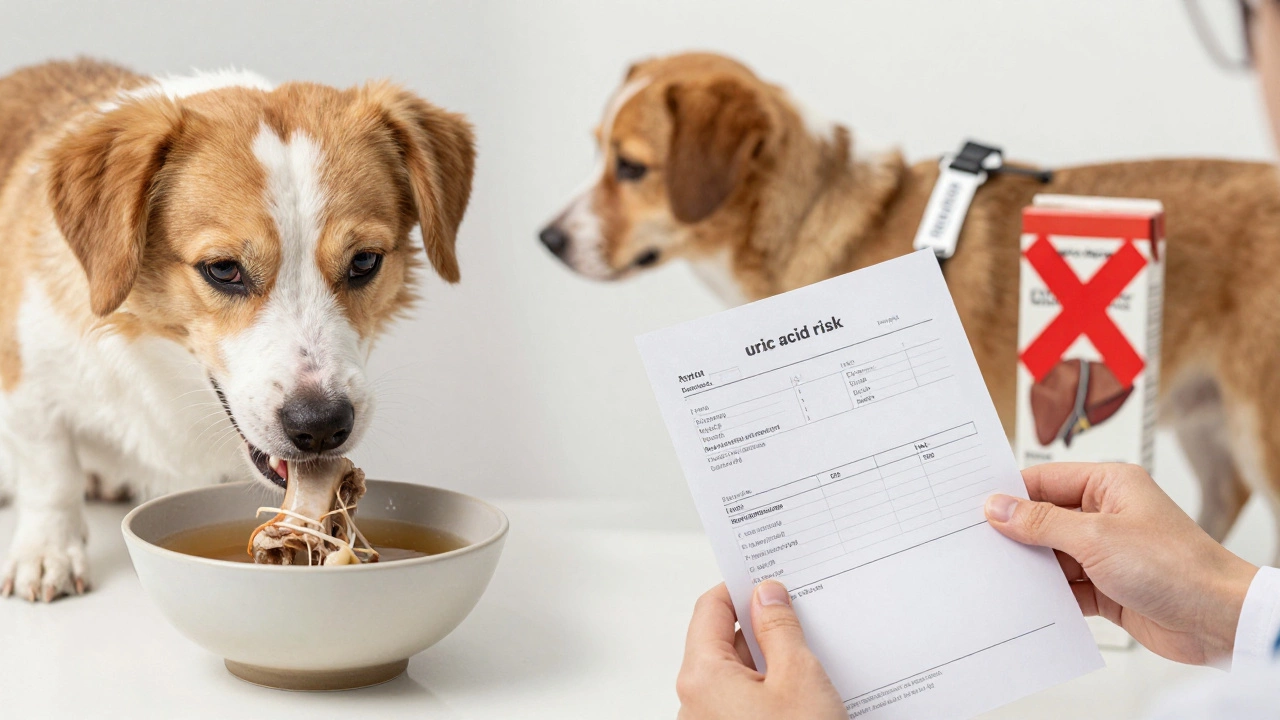
- High uric acid levels-Dogs prone to urate stones (like Dalmatians or Bulldogs) should avoid broth high in purines, which can increase uric acid.
- Chronic kidney disease-Broth contains phosphorus and protein, which can overload kidneys if given too often.
- Obesity-Even low-fat broth adds calories. If your dog is overweight, skip it or use it sparingly.
- Food allergies-Some dogs react to beef or chicken proteins. Try a novel protein source like duck or rabbit bones if you suspect an allergy.
A 2023 survey of 347 veterinary clinics across Australia and New Zealand found that 18% of dog owners who gave bone broth without consulting a vet ended up with a vet visit due to digestive upset, pancreatitis, or worsening kidney values.
How Much Is Too Much?
There’s no official dosage, but most vets recommend:
- Small dogs (under 20 lbs): 1-2 tablespoons, 2-3 times a week
- Medium dogs (20-50 lbs): ¼ cup, 2-3 times a week
- Large dogs (50+ lbs): ½ cup, 2-3 times a week
Never use bone broth as a full meal replacement. It lacks essential nutrients like taurine, omega-3s, and certain vitamins dogs need to survive. Think of it as a supplement-not a replacement for balanced dog food.
Store-Bought vs. Homemade: Which Is Better?
There are plenty of commercial bone broth products on shelves. But not all are safe.
| Feature | Homemade | Store-Bought |
|---|---|---|
| Ingredients | Controlled-only bones and water | Often contains salt, garlic, preservatives |
| Cost | $0.10-$0.25 per serving | $1.50-$4 per serving |
| Shelf Life | 5 days fridge, 6 months freezer | 1-2 years unopened |
| Protein Content | 5-8g per cup | 2-10g per cup (varies widely) |
| Sodium Level | 0-5mg per cup | 100-400mg per cup |
Most commercial broths are made for humans and contain sodium levels that exceed the daily limit for dogs. The American Kennel Club (AKC) advises against buying any broth labeled "for humans" unless it explicitly says "dog-safe" and lists zero garlic or onion.
When to Skip Bone Broth Altogether
Some dogs should never get bone broth:
- Puppies under 6 months-Their digestive systems are still developing
- Dogs with pancreatitis or a history of it
- Dogs on kidney or liver disease diets
- Dogs with known allergies to chicken, beef, or turkey
If your dog has any chronic condition, always check with your vet before adding bone broth. A blood test to check kidney and liver values can help determine if it’s safe.
Alternatives to Bone Broth
If you’re unsure about bone broth, there are other ways to support your dog’s joint and gut health:
- Green-lipped mussel supplements-Proven to reduce joint pain in dogs, with fewer risks than broth
- Probiotic dog treats-Help with digestion without added sodium or fat
- Low-sodium chicken or beef stock cubes made for dogs-Look for brands like The Honest Kitchen or PetCure
- Plain, cooked pumpkin-Great for digestive issues and adds fiber
These alternatives often have more consistent dosing and fewer variables than homemade broth.
Final Verdict: Is Bone Broth Good for Dogs?
Yes-when made correctly, given in moderation, and used as a supplement, not a meal. It can help with hydration, appetite, joint pain, and gut health. But it’s not a cure-all. Too much, too often, or the wrong kind can cause serious problems.
For most healthy dogs, a few tablespoons of homemade broth, 2-3 times a week, is safe and beneficial. For dogs with health conditions, skip it unless your vet says otherwise.
Always start slow. Give a small amount on an empty stomach and watch for changes in energy, stool, or appetite over the next 48 hours. If anything seems off, stop and call your vet.
Can I give my dog bone broth every day?
It’s not recommended. Daily use can lead to too much sodium, phosphorus, or fat, especially in older dogs or those with kidney or liver issues. Stick to 2-3 times a week unless your vet advises otherwise.
Does bone broth help with dog arthritis?
Yes, it can help. The natural glucosamine and chondroitin in bone broth support cartilage health, and the anti-inflammatory properties may reduce joint stiffness. But it’s not a replacement for vet-prescribed treatments like NSAIDs or joint supplements like glucosamine-chondroitin tablets.
Can bone broth cause diarrhea in dogs?
Yes, if it’s too fatty, too salty, or if your dog has a sensitive stomach. Always start with a small amount and use homemade broth without seasoning. If diarrhea lasts more than 24 hours, stop giving it and contact your vet.
Is chicken bone broth better than beef for dogs?
Chicken broth is lighter and easier to digest, making it better for dogs with sensitive stomachs or those recovering from illness. Beef broth has more collagen and minerals but is higher in fat. Choose based on your dog’s needs-not trends.
Can I freeze bone broth for my dog?
Yes, freezing is ideal. Pour broth into ice cube trays or silicone molds, freeze, then store in a sealed bag. One cube (about 1 tbsp) is a perfect portion for small dogs. Thaw in the fridge overnight before serving.
If you’re thinking about trying bone broth, start with a small batch at home. Keep it simple-bones, water, time. Skip the salt. Skip the garlic. Watch your dog closely. And if in doubt, ask your vet. Your dog’s health isn’t a trend-it’s a long-term commitment.