Cat Feeding Calculator
Your Cat's Feeding Plan
Feeding your cat the right amount at the right times isn’t just about filling a bowl-it’s about keeping them healthy, happy, and avoiding weight problems or digestive issues. So how many times should you feed a cat? The answer isn’t one-size-fits-all. It depends on their age, health, activity level, and even the type of food you’re using.
Kittens Need More Frequent Meals
If you’ve got a kitten under six months old, they need to eat more often than adult cats. Their tiny stomachs can’t hold much, but their energy needs are high. Most vets recommend feeding kittens three to four times a day. This keeps their blood sugar stable and supports rapid growth. By eight to twelve weeks, you can start shifting from four meals down to three. Around six months, you can begin transitioning to two meals a day.
Why not just leave food out all day? Free-feeding might seem convenient, but kittens can overeat easily. I’ve seen too many cases where a kitten gains weight too fast, leading to joint problems later. Stick to measured portions. For example, a 4-month-old kitten weighing 2.5 kg usually needs about 60-70 grams of wet food per day, split into three meals.
Adult Cats: Two Meals a Day Is Ideal
Once your cat hits one year old, they’re considered an adult. Most healthy adult cats do best with two meals per day-one in the morning and one in the evening. This mimics their natural hunting rhythm: they’d catch small prey several times a day in the wild, but they digest those meals slowly, so two larger portions work well in a home setting.
Some owners think once-a-day feeding is fine. It’s not. Cats are obligate carnivores with fast metabolisms. Going 24 hours without food can trigger fatty liver disease, especially in overweight cats. Even if your cat seems fine skipping a meal, it’s a red flag. Consistent feeding keeps their digestion running smoothly.
Portion size matters too. A typical 5 kg adult cat needs around 200-250 calories per day. That’s roughly 150-180 grams of wet food or 50-60 grams of dry food. Always check the feeding guide on the bag or can, but adjust based on your cat’s body condition. You should be able to feel their ribs with light pressure, but not see them.
Senior Cats May Need Special Attention
Cats over seven years old often have slower metabolisms, dental issues, or health conditions like kidney disease or hyperthyroidism. These changes mean their feeding needs shift. Many senior cats do better with two smaller meals rather than one large one. Smaller portions are easier to digest and help manage blood sugar levels.
If your older cat is losing weight despite eating, or seems less interested in food, talk to your vet. Sometimes switching to a softer wet food or warming it slightly helps. I’ve seen cats with dental pain stop eating dry kibble altogether-switching to pâté-style wet food made all the difference.
What About Free-Feeding Dry Food?
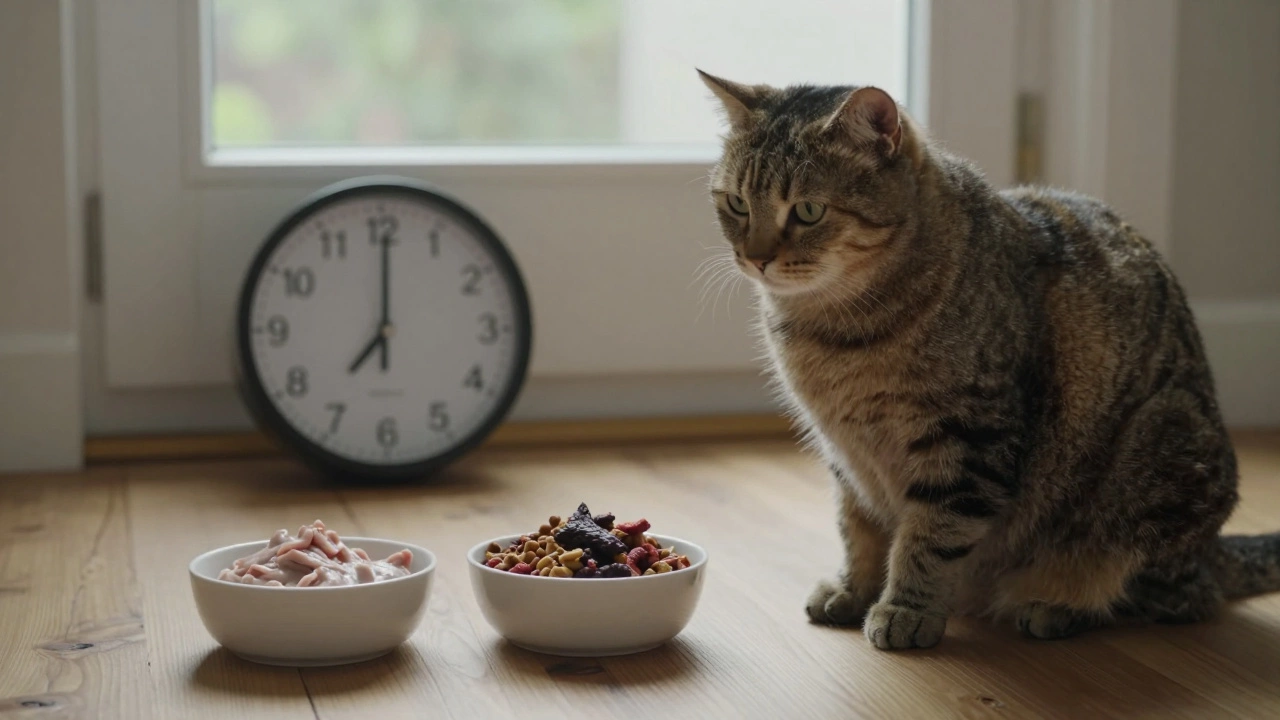
Many people leave dry food out all day, assuming their cat will eat when hungry. But cats don’t self-regulate well with dry food. It’s calorie-dense, low in moisture, and easy to overeat. A cup of dry food can contain 300-400 calories-more than most cats need in a full day.
Studies show that cats fed free-choice dry food are more likely to become overweight than those on scheduled meals. In a 2023 veterinary survey of over 1,200 cats in New Zealand, 58% of free-fed cats were overweight or obese, compared to just 31% of cats on timed meals.
If you want to use dry food, try portion-controlled feeders or puzzle toys. These slow down eating and make mealtime more engaging. But don’t rely on dry food alone. Cats need moisture, and wet food helps prevent urinary issues.
Wet vs. Dry Food: How It Changes Feeding
The type of food you choose directly affects how often you feed. Wet food has a higher water content (70-80%) and is more filling per calorie. That means you can feed less volume and still keep your cat hydrated. Most cats on wet food do fine with two meals a day.
Dry food is less hydrating and more concentrated in calories. If you’re feeding dry food only, you’ll need to measure carefully and avoid leaving it out. Some owners mix wet and dry-this works well if you’re feeding wet food twice a day and offering a small amount of dry as a snack.
Here’s a simple rule: if you’re feeding dry food, don’t leave it out all day. If you’re feeding wet food, don’t leave it out for more than 30 minutes after serving. It spoils fast, especially in Auckland’s warm weather.
Signs You’re Feeding Too Much or Too Little
It’s easy to misjudge portions. Here’s what to look for:
- Too much: Round belly, difficulty grooming, no waistline when viewed from above, lethargy, trouble jumping.
- Too little: Visible ribs or spine, dull coat, constant begging, increased vocalization, weight loss over weeks.
Weight changes are the clearest indicator. Weigh your cat every month using a pet scale or a bathroom scale (hold them, then subtract your weight). A steady gain or loss of more than 10% of body weight over a few months needs vet attention.
Special Cases: Pregnant, Nursing, or Sick Cats
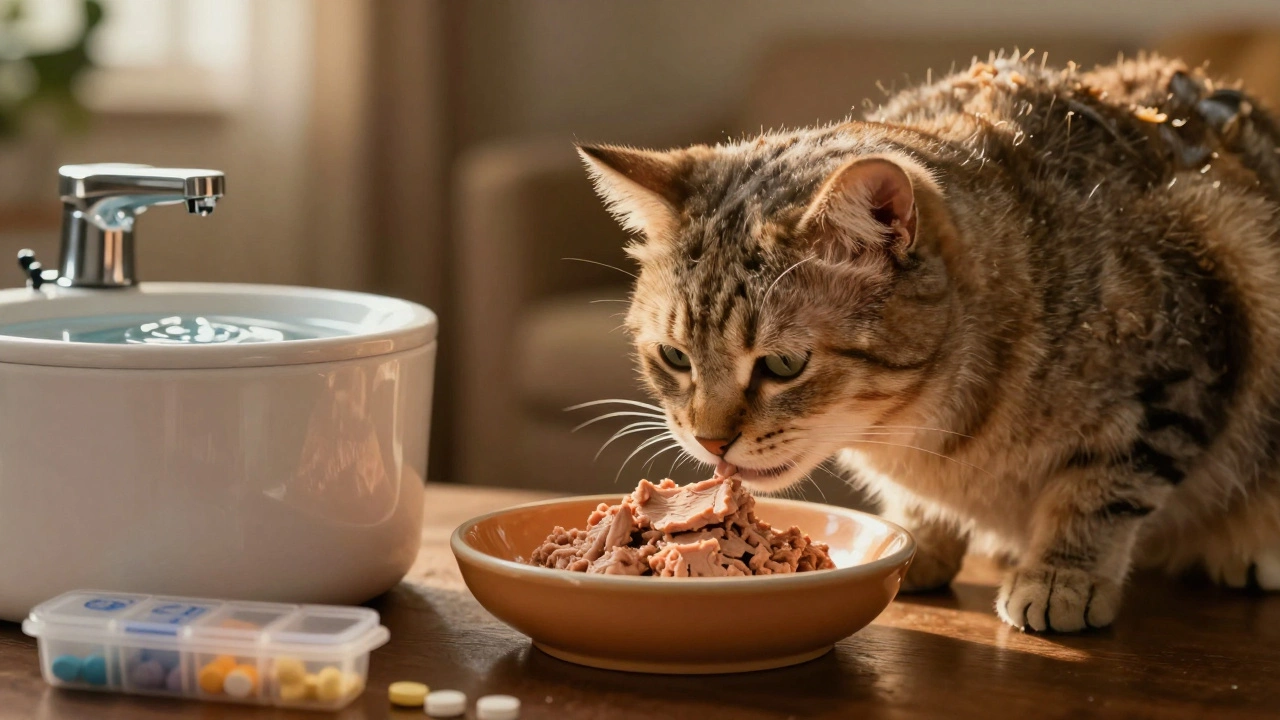
Pregnant cats need more calories as their kittens grow. Around week five of pregnancy, start increasing meals to three times a day. After giving birth, nursing mothers may need to eat four to five small meals daily-they can burn up to 2-3 times their normal energy needs.
If your cat is sick-whether they have diabetes, kidney disease, or just a stomach bug-feeding frequency may need to change. Some cats with kidney disease benefit from small, frequent meals to reduce nausea. Others with diabetes need meals timed with insulin injections. Always follow your vet’s advice in these cases.
Feeding Schedule Tips That Actually Work
Here’s what works in real homes, not just theory:
- Feed at the same times every day. Cats thrive on routine.
- Use a timer or app to remind you. Even busy households can set alarms for 7 a.m. and 7 p.m.
- Don’t reward begging. If your cat meows for food between meals, ignore it. Feeding on demand teaches them to beg.
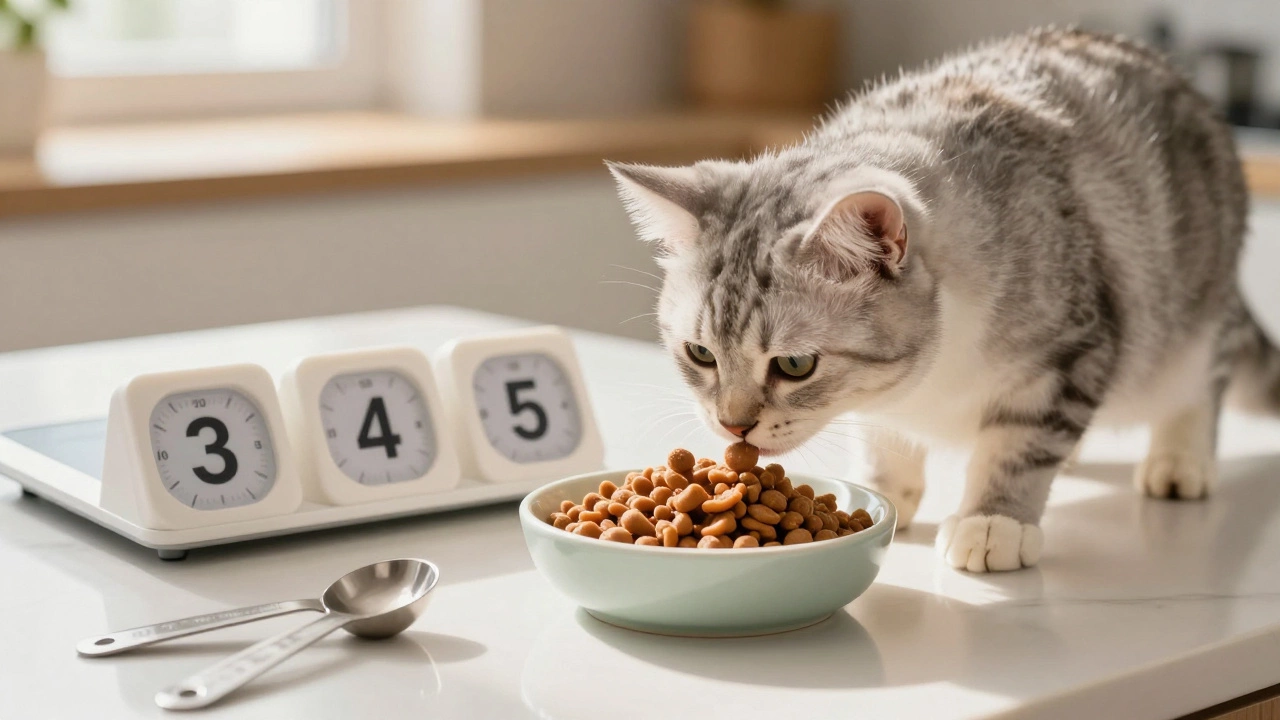
- Measure food with a kitchen scale. A tablespoon isn’t accurate-grams are.
- Keep fresh water available at all times. Hydration matters as much as food.
Some people worry about their cat being hungry between meals. Don’t. Cats are used to going hours without food. In the wild, they hunt, eat, then nap. Your indoor cat isn’t starving-they’re just being dramatic.
Final Answer: How Many Times Should You Feed a Cat?
For most cats:
- Kittens (under 6 months): 3-4 times a day
- Adult cats (1-7 years): 2 times a day
- Senior cats (7+ years): 2 times a day, possibly with softer food
- Pregnant/nursing cats: 3-5 times a day, as needed
Always adjust based on your cat’s body condition, activity level, and vet advice. And remember-feeding isn’t just about calories. It’s about routine, hydration, and building trust. Your cat doesn’t need to be fed like a human. They need you to be consistent, observant, and thoughtful.
Can I feed my cat once a day?
For most healthy adult cats, once-a-day feeding isn’t ideal. Cats have fast metabolisms, and going 24 hours without food can increase the risk of fatty liver disease, especially in overweight cats. Two meals a day is safer and more natural. If your cat only wants to eat once a day, check with your vet-it could signal an underlying issue.
Should I feed my cat wet or dry food?
Wet food is better for hydration and helps prevent urinary tract issues, which are common in cats. Dry food is convenient but lacks moisture and is higher in carbs. A mix of both is fine, but don’t rely on dry food alone. If you’re feeding dry, make sure your cat drinks plenty of water. Many vets recommend at least 50% of calories from wet food.
Why does my cat beg for food all the time?
Cats beg for food because they’ve learned it works. It’s not always hunger-it could be boredom, attention-seeking, or habit. If you feed them every time they meow, you’re reinforcing the behavior. Stick to your schedule. Offer playtime or a puzzle feeder instead. If they’re truly underweight or have a medical issue, your vet can help identify the cause.
How do I know if my cat is overweight?
Look at your cat from above-you should see a visible waistline. From the side, their belly shouldn’t hang down. Feel their ribs: you should be able to feel them with light pressure, but not see them. If you can’t feel the ribs without pressing hard, your cat is likely overweight. A vet can give you a body condition score (BCS) for accuracy.
Is it okay to feed human food to my cat?
No. Many human foods are dangerous for cats-onions, garlic, chocolate, grapes, and even too much dairy can cause illness. Cooked chicken or fish without seasoning is okay occasionally, but it shouldn’t replace balanced cat food. Cat food is specially formulated to meet their nutritional needs. Human food lacks key nutrients like taurine, which cats can’t make on their own.