Pet Vaccine Checker
Are your pet's vaccines up to date? Enter details to see which vaccines are essential for your New Zealand pet based on veterinary guidelines.
Vaccine Recommendations
Core vaccines (required):
Non-core vaccines (recommended based on lifestyle):
Every year, pet owners in Auckland and across New Zealand face the same question: Are pet vaccines really necessary? Some people wonder if vaccines are just a way for vets to make money. Others worry about side effects. But skipping vaccines isn’t a risk-free choice-it’s a gamble with your pet’s life.
What vaccines do pets actually need?
Not all vaccines are created equal. Vets divide them into two categories: core and non-core. Core vaccines are the ones every dog and cat needs, no matter where they live or how much they travel. These protect against diseases that are deadly, widespread, and hard to treat.
For dogs, the core vaccines are:
- Canine parvovirus
- Canine distemper
- Canine adenovirus (hepatitis)
- Rabies
For cats, the core vaccines are:
- Feline panleukopenia (distemper)
- Feline calicivirus
- Feline herpesvirus
- Rabies (required by law in some areas, including parts of Auckland)
These diseases aren’t theoretical. In 2023, the New Zealand Veterinary Association reported 147 confirmed cases of parvovirus in dogs under two years old. Half of them didn’t survive. That’s not a statistic-it’s a family’s heartbreak.
Why can’t you just skip the shots?
Some pet owners think their indoor cat will never get sick. Or that their dog never goes near other animals. That’s a dangerous myth.
Parvovirus can live on your shoes for months. A single walk through a park, a visit to the vet’s waiting room, or even a sniff from another dog’s potty spot can expose your pet. Feline calicivirus spreads through sneezes. One carrier cat in a shelter can infect dozens.
Even if your pet never leaves the house, you might bring the virus in. A visitor’s dog might have been at a park. A new cat from the shelter might carry herpesvirus. Vaccines aren’t about where your pet goes-they’re about what you bring home.
What happens if you don’t vaccinate?
Let’s say you skip the rabies vaccine. In New Zealand, rabies isn’t present-but that doesn’t mean it can’t come. Our borders are porous. A smuggled pet, a stray animal crossing from Australia, or even contaminated wildlife could trigger an outbreak. If your unvaccinated pet bites someone, the law requires quarantine-or euthanasia-for testing.
Distemper? It attacks the nervous system. Dogs with distemper shake uncontrollably, lose coordination, and often die even with intensive care. There’s no cure. Only prevention.
Parvovirus? It destroys the gut lining. Puppies vomit blood, bleed internally, and dehydrate fast. Treatment costs over $2,000. Survival isn’t guaranteed. And if one puppy gets it, the virus lingers in your yard for years.
These aren’t rare tragedies. They’re preventable.

Are vaccines safe?
Yes. And the risks are tiny compared to the diseases they prevent.
Some pets get a sore leg or a slight fever after vaccination. That’s normal. It means the immune system is working. Less than 1% of vaccinated pets have a serious reaction. That’s lower than the risk of a car accident on the way to the vet.
There’s no credible scientific link between vaccines and autism, allergies, or chronic illness in pets. Those claims come from poorly designed studies or anecdotal stories. Real-world data from the University of Auckland’s veterinary college tracked over 12,000 vaccinated dogs and cats between 2020 and 2025. The rate of adverse events was 0.7%-and most were mild, like swelling or tiredness.
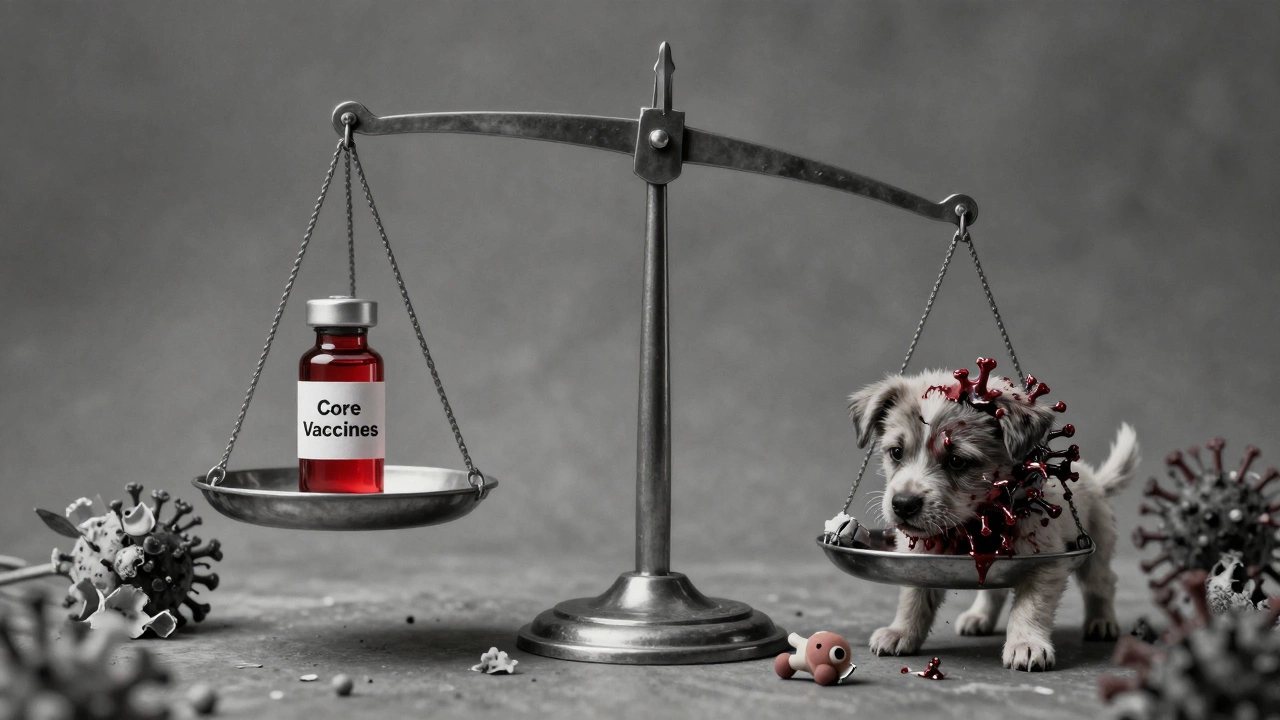
Compare that to the 30% mortality rate for unvaccinated puppies with parvovirus. The math isn’t close.
Do vaccines last forever?
No. That’s why boosters matter.
Core vaccines like distemper and parvovirus usually last three years after the final puppy/kitten series. Rabies boosters are required every one to three years depending on local rules. Some non-core vaccines-like leptospirosis or Bordetella-need yearly shots if your pet is exposed to risks like ponds, dog parks, or boarding facilities.
Skipping boosters is like leaving your car unlocked. The protection fades. Your pet isn’t protected just because they got shots once.
Some vets now offer titre testing-blood tests that check antibody levels. But even these aren’t perfect. A low titre doesn’t always mean your pet is unprotected. And a high titre doesn’t guarantee lifelong immunity. Most vets still recommend following the standard schedule unless there’s a medical reason not to.
What about holistic or natural alternatives?
You’ll hear people say homeopathy, herbal remedies, or ‘vaccine-free diets’ can protect pets. None of these work.
There’s zero scientific evidence that any natural product prevents parvovirus, distemper, or rabies. The immune system doesn’t respond to crystals, essential oils, or raw food the way it does to a vaccine. Vaccines train your pet’s body to recognize and fight specific viruses. Nothing else does that.
Trying to replace vaccines with supplements is like using a bandage to stop a gunshot wound. It feels like you’re doing something-but it’s not enough.
Who shouldn’t get vaccines?
Very few pets have medical reasons to skip vaccines. If your pet has had a severe allergic reaction to a vaccine before, your vet will adjust the plan. Pets with active cancer, autoimmune disease, or severe illness might delay vaccination until they’re stable.
But age isn’t a reason. Senior dogs and cats still need core vaccines. Their immune systems weaken with age. They’re more vulnerable, not less.
Never skip vaccines because your pet is ‘too old’ or ‘too small.’ That’s not science-it’s fear dressed up as care.
What’s the bottom line?
Are pet vaccines really necessary? Yes. Not because vets say so. Not because it’s trendy. But because the science is clear, the risks of skipping them are high, and the protection they offer is proven.
Vaccines saved millions of pets worldwide. They’re one of the most effective tools in veterinary medicine. Skipping them doesn’t make you a ‘natural’ pet owner. It makes your pet vulnerable.
If you’re unsure, talk to your vet. Ask them to show you the data. Ask about your pet’s specific risks. But don’t let fear or misinformation cost your pet their life.
Your pet doesn’t need to be perfect. They just need to be protected.