Puppy Sleep: What Every Dog Owner Needs to Know About Rest, Routine, and Recovery
When your puppy sleep, the essential daily rest period puppies need to grow, learn, and recover from constant stimulation. Also known as puppy rest cycles, it’s not laziness—it’s biology. A healthy puppy sleeps 18 to 20 hours a day. That’s not because they’re bored. It’s because their brains and bodies are working overtime to develop muscles, process new smells, learn commands, and recover from all the zoomies. If you’re wondering why your pup drops like a rock after five minutes of play, you’re not alone—and it’s completely normal.
What happens during puppy sleep patterns, the natural cycles of deep and light sleep that puppies go through, similar to adult dogs but more frequent and less predictable matters just as much as how long they sleep. Unlike humans, puppies cycle through sleep stages every 20 to 30 minutes. That’s why you’ll see their paws twitch, ears flick, or soft whimpers—this is when they’re dreaming about chasing squirrels or sniffing new grass. These cycles are how their brains organize the day’s experiences. Skip the sleep, and you skip the learning. A tired puppy isn’t a spoiled puppy—it’s a developing one.
Then there’s the puppy crate sleep, the practice of using a secure, comfortable crate as a designated sleep space that helps puppies feel safe and learn to self-soothe. Many owners think crating is cruel, but science and behaviorists agree: a well-introduced crate becomes a puppy’s den, a place of calm. It reduces anxiety, prevents nighttime accidents, and stops destructive chewing. The key? Make it inviting—not a punishment. Add a soft blanket, a safe chew toy, and keep the door open during the day so your pup chooses it. At night, they’ll settle in faster than you expect.
And let’s talk about puppy sleeping habits, the consistent behaviors around when, where, and how a puppy chooses to rest, shaped by routine, environment, and emotional safety. If your puppy insists on sleeping right next to your bed, it’s not just clinginess. It’s trust. Dogs bond through proximity. They follow scent, sound, and warmth. If you want them to sleep in their own space, start slow: place their crate beside your bed, then move it gradually. Don’t force it. Don’t punish them for waking up. Just be consistent. They’ll adapt.
Some puppies wake up at 3 a.m. crying. Others sleep through the night by eight weeks. There’s no magic age—it depends on breed, temperament, and how you’ve set up their routine. But one thing’s true: sleep problems often come from overstimulation, inconsistent schedules, or lack of boundaries. Feed them last meal three hours before bedtime. Take them out right before bed. Keep the environment quiet and dark. No more playtime after 8 p.m. Simple. Effective. No gadgets needed.
And if you’re tempted to use a bark collar or a nightlight because your puppy cries—don’t. Those don’t fix the root issue. They mask it. What your puppy needs isn’t punishment or distraction. It’s reassurance, routine, and rest. The right sleep setup doesn’t just make your life easier. It builds confidence, reduces anxiety, and helps them grow into calm, balanced dogs.
Below, you’ll find real advice from other owners who’ve been there: how to handle nighttime whining, why crate beds beat floor mats, what to do when your puppy won’t nap during the day, and how to tell if sleep changes mean something’s wrong. No fluff. No myths. Just what works.
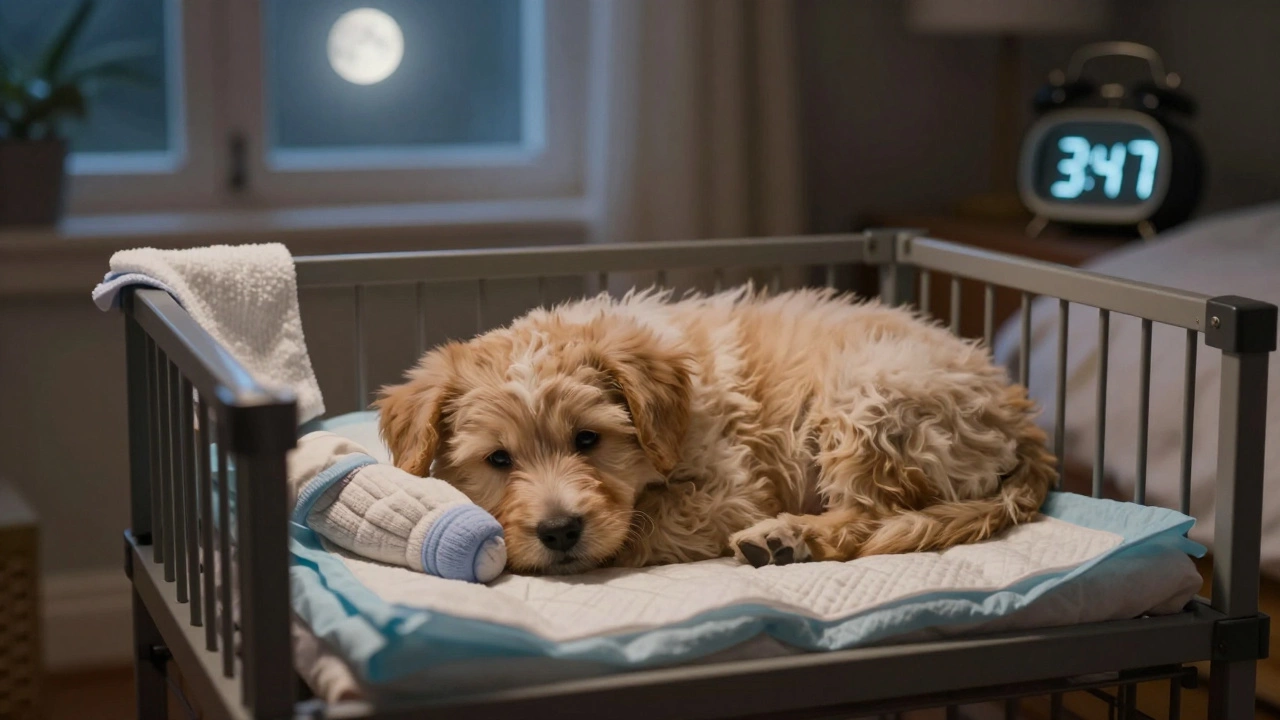
Can an 8-Week-Old Puppy Stay in a Crate All Night?
An 8-week-old puppy can't sleep through the night without needing to go outside. Learn how to set up a safe, realistic overnight routine that supports their development and builds trust.