Human Food for Cats: What’s Safe, What’s Dangerous, and What to Feed Instead
When you’re eating dinner, your cat stares at you like you’re holding the last slice of pizza. It’s tempting to share—but human food for cats, edible items meant for people that owners sometimes give to their felines. Also known as table scraps for cats, it can be harmless in small amounts—or deadly without warning. Cats aren’t small dogs. Their bodies process food differently, and what’s nutritious for you might trigger kidney failure, poisoning, or digestive chaos in them.
Some safe human foods for cats, plain, cooked meats and certain fish that can be given occasionally as treats include plain chicken, turkey, or cooked salmon—no seasoning, no bones. A tiny bit of plain pumpkin or steamed broccoli can even help with digestion. But then there’s the other side: toxic foods for cats, common kitchen items that cause severe illness or death in felines. Onions, garlic, chocolate, grapes, and xylitol (found in sugar-free gum) are silent killers. Even a lick of tuna in brine can mess up their electrolytes. And while milk is cute to give, most adult cats are lactose intolerant—it’s not a treat, it’s a stomach bomb.
Here’s the truth: your cat doesn’t need your leftovers. High-quality wet food or balanced dry kibble gives them everything they need—hydration, taurine, amino acids, and fats—without the risk. If you want to mix things up, try cat-safe toppers like freeze-dried meat or fish oil. It’s safer, more reliable, and just as exciting for them. You’re not being stingy—you’re being smart.
What you’ll find below are real, tested answers from pet owners and vets about what happens when you feed your cat human food. From tuna myths to why cheese is a bad idea, we’ve pulled together every post that cuts through the noise. No fluff. Just what works—and what could cost you a vet bill.
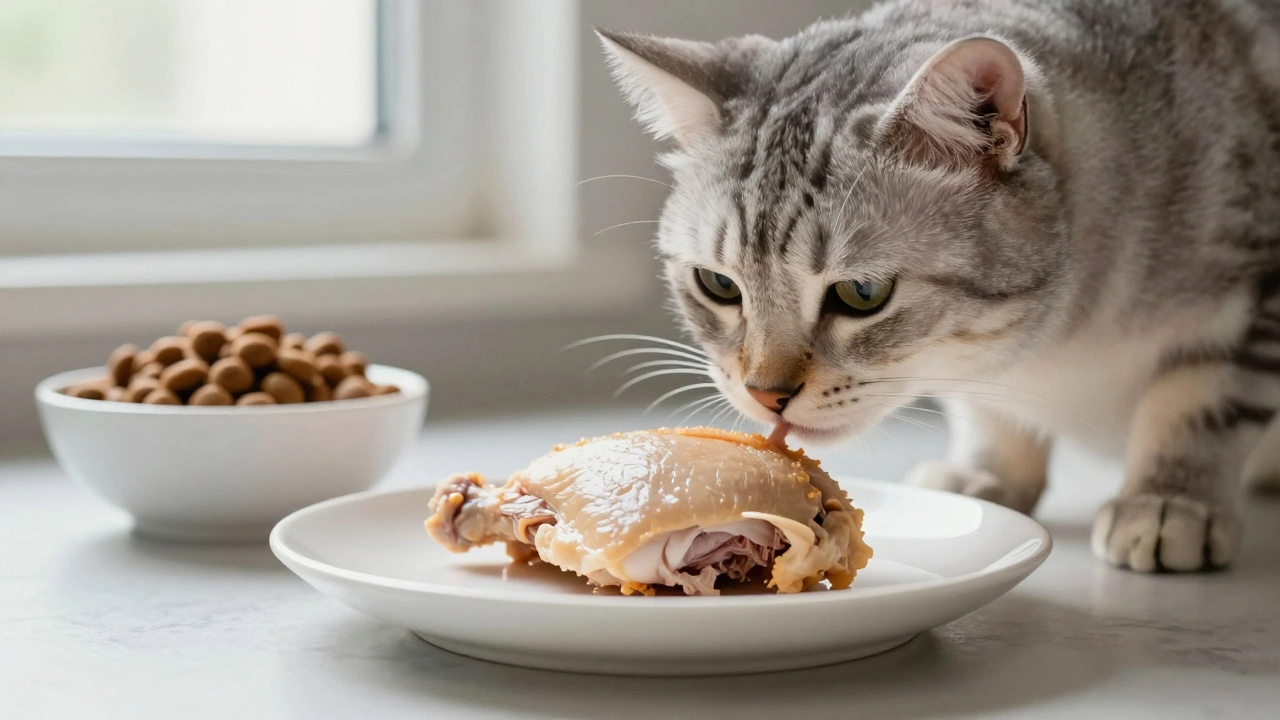
What Can Cats Eat Instead of Cat Food? Safe Human Foods for Cats
Cats can eat small amounts of plain cooked chicken, fish, or eggs as temporary alternatives to cat food-but never as a replacement. Learn what’s safe, what’s dangerous, and how to handle emergencies.