Cat Supplements: What They Are, Why They Matter, and What Works
When we talk about cat supplements, additives given to cats to support health beyond basic food. Also known as feline nutritional aids, these aren’t magic pills—they’re tools to help fill gaps in diet, support aging bodies, or manage specific conditions like joint pain or digestive upset. Most cats eating a balanced commercial diet don’t need them. But if your cat is older, has a sensitive stomach, or eats mostly dry food, supplements can make a real difference.
One big thing to know: cat nutrition, the science of what cats need to thrive. Also known as feline dietary requirements, it’s built around high protein, low carbs, and lots of moisture. Cats can’t make certain nutrients on their own—like taurine, arachidonic acid, and vitamin A—so their food must supply them. If you’re feeding homemade meals or low-quality kibble, even the best food might miss the mark. That’s where cat vitamins, specific nutrient blends designed for cats. Also known as feline multivitamins, they’re not just human pills crushed up—they’re formulated for a cat’s tiny body and unique metabolism. Giving the wrong kind can do more harm than good. For example, too much calcium can hurt kidneys, and too much vitamin D can poison them.
Some supplements are backed by real results. Cat supplements with omega-3s help with dry skin and itchy coats. Glucosamine supports stiff joints in older cats. Probiotics can calm upset stomachs after antibiotics or food changes. But they’re not one-size-fits-all. A cat with kidney issues needs different support than a young, active one. And if your cat is already eating a premium, vet-recommended food, extra supplements might just be expensive urine.
What you’ll find below are real stories and facts from cat owners who’ve tried supplements—and what actually worked. We’ll cover when they help, which ones to skip, how to spot fake claims, and how to talk to your vet about them without sounding like you’re buying snake oil. No fluff. No hype. Just what your cat’s body really needs.
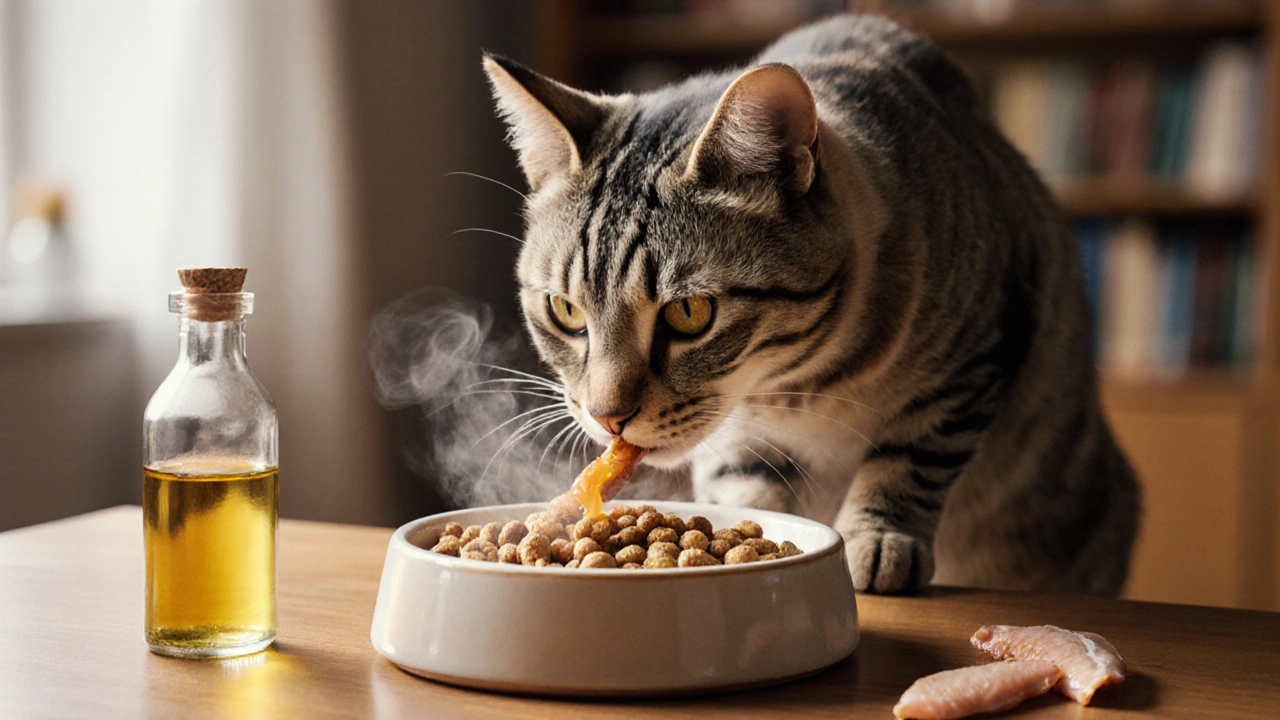
What to Add to Your Cat's Dry Food for Better Nutrition
Discover safe, effective ways to enhance your cat's dry food with wet food, toppers, fish oil, and probiotics to improve hydration, coat health, and digestion-without risky additions.