Service Dogs in Grocery Stores: Rules, Rights, and Real-Life Tips
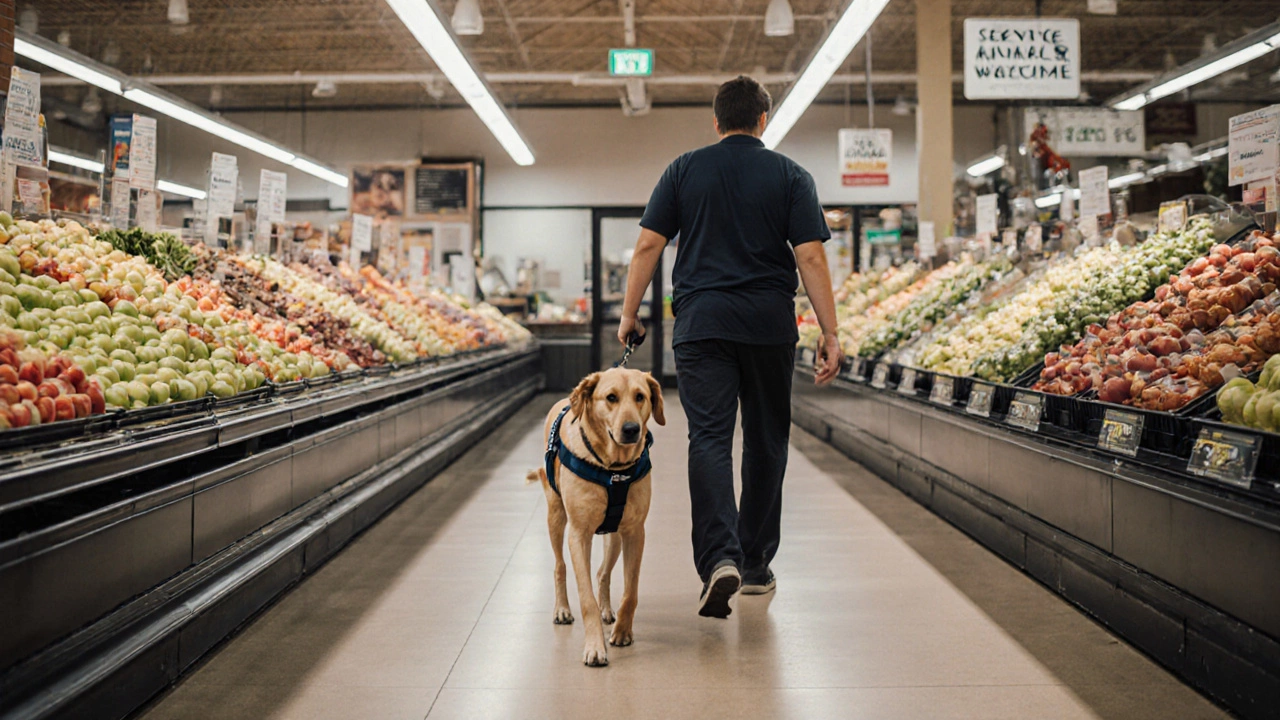
When you see a service dog, a dog trained to perform specific tasks for a person with a disability. Also known as assistance dog, it isn't just a pet—it's a medical tool, like a wheelchair or hearing aid. These dogs work in all public places, including grocery stores, retail spaces where food and household items are sold to the public. Under the Americans with Disabilities Act (ADA) and similar UK regulations, businesses must allow service dogs inside, no matter how busy or clean they claim to be.
Some people confuse service dogs with emotional support animals, pets that provide comfort but aren’t trained for specific tasks. That’s a big difference. A service dog can open doors, retrieve medication, alert to seizures, or guide someone who is blind. An emotional support animal doesn’t have the same legal access rights. Grocery stores can ask two questions: Is the dog required because of a disability? and What work or task has the dog been trained to do? They can’t ask for proof, paperwork, or demand the dog demonstrate its task.
Real issues come up when people try to bring untrained dogs in pretending they’re service animals. That’s not just unfair—it makes it harder for people who truly need these dogs. Store employees who aren’t trained in the rules might say no, even when they shouldn’t. That’s why knowing your rights matters. If you’re the handler, carry a printed copy of the ADA guidelines or UK Equality Act summary. If you’re a store owner, train your staff. A confused employee can turn a simple trip to buy milk into a stressful event for someone with a disability.
Service dogs don’t wear badges or vests by law, but most do—because it helps avoid confrontations. That doesn’t mean every dog in a vest is real. Look at behavior. A true service dog stays calm, ignores food, doesn’t bark or sniff around, and stays close to its handler. If a dog is pulling, barking, or going to the bathroom inside, it’s not a service dog—it’s a pet. And yes, stores can ask you to leave if the dog is out of control.
What about food safety? Some people worry about germs. But service dogs are trained to stay clean and are usually groomed regularly. The risk of contamination is far lower than from a customer’s shopping cart or reusable bag. The ADA doesn’t allow businesses to deny access based on fear of contamination. The only valid reason to refuse entry is if the dog is disruptive or uncontrolled.
Service dogs help people live independently. They let someone with diabetes check their blood sugar without a device, help a veteran with PTSD exit a crowded store, or guide a child with autism through a busy aisle. Denying them access isn’t about rules—it’s about dignity. And in grocery stores, where people need to buy food for their families, that dignity matters most.
Below, you’ll find real stories and practical advice from people who live with service dogs, plus clear breakdowns of what stores can and can’t do. Whether you’re a handler, a store worker, or just someone who’s seen a dog in a grocery aisle, these posts will help you understand the facts—not the myths.
Are Dogs Allowed in Grocery Stores in Virginia? What You Need to Know
In Virginia, only service dogs are allowed in grocery stores. Pets, emotional support animals, and therapy dogs are banned due to food safety laws. Learn the rules, alternatives, and what to do if you're turned away.